N. T. Rama Rao Biography: Net Worth, Wife, Age, Parents, Religion, Height, Movies, Children
Biography
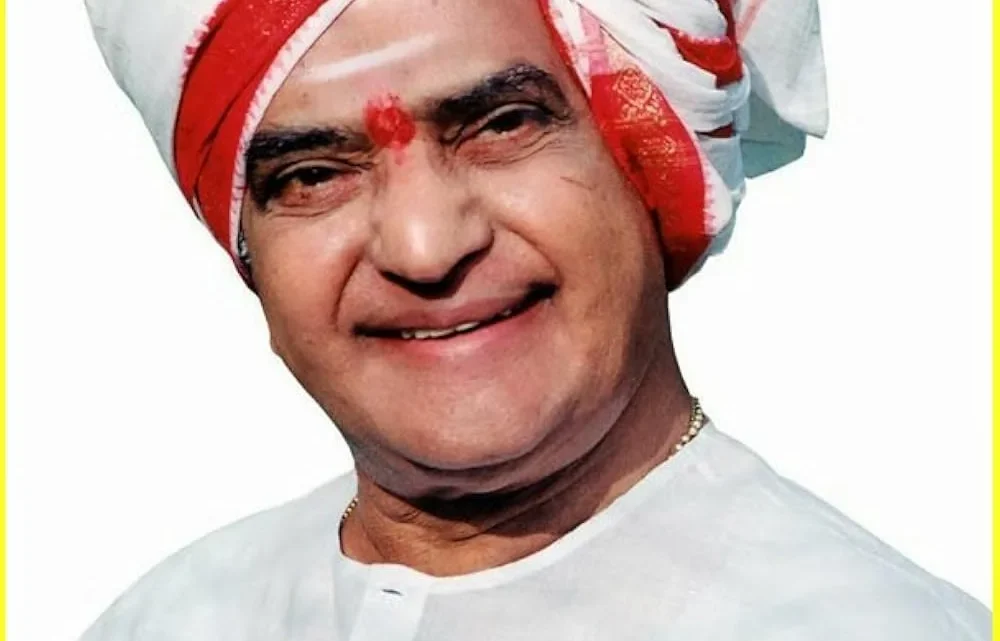
Nandamuri Taraka Rama Rao (28 May 1923 – 18 January 1996), popularly known as NTR, was a legendary Indian actor, filmmaker, and politician from Andhra Pradesh.
Born into a farming family in the village of Nimmakuru, Krishna district, he rose to become one of the most influential figures in Telugu cinema.
Trending Now!!:
Over a career spanning nearly five decades, he acted in approximately 300 films, earning iconic status for his powerful portrayals of mythological characters, especially gods like Krishna and Rama.
He also directed, produced, and wrote several films, earning the title Viswa Vikhyatha Nata Sarvabhouma (Universally Renowned Star of Acting). He received the Padma Shri in 1968.
In 1982, NTR founded the Telugu Desam Party (TDP), a regional party focused on Telugu pride and welfare. The following year, he became the first non-Congress Chief Minister of Andhra Pradesh, serving three terms (1983–84, 1984–89, and 1994–95) and bringing significant populist reforms.
A larger-than-life personality who transitioned seamlessly from silver screen to political power, NTR remains a revered icon in Telugu culture and politics even decades after his passing.
| Indian actor, film director, film producer, screenwriter, film editor, philanthropist, and politician | |
| N. T. Rama Rao | |
|---|---|
 | |
| Wiki Facts & About Data | |
| Real Name: | Nandamuri Taraka Rama Rao |
| Stage Name: | N. T. Rama Rao |
| Born: | 28 May 1923 (age 72 years old) |
| Place of Birth: | Nimmakuru, India |
| Died: | 18 January 1996 (age 72 years), Hyderabad, India |
| Nationality: | Nigerian |
| Education: | SRR & CVR College, Andhra Christian College |
| Height: | 175 cm |
| Parents: | Nandamuri Lakshmaiah Chowdary, Nandamuri Venkata Ramamma |
| Siblings: | Trivikrama Rao |
| Spouse: | Lakshmi Parvathi (m. 1993–1996), Basavatarakam Nandamuri (m. 1943–1985) |
| Girlfriend • Partner: | Not Dating |
| Children: | Nandamuri Balakrishna, Nandamuri Harikrishna, Hari Krishna, Daggubati Purandeswari, Nara Bhuvaneshwari, Nandamuri Jayakrishna, Nandamuri Mohana Krishna, Kantamaneni Uma Maheswari, Nandamuri Jayashankar Krishna, Nandamuri Saikrishna, Garapati Lokeswari, Nandamuri Ramakrishna Sr., Nandamuri Ramakrishna Jr., Bhuvaneswari |
| Occupation: | Actor • Film Director • Film Producer • Screenwriter • Film Editor • Philanthropist • Politician |
| Net Worth: | $42 million (USD) |
Early Life & Education
Nandamuri Taraka Rama Rao, popularly known as NTR, was born on 28 May 1923 in Nimmakuru, a small farming village in Gudivada taluk of Krishna district (then part of Madras Presidency, British India, and now in Andhra Pradesh).
He belonged to a Telugu Hindu agrarian family and was the son of Nandamuri Lakshmaiah Chowdary and Nandamuri Venkata Ramamma. Because his paternal uncle and aunt were childless, he was given up for adoption to them at a young age.
He received his early education from a village teacher in Nimmakuru, whom he later credited, along with his father, for developing his strong command of Telugu. Although it was unusual for children from farming families to pursue higher education at the time, his father ensured he continued his schooling as the first male child in the family.
He completed his matriculation in 1940 at a high school in Vijayawada, studied intermediate at SRR & CVR College in Vijayawada, and earned his Bachelor of Arts degree from Andhra Christian College in Guntur. Details about his siblings are not prominently documented in major biographical accounts, though some sources mention he had brothers, including one named Trivikrama Rao.
After graduation, he briefly worked as a sub-registrar in the Madras civil service but soon resigned to follow his passion for acting.
Career
Nandamuri Taraka Rama Rao, better known as NTR, started his acting career in 1949 with a supporting role in the Telugu film Mana Desam, directed by L. V. Prasad. He became well known after his first lead role in Palletoori Pilla (1950) and found major success with the fantasy film Pathala Bhairavi (1951), which made him a leading star in Telugu cinema.
His roles in films like Malliswari (1951), Pelli Chesi Choodu (1952), and Mayabazar (1957) made him even more popular, especially for his portrayal of Lord Krishna, a role he played in about 17 movies.
NTR was famous for his performances as Hindu deities such as Krishna, Rama, and Shiva, earning him the title Viswa Vikhyatha Nata Sarvabhouma, meaning Universally Renowned Star of Acting. Over nearly fifty years, he acted in more than 300 films, mostly in Telugu, but also in a few Tamil and Hindi movies.
He often played heroes, villains, or Robin Hood-like characters in social and action dramas. Besides acting, NTR also directed, produced, wrote, and edited several films. He started his own production company, National Art Theatre, in 1953.
He won three National Film Awards: two for co-producing Thodu Dongalu (1954) and Seetharama Kalyanam (1960), and one for directing Varakatnam (1968). In 1968, he received the Padma Shri for his contributions to Indian cinema and continued acting until 1982.
That year, at almost 60, NTR entered politics by founding the Telugu Desam Party (TDP) on March 29. He positioned the party as a supporter of Telugu pride, self-respect, and welfare, challenging the long-standing Congress party.
Just nine months later, in the 1983 Andhra Pradesh assembly elections, the TDP won a landslide victory, making NTR the first non-Congress Chief Minister of the state. He served three terms as Chief Minister (1983–84, 1984–89, and 1994–95), introducing reforms such as subsidised rice, a ban on liquor, and efforts to promote Telugu culture and rural development.
His political career included dramatic events, such as a brief removal from office in 1984, but he remained a key figure who changed the direction of Andhra Pradesh politics.
Personal Life
Nandamuri Taraka Rama Rao, the towering icon of Telugu cinema and Andhra Pradesh politics known universally as NTR, was born on 28 May 1923 in the small agrarian village of Nimmakuru, in the Krishna district of what was then the Madras Presidency of British India. He died on 18 January 1996 at his residence in Hyderabad following a heart attack, having lived a full and historically consequential 72 years.
He starred in over 300 films and was referred to as “Viswa Vikhyatha Nata Sarvabhouma,” meaning universally renowned star of acting. He founded the Telugu Desam Party in 1982 and served as Chief Minister of Andhra Pradesh across four terms spanning seven years, cementing a dual legacy in art and governance that few figures in Indian public life have ever matched.
On the matter of his physical stature, NTR cut a commanding screen presence that made him appear larger than life to generations of Telugu audiences. While precise figures vary across sources and were not recorded in the formal fashion common to later celebrities, he is generally described as standing around 5 feet 9 inches (approximately 175 centimetres) tall. His broad shoulders, deep voice, and theatrical bearing made him ideally suited to the mythological roles, particularly his celebrated portrayals of Lord Krishna, Lord Rama, and Lord Shiva, that made him the preeminent deity-actor of Indian cinema.
When it comes to his romantic and matrimonial life, NTR‘s personal history is defined by two marriages and no documented dating history in the conventional sense. He grew up in a conservative Telugu Hindu household and was betrothed and wed in the traditional manner of his time, well before his film career brought him into public prominence.
In May 1942, at the age of 18, while still pursuing his Intermediate education, Rao married Basava Rama Tarakam, the daughter of his maternal uncle. It was an arranged marriage within the family, which was common practice in rural Telugu communities of that era, and there is no credible record of any romantic relationship prior to or outside of this union. He did not date in the modern sense, and no actress or public figure from his film years was ever credibly associated with him romantically outside the institution of marriage.
Basava Rama Tarakam, known affectionately as Basavatarakam, became the anchor of the Nandamuri household through four transformative decades. She was the daughter of Chenchayya Katragadda and Krishnaveni Katragadda, born in Krishna district, and was, by all accounts, a woman of extraordinary resilience, humility, and devotion.
She raised twelve children while her husband built one of Telugu cinema’s greatest careers and eventually launched a seismic political movement. In the early 1980s, Basava Tarakam was diagnosed with cancer, specifically malignant fibrous histiocytoma. She passed away on 12 May 1985 in Hyderabad. Deeply affected by the loss, NTR established the Basavatarakam Indo-American Cancer Hospital in Hyderabad in 1986 in her memory. That hospital has since grown into one of South India’s foremost cancer treatment institutions and stands as his most enduring tribute to her.
NTR‘s second marriage came nearly a decade after Basavatarakam‘s passing, and it arrived in circumstances that were considerably more complicated. Lakshmi Parvathi had met NTR during a Harikatha performance at AP Bhavan in 1985. She sought his permission to write his biography and persisted despite initial rejections from Rao.
During 1991, he relented, and Lakshmi Parvathi started meeting him regularly. She cared for him during his campaigning for the mid-term elections. Their relationship deepened into companionship and eventually marriage. According to Parvathi, they got married on 22 February 1992 secretly in the puja room of NTR‘s kuteeram at Ramakrishna Studios, Nacharam, though the marriage was publicly acknowledged in 1993.
Lakshmi Parvathi was born on 14 September 1955, making her roughly 32 years younger than NTR. The marriage was opposed fiercely by his family, particularly by his son-in-law Nara Chandrababu Naidu, and it contributed directly to the political rupture within the Telugu Desam Party that preceded NTR‘s death. Lakshmi Parvathi remained at his side until his passing, and his ashes were eventually immersed at Srirangapatna by her in May 2004, eight years after his death.
The most extraordinary chapter in NTR‘s family story is simply the sheer size of his progeny. His marriage to Basava Rama Tarakam resulted in 12 children, including 8 sons and 4 daughters: Nandamuri Ramakrishna Sr., Nandamuri Jayakrishna, Nandamuri Saikrishna, Nandamuri Harikrishna, Nandamuri Mohana Krishna, Nandamuri Balakrishna, Nandamuri Ramakrishna Jr., Nandamuri Jayashankar Krishna, Garapati Lokeswari, Daggubati Purandeswari,and Kantamaneni Uma Maheswari.
Nandamuri Ramakrishna Sr. was the eldest son, and his story is one of the family’s earliest tragedies. He died in 1962, and in his memory, NTR founded the Ramakrishna Studios film studio in Nacharam. Nandamuri Jayakrishna, the second son, has maintained a notably low profile throughout his life, staying away from the public sphere and the family’s overlapping worlds of cinema and politics.
Nandamuri Saikrishna, the third son, pursued a career as a medical professional and also died before his father’s legacy could fully unfold around him. Nandamuri Harikrishna, the fourth son, followed his father into both acting and politics and became one of the more visible members of the family’s second generation.
He was an actor-turned-politician elected to the Rajya Sabha representing the TDP, and he died in a tragic road accident on 29 August 2018. Harikrishna was married to Shalini Bhaskar Rao and had three sons and a daughter. Nandamuri Mohana Krishna, the fifth son, chose to work behind the camera as a cinematographer, contributing to Telugu cinema in a less visible but technically significant capacity. He is married to Nandamuri Shanti Mohan.
Nandamuri Balakrishna, the sixth son, is perhaps the most publicly prominent of all NTR‘s sons. He followed his father onto the big screen and built a career of his own as one of Tollywood’s enduring stars since the mid-1980s. Balakrishna contested the 2014 elections and has been the elected member of the Andhra Pradesh Legislative Assembly from the Hindupuram constituency since then.
Nandamuri Ramakrishna Jr., the seventh son, became a film producer and director, receiving multiple Nandi Awards for his contributions to Telugu cinema. Nandamuri Jayashankarakrishna, the eighth and youngest son, entered the business world. He married Sridevi, and they have two children together.
Among NTR‘s four daughters, each took a distinct path. Garapati Lokeswari, the eldest daughter, married into the Garapati family and has largely stayed out of the public eye. Daggubati Purandeswari, the second daughter, became one of the most prominent women in Indian national politics. She was married to Daggubati Venkateswara Rao on 9 May 1979 and has two children: Hitesh Chenchuram and Nivedita Purandeswari.
She has served as a Union Minister and is the current BJP Andhra Pradesh President. Bhuvaneswari, the third daughter, married Nara Chandrababu Naidu, who went on to serve multiple terms as Chief Minister of Andhra Pradesh, making NTR‘s daughter a chief ministerial spouse. Umamaheswari, the fourth and youngest daughter, lived a largely private life and passed away in 2022.
The generation of grandchildren has extended NTR‘s legacy across cinema, politics, and business in ways that have kept the Nandamuri name at the forefront of Telugu public life.
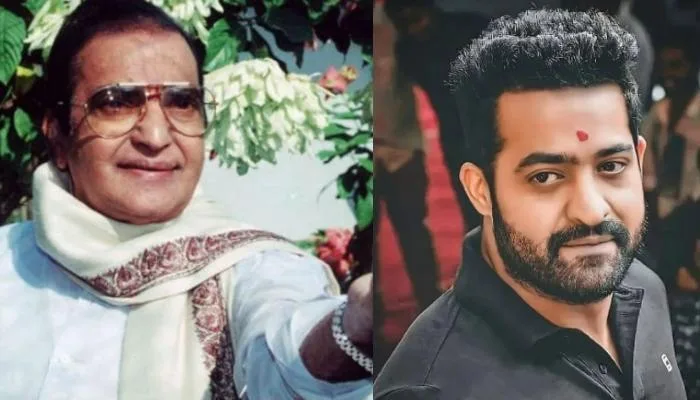
From Harikrishna‘s line come two of the most recognisable figures: Nandamuri Kalyan Ram, an actor and film producer who has built a steady career in Tollywood, and Nandamuri Taraka Rama Rao Jr., popularly known as Jr. NTR (N. T. Rama Rao Jr.), who has become arguably the biggest Telugu film star of his generation. Born on 20 May 1983, Jr. NTR starred in S. S. Rajamouli’s global phenomenon RRR in 2022 and is one of the highest-paid actors in Indian cinema, having been featured in Forbes India’s Celebrity 100 list since 2012. He married Lakshmi Pranathi in 2011, and they have two sons: Abhay Ram and Bhargav Ram.
From Balakrishna‘s line come three grandchildren: Brahmani, his daughter who married Nara Lokesh (the son of Chandrababu Naidu and NTR‘s own daughter Bhuvaneswari, meaning the marriage knits two branches of the Nandamuri family together), Tejaswini, and Mokshagna Teja, a son expected to make his debut in Telugu cinema.
Taraka Ratna, son of Mohana Krishna, is another grandchild who married Alekhya Reddy in 2012. From Jayashankarakrishna‘s family, there are two further grandchildren. Janaki Ram Nandamuri, another grandchild, was a film producer who died in an accident in 2014 and is survived by two sons: Soumithri Prabhakar and Master NTR.
On Bhuvaneswari‘s side, through Chandrababu Naidu, there is Nara Lokesh, a politician who has been a member of the Andhra Pradesh Legislative Assembly. From Purandeswari’s marriage to Daggubati Venkateswara Rao, there are two grandchildren: Hitesh Chenchuram and Nivedita Purandeswari, both of whom are involved in business and social work.
The great-grandchildren of NTR represent the fourth generation of a dynasty that has now spanned a century of Telugu cultural life. The most prominent among them is Devnash Nara, the son of Nara Lokesh and Brahmani, who is Balakrishna‘s daughter. This makes Devnash Nara a great-grandchild of NTR through two separate family lines simultaneously, reflecting the tight interlocking marriages within the Nandamuri family. Jr. NTR‘s sons, Abhay Ram and Bhargav Ram, are also great-grandchildren of NTR Sr., carrying his given name into the fourth generation.
Nandamuri Taraka Rama Rao died having seen his children spread across the widest possible range of human endeavour: cinema, political office, medicine, business, and the quiet private life. The family he built, across two marriages, one extraordinary first wife, and twelve children, became a dynasty that continues to shape the political and cultural character of Andhra Pradesh more than three decades after his passing.
In 2013, Rao was voted the Greatest Indian Actor of All Time in a CNN-IBN national poll conducted on the occasion of the Centenary of Indian Cinema, an honour that placed his name above all others in the history of a film industry that has produced legends across every language and region of the subcontinent.
Net Worth
Nandamuri Taraka Rama Rao, popularly known as NTR, had an estimated net worth of around ₹150 crore at the time of his passing in January 1996. This was approximately $42 million (at the prevailing exchange rate of roughly ₹35.8 per US dollar).
His wealth primarily came from a highly successful five-decade career in Telugu cinema, where he acted in over 300 films, directed and produced several hits, and built significant assets, including film production companies, real estate properties in Hyderabad and other parts of Andhra Pradesh, agricultural lands, and investments accumulated during his peak stardom and political career.
This figure, adjusted for the economic context of the mid-1990s, reflected his status as one of the most influential and prosperous figures in South Indian entertainment and politics, with his family continuing to manage and grow the legacy properties and business interests after his death.
Filmography
Mythological and Iconic Roles
- Mayabazar (1957)
- Bhookailas (1958)
- Sri Venkateswara Mahatyam (1960)
- Sri Krishna Pandaveeyam (1966)
- Lava Kusa (1963) — as Lord Rama
- Nartanasala (1963)
- Daana Veera Soora Karna (1977) — where he famously played three roles: Karna, Duryodhana, and Krishna
These films, along with Pathala Bhairavi, Malliswari, and Mayabazar, are often ranked among the greatest Indian films of all time.
Social, Action, and Other Genres
In the later phase of his career, he excelled in social dramas, action-oriented “Robin Hood”-style roles, and dual-character films. Notable ones include:
- Gundamma Katha (1962)
- Devudu Chesina Manushulu (1973)
- Adavi Ramudu (1977)
- Driver Ramudu (1979)
- Vetagadu (1979)
- Sardar Papa Rayudu (1980)
- Kondaveeti Simham (1981)
- Justice Chowdary (1982)
- Bobbili Puli (1982)
As Director and Producer
NTR founded his own production house, National Art Theatre, in 1953. He directed and produced several films, including:
- Varakatnam (1968/1970) — for which he won the National Film Award for Best Director
- Daana Veera Soora Karna (1977)
- Chanakya Chandragupta (1977)
- Srimadvirat Veerabrahmendra Swami Charitra (1984)
- Brahmarshi Viswamitra (1991)
- Major Chandrakanth (1993)
What People Ask
NOTICE!! NOTICE!! NOTICE!!
At TheCityCeleb, we strive to provide accurate and up-to-date biographies and entertainment news, focusing on celebrities. Our editorial team researches information from reputable sources, including interviews, official statements, and verified media.If you spot an error or have additional details, please contact us at editor@thecityceleb.com. We value your feedback and are committed to maintaining trustworthy content.