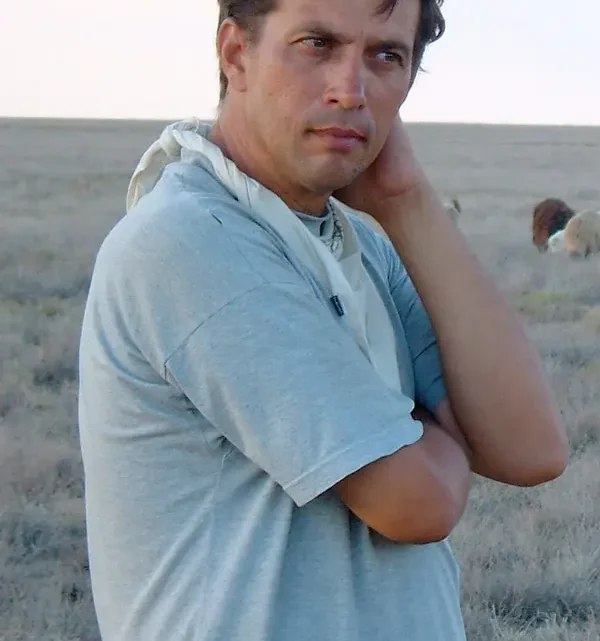
Sergey Dvortsevoy Biography: Height, Career, Age, Net Worth, Parents, Movies, Wife, Movies
Sergey Dvortsevoy is a Kazakhstani-Russian documentary and feature filmmaker renowned for his poetic, observational style that captures the raw texture of rural life.
He transitioned from acclaimed shorts like Bread Day (1998) and In the Dark (2004) to the Cannes-winning feature Tulpan (2008), which took the Un Certain Regard prize.
Trending Now!!:
Dvortsevoy followed with Ayka (2018), earning Best Actress for Samal Yeslyamova at Cannes. His works blend fiction and documentary, exploring isolation, survival, and human connection in the Kazakh steppe, establishing him as a master of slow cinema.
Quick Facts
- Full Name: Sergey Dvortsevoy
- Stage Name: Sergey Dvortsevoy
- Born: August 18, 1962
- Age: 63 years old
- Birthplace: Shymkent, Kazakhstan
- Nationality: Kazakhstani-Russian
- Occupation: Film Director, Screenwriter, Producer
- Height: Unknown
- Parents: Mr. and Mrs. Dvortsevoy
- Siblings: Unknown
- Spouse: Unknown
- Children: Unknown
- Relationship: Unknown
- Net Worth: $1.2 million
Early Life and Education
Sergey Dvortsevoy was born on August 18, 1962, in Shymkent, Kazakhstan, to parents referred to as Mr. and Mrs. Dvortsevoy. He might have had siblings but details about them are unknown.
Dvortsevoy studied aviation engineering in Ukraine before shifting to cinema, graduating from the Moscow Radio and Television Institute in 1988. He later completed the Higher Courses for Scriptwriters and Directors in Moscow in 1992 under documentary masters.
Dvortsevoy identifies with Kazakh-Russian heritage and without publicly known religion.
Career
Sergey Dvortsevoy began his career directing short documentaries in the early 1990s, shooting on 35mm film in remote Russian and Kazakh villages. He released Bread Day in 1998, a 50-minute portrait of pensioners hauling bread across snow, which won the Grand Prix at Cinéma du Réel.
Dvortsevoy followed with Paradise (1995) and Highway (1999), screening at IDFA and Visions du Réel. He moved to feature filmmaking with Tulpan in 2008, shot over 18 months in the Betpak-Dala steppe with non-actors.
The film premiered at Cannes Un Certain Regard, winning top prize and the Asia Pacific Screen Award. Dvortsevoy’s meticulous process involved living among subjects for immersion.
These early works defined his patient, fly-on-the-wall approach.
Dvortsevoy spent a decade developing Ayka (2018), a harrowing portrait of a Kyrgyz migrant in Moscow that premiered in Cannes Competition. Samal Yeslyamova won Best Actress, and the film earned Oscar shortlist consideration for Kazakhstan.
He produced through his company Kinodvor and secured European co-financing. Dvortsevoy taught masterclasses at Moscow Film School and mentored young documentary filmmakers.
His shorts continued to circulate in retrospectives at MoMA and BFI. Dvortsevoy balanced artistic rigor with commercial challenges, often self-funding early stages.
His films consistently explored human struggle with empathy and minimal dialogue.
Sergey Dvortsevoy maintains a selective output, focusing on long-term projects rooted in real lives. He developed The Well in the 2020s, continuing his steppe trilogy.
Dvortsevoy’s works screen in major museum collections and inspire slow-cinema directors globally. He supports Kazakh film preservation through archive donations.
Dvortsevoy’s legacy lies in redefining documentary poetry and elevating Central Asian stories to arthouse prominence.
Social Media
- Instagram Handle: Unknown
- Facebook Handle: Sergey Dvortsevoy
- Twitter Handle: Unknown
Personal Life
Sergey Dvortsevoy keeps his personal life private and has not disclosed details about a spouse or children. He divides time between Moscow and Kazakh villages, where he researches projects for months.
Dvortsevoy enjoys classical music and photography, often documenting subjects off-set.
Filmography
- Paradise (1995)
- Bread Day (1998)
- Highway (1999)
- In the Dark (2004)
- Tulpan (2008)
- Ayka (2018)
Net Worth
Sergey Dvortsevoy has an estimated net worth of $1.2 million. His income derives primarily from festival prizes, European co-production funding, and arthouse distribution deals.
Teaching honoraria and archive sales provide steady revenue. State grants from Russia and Kazakhstan supplement project budgets.
NOTICE!! NOTICE!! NOTICE!!
At TheCityCeleb, we strive to provide accurate and up-to-date biographies and entertainment news, focusing on celebrities. Our editorial team researches information from reputable sources, including interviews, official statements, and verified media.If you spot an error or have additional details, please contact us at editor@thecityceleb.com. We value your feedback and are committed to maintaining trustworthy content.