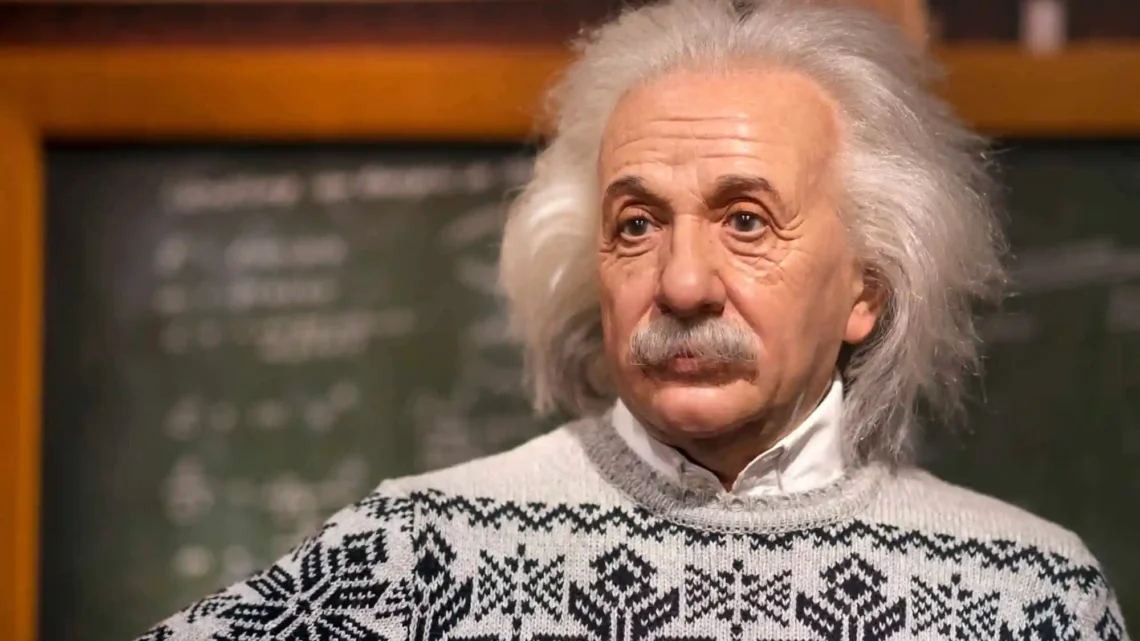
Albert Einstein Biography: Children, Age, IQ, Wife, Net Worth, Parents, Height, Invention, Religion, Death
Biography
Albert Einstein (March 14, 1879 – April 18, 1955) was a German-born theoretical physicist widely regarded as one of the most influential scientists in history.
Born in Ulm, Germany, to a Jewish family, Einstein showed early curiosity in mathematics and science despite being a slow talker as a child. He renounced German citizenship in 1896, studied at the Swiss Polytechnic in Zurich, and graduated in 1900.
Trending Now!!:
In 1905, his “miracle year” while working as a patent clerk in Bern, Switzerland, he published four groundbreaking papers on the photoelectric effect, Brownian motion, special relativity, and mass-energy equivalence (E=mc²).
His 1915 general theory of relativity revolutionized our understanding of gravity, space, and time. In 1921, Einstein received the Nobel Prize in Physics for explaining the photoelectric effect, a cornerstone of quantum mechanics.
Fleeing Nazi persecution, he emigrated to the United States in 1933 and joined the Institute for Advanced Study in Princeton, becoming a U.S. citizen in 1940. A pacifist and advocate for civil rights, he remained politically active until his death in Princeton, New Jersey, at age 76.
Einstein‘s work transformed modern physics, and his name has become synonymous with genius.
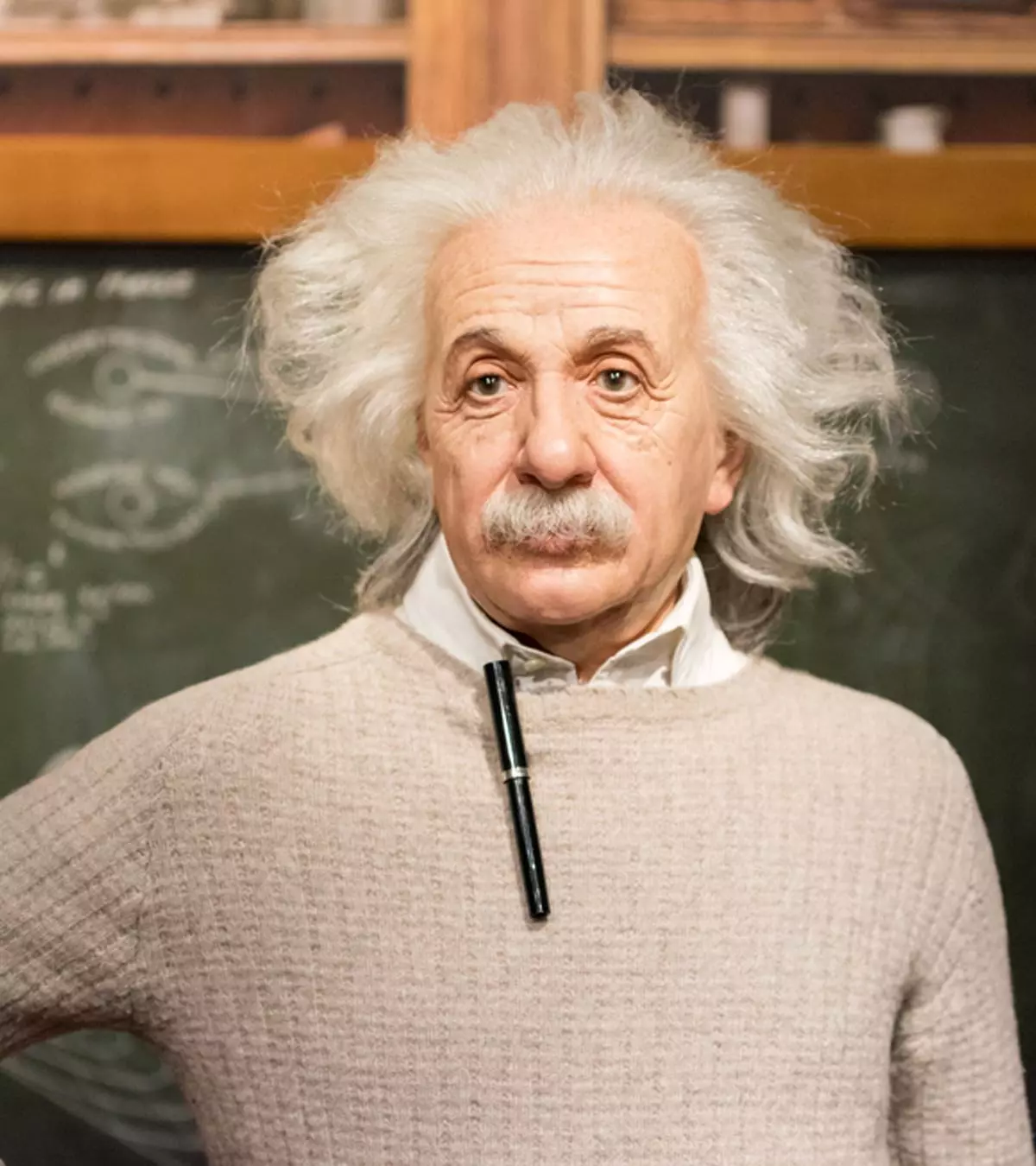
| German theoretical physicist | |
| Albert Einstein | |
|---|---|
 | |
| Wiki Facts & About Data | |
| Real Name: | Albert Einstein |
| Born: | 14 March 1879 (age 76 years old) |
| Place of Birth: | Ulm, Germany |
| Died: | 18 April 1955 (age 76 years), Princeton, New Jersey, United States |
| Nationality: | American, Swiss, German, Weimar, Prussian |
| Education: | University of Zurich (1905), ETH Zürich (1897–1900), Alte Kantonsschule Aarau, Luitpold-Gymnasium, Luitpold Gymnasium |
| Height: | 173 cm |
| Parents: | Hermann Einstein, Pauline Einstein |
| Siblings: | Maria “Maja” Einstein |
| Spouse: | Elsa Einstein (m. 1919–1936), Mileva Marić (m. 1903–1919) |
| Girlfriend • Partner: | Marie Winteler, Margarita Konenkova |
| Children: | Eduard Einstein, Lieserl Einstein, Hans Albert Einstein |
| Occupation: | Theoretical Physicist |
| Net Worth: | $1 million-$1.5 million (USD) |
Early Life & Education
Albert Einstein was born on 14 March 1879 in Ulm, in the Kingdom of Württemberg, German Empire (present-day Baden-Württemberg, Germany). He was born into an Ashkenazi Jewish family that was entirely secular and non-observant.
Although his parents had him circumcised according to Jewish tradition, they did not practice religious customs and identified culturally rather than religiously. Einstein himself received no formal religious education in childhood and later described his early outlook as largely irreligious.
His father, Hermann Einstein (1847–1902), was a salesman and electrical engineer who co-owned an electrochemical business. His mother, Pauline Einstein (née Koch, 1858–1920), came from a well-off Jewish family and was a talented pianist who introduced young Albert to music.
Einstein had one younger sister, Maria “Maja” Einstein (born 18 November 1881 in Munich; died 1951), and the two remained very close throughout their lives. Six weeks after his birth, the family moved to Munich. From age five to nine, he attended the Catholic elementary school Petersschule in Munich.
At age eight, he transferred to the Luitpold Gymnasium (now Albert-Einstein-Gymnasium), where he studied until 1894. That year, his parents relocated to Milan and then Pavia, Italy, for business reasons, and 15-year-old Albert left the Gymnasium without graduating.
He then completed his secondary education at the progressive Cantonal School (Aargau Gymnasium) in Aarau, Switzerland, from 1895 to 1896, living with the Winteler family during that time.
In October 1896, he enrolled at the Swiss Federal Polytechnic School (later ETH Zurich) to study mathematics and physics, graduating with a teaching diploma in 1900.
Career
Albert Einstein started his career after graduating from the Swiss Federal Polytechnic in Zurich in 1900 with a teaching diploma in mathematics and physics. Since he could not find an academic job right away, he worked as a technical assistant at the Swiss Patent Office in Bern starting in June 1902.
This job gave him financial security and time to think independently. While at the patent office from 1902 to 1909, Einstein did some of his most important early work. In 1905, often called his “miracle year,” he published four major papers on the photoelectric effect, Brownian motion, special relativity, and the mass-energy equivalence E=mc².
That same year, he earned his PhD from the University of Zurich with a dissertation on molecular dimensions. In 1908, Einstein became a lecturer at the University of Bern. The next year, he left the patent office to become an extraordinary professor at the University of Zurich.
He then briefly taught at Charles University in Prague before returning to Zurich as a full professor at ETH Zurich. In 1914, Einstein moved to Berlin for a research position with the Prussian Academy of Sciences and a professorship at the University of Berlin, where he had few teaching duties.
He also became director of the Kaiser Wilhelm Institute for Physics in 1917, a position he held until 1933. While in Berlin, he completed his general theory of relativity in 1915, which changed how people understood gravity, space, and time.
The theory was confirmed during a solar eclipse in 1919, making him famous worldwide. He served as president of the German Physical Society from 1916 to 1918 and received the Nobel Prize in Physics in 1921 (awarded in 1922) for his explanation of the photoelectric effect, which was important for quantum theory.
As a well-known Jew and pacifist, Einstein faced growing antisemitism and political danger in Germany after the Nazis took power in 1933. He gave up his German citizenship, moved to the United States, and joined the new Institute for Advanced Study in Princeton, New Jersey, as a professor of theoretical physics.
This position had no teaching duties, so he could focus on research. He became a U.S. citizen in 1940 and remained at the Institute until his death in 1955. In his later years, Einstein continued to work in theoretical physics, including efforts to develop a unified field theory combining gravity and electromagnetism, though he was not successful.
He also spoke out for peace, civil rights, nuclear disarmament, and Zionism, and he often debated aspects of quantum mechanics, especially with Niels Bohr.
Social Media
- Wikipedia: Albert Einstein
- Instagram: Albert Einstein (@alberteinstein)
- Twitter: Albert Einstein (@AlbertEinstein) / X
Personal Life
Albert Einstein lived to the age of 76, passing away on 18 April 1955 in Princeton, New Jersey. He was married twice.
His first wife was Mileva Marić, a Serbian physicist and former classmate at ETH Zurich, whom he married in January 1903; the couple divorced in February 1919 after years of growing estrangement.
Just months later, in June 1919, Einstein married his first cousin, Elsa Löwenthal (née Einstein), with whom he remained until her death in December 1936; he never remarried. All three of his children came from his first marriage: daughter Lieserl Einstein, born in 1902 (whose fate remains unclear, likely an early death or adoption), and sons Hans Albert Einstein (1904–1973) and Eduard Einstein (1910–1965).
He had no children with Elsa. Einstein stood approximately 5 feet 8 inches (173 cm) tall. In terms of dating history, he had an early romance with Marie Winteler while living with her family in Aarau, Switzerland, in 1895–1896, before beginning a passionate relationship with Mileva Marić as university students around 1899.
He began seeing Elsa while still married to Mileva, and in his later years, after becoming widowed, he had several close romantic involvements, most notably a well-documented affair with Margarita Konenkova in the mid-1940s.
Cause of Death
Albert Einstein died on April 18, 1955, at the age of 76, at Princeton Hospital in Princeton, New Jersey, United States. The cause of death was internal bleeding from a ruptured abdominal aortic aneurysm—a condition he had lived with for years after a previous surgical reinforcement in 1948.
On April 17, the aneurysm burst, causing severe pain; doctors offered emergency surgery, but Einstein refused, reportedly saying he had done his part and wanted to go gracefully. He passed away peacefully in his sleep early the next morning, speaking a few final words in German that the nurse could not understand.
His body was cremated shortly after, with ashes scattered in an undisclosed location (though his brain was controversially removed without family permission for scientific study). His death marked the end of an era, as the world mourned the loss of one of history’s greatest minds.
IQ (Intelligence Quotient)
Regarding IQ, Albert Einstein never took a formal IQ test, so there is no official or measured score. Estimates based on his extraordinary achievements, biographical data, and historical comparisons typically place his IQ around 160—well into the “genius” range (generally 140+).
Some older or sensationalized claims have suggested higher figures (up to 190–207), but these are speculative and lack reliable evidence.
Modern analyses emphasize that IQ tests measure specific cognitive skills and do not fully capture Einstein‘s unique creative and intuitive genius in theoretical physics. His legacy stems far more from revolutionary contributions like relativity and quantum foundations than from any numerical score.
Net Worth
Albert Einstein was not wealthy by modern standards and lived a modest, unmaterialistic life focused on science rather than finances. At the time of his death on 18 April 1955, his estate was valued at approximately $1 million to $1.5 million in 1955 dollars (sources vary slightly, with some reliable estimates around $1.2 million). Adjusted for inflation, this equates to roughly $12–15 million in today’s dollars.
His income primarily came from academic salaries, most notably around $10,000–$15,000 annually (equivalent to about $180,000–$250,000 today) at the Institute for Advanced Study in Princeton from 1933 onward, plus royalties from publications, lectures, and his 1921 Nobel Prize money (about $32,000 then, or roughly $500,000–$760,000 adjusted).
He owned no major patents on his theories, as they were fundamental scientific contributions rather than commercial inventions. In his will, Einstein bequeathed his literary rights, manuscripts, and royalties (including future licensing of his name and image) to the Hebrew University of Jerusalem.
This has generated tens of millions annually for the university posthumously (often $10–$20 million in recent years from endorsements and merchandise), far exceeding his lifetime wealth, though his direct descendants received no financial benefit from it.
What People Ask
NOTICE!! NOTICE!! NOTICE!!
At TheCityCeleb, we strive to provide accurate and up-to-date biographies and entertainment news, focusing on celebrities. Our editorial team researches information from reputable sources, including interviews, official statements, and verified media.If you spot an error or have additional details, please contact us at editor@thecityceleb.com. We value your feedback and are committed to maintaining trustworthy content.