Is AliExpress Legit? A Complete 2026 Buyer’s Guide to Shopping Safely Online
If you’ve ever scrolled through TikTok or YouTube hauls and thought, “Wait—can I actually trust AliExpress?”, you’re not alone.
AliExpress has become one of the biggest online marketplaces in the world, known for its unbelievably low prices and endless range of products—from viral gadgets to celebrity-style outfits. But with deals that look too good to be true, many shoppers are asking the same question: is AliExpress legit or a scam?
Trending Now!!:
In this 2026 buyer’s guide, we’ll uncover how AliExpress really works, what makes it trustworthy (or not), and how to shop safely without falling for fakes. Whether you’re hunting for budget tech or influencer-approved fashion, this guide will help you decide if AliExpress deserves a spot in your cart.
Understanding AliExpress: What It Is and How It Works

AliExpress is a global e-commerce platform owned by Alibaba Group, launched in 2010. It connects Chinese sellers directly with international buyers, offering millions of products at factory-level prices.
Unlike Amazon, AliExpress doesn’t stock products in warehouses. Instead, it operates as a marketplace—a digital bazaar where independent sellers list their own items. That’s why you can find ten identical phone cases at ten different prices.
The platform became wildly popular for one simple reason: affordability. Shoppers can buy trending clothes, tech gadgets, or home décor for a fraction of Western retail prices.
However, this low-cost freedom comes with trade-offs—especially around seller reliability, shipping time, and product authenticity.
Is AliExpress Legit or a Scam? Let’s Break Down the Facts
Let’s get this out of the way: AliExpress is a legitimate platform, not a scam. It’s owned by one of the largest tech companies in the world, publicly traded and regulated under Chinese and international business laws.
That said, some sellers on AliExpress can be questionable, just like on eBay or Amazon Marketplace. The platform acts as a middleman—it provides the marketplace and payment system, but the responsibility for product quality and delivery rests with the seller.
So yes, AliExpress is legit, but not every seller on it is trustworthy. If you’d like a deeper, step-by-step analysis of how safe the platform truly is and what red flags to avoid, check out this detailed guide on is AliExpress legit.
Think of it like a digital flea market: there are genuine merchants offering real deals, and there are sketchy ones too. Your job as a buyer is to spot the difference.
User Reviews and Consumer Reports
Thousands of verified reviews confirm that most AliExpress transactions go smoothly. Consumers report successful deliveries, reasonable quality, and massive savings—especially when buying smaller items like phone accessories or fashion jewelry.
On Trustpilot, AliExpress currently holds an average rating of 3.9/5 with over 120,000 reviews. The most common praise is affordability; the most frequent complaint is long shipping times.
The verdict from most users? It’s worth it if you’re patient and careful.
AliExpress Buyer Protection: How It Keeps You Safe
AliExpress isn’t a free-for-all. It’s backed by an internal Buyer Protection system, designed to give shoppers confidence.
Here’s how it works in practice: when you buy an item, your money doesn’t immediately go to the seller. Instead, AliExpress holds your payment in escrow until you confirm the product has arrived and matches its description.
If something goes wrong—say, your item doesn’t arrive, or it’s a completely different product—you can open a dispute within a set timeframe. If your claim is valid, AliExpress will issue a refund or replacement.
This structure protects you from outright fraud, which is why millions of people continue to use the platform confidently.
Spotting Fake Sellers and Counterfeit Products
Here’s where things get tricky. While AliExpress has cracked down on counterfeit goods, fake sellers still exist—especially in trending categories like sneakers, makeup, and branded electronics.
A few signs to look out for:
- Unrealistic prices: If a “new iPhone” costs $80, it’s fake.
- No verified buyer reviews: Real sellers usually have dozens or hundreds.
- Generic store names: “SuperDeal Tech Store 003” is a red flag.
- Vague descriptions and blurry photos: Legit sellers take product presentation seriously.
When in doubt, check the seller’s rating percentage (above 95% is good), number of sales, and buyer comments with photos. The review section is your best lie detector.
AliExpress Shipping, Delivery Times, and Customs Tips
If there’s one universal truth about AliExpress, it’s this: shipping takes time.
Because most products ship directly from China, expect anywhere from 2 to 6 weeks for standard delivery. However, many sellers now offer AliExpress Standard Shipping, which includes tracking and improved delivery times.
For faster results, look for items marked as “Ships from US/UK/EU”—these are stocked in local warehouses and arrive in days, not weeks.
Pro tip: avoid ordering last-minute gifts unless you’re okay with them arriving after the event.
Is AliExpress Legit and Safe for Payments and Personal Data?
Yes, AliExpress is generally safe for payments, thanks to encryption and secure transaction systems. You can use credit cards, debit cards, or digital wallets like PayPal (in supported countries).
The safest method is to pay directly through AliExpress’s checkout—never send money off-platform or communicate through unofficial channels.
AliExpress also doesn’t store your full payment details permanently. That reduces the risk of data theft.
Just like any e-commerce site, basic security hygiene applies: use strong passwords, avoid public Wi-Fi during checkout, and always verify the URL before entering card details.
AliExpress vs. Temu vs. Shein: Which Is Safer in 2026?
This is where things get interesting. Temu, Shein, and AliExpress all dominate the “affordable global shopping” scene—but each caters to slightly different audiences.
- AliExpress is a marketplace, connecting you directly with independent sellers.
- Temu is more curated, often controlling its inventory and logistics.
- Shein focuses solely on fast fashion, with centralized product sourcing.
In terms of safety:
- Temu tends to have faster shipping and fewer seller disputes.
- AliExpress wins in product diversity and global presence.
- Shein dominates in trend-driven clothing but faces sustainability scrutiny.
If you value variety and don’t mind longer wait times, AliExpress remains a strong choice—especially for niche items that aren’t available elsewhere.
Pros and Cons of Shopping on AliExpress
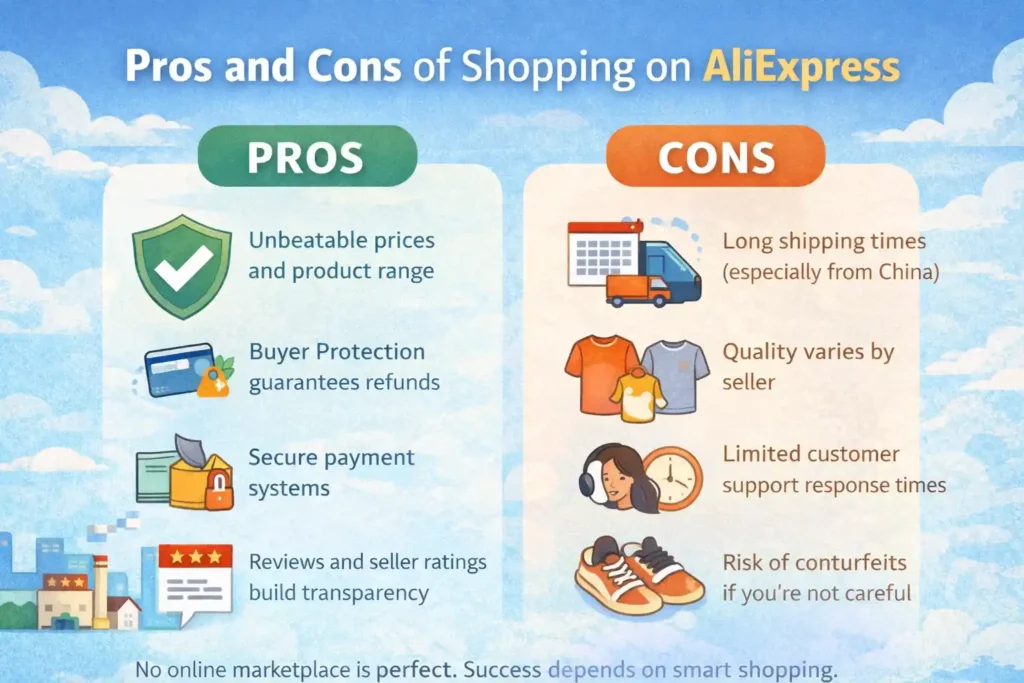
Let’s be real: no online marketplace is perfect.
Pros:
- Unbeatable prices and product range
- Buyer Protection guarantees refunds
- Secure payment systems
- Reviews and seller ratings build transparency
Cons:
- Long shipping times (especially from China)
- Quality varies by seller
- Limited customer support response times
- Risk of counterfeits if you’re not careful
So, while AliExpress is legit, it’s not foolproof. Success depends largely on how smartly you shop.
Expert Tips for Safe and Smart Shopping on AliExpress
Here’s how to make the most out of AliExpress—without regrets:
- Always read reviews (and look for photos). Words can lie, images rarely do.
- Filter by top-rated sellers (4.7+ stars).
- Use AliExpress Standard Shipping for tracking reliability.
- Avoid branded items that seem suspiciously cheap.
- Start small—test one or two items before making bulk orders.
- Don’t panic if shipping is slow. Most delays are logistical, not scams.
Following these simple habits can turn AliExpress from a gamble into a goldmine of savings.
Final Verdict: Should You Trust AliExpress in 2026?
Here’s the honest answer: AliExpress is legit—but it’s not magic.
It’s a real platform backed by one of the world’s biggest e-commerce companies, offering incredible value for money. But as with any open marketplace, your experience depends on your judgment.
If you expect luxury quality for pocket-change prices, you’ll be disappointed. But if you’re a smart shopper—patient, cautious, and willing to research—AliExpress can save you hundreds of dollars a year.
For budget-conscious buyers, it’s still one of the most accessible ways to explore global products safely.