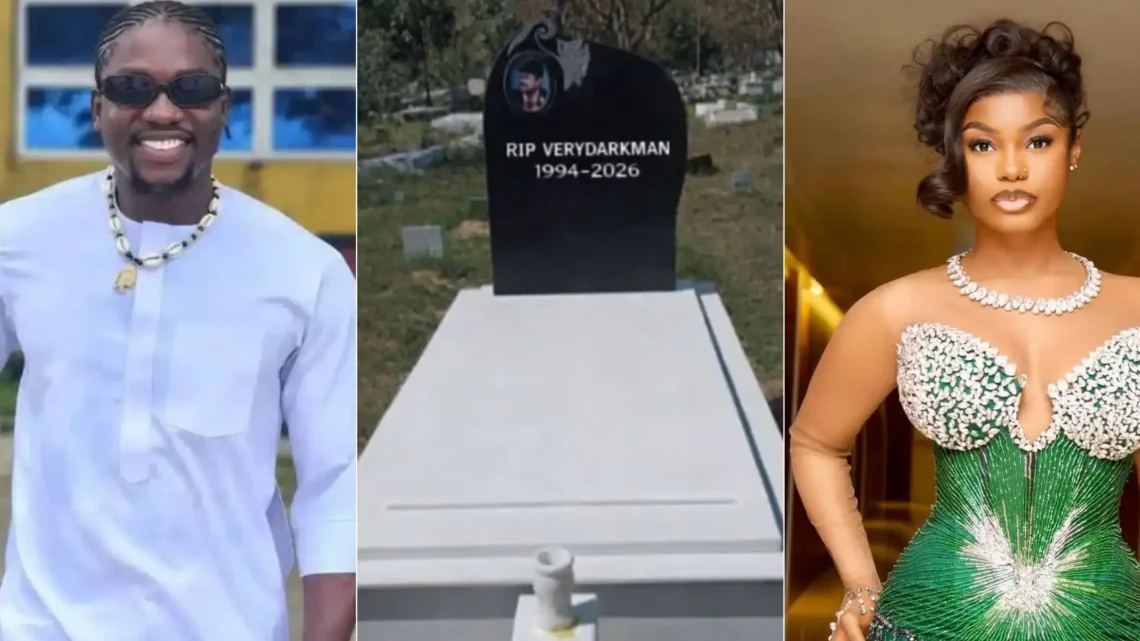
Is VeryDarkMan Responsible for the King Mitchy ‘Death’?
Mukoro Mitchelle, the Nigerian influencer and philanthropist widely known online as King Mitchy, was reported dead on Saturday in a post published to her verified social media account, a claim that unraveled within hours after a hospital in Abuja said she had never been admitted, plunging followers into a day of confusion and debate over misinformation, mental health and the volatility of online activism.
The announcement, attributed to her management and shared on Instagram, said she had died after a critical medical emergency and that doctors had been unable to revive her. Written in elegiac language, the statement described her as “full of life, light, and dreams.”
Trending Now!!:
Condolences spread rapidly across social platforms, including TikTok, where she had cultivated a large following through philanthropic campaigns, livestream commentary, and personal storytelling.
Almost immediately, speculation turned to a widely circulated livestream clip in which she was said to have ingested a household cleaning substance while visibly distressed. Online observers linked the episode to an escalating feud with the activist and social commentator VeryDarkMan, whose recent exchanges with her had centered on accusations regarding charitable donations, claims of harassment, and counterclaims about accountability within Nigeria’s influencer-driven activism ecosystem.
Digital news outlets moved quickly to memorialize her. One widely shared report from Legit.ng echoed the management statement and attributed her reported death to the alleged ingestion of a toxic substance. In the absence of independent confirmation, such reports nonetheless shaped public perception, illustrating how swiftly narratives can solidify in Nigeria’s fast-moving digital news environment.
By late afternoon, the story shifted sharply. Prime Care Hospitals released a statement denying any involvement in her treatment. “The alleged death of Miss Mukoro Mitchelle at our facility is false,” the hospital said, adding that she had never been a patient there and that it was cooperating with authorities to trace the origin of the claim. The denial introduced a stark contradiction and raised questions about whether the initial announcement had been erroneous, premature, or deliberately misleading.
Uncertainty deepened as some users pointed to signs of continued activity on her social media accounts after the supposed time of death, while others claimed to have received private reassurances that she was alive but emotionally distressed. By evening, no official medical documentation or family statement had emerged, leaving the public to reconcile conflicting claims in real time.
Ms. Mitchelle, who built a reputation in Nigeria as both a philanthropist and a polarizing online personality, has long occupied the intersection of charity, controversy, and viral spectacle. Her projects, often framed as grassroots interventions for vulnerable communities, helped cultivate a devoted following even as critics accused her of theatrics and insufficient transparency.
The clash with VeryDarkMan stressed broader tensions within Nigeria’s digital activism sphere, where influencer-led advocacy can blur the boundaries between genuine social work, public accountability, and personal branding.
By nightfall, no independent authority had confirmed her death. The hospital’s categorical denial, combined with the absence of corroboration from relatives or officials, suggested that the episode might represent either a grave misunderstanding or a cautionary example of how online narratives can outrun verifiable facts. For many observers, the spectacle evolved from mourning to skepticism, with some warning that such confusion could erode trust in genuine emergency disclosures by public figures.
The episode also revived discussion about the psychological toll of sustained online conflict. Mental health advocates noted that high-profile feuds performed before large audiences can intensify distress and pressure people to make increasingly dramatic gestures. Media analysts pointed to the speed with which an unverified claim traveled from a single post to a national talking point, underscoring the fragile boundary between information and rumor in a hyperconnected public sphere.
As of Saturday evening, Ms. Mitchelle’s precise condition remained unclear, even as the day’s conflicting claims revealed the vulnerabilities of a digital culture in which announcements, denials and speculation can coexist, each asserting authority in the absence of confirmed fact.