Ogun Police Signal Possible Charges After Mirabel’s Rape Claim Is Questioned
For more than a week, Nigeria’s internet has been gripped by a story that began with raw emotion and ended in confusion and official scrutiny, raising unsettling questions about social media, truth, and the fragility of public trust.
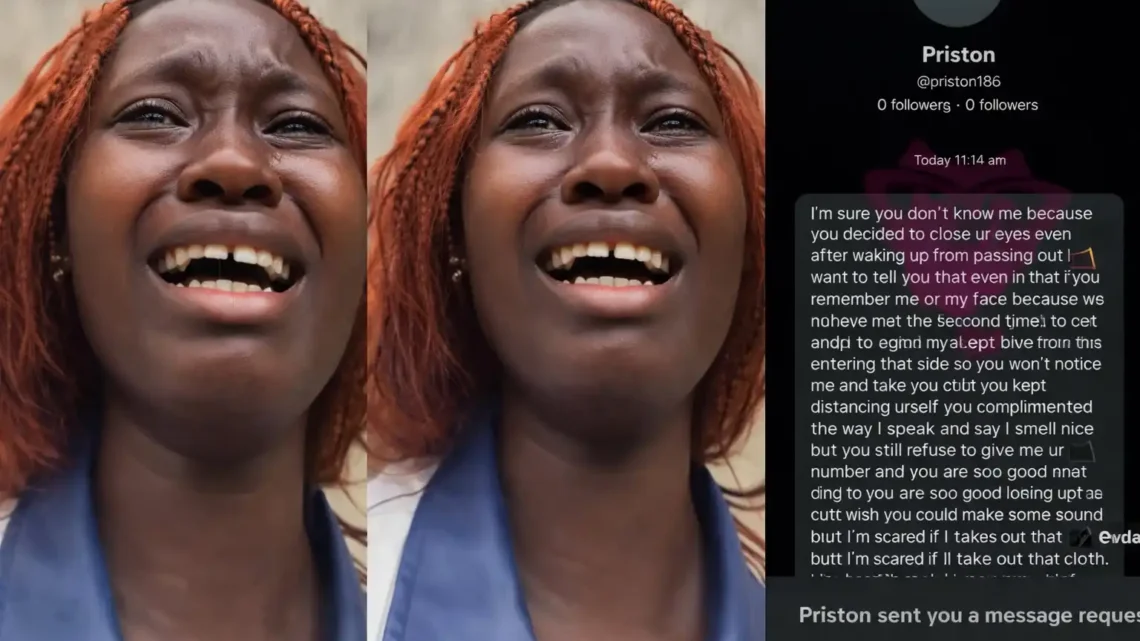
In early February, a young woman known online as Mirabel posted a TikTok video that would spread across the country at astonishing speed. In a voice trembling with anguish, she recounted what she said had been a brutal assault: that a stranger had forced his way into her apartment in the Ogijo area of Ogun State, raped her, and later taunted her with a message detailing the violence.
Trending Now!!:
The video quickly went viral. Hashtags calling for justice and condemning sexual violence trended on multiple platforms, and Nigerian civil-society figures and online activists amplified her account. Major news outlets picked up the story. To many, it seemed another instance in which the internet — long derided as a repository of rumor and spectacle — had become a vehicle for visibility and solidarity with a survivor.
Within days of the first video’s spread, officials from the Lagos State Domestic and Sexual Violence Agency and the Lagos State Police had issued public statements saying they were aware of the case and attempting to make contact with the woman who had posted the video.
The police said the matter had been referred to their gender unit and urged anyone with credible information to come forward. But that apparent eagerness to act was accompanied by an unusual caveat: at the time, authorities had not confirmed that they had actually located her.
Then, as the story unfolded beyond the initial shock and sympathy, another development caught many Nigerians off guard: reports began circulating that the young woman’s account might not be true in all its particulars.
Multiple news organisations in Nigeria, citing unnamed police sources and a recording of a conversation that surfaced online, reported that during a phone call with a prominent social media influencer, the woman acknowledged that parts of her original account were inaccurate. In widely circulated audio, she was heard apologising and using language that some interpreted as an admission that elements of her story were fabricated.
PUNCH Metro and other outlets reported that Ogun State police planned to arrest and prosecute her on suspicion of making a false report once she was discharged from the hospital. Those accounts quoted police sources saying officers were monitoring her situation and would take her into custody after she received medical treatment. One commenter quoted in the reporting said, “Once she is discharged, she will be taken into custody, and a charge will be prepared against her for trial,” with the aim of deterring others from making false allegations.
According to those same reports, during the exchange with the influencer — widely attributed online to the figure Martins Vincent Otse, also known as VeryDarkMan — the woman expressed regret and said she was “very sorry,” language that some interpreters saw as an admission that she had created the narrative that had triggered the viral storm.
Some sources also claimed she acknowledged having created an account she had presented as belonging to her alleged attacker, and referenced mental distress and drug use.
It is important to note that Nigerian police officials, when contacted by local media outlets, have also denied that she has been arrested and have stressed that she is currently receiving treatment. In statements to the press, Ogun State police spokespeople emphasised that she had voluntarily presented herself at a police division to lodge her complaint, was taken to hospital because she was “not stable enough to be interviewed,” and that she had not been formally taken into custody. One official was quoted as saying, “We did not arrest her, so she is not in custody,” and that the investigation was ongoing and would be evidence-based.
These conflicting versions — police sources reported by news outlets on the one hand, and official denials on the other — reflect the wider complexities embedded in the story. The original allegation of a violent attack spoke to widespread concerns about sexual violence in Nigeria, a problem long documented by human-rights groups.
Survivors have often faced social stigma, police indifference, and high barriers to justice, which is why many felt compelled to come forward publicly in a digital age where silence once reigned. But publicising trauma on social media also exposes survivors to intense scrutiny, online speculation, and, in contested cases, accusations of fabrication that can do further harm.
The posts attributed to the young woman included screenshots of messages she said were sent by her alleged attacker from an account called priston186. In the screenshots shared early in the saga, the sender claimed to know her, described prior encounters, and asserted that his father’s wealth would protect him from consequences, concluding with a line that read: “I will come back for you in 4–5 years time and date you… I love you, don’t see me as a bad person, okay.” Those screenshots were widely circulated and served as a catalyst for much of the public outrage that followed.
After the reports of her alleged recantation surfaced, reactions were swift and sharply divided. Some Nigerians expressed relief that authorities appeared to be holding her accountable, arguing that false allegations undermine the credibility of all survivors and can erode trust in legitimate claims. Others warned against rushing to judgment, noting that the emotional dynamics of trauma and mental health are complex and that public interpretation of private conversations can be misleading.
Statistics and interviews with experts on gender-based violence suggest that false allegations remain rare globally, including in Nigeria, though they are seized upon with disproportionate fervour when they occur.
Human-rights advocates and domestic-violence counsellors have reiterated that every allegation deserves careful, evidence-based investigation, and have cautioned against weaponising claims of false reporting to discredit broader advocacy against sexual violence.
At the same time, law-enforcement authorities are obliged to address all reports through established legal processes. Making a false report of a serious crime can itself carry legal penalties in Nigeria.
Whether the materials circulating online — including the recorded conversation and the messages attributed to the alleged attacker — will form the basis for formal charges remains unclear. Police have reiterated that their investigation is ongoing and that they will issue official updates in due course.
The episode has also fuelled a broader national conversation about social media culture and the responsibilities it imposes on both individuals and institutions.
In a country where smartphones and data have dramatically expanded access to public discourse, collective reactions can build powerful movements, but they can also amplify unverified claims with real consequences. The question of how to balance empathy for possible victims with the need for thorough fact-finding is one that legal scholars and social commentators are now grappling with in the Nigerian context.
For now, the woman at the centre of the controversy remains a figure shrouded in conflicting narratives — someone whose initial portrayal as a potential survivor drew sympathy and outrage, and whose subsequent statements, as reported online, have prompted official scrutiny. The Lagos and Ogun State police commands have both acknowledged their involvement, but have offered differing emphases on custody and charges.
What is clear is that the public appetite for rapid judgment has collided with the slower, more methodical pace of legal process. The story continues to unfold, with Nigerians watching closely as authorities, civil-society advocates, and the woman herself navigate the fraught intersection of trauma, truth, and accountability in the age of social media.