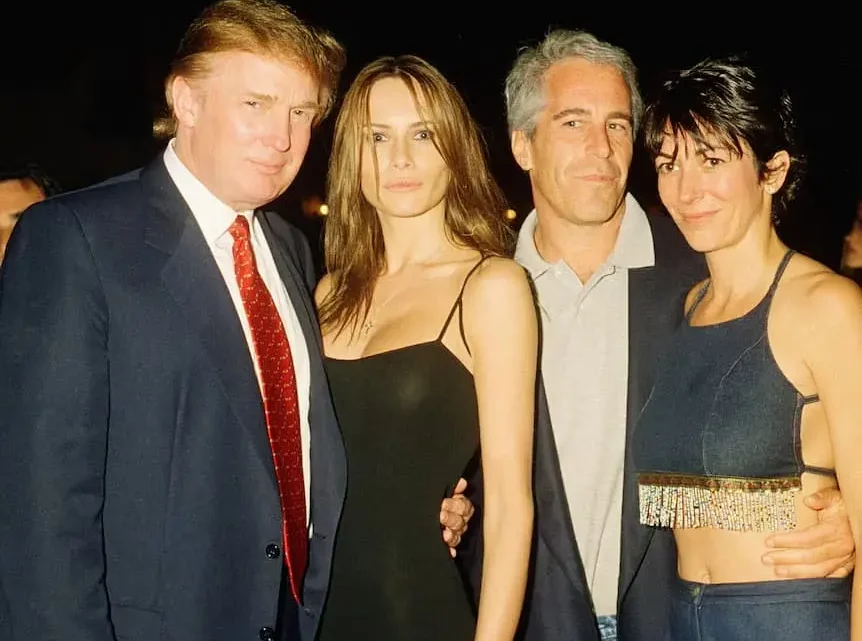
The Epstein Files Prove Exposure Is Not Accountability
The latest public release of documents tied to Jeffrey Epstein has reopened one of the most troubling chapters in modern American justice, not because it delivers dramatic new revelations, but because it once again exposes how proximity to power can coexist with accountability gaps that remain unresolved years after Epstein’s death.
The files, released under court order and transparency statutes, consist of emails, contact lists, travel records, deposition excerpts, and internal memoranda assembled over decades of investigations into Epstein’s activities.
Trending Now!!:
Together, they form a fragmented but unsettling portrait of a man whose social reach extended into the highest levels of politics, finance, royalty, academia, and entertainment.
Epstein, the financier who died in federal custody in 2019 while awaiting trial on sex trafficking charges, cultivated an image of intellectual curiosity and elite access. The documents show how that image functioned less as a disguise than as an operating system.
Names appear repeatedly across the records, not always in incriminating contexts, but often in ways that demonstrate how normalized Epstein’s presence was within elite circles long after he had pleaded guilty in 2008 to soliciting prostitution from a minor. That earlier conviction, which resulted in an extraordinarily lenient plea deal, looms over the documents like an unanswered question: how did someone already known to law enforcement continue to move so freely among the powerful?
Among the individuals whose names appear in various forms throughout the files are Ghislaine Maxwell, Epstein’s longtime associate, who was convicted in 2021 of helping facilitate his abuse of underage girls. Her correspondence and scheduling records form a backbone of the archive, illustrating how Epstein’s operations were managed and how access was brokered.
Prince Andrew, Duke of York, is also referenced in connection with Epstein’s social world, a relationship that ultimately led to a civil settlement with Virginia Giuffre, one of Epstein’s accusers, and the prince’s withdrawal from public royal duties.
Bill Clinton, the former U.S. president, appears in flight logs and contact records tied to Epstein’s travel and philanthropic activities; Clinton has acknowledged limited contact and denied any wrongdoing. Donald Trump, now president, is referenced in social contexts connected to Epstein’s time in Florida and New York; Trump has said he severed ties with Epstein years before Epstein’s arrest and has denied involvement in criminal conduct.
Other names surface in less prominent but still notable ways. Alan Dershowitz, the legal scholar, appears in flight records and legal correspondence; he has consistently denied allegations made against him and has not been charged.
Kevin Spacey is listed in travel records; no allegations tie him to Epstein’s crimes. The violinist Itzhak Perlman appears in connection with cultural or academic travel. Les Wexner, the billionaire retail magnate, is documented extensively due to his former financial relationship with Epstein, which he has said ended once he became aware of Epstein’s misconduct.
Jean-Luc Brunel, the French modeling agent accused of procuring girls for Epstein, is referenced in recruitment-related material; Brunel died in custody in France before trial. Sarah Kellen, identified as an Epstein assistant, appears repeatedly in scheduling and logistics records and was previously named as an unindicted co-conspirator in Epstein’s 2008 agreement.
The presence of these names has fueled intense public reaction, but the documents themselves are careful, often frustratingly so, in what they do and do not establish. Many references are logistical rather than descriptive, names listed without context, initials without explanation, emails stripped of attachments, and travel logs that confirm proximity but not purpose.
Prosecutors and courts have emphasized that appearance in these materials does not constitute evidence of criminal activity. Still, the accumulation of elite contacts across decades, even after Epstein’s first conviction, raises questions that the documents alone cannot answer.
The files also reveal the cost of disclosure when it is done without sufficient care. Early releases exposed identifying details of victims, prompting swift backlash from advocates and survivors who argued that transparency had once again come at their expense.
Federal officials moved to re-redact portions of the archive, acknowledging failures in safeguarding privacy. The incident underscored a recurring tension in the Epstein saga: the public demand for accountability versus the ethical obligation to protect those who were exploited.
Politically, the release has been absorbed into an already polarized environment. Lawmakers from both parties have accused institutions of selective transparency, arguing that key investigative materials, including full interview transcripts and financial tracing records, remain sealed or heavily redacted. Others have warned that partial disclosure risks feeding conspiracy theories rather than resolving them, particularly when documents are read without legal or factual context.
What emerges from the Epstein files is not a single hidden list or a neat hierarchy of guilt, but a pattern of institutional failure. Epstein did not operate in secrecy; he operated in plain sight, enabled by wealth, access, and a legal system that repeatedly chose restraint over confrontation.
The documents show a man who understood the value of association, who embedded himself in environments where scrutiny was diluted by status and where questions were deferred rather than pressed.
Years after Epstein’s death, the central question remains unresolved. It is not simply who knew him, or who appears in his records, but why the mechanisms designed to stop him failed for so long, and why accountability has remained so narrow.
The files, voluminous but low-resolution, do not close the case. They instead reinforce a more uncomfortable truth: that the story of Jeffrey Epstein is less about a single criminal than about a system that repeatedly looked away.