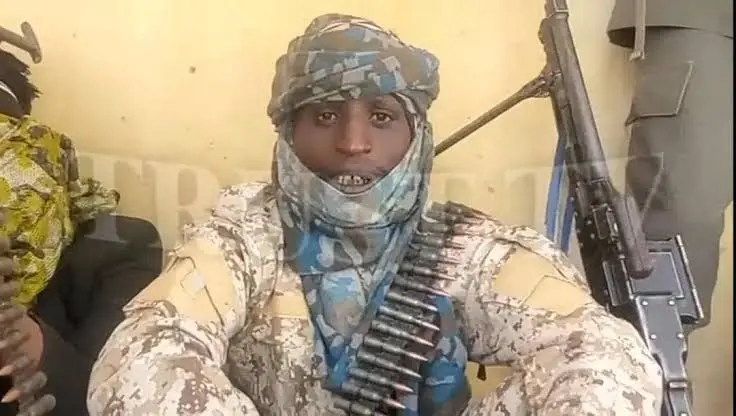
When the State Is Absent, the Bandits Govern: The Rise of Bello Turji’s Shadow Rule
By nightfall on January 12, the village of Tidibale in Nigeria’s Sokoto State was already dissolving into darkness. Then the gunmen arrived.
Heavily armed fighters loyal to Bello Turji, one of the country’s most feared bandit leaders, stormed the rural community in Isa Local Government Area and delivered a chilling ultimatum: residents had 24 hours to leave their homes or face deadly consequences. Families fled almost immediately, gathering children and a few belongings, slipping into nearby villages under the cover of night.
Trending Now!!:
Videos posted on social media by the security analyst Bakatsine, known online as @DanKatsina50, captured scenes of panic and exhaustion—men balancing sacks on their heads, women guiding children through unlit paths, entire households abandoning everything familiar. “It was a forced evacuation,” one local source said. “Not by government order, but by terror.”
The raid in Tidibale came only days after another attack attributed to Turji’s group in nearby Bargaja village, also in Isa L.G.A., where at least three people were killed during a nighttime assault around January 10 or 11. Together, the incidents underscore a pattern that security analysts say is becoming increasingly deliberate: the systematic clearing of villages through threats, killings, and forced displacement.
“Turji is not just raiding anymore,” a regional security researcher said. “He is redrawing the map. He is turning inhabited communities into empty territory he can control.”
Once a little-known cattle herder from Shinkafi in Zamfara State, Bello Turji has become a central figure in the violent criminal networks that plague Nigeria’s northwest. Born in 1994 and with little formal education, he rose through the ranks of armed groups that began as cattle-rustling gangs and evolved into powerful bandit organizations controlling vast forested areas across Zamfara, Sokoto, Niger, and Kebbi states.
He has been linked to some of the region’s deadliest attacks, including the 2022 massacres in Zamfara State that killed nearly 200 people, many of them women and children. In 2021, his fighters were accused of opening fire on a market in Goronyo, Sokoto State, killing as many as 60 people. Communities across the northwest say they have been forced to pay millions of naira in “levies” to avoid attacks.
Turji has often justified his violence as retaliation against vigilante groups, particularly the Ƴan Sakai, whom he accuses of killing six of his siblings and stealing his family’s cattle. But analysts say his operations now resemble territorial conquest more than revenge.
“This is a consolidation of power,” one military analyst said. “When villages are emptied, forests expand. When forests expand, bandits operate with greater freedom.”
In 2022, Nigerian authorities placed a five-million-naira bounty on Turji’s head. Yet he remains at large, moving through remote forest corridors and, according to security officials, benefiting from logistical networks that provide fuel, food, weapons, drugs, and even building materials. A federal court case against several alleged suppliers, revived in late 2025, is scheduled for hearing on January 21, 2026.
The Nigerian military has intensified operations against his network. Airstrikes and ground offensives have killed several of his close associates, including Kachalla Kallamu in December 2025 and Shaudo Alku earlier. But these losses have not slowed the pace of attacks on rural communities.
The latest violence comes amid heightened international attention on insecurity in Nigeria’s northwest. On December 25, 2025, the United States carried out coordinated airstrikes with Nigerian authorities against what U.S. officials described as Islamic State-linked camps in Sokoto State, particularly targeting the Lakurawa group near the Niger border.
President Donald Trump described the strikes as a response to alleged killings of Christians, calling the targets “ISIS terrorist scum” and framing the operation as a “Christmas present” to militants. The United States Africa Command said multiple fighters were killed, and Nigerian officials confirmed that precision strikes had been conducted on enclaves used for planning attacks.
But many analysts argue that the narrative of jihadist violence does not fully explain the region’s crisis. Most of the victims of bandit attacks in the northwest are Muslims, and the violence is largely driven by criminality, land disputes, farmer-herder conflicts, and the collapse of local governance.
“The northwest is not primarily a religious battlefield,” a conflict researcher said. “It is a governance vacuum. Bandits like Turji fill that vacuum with guns.”
The Lakurawa group, which the United States linked to the Islamic State, originated as an anti-bandit vigilante force before transforming into a militant organization that itself began terrorizing local communities. Its ideological ties to ISIS remain unclear, and residents in some bombed areas reported confusion about what exactly had been targeted.
In Jabo village, not far from Isa L.G.A., residents said debris fell from the sky during the strikes, but they saw no evidence of ISIS fighters in their area. “We only know bandits,” one villager said. “They are the ones who come to our homes.”
On social media, skepticism has grown. “Who exactly did Donald Trump bomb?” one user asked, echoing a broader frustration that foreign military action has not visibly reduced the threat posed by groups like Turji’s.
Meanwhile, for families displaced from Tidibale and Bargaja, geopolitics offers little comfort. They are now scattered in neighboring communities, dependent on relatives and local charity, uncertain if they will ever return home.
“These villages were alive,” a local teacher said. “Now they are becoming ghost towns.”
As Bello Turji’s campaign of intimidation intensifies, pressure is mounting on Nigeria’s federal government to move beyond airstrikes and arrests toward dismantling the political, economic, and logistical systems that allow bandit leaders to operate. Without that, analysts warn, forced evacuations like those in Tidibale may not remain an exception but become the rule across Nigeria’s northwest.