Aboki Naira to Dollar Black Market Exchange Rate Today, 19th January 2026
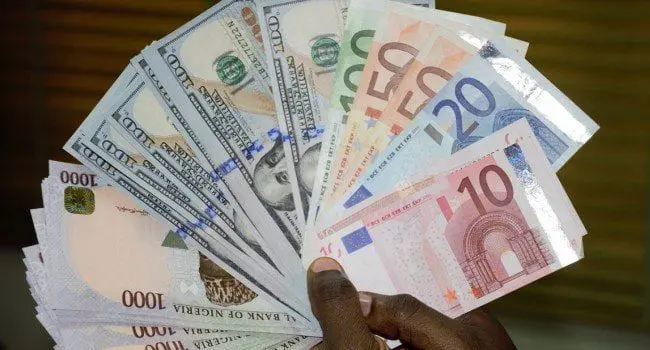
The Naira to Dollar Black Market Exchange Rate on January 19, 2026, showed relative stability in the parallel market, commonly known as the Aboki FX or black market, amid ongoing economic dynamics in Nigeria.
According to updates from reliable forex tracking platforms like Aboki Forex, the black market rate for 1 US Dollar stood at approximately ₦1,485 today. This reflects the rate at which dollars were exchanging hands in informal markets across major cities such as Lagos, Abuja, Port Harcourt, and Kano.
Trending Now!!:
- Buying rate (what dealers pay to acquire dollars): Around ₦1,480
- Selling rate (what buyers pay for dollars): Around ₦1,485 to ₦1,494 (with some sources reporting slight variations up to ₦1,494 for sell-side transactions)
Other parallel market aggregators and user-reported data indicated minor fluctuations, with averages ranging from ₦1,480 to ₦1,500, depending on location, volume, and dealer margins. For instance:
- Some Lagos-based Bureau de Change (BDC) operators quoted sell rates in the ₦1,490–1,494 range earlier in the day.
- The rate remained largely unchanged (0% movement reported across several platforms) from recent sessions, signaling a period of consolidation after a slight weakening over the weekend.
In contrast, the official market (Nigerian Foreign Exchange Market – NFEM, as tracked by the Central Bank of Nigeria) showed the Naira performing stronger:
- The indicative/closing rate was around ₦1,418 to ₦1,420 per dollar in recent sessions (with early January 19 data pointing to stability near ₦1,420 levels).
- This created a premium of roughly ₦65–75 between the official and parallel markets, a gap that has widened slightly in recent weeks but remains narrower than historical highs.
The stability in the black market comes as Nigeria’s forex landscape continues to reflect the effects of CBN policies, improved dollar inflows from oil and non-oil sectors, and global factors influencing the USD. However, demand for dollars in the informal sector—driven by importers, travelers, and small businesses—keeps the parallel rate higher than the regulated window rate.
Experts note that while the Naira has shown resilience in the official market in early 2026, participants in the parallel market should expect volatility driven by supply-demand pressures, geopolitical events, and domestic economic indicators.
Note: Black market rates can vary by location, time of day, and transaction size. Always verify with trusted local dealers for real-time quotes, and consider official channels where possible for larger transfers to minimize risks. For the latest updates, platforms like Aboki Forex, NgnRates, or TheCityCeleb provide ongoing tracking.