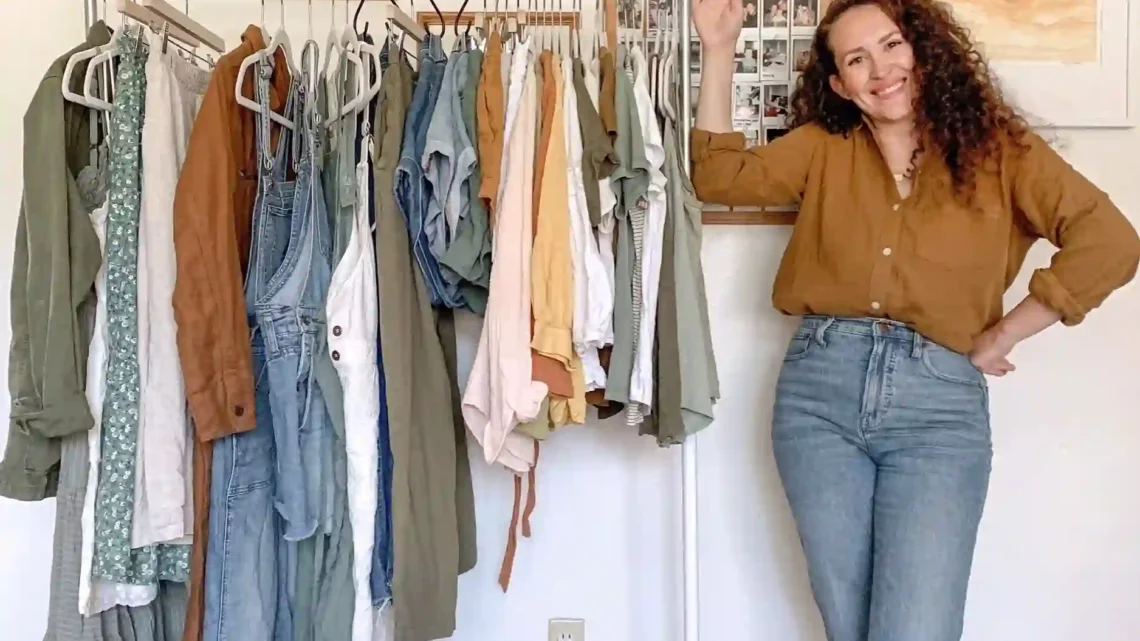
How to Build a Capsule Wardrobe For Any Style or Season
I’ve spent the last fifteen years watching people struggle with the same paradox, the one I struggled with myself when I was starting out.
A closet packed with clothes, yet nothing to wear. Drawers overflowing with pieces that don’t speak to each other, outfits that take forty-five minutes to assemble, and the creeping sense that you’re somehow doing fashion completely wrong.
Trending Now!!:
Then I discovered what most of the fashion industry had been quietly practicing all along, the concept that would fundamentally change how I approached getting dressed. It’s called a capsule wardrobe, and it remains, hands down, the most practical and transformative approach to building a personal style that I’ve encountered in my career.
This isn’t about deprivation or looking like you’re trapped in a minimalist aesthetic police state. This is about the opposite, actually. It’s about creating a collection of pieces that work together so seamlessly that getting dressed becomes the easiest part of your day, not a source of anxiety.
What Actually Is a Capsule Wardrobe, and Why It Matters
A capsule wardrobe is fundamentally a thoughtfully curated collection of essential clothing pieces designed to mix and match effortlessly across multiple occasions and seasons. The term itself has become almost trendy in recent years, but the concept is far older than the zeitgeist suggests.
The idea took shape in the 1970s when a London boutique owner named Susie Faux began helping clients build what she called a capsule of essential pieces. What was revolutionary then remains revolutionary now, not because fashion has changed, but because human psychology hasn’t. We’re still overwhelmed by choice, still making impulsive purchases we regret, still standing in front of our closets convinced we have nothing to wear.
The difference between a minimalist wardrobe and a capsule wardrobe matters more than people realize. Minimalism is a philosophy and a lifestyle that extends to how you think about consumption itself. A capsule wardrobe is a practical tool, a concrete system you can implement regardless of whether you’ve adopted minimalism as an ideology. You can live an entirely non-minimalist life and still benefit enormously from having a capsule wardrobe. The two are often conflated, but they’re distinct enough that the distinction matters.
When I first built my own capsule wardrobe about twelve years ago, I made nearly every mistake possible. I started with clothes I thought I should wear rather than clothes I actually wore. I invested in pieces that looked good on the hanger but never felt right on my body. I tried to force neutrals when I actually craved subtle color. I filled the wardrobe with what I imagined my style should be, not with what it actually was.
The capsule wardrobe I have now, the one that’s genuinely transformed my daily life, looks nothing like the fashion magazine version. And that’s exactly why it works.
The Real Numbers, and Why They Vary More Than Anyone Tells You
Most articles about capsule wardrobes cite a magic number somewhere between 30 and 50 pieces. This has become almost gospel in fashion circles. Thirty to fifty pieces, the reasoning goes, should be enough to create an entire functional wardrobe.
Here’s what that advice misses: the way it’s usually presented assumes a certain lifestyle that not everyone has. If you work in a casual environment, live in a mild climate, and don’t attend formal events, thirty pieces might genuinely be sufficient. If you live somewhere with distinct seasons, navigate between professional and casual environments, and value having options for different occasions, you might need more.
When I audited my wardrobe seriously for the first time, I counted the pieces I actually wore on regular rotation. The number wasn’t magic. It was forty-three items, not counting seasonally stored pieces. Eventually, I learned that the magic number for me was actually driven by my lifestyle, not by some external standard.
Let me break down what I mean by pieces in a way that’s actually useful. Count each distinct item, not multiples. Two pairs of jeans are two pieces. Three white t-shirts in slightly different cuts are three pieces. Five pairs of shoes count as five. When you start counting this way, you quickly understand why the number varies so much from person to person.
If you work in a creative field where casual wear is expected, a reasonable capsule might look like this: five to seven pairs of bottoms, eight to twelve tops, two to three dresses, two to three jackets or cardigans, one to two layers for layering, and five to seven pairs of shoes. That’s somewhere in the 25 to 35 range.
If you navigate between office settings and casual environments, add more bottoms, more structured pieces, and potentially one or two additional jackets. You’re looking at 40 to 50 pieces.
The point here is this: start by auditing what you actually wear, not what you think you should wear. That number is your real baseline.
The Foundation, Building Your Minimalist Wardrobe Essentials
There’s a reason certain pieces appear in virtually every capsule wardrobe discussion, and it’s not because fashion editors are running out of ideas. These pieces are part of the recommendation canon because they genuinely work across contexts and seasons. They’ve earned their place through sheer utility and versatility.
The white button-down shirt is the most obvious example. I was resistant to this truth for years. I thought white button-downs were boring, corporate, and not at all the vibe I wanted to project. Then I borrowed a really good one from a friend, a crisp linen number that fit perfectly, and I wore it every single day for a week in different ways. White t-shirt underneath, sleeves rolled, tied at the waist over a slip dress, layered under sweaters, worn open over a tank. The shirt became my gateway into understanding how versatility actually worked in practice.
The well-fitting jeans follow the same pattern. Not trendy jeans that will look dated in a year, not novelty jeans that only work with one specific outfit. A pair or two of jeans in a neutral wash, cut in a way that’s flattering on your actual body. If baggy wide-leg styles feel right for how you move in the world, choose those. If a slightly more fitted silhouette makes you feel more yourself, go there instead. The trend landscape is irrelevant here.
Then there are the pieces that bridge casual and professional, the tailored trousers, the simple blazer, the slip dress. These are the pieces that do the heavy lifting in terms of outfit variety. A pair of tailored black trousers works for office meetings, weekend dinners, and casual events where you want to look more put together. I’ve found myself gravitating toward trousers that have a slightly relaxed silhouette but tailored at the ankle, the kind that works with sneakers and with heels, with blazers and with sweaters.
The basics for a minimalist foundation are deceptively simple. White, black, and gray tops in different cuts and weights. One neutral jacket that works across seasons, something like a wool blazer or a denim jacket. A black or neutral cardigan for layering. Simple everyday shoes, something that works with jeans and trousers and dresses alike.
Here’s the thing I wish someone had told me sooner: quality over quantity isn’t actually a suggestion. It’s the entire principle that makes a capsule wardrobe function as intended. A cheaper t-shirt that pills after three washes is ultimately more expensive and wasteful than a quality one that lasts for years. The investment upfront matters.
Seasonal Fashion and Building For Year-Round Wear
When I first tried to build a capsule wardrobe, I made the mistake of treating it as though I needed completely separate wardrobes for each season. Piles of wool sweaters for winter, linen dresses for summer, and completely distinct pieces for spring and fall. My closet exploded in size, and I still didn’t have enough pieces that could transition.
The revelation came when I stopped thinking in terms of seasons and started thinking in terms of layering. A good capsule wardrobe is actually built around pieces that can be layered and styled differently depending on the temperature. A sleeveless linen dress works well on its own in summer. In the fall, throw a linen shirt over it and add a thin sweater. In spring, layer it with a cardigan. In winter, wear it with opaque tights, a long-sleeved base layer underneath, a sweater, and a coat.
This approach to seasonal dressing changes everything about how many total pieces you need. Suddenly, your closet doesn’t need to be three times bigger to accommodate radical seasonal shifts.
The pieces that work across seasons share certain qualities. They’re in neutral colors or colors versatile enough to work with multiple other pieces. They are made from natural fabrics that can be layered: linen, cotton, wool, silk, and merino. They’re cut in a way that allows for underneath layers without looking bulky.
I keep certain pieces year-round in easy access, then rotate in seasonal additions. In winter, I add thicker sweaters, boots, and a proper winter coat. In summer, I bring out lighter layers and add a few more tank tops and t-shirts to the mix. For me, spring and fall are about rotating the jewelry and adding or removing a single layer, usually a cardigan or a lightweight jacket.
The seasonal approach shifts depending on where you live. If you live somewhere with dramatic temperature swings and distinct seasons, you’ll need more variation. If you live somewhere with fairly consistent weather, you can be more minimal. I lived in Los Angeles for 5 years and had a much more streamlined capsule than I do now in a place with actual winters.
The Color Foundation and Personal Style, Because Not Everything Has to Be Neutral
This is where I see most capsule wardrobe advice go slightly off the rails. There’s this pervasive belief that a capsule wardrobe must be constructed entirely from neutrals. Black, white, gray, navy, beige, maybe some tan or olive. And yes, neutral pieces form the foundation of a functional capsule. But a wardrobe comprised entirely of neutrals is less a capsule and more a uniform, and it’s a uniform that will eventually make you feel trapped rather than liberated.
The real secret is using neutrals as your base, your mixing and matching backbone, then introducing color strategically. Most of my everyday pieces are neutral, but I have several jewel-toned dresses, a few pieces in deeper colors like burgundy or forest green, and more casual pieces in colors that bring me joy.
I’ve made mistakes here, too. I bought a beautiful emerald-green sweater because it was on sale and looked objectively good on me. I wore it twice in four years. It turned out the color, while beautiful, just wasn’t part of my natural instinct when getting dressed. In contrast, I have three pieces in navy blue in different weights and styles, and I reach for them constantly.
The lesson I learned was to introduce color slowly and only in pieces you actually connect with. A simple trick is to ask yourself how you already use color in your life. The colors you wear in your jewelry, the colors that dominate your Instagram feed, the colors in your home that make you feel good. Invest in capsule pieces in those colors, not in colors that are theoretically good but that you have to force yourself to wear.
One piece that changed my approach to color in my capsule was a simple slip dress in a warm taupe. It’s not a neutral in the way white is neutral. It reads as a color, but it’s subdued enough to work with almost everything else in my closet. It’s the kind of piece that builds a bridge between strict neutrals and actual color.
The Investment Pieces, Where Price Actually Matters
I lived for a long time with a scarcity mindset when it came to clothing purchases. The cheaper, the better. Buy five mediocre things for the price of one good thing. I ended up with a closet full of pieces I kind of liked, none of which I loved, all of which deteriorated quickly.
The shift happened gradually. I couldn’t afford to buy a new wardrobe, so instead, when something wore out, I replaced it with the best-quality version I could afford. A pair of jeans would wear out at the thighs, and instead of replacing it with another cheap pair, I’d save and buy a pair known to last. A t-shirt would develop a hole, and I’d invest in ones made from better cotton, stitched more carefully. Eventually, through replacement over time rather than renovation all at once, my entire wardrobe shifted.
The price point question depends on your financial situation, but the principle remains the same. You’re not looking for the most expensive option. You’re looking for the best value for the money you have available. There’s a significant difference. A t-shirt that costs three times as much as another t-shirt but lasts five times as long is actually dramatically cheaper.
The pieces worth investing in are the ones you’ll wear all the time. Jeans, everyday shoes, a jacket that works across seasons, the pieces that form the core of multiple outfits. I invest less money in pieces I’ll wear occasionally, the fancy dress for special events, the white linen shorts that only work in summer, the specific outfit for a work event that’s just right for that occasion but not elsewhere.
One specific investment I’ve never regretted is a good leather tote bag. I use mine almost daily, and it’s been my bag for over a decade. The initial cost was significant, but when calculated per day, it’s been the least expensive bag I’ve ever owned.
Quality fabrics matter here too. Natural fibers, linen, cotton, wool, silk, merino, tend to age better and look better for longer than synthetic alternatives. They breathe better, they develop a patina that often makes them look better, not worse, as they age. They’re also more comfortable and more sustainable in terms of environmental impact.
Common Mistakes I Made So You Don’t Have To
The first mistake was buying things I didn’t try on properly. I’d buy things online or on a whim from stores, confident they’d work, then come home and find they didn’t fit the way I imagined or the color wasn’t quite right in my actual life. I wasted a staggering amount of money this way before I established a rule: every piece has to earn its place in my closet through actual try-on and honest assessment.
The second mistake was buying pieces in silence. I’d bring something home, let it sit in my closet unworn for two weeks, and only then realize it wasn’t working. Now, I do a real wear test. I wear a new piece at least twice in the first week to genuinely assess whether it works in my life. If I’m not reaching for it after two real-world wears, it probably won’t become a staple.
The third mistake was not accounting for seasonality properly, then ending up in situations where half my wardrobe was unwearable for long stretches. I’d buy a beautiful linen dress in March, then it would get too cold to wear it, and by the time summer came, I’d forgotten about it and bought something else.
The fourth mistake was comparison. I’d look at other people’s capsule wardrobes, usually on Instagram or from fashion writers, and try to recreate those exactly. Someone’s capsule that worked perfectly for her life made me feel constrained and uncomfortable in mine. It took a while to understand that a capsule wardrobe is inherently personal. It’s a tool built for your actual life, not for the version of yourself you think you should be.
The fifth mistake, and this one feels important, was not checking in with my wardrobe regularly. I’d build a capsule, feel satisfied that I’d solved the problem, then never revisit it. Life changes. Your body changes. The way you work changes. Your capsule wardrobe should shift with those things.
Building a Capsule For Any Style, From Classic to Contemporary
The beauty of the capsule wardrobe approach is that it works regardless of your personal style. A Parisian minimalist and someone who loves the vintage Americana aesthetic can both build functional capsules using the same principles. The pieces change, but the methodology remains consistent.
If your style is classic, your capsule will likely emphasize tailored silhouettes, structured pieces, and a more limited color palette. Think perfectly fitted blazers, elegant dresses, quality leather accessories. Your capsule becomes a study in timeless elegance.
If your style skews contemporary or trendy, you have options. You can either build your capsule entirely from more timeless basics and then introduce trend pieces seasonally, kind of a layered approach where trends are additive rather than foundational. Or you can build a capsule that incorporates current trends but chooses them carefully based on how long you genuinely think you’ll wear them. I tend toward the former approach because it feels more sustainable long-term.
Casual style might look like jeans-based basics, comfortable cuts, and pieces that prioritize ease and movement over formality. The pieces are still intentional and work together, but they’re less structured than a classic capsule.
The key is knowing your actual style, not the style you think you should have. I spent years trying to be a structured, tailored person because that’s what fashion magazines told me to be. My actual style is more relaxed, with an emphasis on natural fabrics and pieces that feel good against my skin. Once I started building a capsule around what I actually liked rather than what seemed objectively sophisticated, everything changed.
One way to figure this out is to look at the pieces you reach for most often when you have complete freedom. The clothes that make you feel most like yourself. Those pieces are clues to your actual style. Build your capsule around similar pieces, and you’ll find you naturally reach for more of it.
Sustainable Fashion and the Ethics of a Smaller Closet
The environmental impact of fashion is staggering. The industry generates roughly 10 percent of global carbon emissions, and textile waste comprises about 5 percent of all landfill waste. A single piece of clothing often requires thousands of gallons of water to produce. A pair of jeans might be worn for two years and then discarded, contributing to waste despite the resources invested in creating it.
When I started thinking seriously about the environmental impact of my personal consumption, it was eye-opening and somewhat depressing. I’d been a casual consumer for years, buying more than I needed, discarding pieces at the first sign of wear, perpetuating the cycle that drives these numbers.
A capsule wardrobe, almost by definition, is more sustainable than the alternative. You buy less, you buy more intentionally, you invest in pieces made to last. These pieces are worn more frequently, over longer periods, reducing the environmental cost per wear.
The further step is seeking out brands that prioritize sustainability in their production. There’s a thriving movement of minimalist fashion brands that focus specifically on building sustainable, high-quality pieces designed for capsule wardrobes. Brands like Everlane, which emphasizes radical transparency about manufacturing and costs, or Patagonia, which has a robust repair and recycling program. Quince, which focuses on quality basics at lower price points than many luxury alternatives. Eileen Fisher, a brand that’s been pioneering sustainable minimalism for decades.
You don’t have to buy exclusively from sustainability-focused brands for your capsule to be sustainable. You can shop secondhand for pieces, giving them a second life while reducing demand for new production. You can invest in pieces from any brand that are genuinely well-made and durable. You can repair things instead of replacing them, supporting local tailors and seamstresses rather than the fast fashion cycle.
The most sustainable piece of clothing, ultimately, is the one you already own. If you can make your existing wardrobe work better through the capsule approach, that’s the greenest option available.
The Practical Process, Step by Step
This is the part that actually requires work, the part that can’t be skipped if you want real results.
Step one is an audit. Pull out everything. Every piece. Look at what you actually wear on rotation. Not what’s hanging in the back of your closet waiting for you to become a different person. What do you actually reach for when you have complete choice? What pieces create the outfits you wear most often?
Step two is grouping what you have. Separate the pieces you found in step one into categories. Tops, bottoms, dresses, jackets, shoes. Look for patterns in what works together. Notice the colors, the cuts, the fabrics. Notice what doesn’t work with anything else, what sits there unworn despite being lovely.
Step three is identifying gaps. Based on what you wear and what you actually do with your life, what pieces would increase your outfit options? If you have three bottoms that work, but they all look casual, maybe you need a pair of tailored pants. If you have lots of warm-weather clothes but live somewhere with distinct winters, you probably need more transitional pieces for fall and spring.
Step four is the intentional shopping phase, where you fill the gaps you identified with pieces that align with your style and work with what you already own. This is where the investment approach matters. Don’t rush it. Don’t impulse buy. Wait for pieces that feel right.
Step five is the ongoing evaluation. Every few months, take a real look at what you’re wearing and what’s sitting unworn. Does it still work? Has your life shifted in a way that means your capsule should shift? Be willing to adjust.
Making Peace With Seasonality and Lifestyle Changes
Life is not static, and your wardrobe doesn’t need to be either. The point of a capsule wardrobe is not to have a fixed collection frozen in time. It’s to have a system flexible enough to adapt to changes while maintaining the core principle, fewer, better pieces that work together.
When I changed jobs several years ago from a creative industry position to something more corporate, I had to add more tailored pieces to my capsule. It wasn’t a complete overhaul, more like a recalibration. I kept my favorite pieces that still worked in the new environment, and I added some structured blazers and more formal trousers. The capsule evolved rather than disappeared.
When I moved to a place with a real winter, I faced a similar situation. I couldn’t keep wearing the same wardrobe I’d had in Los Angeles. But instead of starting from scratch, I added seasonally appropriate pieces. Heavier sweaters, proper boots, and a winter coat. The basics stayed the same; the adaptations were additive.
The mistake people often make is treating seasonal rotation as though you need completely different wardrobes. You don’t. You need the same core pieces with seasonal additions and substitutions. Your everyday jeans probably work year-round. Your basic tops probably work year-round, just sometimes with different layering. Your shoes might rotate, but your approach doesn’t need to.
The Real Test, Wearing What You Actually Buy
Here’s the thing that separates a capsule wardrobe that’s a genuine tool from a capsule wardrobe that’s just a story you tell yourself. A real capsule wardrobe is worn. Regularly. The pieces are integrated into your actual daily life, not separated out as something precious and special.
I have a simple metric. If I haven’t worn a piece in three months, and there’s no seasonal reason for that, it’s probably not a true member of my capsule. It’s taking up space. A real capsule wardrobe is active.
This also means accepting that your capsule will look different at different times of your life. The capsule I have now is not the capsule I’ll have in five years. My body might change. My job might change. The climate I live in might change. The clothes I care about wearing might evolve. That’s not a failure of the capsule concept. That’s the system working as intended.
The most practical advice I can offer, distilled from years of figuring this out through trial and error, is this. Start where you are. Use the clothes you already own. Be honest about what you actually wear. Fill gaps slowly and intentionally. Invest in quality over quantity. Re-evaluate regularly. Build a wardrobe that serves your actual life, not some imaginary version of yourself.
Conclusion
Somewhere in the last decade, fashion stopped feeling like something that had to be complicated. I stopped needing special occasions to know what to wear. I stopped opening my closet to a wall of options that somehow still managed to add up to nothing. Getting dressed became simple, almost automatic, because I had fewer but better pieces that all worked together.
The capsule wardrobe approach won’t turn you into someone who loves fashion if you don’t already. But it will transform your relationship with the clothes you own. It will free up time, reduce decision fatigue, lower your environmental impact, and save you money. It’s also incredibly practical for anyone who wants to actually wear the things in their closet.
The goal of a minimalist wardrobe is not minimalism for its own sake. It’s maximum freedom through thoughtful choice. It’s having enough, the right enough, for your actual life. It’s the simple but revolutionary act of owning fewer things that you genuinely love and actually wear.
That’s worth the effort of building it right.