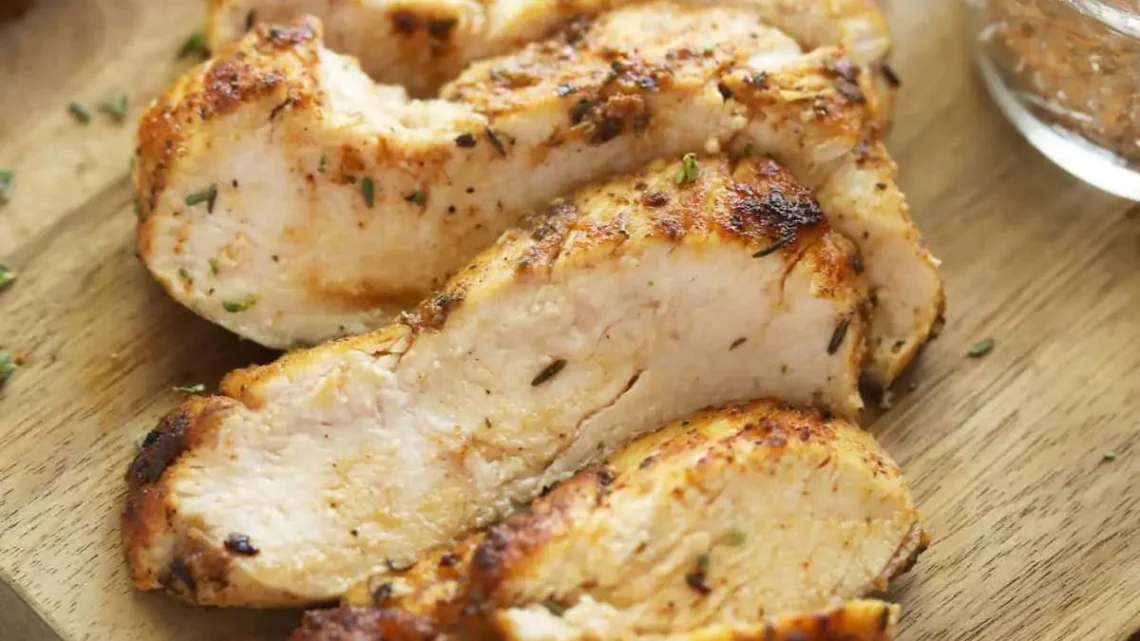
How to Cook Chicken Breast So It’s Never Dry Again
The real reason your chicken breast keeps drying out has nothing to do with the recipe. Here is what actually works, from brining and heat control to the resting step most cooks skip.
There is a specific kind of disappointment that comes with cutting into a chicken breast and watching the juice not run.
No glistening. No steam carrying any real promise. Just a pale, dense slab that your knife drags through rather than glides across.
Trending Now!!:
Anyone who has cooked chicken breast more than a handful of times knows this feeling. It is not a beginner’s mistake. It is an almost universal one, and it has everything to do with what most of us were never actually taught.
The chicken breast has a reputation problem. It is lean, forgiving in theory, the go-to protein for everything from weeknight dinners to high-volume meal prep, and yet it is among the easiest things to ruin in a kitchen.
Unlike chicken thighs, which carry enough intramuscular fat to absorb mistakes gracefully, the boneless skinless chicken breast has almost no protective fat layer.
The margin between perfectly cooked and dried-out chalk is thin, and for years, most home cooks have been working entirely on the wrong side of that margin.
After more than a decade of cooking chicken professionally and obsessively at home, through catering events, family dinners, kitchen experiments at odd hours, and more failed batches than I would comfortably admit to, I have learned that juicy chicken breast is not about luck or talent. It is about a handful of non-negotiable principles that most recipes either gloss over or skip entirely.
The First Problem Is Thickness, and It Is Hiding in Plain Sight
Walk into any grocery store and pick up a pack of boneless, skinless chicken breasts. You will almost certainly find pieces that are thick and rounded on one end and thin and tapered on the other.
That uneven shape is the root cause of most dry chicken disasters, because the thin end will finish cooking in about half the time it takes the thick part to reach a safe internal temperature. By the time the thickest section of the breast hits 165 degrees Fahrenheit, that thin tail has been overdone for minutes.
The fix is so simple it borders on embarrassing: pound the chicken to an even thickness before you cook it. Place the breast between two sheets of plastic wrap or inside a zip-lock bag, and use a meat mallet or the bottom of a heavy skillet to gently flatten it to about three-quarters of an inch throughout.
This is not about making the chicken thin. It is about making it uniform so that every part of the breast meets the heat at the same rate and leaves the pan at the same time.
It also tenderizes the muscle fibres in the process, which is a quiet bonus that most people only notice when they are suddenly cutting through chicken that feels nothing like the cardboard they were used to.
I learned this the hard way during a catering job where I was cooking thirty-six chicken breasts for a corporate lunch. I was running behind, skipped the pounding step to save time, and served a plate of uneven, partially overcooked meat to a room full of people who had paid for something better. The lesson cost me professionally, but it stuck permanently.
Brining Is Not Optional, It Is the Foundation
Chicken breast loses moisture during cooking, the same way a sponge loses water when you squeeze it. Heat causes the muscle fibres to contract, and the water inside the cells gets pushed out. The only way to counteract this at a structural level, before any pan or oven is involved, is to brine the meat first.
A basic wet brine is nothing complicated. Dissolve two tablespoons of kosher salt in a quart of cold water, submerge your chicken breasts, and let them sit for at least fifteen minutes and up to four hours in the refrigerator.
What happens chemically during that time is that the salt solution penetrates the meat, loosening the protein structure so that the muscle fibers are less likely to seize and expel liquid under heat. The chicken also absorbs some of that seasoned water, which means it starts the cooking process already hydrated from the inside.
If you are short on time, even a fifteen-minute quick brine will produce a noticeably juicier result than skipping the step entirely. And if you want to go further without committing to a full overnight brine, add aromatics to the water.
A smashed garlic clove, a sprig of thyme, and a pinch of sugar will do more for the flavor of a plain boneless chicken breast than most marinades will. After brining, always pat the chicken completely dry with paper towels before seasoning and cooking. A wet surface steams rather than sears, and that is a texture problem you do not want.
Temperature Is the Variable That Everyone Ignores
The most reliable and overlooked piece of kitchen equipment for cooking chicken breast is a good instant-read meat thermometer. Not because cooking is complicated, but because the internal temperature of the chicken is the only honest answer to the question of whether it is done.
Color is unreliable. Timing charts are approximations. The feel of the meat under a finger takes years to calibrate and varies with the size of the piece. A thermometer removes all of that guesswork immediately.
The target internal temperature for safe chicken breast is 165 degrees Fahrenheit, according to the USDA. But here is where practical cooking knowledge starts to diverge from textbook instruction.
Many experienced cooks, especially those working in professional kitchens or using precision cooking methods like sous vide, will pull chicken breast from the heat at 155 to 160 degrees and allow carryover cooking to bring it the rest of the way.
The reason is that chicken held at 160 degrees for just one minute is considered equally safe to chicken that briefly hits 165, because food safety at this level is a function of both temperature and time. Pulling the chicken a few degrees early, then tenting it with foil and letting it rest for five to eight minutes, will yield a noticeably juicier result without compromising safety.
I say this not to encourage recklessness in the kitchen, but because I spent years overcooking chicken in the name of safety and never understood why my results were mediocre. The thermometer freed me from that cycle.
How You Apply Heat Matters as Much as the Temperature You Target
There is a persistent myth that baking chicken breast at a low temperature, around 325 to 350 degrees Fahrenheit, is the gentler and safer approach. In practice, it tends to produce drier results because the longer cooking time means the breast spends more time losing moisture before it finishes.
A higher oven temperature, somewhere between 400 and 425 degrees, cooks the chicken breast faster, which means less time for liquid to evaporate. In my experience, twenty minutes in a 425-degree oven will consistently produce a juicier breast than thirty-five minutes at 325, provided you are working with even-thickness pieces and using a thermometer to pull them at the right moment.
For stovetop cooking, the technique that has never failed me is the sear-and-cover method. Heat a tablespoon of oil in a heavy skillet, ideally cast iron or stainless steel, over medium-high heat until the oil shimmers.
Lay the chicken breast flat, smooth side down, and let it cook undisturbed for about four minutes to develop a proper golden crust. Then flip it once, reduce the heat to medium-low, add a small knob of butter, and cover the pan tightly with a lid. The steam that builds inside the covered pan gently poaches the interior of the chicken while the crust continues to cook below.
After six to eight minutes with the lid on, the thickest part of the breast should read somewhere between 158 and 163 degrees on your thermometer. Remove the pan from the heat and let the chicken rest in the covered pan for another two minutes before serving.
That lid is everything. Without it, the stovetop method is a race between the exterior burning and the interior cooking through. With it, the chicken cooks gently and evenly in its own steam and whatever moisture is released into the pan. This is functionally the same principle behind poaching, but with the added benefit of a seared, flavorful crust.
Resting Is Not a Suggestion
Every piece of advice about cooking meat eventually arrives here, and every home cook eventually tests this advice by cutting into the chicken two minutes before they should.
The juice that pools on the cutting board is not a reward. It is moisture that would have redistributed through the fibers of the meat if you had given it four more minutes.
When chicken breast, or any meat, comes off the heat, its muscle fibers are contracted and the liquid inside is still moving toward the center under pressure. As the temperature drops slightly during rest, those fibers relax and the liquid redistributes evenly throughout the meat.
Cut too early, and you release that pressure before the redistribution happens. The result is a drier piece of chicken and a wet cutting board.
Tent the cooked chicken loosely with a piece of aluminum foil and wait five to ten minutes. This single habit will improve your results more consistently than any marinade or technique tweak.
Seasoning Is Flavor, But Fat Is Moisture
Chicken breast, more than almost any other cut of poultry, benefits from the presence of fat during cooking. This is why a skin-on breast is so forgiving and a boneless skinless one is not. You can compensate for the missing skin in several practical ways.
Coating the breast in a thin layer of olive oil or melted butter before it goes into the oven adds a protective layer that slows moisture loss. Basting the breast with butter and pan drippings during stovetop cooking, as you would a steak, adds flavor and keeps the surface from drying out before the interior finishes.
Some cooks swear by placing pats of compound butter, seasoned butter blended with garlic, herbs, or lemon zest, directly on top of the breast for the last few minutes of oven time.
The butter melts into the meat as it rests and makes an enormous difference in perceived juiciness and flavor. I started doing this during a period when I was cooking for guests who were serious food people, and I have never stopped.
What You Do After Cooking Matters More Than You Think
The way you slice chicken breast affects how juicy it tastes in the mouth. Cutting with the grain of the muscle fibers means your teeth have to do more of the work of breaking those fibers apart, which registers as toughness.
Cutting against the grain, perpendicular to the direction the fibers run, shortens those fibers before they ever reach your mouth, making the meat feel more tender and releasing more moisture with each bite. This is a technique borrowed from steak cookery that applies just as well to poultry.
For meal prep purposes, store cooked chicken breast with a small amount of its pan drippings or a splash of chicken broth in the container. The liquid keeps the surface of the meat from drying out in the refrigerator and makes reheating more forgiving.
Reheat gently, in a covered pan over low heat with a teaspoon of water or broth added, rather than blasting it in a microwave uncovered. Cold dry chicken that gets blasted with high heat comes back as rubbery, flavorless protein that no amount of sauce can fully redeem.
On Sous Vide, and Why It Deserves More Attention Than It Gets
For anyone who has access to a sous vide immersion circulator, cooking chicken breast using this method removes nearly every variable that causes dryness. The chicken is sealed in a vacuum bag and held at a precise water temperature, usually around 140 to 145 degrees Fahrenheit, for one to two hours.
At that temperature and hold time, the chicken reaches pasteurization through time rather than through high heat, and it comes out with a texture that is genuinely unlike anything achievable in a conventional oven.
The interior is uniformly cooked from edge to edge, and the moisture retention is remarkable. A quick two-minute sear in a ripping-hot pan after the water bath gives you the Maillard-browned crust that sous vide alone cannot produce.
I will be the first to admit that pulling out an immersion circulator on a Tuesday night is not realistic for most people. But for anyone cooking large quantities of chicken for events or aggressive meal prep schedules, it is one of the more practical investments a kitchen can make.
The Real Lesson Is Control, Not Complexity
There is nothing complicated about cooking juicy chicken breast. The recipe is not the issue. The technique is.
The same boneless skinless breast that comes out chalky and dry in one kitchen comes out tender and flavorful in another, and the difference almost always comes down to thickness uniformity, a salt brine, a calibrated heat strategy, a thermometer pulled at the right moment, and enough patience to let the meat rest.
None of this requires expensive equipment or advanced training. It requires paying attention to a handful of variables that most recipes mention in passing rather than treating as the central point.
The chicken breast is not a difficult ingredient. It is an unforgiving one. But that unforgiving quality disappears almost entirely once you understand what it actually needs, which is not lower heat or longer cooking or more marinade.
It needs even thickness, pre-seasoning through brining, a thermometer, and rest. Give it those four things every time and the problem of dry chicken breast becomes, almost overnight, a problem you used to have.