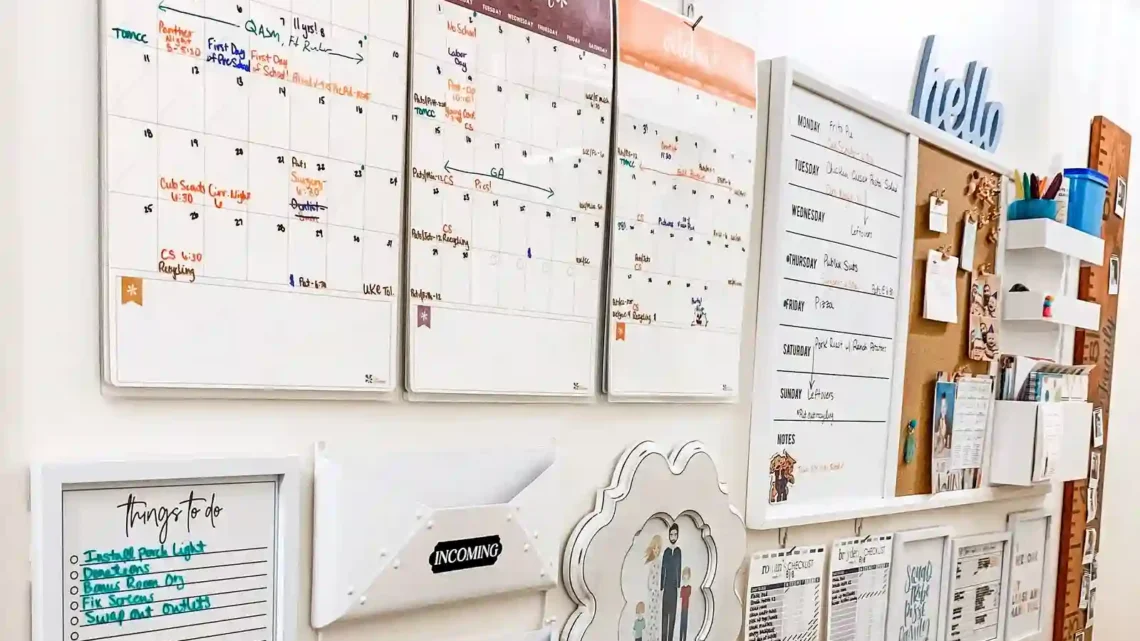
How to Create a Family Command Center (Organize Your Life)
In the chaos of raising three kids while juggling freelance work and a spouse whose schedule changes weekly, I learned the hard way that good intentions alone don’t keep a household running.
For over a decade, I’ve helped friends, clients, and my own family build what we now call the family command center. This central hub turns scattered sticky notes, forgotten permission slips, and last-minute “where’s the soccer bag?” panic into something manageable.
Trending Now!!:
It’s not about perfection or Pinterest aesthetics; it’s about creating a system that actually survives real life. The term family command center gets thrown around a lot these days.
Still, at its core, it’s simply a designated spot—usually a wall, nook, or even the back of a door—where the most critical household information lives. Think of it as mission control for daily life: schedules, mail, keys, meal plans, and reminders all in one glanceable place.
When done right, it cuts down on mental load, reduces arguments over forgotten events, and gives everyone a shared sense of what’s happening.
Location Matters More Than You Think
The biggest mistake I see—and one I made early on—is picking a spot that’s pretty but ignored. My first attempt was a beautiful gallery wall in the living room.
It looked great in photos, but no one walked by it except guests. Papers piled up elsewhere, and the center gathered dust. After that flop, I moved it to the high-traffic zone: the narrow hallway between the garage door and kitchen.
Everyone enters and exits there multiple times a day. Even in small homes, aim for a “drop zone”—near the entry, mudroom, or kitchen counter.
If space is tight, I’ve seen families mount slim organizers inside pantry doors or use a rolling cart that tucks away. The key is visibility and convenience. If you have to detour to check the calendar, it won’t get used.
Core Elements That Actually Work
Start with the non-negotiables, then layer in what your family needs.
1. A Large, Readable Family Calendar
This is the heart. I swear by a big monthly dry-erase board (at least 24×36 inches) or a wall-mounted perpetual calendar. Color-coding changed everything for us: blue for my husband’s shifts, green for kids’ school and activities, pink for my deadlines, and yellow for family events.
One glance shows if Tuesday is double-booked. Avoid tiny desk calendars—they get buried. And update it weekly, ideally Sunday evenings, as a family ritual. We gather around coffee (or juice boxes) and sync everything.
2. Mail and Paper Management
Papers are the silent killer of an organization. Incoming mail, school flyers, bills—without a system, they avalanche across counters. Use vertical file pockets or wall organizers labeled “Incoming,” “To File,” “Bills,” and “Kids’ Stuff.”
I added a “Shred/Recycle” bin below. Teach everyone to sort papers the moment they walk in—no exceptions. One habit I wish I’d started sooner: scanning important docs with a phone app and recycling the paper immediately.
3. Hooks, Baskets, and Drop Spots
Keys, backpacks, reusable bags—designate hooks or shallow baskets. We have individually labeled hooks for each family member. It prevents the “I can’t find my keys” scramble. For younger kids, lower hooks encourage independence.
4. To-Do Lists, Meal Plans, and Notes
A small whiteboard or chalkboard section for the weekly meal plan saves dinner-time stress. We list meals on Sunday night; grocery lists live right below. A corkboard strip for quick notes or inspirational quotes keeps things human.
5. Tech Integration (If It Fits Your Family)
We’ve gone hybrid: the physical center handles quick glances, but shared digital calendars (Google or Apple) sync appointments. Some families mount a tablet for a digital dashboard, but I caution against over-relying on screens—kids still need to see things physically to internalize routines.
Lessons from Real Mistakes
- Overcomplicating It — My early versions had chore charts, reward systems, emergency contacts, everything. It looked impressive but became overwhelming. We stripped it back to essentials; add-ons only if they get used consistently.
- Not Involving the Family — I once built a perfect setup alone. The kids ignored it because it didn’t feel like theirs. Now, we customize together—colors, layouts, even silly magnets. Buy-in matters.
- Ignoring Maintenance — A command center isn’t set-it-and-forget-it. Weekly resets prevent chaos. If it’s messy, it stops working. Make tidying part of the routine.
- Going Too Digital-Only — During a phase when we tried a full digital wall setup, power outages or dead batteries left us blind. A hybrid approach wins for reliability.
Making It Last
After years of tweaking, the best setups evolve. Reassess every six months—what’s working, what’s ignored? Kids grow, schedules shift. Ours started simple when the children were toddlers (mostly visual cues and pictures) and now includes more responsibility trackers.
A well-functioning home command center doesn’t eliminate chaos—it channels it. Mornings feel less frantic, evenings less reactive. Everyone knows the plan, and that shared clarity creates breathing room in a busy life.
If you’re drowning in details, start small: clear a wall, hang a calendar, add hooks. Test it for a month. Adjust. You’ll wonder how you ever managed without it. The real magic isn’t in the tools—it’s in the habit of everyone checking in with the same central source.
In a world pulling us in a dozen directions, having one reliable spot where the family story is told, day after day, brings a quiet kind of peace.