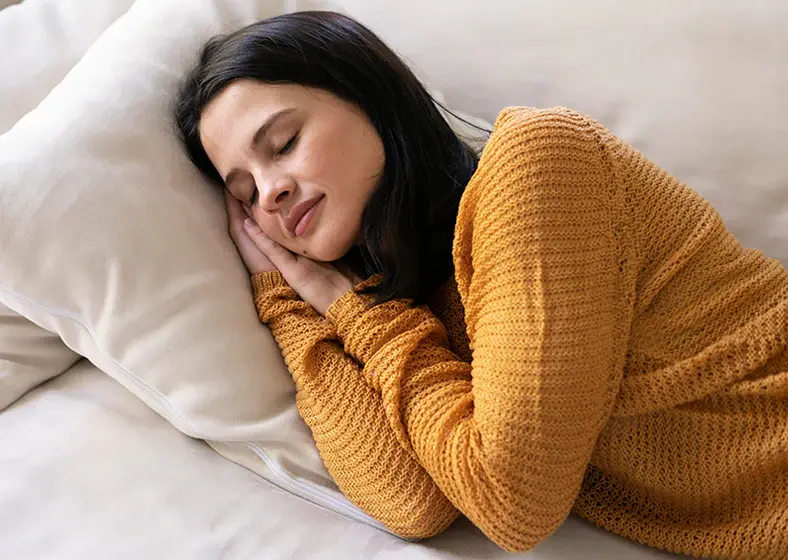
Sleep Hygiene 101: How to Actually Fall Asleep Faster and Stay Asleep
Falling asleep should not require strategy. For most of human history it did not. But modern life, with its artificial light, irregular schedules, constant stimulation, and low-grade background stress, has quietly dismantled the conditions under which sleep comes naturally. This guide walks you through rebuilding those conditions, one practical, evidence-backed habit at a time, so that sleep stops being something you chase and starts being something your body simply does.
There is a particular kind of exhaustion that hits you at 2:47 in the morning when you have been staring at the ceiling for two hours, calculating exactly how many hours of sleep you will get if you fall asleep right now. You do the math.
You recalculate. You check your phone. You do the math again. And somewhere in that loop, sleep becomes the one thing you want most and the one thing your body flatly refuses to give you.
Trending Now!!:
That experience is not a character flaw. It is not laziness, weakness, or a broken brain. It is, in most cases, a direct result of what sleep scientists call poor sleep hygiene, and it is far more fixable than most people realize. But fixing it requires you to unlearn a few things first.
What Sleep Hygiene Actually Means (And What It Does Not)
The phrase “sleep hygiene” gets thrown around so casually now that it has almost lost its meaning. Most people hear it and picture some influencer holding a lavender candle. But in clinical practice, sleep hygiene refers to a specific set of behavioral and environmental habits that either support or undermine your body’s natural sleep-wake cycle, your circadian rhythm.
Your circadian rhythm is essentially a 24-hour internal clock that regulates when you feel alert and when you feel sleepy. It responds to light, temperature, meal timing, exercise, stress hormones, and social cues.
When those inputs are consistent and well-timed, the clock runs cleanly. When they are chaotic, which describes the average modern adult’s schedule with frightening accuracy, the clock gets confused, and so does your sleep.
The goal of good sleep hygiene is not to turn you into some kind of monk with a 9 p.m. bedtime. It is to stop sending your body contradictory signals so that when you actually want to sleep, your biology cooperates.
The Sleep Schedule Nobody Wants to Keep (But Needs To)
Here is the most boring and most effective piece of advice in all of sleep medicine: wake up at the same time every single day, including weekends.
Not approximately the same time. Not “within an hour.” The same time.
This single habit is the backbone of healthy sleep. It anchors your circadian rhythm more reliably than any supplement, app, or mattress upgrade ever will.
The reason sleeping in on weekends feels so good in the moment and so terrible by Sunday night is called social jetlag, a term coined by chronobiologist Till Roenneberg to describe the mismatch between your biological clock and your social schedule. When you sleep until noon on Saturday after a 6 a.m. wake-up on Friday, you are essentially flying from New York to Los Angeles and back in 48 hours.
The fix is not to become a morning person by force. Pick a wake time that is genuinely sustainable, set your alarm, and treat it like a doctor’s appointment. Bedtime will adjust naturally over a few weeks. The consistency is the therapy.
Your Bedroom Is Probably Working Against You
The human body drops core temperature by roughly one to two degrees Fahrenheit in the hours leading up to sleep. This temperature drop is a biological signal that it is time to rest. When your bedroom is too warm, that signal gets muted.
Sleep specialists consistently recommend keeping your sleeping environment between 65 and 68 degrees Fahrenheit (18 to 20 Celsius) for optimal sleep quality. That might feel uncomfortably cool when you first climb into bed, but that is actually the point. Your body needs room to radiate heat. A cool room supports deep sleep. A warm one fragments it.
Light is the other major variable people underestimate. Your brain produces melatonin, the hormone that signals sleep onset, in response to darkness. Even low-level ambient light, the glow of a streetlamp through thin curtains, the standby light on a television, can suppress melatonin production enough to delay sleep onset by 30 minutes or more. Blackout curtains are not a luxury item. For anyone who struggles to fall asleep faster, they are among the highest-return investments available.
Noise matters too, though perhaps not in the way you expect. The problem is not noise per se, but inconsistent noise. A steady background hum, whether from a white noise machine, a fan, or a brown noise track, is often more conducive to staying asleep than total silence, because total silence means every random sound becomes jarring by contrast. The consistency of the sound is what matters, not the absence of it.
Blue Light, Screens, and the Part You Are Not Going to Like
You already know screens before bed are bad for sleep. The knowledge is everywhere. And yet you are still scrolling. So let us talk about why this is harder than it sounds, and what actually works.
The core issue is blue light, the high-frequency wavelength emitted by phones, tablets, laptops, and LED televisions. Blue light suppresses melatonin production more aggressively than any other wavelength because it mimics the spectral quality of midday sunlight. When your brain detects blue light at 10 p.m., it interprets that as “it is noon, be alert.” The result is a delayed circadian phase, meaning your sleep window gets pushed later and later over time.
Night mode settings and blue-light-blocking glasses help, but not as much as the companies selling them would have you believe. They reduce blue light exposure; they do not eliminate it. The more reliable intervention is a hard cutoff. No screens for 60 to 90 minutes before bed is the standard clinical recommendation. The apps, the social media, the streaming shows that suck you into “one more episode,” those are not just distractions. They are physiologically activating.
The workaround that actually works for most people is not willpower. It is friction. Put your phone charger across the room or outside the bedroom entirely. Buy an inexpensive alarm clock so you no longer need the phone at your bedside. The goal is to make reaching for the phone at 11 p.m. mildly inconvenient rather than reflexive.
What You Eat and Drink Is Disrupting Your Sleep More Than You Think
Alcohol is the most commonly misused sleep aid in the world, and it is worth being direct about this: alcohol does not improve sleep. It sedates you into unconsciousness, which is not the same thing.
In the first half of the night, after drinking, your body metabolizes the alcohol and suppresses REM sleep, the stage associated with emotional regulation, memory consolidation, and cognitive restoration. In the second half of the night, as the alcohol clears your system, your brain rebounds with a surge of activating neurotransmitters that cause fragmented, light, restless sleep. You wake up feeling as though you barely slept because, neurologically, you barely did.
Caffeine has a half-life of roughly five to seven hours in most adults. That means a cup of coffee at 3 p.m. still has half its caffeine load active in your system at 8 or 9 p.m. For people who are slow caffeine metabolizers, a genetic trait that is more common than most people realize, that 3 p.m. coffee can still be disrupting sleep at midnight. Cutting off caffeine before noon is aggressive but effective if you are genuinely struggling with sleep onset.
Large meals close to bedtime activate your digestive system and can raise core body temperature, both of which work against the physiological conditions your body needs for deep sleep. If you are hungry before bed, a small snack that combines a complex carbohydrate with a protein, such as a piece of whole grain toast with peanut butter, for example, is far better than going to bed either full or completely empty.
The Racing Mind Problem and What CBT-I Actually Does
For a significant portion of people with chronic insomnia, the environmental fixes help but do not solve the problem entirely. The real obstacle is not the room temperature or the screen time. It is the mind.
Sleep anxiety is a learned response. At some point, a few bad nights in a row created an association between the bed and wakefulness, between lying down and a cascade of anxious thoughts. The bed that should be a place of rest becomes a place where you rehearse tomorrow’s problems, replay yesterday’s conversations, and calculate your sleep debt with increasing panic.
Cognitive behavioral therapy for insomnia, commonly called CBT-I, is the treatment that has the most robust clinical evidence behind it. It is consistently recommended as the first-line treatment for chronic insomnia by sleep medicine specialists, outperforming sleeping pills in both short-term and long-term outcomes. CBT-I works by dismantling the learned associations that maintain insomnia and replacing them with more accurate beliefs about sleep.
One of its core techniques is called stimulus control. The logic is simple but counterintuitive: if you cannot sleep within about 20 minutes of lying down, you get up. You go to another room.
You do something quiet and non-stimulating in dim light until you feel genuinely sleepy, not just tired, and then you return to bed. You repeat this as many times as necessary. The goal is to rebuild the mental association between the bed and sleep, and to stop reinforcing the association between the bed and lying awake for hours.
Another CBT-I technique, sleep restriction therapy, is even more counterintuitive. It temporarily limits your time in bed to match your actual sleep time, which strengthens your sleep drive and consolidates fragmented sleep into a more solid block. It is deliberately uncomfortable in the short term. It works.
Natural Sleep Aids: What Helps, What Is Hype
Melatonin is probably the most widely used natural sleep aid in the United States, and it is almost universally misunderstood. Melatonin is not a sedative. It does not knock you out. It is a timing signal, a hormone that tells your brain it is getting dark and sleep time is approaching.
This distinction matters because most people take far too much of it. Over-the-counter melatonin supplements in the United States typically come in doses of 5 to 10 milligrams. The dose that research consistently shows to be effective for shifting the circadian clock is between 0.3 and 1 milligram. The higher doses flood the receptor sites without producing proportionally better results and can actually leave you feeling groggy the next morning.
Melatonin is most effective for circadian rhythm problems, jet lag, shift work, and delayed sleep phase syndrome. For garden-variety insomnia driven by racing thoughts or poor habits, it is only marginally useful on its own.
Magnesium glycinate has more robust evidence supporting it than most sleep supplements. Magnesium plays a role in regulating GABA, an inhibitory neurotransmitter that promotes relaxation and sleep. Many adults are mildly deficient due to modern dietary patterns, and supplementation at 200 to 400 milligrams before bed has shown measurable improvements in sleep quality and duration in several well-designed studies.
L-theanine, an amino acid found naturally in green tea, has a calming effect without sedation and pairs well with magnesium for people whose primary problem is an overactive mind at bedtime.
Prescription sleeping pills work. But they also carry real risks, including dependency, cognitive impairment, and the rebound insomnia that happens when you stop taking them. They are appropriate for short-term use in specific circumstances, and they are a poor long-term strategy for the vast majority of people with chronic sleep problems.
Exercise, Daylight, and the Habits That Set Your Clock
Morning sunlight exposure is the most powerful circadian zeitgeber, a German word meaning “time giver,” that exists outside of your own biology. Getting 10 to 20 minutes of natural light in your eyes within an hour of waking, not through a window, but actually outside, calibrates your circadian clock for the day and has downstream effects on how readily you fall asleep that night.
This is not a wellness platitude. It is anchored in photobiology. The specialized retinal cells that detect light for circadian purposes, called intrinsically photosensitive retinal ganglion cells, respond specifically to short-wavelength blue light in the morning, which suppresses melatonin and boosts cortisol appropriately, setting the timer for when melatonin will rise again roughly 12 to 16 hours later. Indoor lighting, even bright indoor lighting, is typically not intense enough to trigger this response properly.
Exercise significantly improves sleep quality, but timing matters for some people. Vigorous exercise within two to three hours of bedtime raises core body temperature and adrenaline levels, which can delay sleep onset in individuals who are already sensitive. Morning or afternoon exercise is preferable for most people with sleep problems. Even a 20-minute walk in the afternoon can meaningfully improve that night’s sleep.
The Bedtime Routine That Actually Works
A bedtime routine is not about self-care theater. It is about giving your nervous system a reliable sequence of low-stimulation cues that signal the transition from alertness to rest.
The routine does not need to be elaborate. It needs to be consistent. The same sequence of activities in the same order at roughly the same time every night becomes a conditioned trigger for sleep.
A warm shower or bath about 90 minutes before bed is particularly effective because it causes a drop in core body temperature as you dry off, mimicking the natural temperature drop that precedes sleep. Reading physical books, light stretching, journaling, or a body scan meditation all work well as wind-down activities.
What does not work: consuming news, watching stimulating television, checking work email, having difficult conversations, or doing anything that generates anxiety or excitement. The content matters as much as the medium.
When to Talk to a Doctor
Most sleep problems respond to the behavioral changes described above. But some do not, and it is important to know the difference.
Sleep apnea, a condition in which the airway repeatedly collapses during sleep, causes fragmented sleep and severe daytime fatigue that no amount of good sleep hygiene will fix. It is dramatically underdiagnosed, particularly in women, where it often presents without the classic loud snoring.
If you sleep an adequate number of hours and still wake up unrefreshed, if your partner reports that you stop breathing during the night, or if you have unexplained daytime sleepiness, a sleep study is worth pursuing.
Restless leg syndrome, periodic limb movement disorder, and circadian rhythm disorders are other conditions that require clinical evaluation rather than behavioral adjustment alone. Persistent insomnia that has lasted more than three months and is causing significant daytime impairment is the clinical threshold at which CBT-I with a trained therapist, rather than self-guided behavioral changes, becomes appropriate.
The Honest Truth About Sleep
Sleep is not a performance you optimize once and then maintain forever. It is a dynamic biological process that responds to everything: your stress levels, your health, your relationships, the season, and the stage of life you are in. There will be bad nights. There will be stretches of weeks where nothing seems to work. That is not failure.
The research on sleep is unambiguous on one point that rarely gets enough attention: worrying about sleep makes sleep worse. The anxiety about not sleeping is often more disruptive than the insomnia itself. Learning to hold your sleep more loosely, to stop treating each night as a test you might fail, is not passivity. It is a genuine therapeutic intervention.
The people who sleep best are generally not the ones who try hardest to sleep. They are the ones who have built quiet, consistent sleep habits and then mostly gotten out of their own way.
Start with one thing. The consistent wake time. The morning sunlight. The cooler bedroom. The phone is outside the door. Pick one, apply it genuinely for two weeks, and see what shifts. Sleep debt is real, but it is also recoverable. Your body wants to sleep. Usually, the most helpful thing you can do is stop preventing it.