What Really Happened to Caylee Anthony? Revisiting Casey Anthony’s Case
Caylee Anthony was two years old when she disappeared in 2008. Seventeen years later, no one has been held legally responsible for her death, and the questions that defined one of America's most divisive trials remain unanswered.
On the morning of July 15, 2008, a 911 call from a grandmother in Orlando, Florida, cracked open what would become the most talked-about murder case of the 21st century’s first decade.
Cindy Anthony told the dispatcher that her daughter’s car smelled “like there’s been a dead body in the damn car.” Her granddaughter, two-year-old Caylee Anthony, had been missing for thirty-one days. And nobody had called the police.
Trending Now!!:
That detail, thirty-one days of silence, is where this story really begins.
The Girl Who Was Already Gone
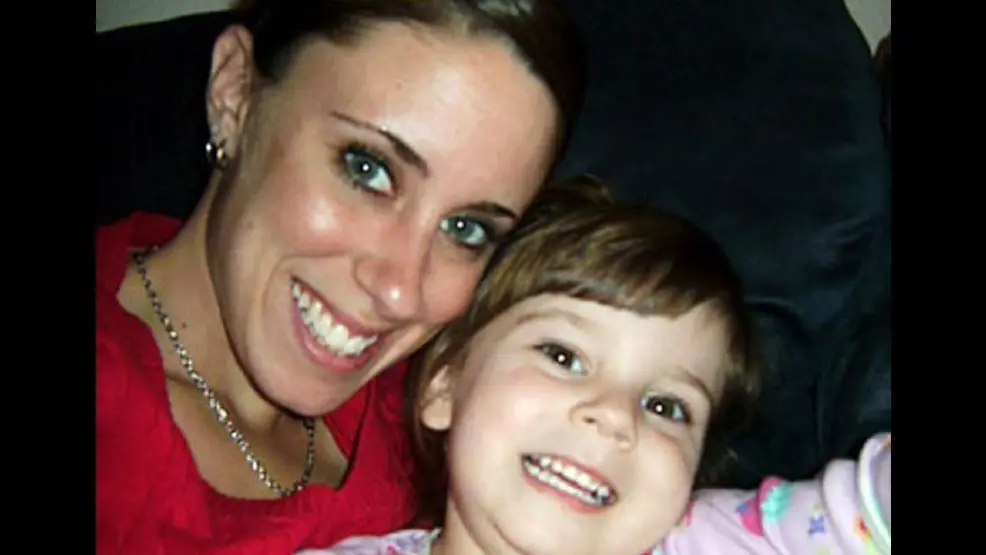
Caylee Marie Anthony was born on August 9, 2005, to Casey Anthony, a 19-year-old unmarried woman living with her parents, George Anthony and Cindy Anthony, in Orange County, Florida. By all photographic accounts, Caylee was a vivid, beautiful child with dark eyes and a wide smile that filled up every photograph she was ever in.
What we know about her short life is largely pieced together through the eyes of people who had motives to shape her story. Her grandmother adored her. Her grandfather, George Anthony, a former law enforcement officer, appeared devoted to her.
Her mother, Casey, presented to the world as a doting young mom, posting pictures, bringing Caylee to family gatherings, and carrying her on her hip at parties.
What happened beneath that surface is the question that divided a nation and continues to haunt the American criminal justice system to this day.
Thirty-One Days of Nothing
When Cindy Anthony finally called 911 on July 15, 2008, Caylee had last been seen alive on June 16, 2008, by anyone other than Casey herself.
For thirty-one days, Casey Anthony had been living what investigators would later describe as a double life: going to nightclubs, entering a “Hot Body” contest, moving in with her boyfriend Tony Lazzaro, and getting a tattoo that read “Bella Vita,” Italian for “Beautiful Life.”
She told her parents, her friends, and eventually detectives that Caylee was with a babysitter named Zenaida Fernandez-Gonzalez, a woman who, upon investigation, turned out to have no meaningful connection to the Anthony family whatsoever. This lie became known publicly as the “Zanny the Nanny” story, and it was one of dozens of fabrications Casey told during those thirty-one days.
When Orange County Sheriff’s Office investigators sat down with Casey on July 16, 2008, she walked them to Universal Studios, claimed she worked there, and led them through a parking lot for several minutes before finally admitting she had not worked at Universal in two years. She had been lying, she told them, because she was trying to find Caylee on her own.
The lies compounded. Each new version of events unraveled the one before it. And through all of it, Casey Anthony showed, at least to outside observers, very little visible distress about her missing daughter.
The Discovery That Changed Everything
On December 11, 2008, a meter reader named Roy Kronk called Orange County authorities about a suspicious bag in a wooded area less than a quarter mile from the Anthony family home on Hopespring Drive. Inside that bag were the skeletal remains of a small child. Wrapped in a Winnie-the-Pooh blanket. With duct tape near the skull.
Forensic analysis confirmed what everyone feared. The remains were those of Caylee Anthony. She was two years old.
The cause of death, however, could not be determined with certainty. Because Caylee’s body had been exposed to the Florida elements for months, decomposition had erased many physical markers that would have told investigators exactly how she died. The medical examiner, Dr. Jan Garavaglia, ruled the manner of death a homicide, but could not definitively identify the specific cause.
That gap in the evidence, that forensic silence where a cause of death should have been, would become the single most important factor in what happened next.
The Trial That Stopped the Country
The Casey Anthony trial began on May 24, 2011, in Orlando, Florida, and it consumed the American public with an intensity that had not been seen since O.J. Simpson. Cable news ran wall-to-wall coverage. HLN’s Nancy Grace, who had branded Casey “tot mom” years before the trial began, drew millions of viewers nightly. People camped outside the Orange County Courthouse for seats in the gallery.
Prosecutors Jeff Ashton and Linda Drane Burdick laid out what they called a deliberate, premeditated murder. Their theory was that Casey Anthony had used chloroform to render Caylee unconscious, then suffocated her with duct tape, disposed of her body in those woods, and spent thirty-one days pretending nothing had happened. They pointed to computer searches on the Anthony family computer for “chloroform,” “neck breaking,” and “how to make chloroform” as evidence of premeditation.
The forensic evidence was genuinely striking in places. A forensic botanist testified that roots had grown through Caylee’s skull in patterns consistent with the body having been placed there around the time Caylee disappeared.
Air samples taken from the trunk of Casey’s car were analyzed by Dr. Arpad Vass of Oak Ridge National Laboratory, who testified that the results were consistent with human decomposition. A stain on the trunk carpet was said by some analysts to contain traces of chloroform.
But defense attorney Jose Baez, working alongside high-profile attorney Cheney Mason, systematically dismantled those pieces of evidence one by one.
What the Defense Said Happened
Jose Baez opened for the defense with a bombshell. Caylee Anthony, he told the jury, had not been murdered. She had drowned accidentally in the family swimming pool on June 16, 2008. And then, Baez argued, George Anthony, not Casey, had disposed of the body, coaching his daughter to lie and covering up the accident to avoid scandal.
He went further. He accused George Anthony of having sexually abused Casey as a child, claiming this abuse was the source of Casey’s pathological lying and dissociative behavior. George Anthony denied every element of this allegation under oath.
The drowning theory was never supported by physical evidence. No witness came forward to corroborate it. But it did not need to be proven true. It only needed to create a reasonable doubt.
Baez and his team methodically attacked the prosecution’s forensic science. The chloroform searches, he argued, were far less sinister than presented: a competing expert testified that the searches were minimal and brief.
The air sample analysis from the trunk was challenged as an unreliable and non-standardized method. The duct tape’s relationship to Caylee’s death was questioned because the remains were so skeletonized that no one could definitively demonstrate the tape had been applied to a living or recently deceased child rather than placed in the bag with decomposing remains.
The prosecution’s case, though emotionally devastating, rested on a foundation of circumstantial evidence and forensic science that defense experts successfully called into question in front of that jury.
The Verdict That Shook the Country
On July 5, 2011, after deliberating for about ten hours and forty-five minutes across two days, the jury of seven women and five men returned their verdict.
Not guilty of first-degree murder. Not guilty of aggravated child abuse. Not guilty of aggravated manslaughter of a child.
Guilty on four counts of lying to law enforcement.
The reaction inside the courtroom was stunned silence. Outside, people who had gathered to watch on screens wept, screamed, and erupted in fury. Nancy Grace declared on live television that the devil was dancing that night.
Social media, still relatively young as a cultural force in 2011, became a firestorm of outrage. Casey Anthony, who had become one of the most hated women in America, was sentenced to four years in prison for the lying charges, but received credit for time already served and was released on July 17, 2011.
She was twenty-five years old. And she walked free.
What the Jury Actually Saw
One of the most persistent misunderstandings about the Casey Anthony verdict is the assumption that the jury got it wrong, or that they simply did not care. The jurors who spoke publicly afterward told a different story.
Juror Jennifer Ford told ABC News that jurors were sickened by the case but felt the prosecution had not proven beyond a reasonable doubt how Caylee died or that Casey was responsible for her death. “If you’re going to charge someone with murder,” Ford said, “don’t you have to know how they killed someone? We didn’t know how she died.”
That is the precise legal standard prosecutors are held to in criminal trials. And on the specific question of how Caylee Anthony died, the physical evidence simply could not deliver a definitive answer. The prosecution’s theory about chloroform and duct tape was compelling and plausible. It was not, in the eyes of twelve jurors, proven beyond a reasonable doubt.
This is not the same thing as Casey Anthony being innocent. Acquittal and innocence are legally and morally distinct things. And most people who have spent serious time with this case, including many experienced criminal attorneys, believe something deeply wrong happened to Caylee in the care of her mother.
But the American criminal justice system, whatever its many failures, is built on the presumption of innocence and the burden of proof. The prosecution did not clear the bar.
The Questions That Will Never Be Answered
What actually happened to Caylee Anthony on June 16, 2008, remains, officially, unknown. The answers that would satisfy the public, a clear cause of death, a clear chain of events, a clear moment of decision, were taken by the Florida heat and rainfall, and the passage of six months in those woods.
There are things we can say with reasonable certainty. Casey Anthony lied extensively and systematically to law enforcement, to her family, and to the public. She showed a pattern of behavior in the thirty-one days after Caylee’s disappearance that is difficult to reconcile with the behavior of a mother who did not know her child was dead. She received a tattoo reading “Bella Vita” while her daughter was missing. She continued her relationship with her boyfriend. She went to nightclubs.
The duct tape near Caylee’s remains was of the same brand found in the Anthony home. The Winnie-the-Pooh blanket matched items in the family’s possession. The body was found a short distance from where Casey’s family lived.
None of that, individually or collectively, was enough for a conviction on murder charges.
George Anthony and the Allegations That Refused to Die
One of the most painful subplots of this case involves George Anthony, Casey’s father. The defense accused him of sexual abuse and of covering up an accidental drowning.
He denied it all. He was never charged with anything. He attempted suicide in January 2009, leaving notes that many interpreted as suggesting he believed his granddaughter was dead.
George Anthony has maintained through the years that he does not know what happened to Caylee and that he loved her deeply. His credibility, like everyone else’s in this case, was savaged by the circus-like nature of the trial and the polarizing media environment surrounding it.
Cindy Anthony, Caylee’s grandmother, famously testified at trial that she, not Casey, may have been the one to conduct the chloroform searches on the family computer, claiming she was looking up information about chlorophyll after one of the family’s dogs ate some plants. Phone records showed she was at work during the times most of those searches occurred. Prosecutors believed she was lying to protect her daughter. She was not charged with perjury.
Casey Anthony Today
Casey Anthony has largely lived in obscurity since her release. She briefly appeared in a 2022 Peacock documentary, “Casey Anthony: Where the Truth Lies,” in which she maintained her innocence, suggested her father may have had a role in Caylee’s death, and offered her own version of the night of June 16, 2008, that aligned loosely with the drowning defense Baez had raised at trial.
She remains a figure of public contempt. She cannot use her real name in many circumstances. She has reportedly struggled to maintain employment because of who she is. In a civil case filed by the real Zenaida Fernandez-Gonzalez, whose name Casey borrowed for her fake babysitter story, a default judgment was entered against Casey after she failed to appear for depositions.
She owes money to the state of Florida for the cost of the investigation. She owes money in civil judgments. And she will carry, for the rest of her life, the weight of being the woman most Americans believe killed her daughter and got away with it.
What This Case Did to American Justice
The Casey Anthony case accelerated a cultural shift in how Americans consume criminal trials and how they render verdicts in the court of public opinion long before any legal jury convenes. It is, in many ways, a forerunner to the true crime industrial complex that now dominates streaming platforms and podcast charts.
It also exposed a genuine tension in the criminal justice system. Prosecutors, under enormous public pressure, charged Casey Anthony with first-degree premeditated murder, a charge that requires a very high evidentiary standard.
A charge of aggravated manslaughter, which requires proving that a death resulted from culpable negligence, might have been easier to prove given the available evidence. Some legal analysts have argued in hindsight that the decision to go for the most serious charge, in a case with an unknown cause of death, was a strategic miscalculation made worse by the public appetite for maximum punishment.
The jury did not exonerate Casey Anthony of wrongdoing. They found the prosecution’s specific theory of deliberate, premeditated murder unproven. That distinction matters enormously in a legal system built on the principle that the state must prove its case, not that the defendant must prove her innocence.
A Child Who Deserved Better
In all the noise about Casey Anthony, the verdicts, the documentaries, the cable news fury, the social media outrage, it is easy to lose sight of who this story is actually about.
Caylee Anthony was a two-year-old child who loved swimming, who called her grandfather “pawpaw,” who had her whole life ahead of her. She was found in a garbage bag in the woods, wrapped in a blanket her family recognized, less than a quarter mile from the house where she had lived.
Nobody has been held legally responsible for her death. The official cause of her death remains listed as homicide by undetermined means. Her case is, by every formal measure, unsolved.
That is the real weight of this story. Not the verdict, not the trial tactics, not the cable news coverage. It is the fact that a little girl named Caylee Anthony died in 2008, and in 2025, seventeen years later, we still cannot say with legal certainty what happened to her or who was responsible.
Some cases don’t give you closure. Some cases just give you questions. This is one of them.