What Your Resting Heart Rate Tells You About Your Cardiovascular Fitness
That quiet number your heart taps out each morning before you reach for your phone is one of the most honest fitness reports your body will ever give you. Here is how to read it.
The first time I paid serious attention to my resting heart rate, I was sitting in a clinic waiting room, fingers pressed against the inside of my wrist, quietly counting.
I had just returned from a six-week period of near-zero exercise, and the number I arrived at, 84 beats per minute, made me uncomfortable in a way that a blood pressure reading never had. Something about that single, quiet number felt personal. Accusatory, almost.
Trending Now!!:
That was over a decade ago. Since then, resting heart rate has become one of the metrics I track with the kind of quiet obsession that most people reserve for their bank balance.
Not because the number is magic, but because it tells a story, and if you know how to read it, that story is surprisingly honest.
The Number Nobody Talks About at the Doctor’s Office
Most people walk out of routine checkups knowing their blood pressure and cholesterol levels. Rarely does anyone sit them down and explain what their resting heart rate actually means, not just as a number on a chart, but as a window into how their cardiovascular system is holding up under the ordinary demands of being alive.
Studies have found that a higher resting heart rate is linked with lower physical fitness, higher blood pressure, and higher body weight. That connection is not incidental. It reflects something fundamental about how a trained heart works versus an untrained one.
The average resting heart rate sits between 60 and 100 beats per minute. For very fit people, it tends to fall in the range of 40 to 50 beats per minute. But the clinical “normal” range of 60 to 100 bpm is, frankly, a wide net. A person sitting at 98 bpm and a person sitting at 62 bpm are both technically “normal,” yet their cardiovascular fitness pictures could not be more different.
When I counsel people on heart health and exercise physiology, one of the first things I tell them is to stop treating that 60 to 100 range as a comfort zone and start thinking about where they actually want to be within it, and why.
Why a Lower Resting Heart Rate Usually Signals a Stronger Heart
Vigorous exercise strengthens the heart muscle, making it more effective at pumping blood throughout the body. Stronger hearts can pump the same amount of blood in fewer heartbeats, while weaker hearts need to beat more times to achieve the same volume.
Think of it this way. A poorly maintained water pump in an old building has to run almost continuously to maintain pressure. A newer, high-efficiency pump delivers the same pressure with far less effort and fewer cycles. Your heart works on the same principle.
When you build genuine cardiovascular fitness through consistent aerobic exercise, running, cycling, swimming, rowing, your heart’s stroke volume increases. That means each beat delivers more blood. So the heart doesn’t need to beat as frequently to meet the body’s oxygen demands at rest. The result is a lower resting heart rate, and it is earned, not inherited.
According to a 2018 review, all types of regular physical activity can help decrease your heart rate. But yoga and endurance training like running, cycling, and swimming were particularly beneficial for resting heart rates.
I’ve seen this play out in real time with dozens of people I’ve worked with over the years. A 46-year-old teacher who started running three days a week brought her resting heart rate from 79 down to 61 over seven months. She hadn’t lost a dramatic amount of weight. She hadn’t changed her diet significantly. The drop was almost entirely a product of her heart learning to work more efficiently.
The Athlete’s Heart: When Low Is a Badge of Honor
Well-trained athletes may have a resting heart rate around 40 bpm. During exercise, the heart pumps more blood with each heartbeat, delivering more oxygen to muscles. Repetitive exercise helps strengthen the heart muscle over time, making it more efficient at pumping larger amounts of blood.
This phenomenon, sometimes called the “athlete’s heart,” is one of the most elegant adaptations the human body is capable of. Elite endurance athletes, professional cyclists and marathon runners in particular often have resting heart rates in the high 30s.
The legendary cyclist Miguel Indurain reportedly had a resting heart rate of around 28 bpm during his peak racing years. That is not a medical anomaly. It is a testament to what years of aerobic training do to the cardiac muscle.
But here is something the internet glosses over: you do not need to be a professional athlete to benefit from this adaptation. Consistent moderate exercise, sustained over months, moves the needle.
The keyword is sustained. I’ve watched too many people sprint through six weeks of intense cardio, see their resting heart rate fall by a few beats, then return to sedentary life and watch it creep back up within weeks.
Heart Rate Variability: The Metric That Goes Deeper
Resting heart rate is the headline number, but tracking your resting heart rate helps you recognize patterns, whether improvements from a new fitness routine or spikes during periods of stress or illness.
Alongside resting heart rate, heart rate variability (HRV) has emerged as one of the most talked-about metrics in cardiovascular fitness monitoring. While resting heart rate measures how many times per minute the heart beats, HRV measures the variation in time between those beats.
A higher HRV generally indicates that the autonomic nervous system is functioning well, that the heart can adapt fluidly to demands. Low HRV, by contrast, often signals stress, overtraining, illness, or poor recovery.
The best wearable fitness trackers now report both. If your resting heart rate is creeping up and your HRV is dropping simultaneously, that is your body telling you something is off, whether that is accumulated fatigue, an oncoming illness, or chronic stress. Learning to read those signals together is more informative than watching either number alone.
What a High Resting Heart Rate Is Actually Telling You
A resting rate consistently above 90 bpm, even if technically within the “normal” range, may be cause for a closer look. It doesn’t always signal disease, but it could reflect stress, dehydration, poor sleep, or other lifestyle factors that strain your cardiovascular system.
I remember working with a man in his early fifties who came to me frustrated. He had been exercising regularly for months, but his resting heart rate remained stubbornly above 85 bpm.
We dug into his lifestyle and found the culprit almost immediately: he was sleeping five to six hours a night and managing a high-pressure business. No amount of treadmill time was going to fully offset the cortisol load he was carrying around the clock.
This is one of the most common misunderstandings I see. People treat resting heart rate as a fitness metric alone, when it is more accurately a whole-life metric. Factors that can affect resting heart rate include emotions, weight, fitness level, sleep quality, chronic long-term conditions, certain medications, and pregnancy.
Sleep deprivation alone can elevate your resting heart rate by several beats per minute on a sustained basis. Chronic anxiety does the same. So does excessive caffeine, which many fitness-conscious people consume in generous quantities without connecting it to their elevated heart rate readings.
Research consistently shows that people with higher resting heart rates tend to face greater risks of cardiovascular disease, stroke, and even premature death, independent of other risk factors. That independence from other risk factors is significant. It means that even after accounting for blood pressure, cholesterol, smoking, and body weight, a high resting heart rate carries its own cardiovascular risk.
The VO2 Max Connection
The gold standard for measuring cardiorespiratory fitness has always been VO2 max, the maximum amount of oxygen your body can consume during intense exercise.
Higher VO2 max levels are associated with a lower incidence of type 2 diabetes, cardiovascular disease, cancer, and mortality. VO2 max is not routinely measured in epidemiological and public health settings; however, measurement of resting heart rate could be a viable alternative at the population level.
In practical terms, if you don’t have access to a laboratory treadmill test, your resting heart rate is one of the most accessible proxies for understanding where your cardiorespiratory fitness stands. It’s not a perfect one-to-one substitute, but it trends in the right direction.
As VO2 max improves through training, resting heart rate tends to fall. As fitness declines through inactivity or illness, resting heart rate tends to rise.
For many people I’ve worked with, watching their resting heart rate trend downward over months of consistent training has been more motivating than any scale reading or body composition measure. It is visceral. The heart itself is confirming that the work is paying off.
Heart Rate Reserve: The Metric Trainers Use
Heart rate reserve is the difference between your maximum peak heart rate and your resting heart rate. It is one way to measure cardiovascular fitness. The more fit you are, the lower your resting heart rate will be. When you have a low resting heart rate, your heart rate reserve is high.
This concept matters because it tells you how much room your cardiovascular system has to respond to exercise demands. A person with a resting heart rate of 50 and a maximum heart rate of 180 has 130 beats of reserve. A person with a resting heart rate of 85 and the same maximum heart rate has only 95 beats of reserve. The first person’s cardiovascular system can scale up far more efficiently.
Cardiac rehabilitation programs use heart rate reserve to figure out the best intensity level for workouts. People doing cardiac rehab aimed for a heart rate of 60% to 80% of heart rate reserve plus resting heart rate.
This is also how personal trainers and exercise physiologists prescribe training zones with real precision, rather than using the blunt instrument of a flat percentage of maximum heart rate. The Karvonen method, which incorporates resting heart rate into target heart rate calculations, produces training zones that are personalized to your actual cardiovascular baseline. It is meaningfully more accurate.
How to Measure Your Resting Heart Rate Properly
This sounds trivially simple, and people almost always do it wrong.
A good time to check your resting heart rate is in the morning after you’ve had a good night’s sleep, before you get out of bed or grab that first cup of coffee.
That last part matters more than people appreciate. Caffeine begins elevating heart rate within 15 to 30 minutes of consumption. Getting out of bed and walking to the kitchen raises it further. Checking your pulse after you have already done both of those things, which is what most people do, gives you a reading that is 5 to 15 beats higher than your true resting rate.
The correct method: wake up naturally, lie still, and check your pulse before you move or reach for your phone. Press your index and middle fingers to the inside of your wrist, just below the base of your thumb. Count the beats for a full 60 seconds. Do not count for 15 and multiply by four; the accumulated error over multiple readings makes your trend data unreliable.
Looking at one day or one week at a time doesn’t always give the full story. Factors such as illnesses, infections, or abnormally active or inactive weeks can skew the data, so examine your averages over the course of a month or a year for a more accurate number.
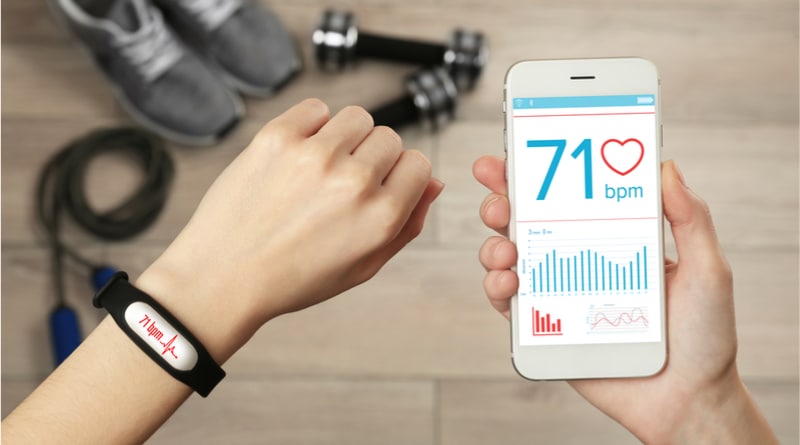
Modern fitness trackers and smartwatches do a credible job of measuring resting heart rate passively overnight, when the body is genuinely at rest. The readings are not perfect, but they are consistent enough to track meaningful trends, which is ultimately what matters most.
When a Low Heart Rate Is Not Good News
Not every low resting heart rate is a fitness trophy. While a low resting heart rate can reflect cardiovascular fitness, extremely low readings below 50 bpm in non-athletes may be concerning if accompanied by dizziness, fatigue, or fainting.
Sometimes, medications such as beta blockers or heart rhythm issues can cause the heart to beat too slowly. The key is context: a runner’s resting heart rate of 48 is likely normal; a sedentary person’s sudden drop to 48 might warrant medical evaluation.
A condition called bradycardia, defined as a resting heart rate below 60 bpm, is perfectly healthy in trained athletes but can indicate a conduction problem in people who have not earned it through exercise. If your heart rate has dropped suddenly without any corresponding increase in physical activity, that warrants a conversation with a physician, not a celebration.
I have seen people come across their low resting heart rate on a smartwatch and start bragging about it at the gym, only to discover their cardiologist had concerns about a sinus node issue. The number lives in context. Always.
The Lifestyle Factors That Move the Number
Beyond exercise, several factors have a consistent and documented effect on resting heart rate:
Sleep quality is probably the most underrated lever. Chronic sleep restriction elevates the sympathetic nervous system’s baseline activity, keeping the heart beating faster even at rest. Prioritizing seven to nine hours of quality sleep has a measurable effect on resting heart rate over weeks.
Stress management works through the same mechanism. Cortisol and adrenaline push the heart rate up. Practices that calm the nervous system, whether meditation, time in nature, or simply adequate rest and social connection, pull it back down. In the case of yoga, a lower resting heart rate may be caused by enhanced parasympathetic output, the body’s rest-and-digest system overriding the fight-or-flight response.
Hydration is another frequently overlooked factor. Mild dehydration reduces blood volume, forcing the heart to beat more frequently to maintain adequate circulation. Staying well hydrated supports a lower resting heart rate with zero additional effort.
Body weight plays a role too. Excess body fat increases the total volume of tissue the heart must supply with oxygenated blood, which drives resting heart rate upward. As body composition improves through exercise and dietary changes, resting heart rate tends to follow.
Putting It to Work
A few practical lifestyle changes can help optimize your resting heart rate and, by extension, your overall heart health: exercise regularly through moderate aerobic activity such as walking, cycling, and swimming, which strengthens the heart muscle and allows it to pump blood more efficiently and beat less often at rest. Get adequate sleep. Poor sleep quality or short sleep duration can elevate your heart rate and blood pressure the next day. Manage stress.
The most honest advice I can give, having tracked this metric in myself and in others for years, is to start treating your resting heart rate as a running biography of your cardiovascular health.
Not a snapshot, but a narrative. A single reading on any given morning means very little. The trend over three months, six months, and a year tells you almost everything you need to know about whether your lifestyle is building a stronger heart or slowly wearing one down.
When that number starts falling, even by three or four beats, something real is happening inside your chest. The heart is getting stronger, beating more deliberately, asking less of itself to keep you alive.
That, to me, is one of the most meaningful forms of progress a human body can make.