
Who Is Milla Blake Really Based On in Apple Cider Vinegar?
Netflix's Apple Cider Vinegar invented the rivalry, the name, and the friendship. But the cancer, the mother, the Gerson therapy, and the grief? Those came from a real Australian woman who died at 29, and whose story the wellness industry has never fully reckoned with.
Netflix’s buzzy Australian limited series has viewers asking one crucial question: Is Milla Blake a real person? The answer is more complicated, and more heartbreaking, than most people expect.
When Netflix dropped Apple Cider Vinegar on February 6, 2025, most viewers already knew the broad strokes of Belle Gibson’s story. The Australian wellness influencer who claimed to have healed terminal brain cancer through diet and natural medicine, only to be exposed as a fraud, had been covered extensively in print and on television for years.
Trending Now!!:
The series is based on the 2017 book The Woman Who Fooled the World by journalists Beau Donelly and Nick Toscano. But it was the other character, the one audiences had never heard of, who ended up haunting people long after the final episode.
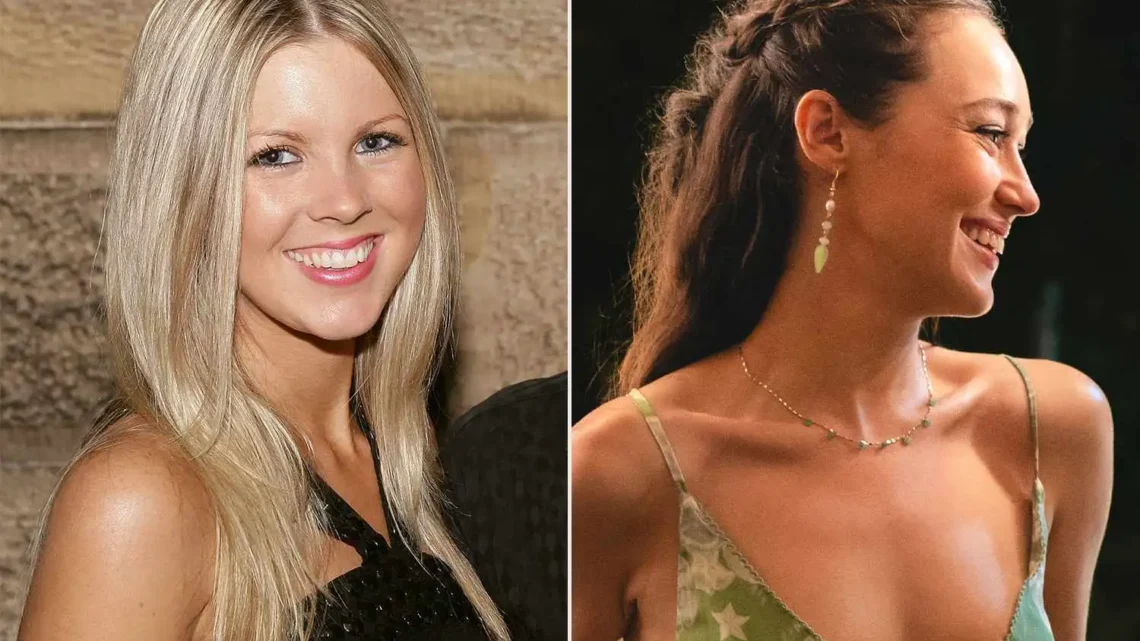
While the Netflix series tracks Belle Gibson (played by Kaitlyn Dever) as she rose to popularity and quickly plummeted after it was revealed she had faked her illness, it runs alongside the story of Milla Blake, another wellness influencer who really did battle cancer.
Played by Alycia Debnam-Carey with a quiet, devastating restraint, Milla becomes the moral and emotional center of the show, the woman whose authentic suffering throws Belle’s manufactured victimhood into sharp, ugly relief.
So who is Milla Blake? And was she a real person?
The Short Answer: Fiction Built on a True Foundation
Milla Blake is a fictional character who is inspired by and based on the real life of Jessica Ainscough, as well as an amalgamation of other wellness influencers. Debnam-Carey herself addressed this directly. “Milla is an amalgamation of wellness influencers at the time,” she told TODAY.com.
“We created Milla as her own thing. That was what was so great about it, we could boost her up so that she could be going toe-to-toe with Belle.”
Series creator Samantha Strauss describes Milla as “a portrait of influencers at the time.” That framing matters. The show is not a biopic of Jessica Ainscough.
It is a dramatized portrait of a particular moment in internet culture, a moment when young women who were genuinely sick became brands, and when the wellness industry found a way to profit from both their hope and their desperation. Milla is the clearest window into that world.
Who Was Jessica Ainscough?
Jessica Ainscough was an Australian teen magazine editor who became a writer and wellness entrepreneur after turning her back on the prescribed treatment for a rare cancer she was diagnosed with at the age of 22.
Ainscough went by the self-coined nickname “The Wellness Warrior” and used her popular blog by the same name to share her personal story of using alternative cancer treatments.
Like Milla, Jessica worked for a teen magazine after graduating from university. In 2008, she was diagnosed with epithelioid sarcoma, a rare, aggressive soft tissue cancer that usually starts as a lump in the arms, hands, or legs.
She was just 22 years old. She was initially offered the option of having her arm amputated to prevent the cancer from spreading. This is precisely the same crossroads where we first meet Milla in the series, sitting across from a doctor who is telling her something her brain refuses to absorb.
What followed for Ainscough mirrors the Apple Cider Vinegar narrative almost scene for scene in places. She initially tried conventional treatment, specifically isolated limb perfusion, which uses chemotherapy targeted at a specific limb. It showed early promise. Then the cancer returned.
Doctors proposed the more drastic option: amputation at the shoulder. Her doctors told her she had no other choice but to amputate her arm completely, and even then, the amputation could only help prolong her life, not save it. Her cancer was terminal. Jess was faced with a difficult choice, and ultimately made the decision not to go through with the amputation.
She turned instead to Gerson therapy.
Gerson Therapy: The Real-Life Hirsch Institute
One of the more striking details in Apple Cider Vinegar is the fictional Hirsch Institute, a lush, expensive retreat where wealthy cancer patients go to pursue alternative healing through juicing, coffee enemas, and a strict organic protocol. In reality, this is a thinly veiled reference to Gerson therapy, and the parallels are not incidental.
Gerson therapy works under the theory that disease can be cured by “removing toxins from the body.” The intense regime involves an organic, high-potassium vegetarian diet, several dietary supplements, and regular coffee enemas.
Per Memorial Sloan Kettering Cancer Center, Gerson therapy “does not treat or prevent cancer,” and the American Cancer Society warns that it can be “very harmful to the body,” especially the repeated use of coffee enemas.
Ainscough turned to Gerson therapy, an alternative cancer treatment that involves patients following a strict two-year organic juice regimen, drinking up to 13 glasses of fresh juice a day, taking dietary supplements, and having daily coffee enemas. The theory, which underlies it and has no scientific backing, is that disease can be cured by removing toxins from the body, boosting the immune system, and replacing excess salt with potassium.
This is not fringe historical medicine. Gerson therapy still has active advocates in 2025. The show does not portray Ainscough or Milla as stupid or gullible. It portrays them as human beings in an impossible situation, reaching for any source of hope they can find, in a wellness marketplace that was more than happy to sell it to them.
How Closely Does Milla Follow Jessica’s Real Story?
The parallels between the fictional Milla Blake and the real Jessica Ainscough are extensive and specific enough that there is no reasonable doubt about the primary inspiration.
Jessica’s mother, Sharyn Ainscough, went through a similar journey as Milla’s mom, Tamara, does in Apple Cider Vinegar. In the series, sometime after Milla’s health journey, Tamara gets diagnosed with breast cancer.
Milla tries to treat her mom in the same way she treated herself. In real life, Sharyn was diagnosed with breast cancer and also chose to forgo conventional treatment. She joined her daughter and went through Gerson Therapy, but in 2013, two and a half years after her diagnosis, she died.
In Ainscough’s now-deleted blog post on her five-year diagnosis anniversary in 2013, she remembered hearing of her sarcoma diagnosis: “The results have told us that you have a rare type of cancer called epithelioid sarcoma.” And like Milla, Ainscough was in a relationship. She and Tallon Pamenter were engaged and planning to marry in 2015.
Jessica would also share her experiences at Wellness Warrior events, in the same way Milla does in Apple Cider Vinegar. She built a following, published books, and became, for a significant period in Australian wellness culture, a figure of genuine admiration and inspiration.
It was reported that Ainscough earned “six figures” in income from the Wellness Warrior brand. This is a detail the show captures with uncomfortable honesty. Milla is not simply a victim.
She is also a businesswoman who profits from her illness, even if she genuinely believes in what she is selling. That ambiguity is what makes her so compelling on screen and so haunting in retrospect.
The Rivalry That Never Happened
One of the most dramatically effective elements of Apple Cider Vinegar is the relationship between Belle and Milla. They circle each other, study each other, and eventually collide in ways that feel both inevitable and tragic. In the show, Belle essentially takes notes from Milla’s playbook and then fakes the illness that Milla actually has.
Seeing as Milla does not exist, she and Belle were not friends in real life. The real Belle Gibson and the real Jessica Ainscough were also reportedly not even acquaintances, so the entire storyline of them being portrayed as rivals is fictional and was created entirely for the show’s narrative.
What is real is that Gibson was aware of Ainscough. According to the book The Woman Who Fooled the World, Gibson was “positioning herself as the next poster girl for holistic health and wellness” four years before Ainscough’s death.
And there is one detail from the real timeline that the show handles with particular care: Belle Gibson showed up at the influencer’s funeral, despite barely knowing her. Other attendees who truly missed Ainscough were shocked to see Belle Gibson there, making the moment all about herself.
One mourner told The Sydney Morning Herald that she had been “in floods of tears” during the wake, adding that some guests seemed put off by it. It is a detail almost too on-the-nose to be true, and yet it is.
How Jessica Ainscough’s Story Actually Ended
In December 2014, Ainscough wrote in her blog that she had returned to conventional medical care to treat a large fungating tumour under her left shoulder that had been bleeding non-stop for ten months, leaving her weak and uncomfortable. Under the care of an oncologist, Ainscough received six weeks of radiation therapy in the final weeks of her life.
While the prescribed scientific treatment had a 10-year survival rate estimated to be 49 to 72 percent, with higher survival rates reported for patients of Ainscough’s age range, she died of cancer at the age of 29, less than six years after switching to alternative treatments.
Her fiancé, Tallon Pamenter, spoke about her final weeks with grief and a kind of anguished clarity. He told the Daily Mail her decision to turn to tougher treatment six weeks before her death was “a risky and tough decision, but Jess bravely embraced this last chance option,” adding: “Finally, the walls were broken down between conventional and unconventional medicine.”
It is worth sitting with that for a moment. A woman who had built an entire identity around the idea that her body was healing itself spent her final weeks in radiation therapy, having arrived there too late.
The Family’s Response to the Netflix Show
The release of Apple Cider Vinegar in February 2025 reopened wounds that had never fully closed for the Ainscough family. Col Ainscough, Jessica’s father, expressed his distaste for the show, telling The Daily Telegraph that it is “insensitive and clearly profit-driven with wildly inaccurate fictional writing about a deeply real and personal tragedy.” “They have chosen to create a dramatized story in which Jess and my family are inaccurately portrayed,” the 72-year-old said.
His frustration is understandable. His daughter died at 29. His wife died two years before her. Now, a streaming platform with tens of millions of subscribers has turned their grief into content, even if the creators insist they did so with care and intention. The fact that the show has received generally strong reviews, with 84 percent of critics giving it a positive rating on Rotten Tomatoes, is cold comfort to a father who watched his family be fictionalized.
It also raises legitimate questions about the ethics of dramatizing the stories of real people who cannot speak for themselves, especially when those people were not fraudsters but genuine victims of both a cruel disease and an industry that promised more than it could deliver.
What the Show Gets Right About the Wellness Industry
Whatever its artistic liberties, Apple Cider Vinegar captures something true about the wellness influencer ecosystem of the early 2010s. It was a world where young, photogenic women who were sick became extremely valuable content, where raw juice and clean eating were sold as both lifestyle choices and something more, where the line between hope and exploitation was blurred until it nearly disappeared.
Jessica Ainscough was, by most accounts, sincere. She genuinely believed that Gerson therapy was working. Her blog was not cynical manipulation in the way Belle Gibson’s claims were. But sincerity does not equal accuracy, and a platform of 1.5 million followers amplifies both the truth and the error at exactly the same volume.
The tragedy is not simply that Ainscough died. It is that she died having encouraged others to follow the same path, and that her mother followed her down it. Responding to Ainscough’s death, John Dwyer of Friends of Science in Medicine warned of the risk of bowel perforation associated with coffee enemas and said: “There is no credible scientific evidence for any of these alternative treatments that claim to cure cancer.”
The wellness industry in 2025 is larger, more sophisticated, and more algorithmically amplified than anything Ainscough could have imagined when she started her blog. The question the show is really asking, the one that lingers after Milla’s final scenes, is not whether these influencers are good or bad people. It is whether the system that elevates them and monetizes their suffering can be held accountable for the harm it causes.
Alycia Debnam-Carey’s Performance and the Weight of the Role
It would be a disservice to the article to discuss Milla Blake without discussing the performance that makes the character real. Alycia Debnam-Carey, the 31-year-old Australian actress known to many from her years on The 100 and Fear the Walking Dead, brings a quality to Milla that goes beyond technique.
There is something in the way she holds herself, slightly guarded, slightly luminous, that makes you believe this is a woman who has decided that her illness is going to mean something, no matter the cost.
The character works as a mirror to Belle precisely because she is not naive. Milla knows she is building a brand. She knows that her suffering has commercial value.
She chooses to believe that making it mean something is worth it. Debnam-Carey plays all of that without editorializing, which is exactly right, because the show does not want you to judge Milla. It wants you to mourn her.
The Bottom Line for Viewers Searching for Answers
If you finished Apple Cider Vinegar and typed “Is Milla Blake a real person” into a search bar at midnight, here is what you need to know. Milla Blake is not real. Jessica Ainscough was.
The show took significant creative liberties, including inventing the rivalry with Belle Gibson entirely. But the bones of Milla’s story, the cancer diagnosis at 22, the choice to reject amputation, the Gerson therapy, the blog and the followers and the book, the mother who followed her into alternative treatment and died, the cancer returning with ferocity in the end, those bones came from a real woman who really lived and really died.
Both Belle and Milla serve as a tragic reminder to audiences of the dangers of peddling unproven treatments to people who are truly ill. Milla Blake’s story is undeniably one of the saddest in Apple Cider Vinegar, owing to her decision to use alternative medicines rather than opt for traditional cancer treatment.
The show asks you to grieve Milla. What it does not tell you, not quite explicitly enough, is that the real version of this story already happened. Jessica Ainscough died on February 26, 2015, on the Sunshine Coast of Australia, surrounded by people who loved her. She was 29 years old. Her fiancé had planned to marry her that September.
That is not a plotline. That is a life.
What People Ask
Apple Cider Vinegar is currently streaming on Netflix. The 2017 book “The Woman Who Fooled the World” by Beau Donelly and Nick Toscano, on which the series is based, is available wherever books are sold.