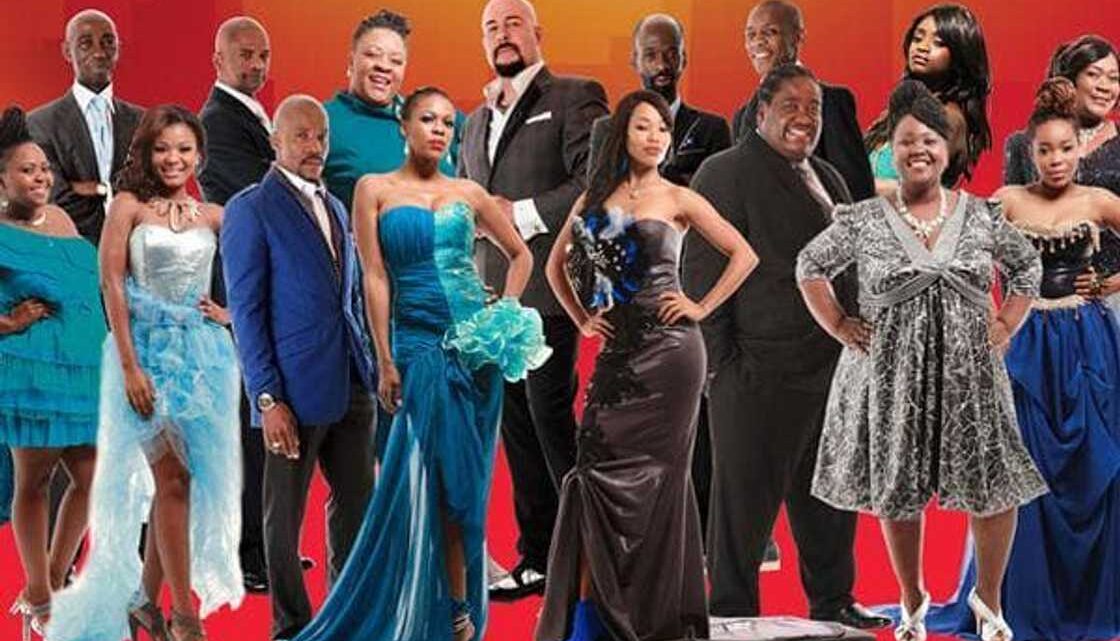
Rhythm City TV Series: The Complete Story of South Africa’s Greatest Music Soapie
From a bold 2007 debut on e.tv to a finale watched by millions, Rhythm City spent fourteen years turning Johannesburg's music scene into the most compelling drama on South African television.
There are shows that entertain, and then there are shows that become part of the cultural fabric of a country.
Rhythm City, the South African television musical drama series that ran on e.tv from July 9, 2007, to July 16, 2021, was firmly the latter.
Trending Now!!:
For fourteen years, it aired five days a week and built a devoted audience that, at its peak in 2020, numbered close to 5.2 million viewers. It was not simply a soapie. It was a mirror held up to South Africa’s cities, its ambitions, its grief, and its relentless creative hunger, all set against the backdrop of the cutthroat music industry.
Anyone who spent even a few months following the show knows that Rhythm City had a texture unlike anything else on South African television.
The plotting was tight when it needed to be, sprawling when the stories demanded it, and the music that ran through every scene was not wallpaper. It was the pulse of the whole enterprise.
Where It Came From and Why It Mattered
Rhythm City was produced by Quizzical Pictures as an e.tv original production and served as a replacement for the cancelled youth-oriented soapie Backstage. The transition was intentional.
Created by Rolie Nikiwe and Neil McCarthy, it made its broadcast debut on July 9, 2007, and was instantly more popular than Backstage, giving e.tv a serious foothold in the production of scripted, local South African prime-time content.
Nobody at the time anticipated that the series would run for over a decade, accumulate more than 3,600 episodes, and win multiple South African Film and Television Awards along the way.
What made the show work from the very beginning was its premise. Rather than reaching for a generic suburban drama, the creators set the action inside the South African music industry, a world that most viewers either dreamed of entering or knew someone who had tried.
The story revolved around the trials and tribulations of people trying to break into the music industry, and that premise aged remarkably well because the music industry never stops producing new dreamers, new gatekeepers, and new betrayals.
The Johannesburg setting, with the series filmed in Stage 6 of Sasani Studios’s Highland North complex, with footage from surrounding areas used, grounded everything in a recognizable urban world that felt lived-in rather than manufactured.
The Cast That Built the Show
Over fourteen seasons, Rhythm City cycled through an enormous number of actors, but several names became synonymous with the series itself.
Mduduzi Mabaso, Mpho Molepo, Linda Sokhulu, Oros Mampofu, and Jesse Suntele were among the performers who shaped the show’s identity across multiple seasons. The role of Sbu Vilakazi became one of the most closely watched character arcs on e.tv.
The role was initially played by Lungile Radu but recast to Pallance Dladla in 2014 to accommodate the actor’s departure and refresh the character’s arc, a move that illustrated exactly how Quizzical Pictures managed a long-running drama without losing its narrative thread.
The casting process itself was rigorous from day one. Led by creative director Rolie Nikiwe, the process focused on sourcing both established and promising performers to portray the show’s mix of aspiring musicians, industry insiders, and township characters.
That combination, the raw talent rubbing up against seasoned operators, gave the show its central dramatic engine. It never let the story become purely aspirational, because for every character who caught a break, there were three others watching from the wings, wondering what they had missed.
The Soundtrack and the Sound of a Show
No account of Rhythm City is complete without spending time on its music, because the music was not incidental. The original soundtrack for the series, including the title sequence, was produced by Alan Lazar under his Lalela Music Library and by Simon Sibanda, with several cast members and artists such as Bongani and Gemini Major.
Gemini Major’s involvement was particularly significant, given how his career developed in the years that followed. The show was, in a genuine sense, a launchpad.
A second title sequence was introduced on October 23, 2014, coinciding with the channel broadcasting in HD, with music again done by Alan Lazar and Simon Sibanda, this time with vocals from Samthing Soweto.
The sequence was filmed with aerial shots over Soweto, Alexandra and the Johannesburg CBD, and on street level in and around Gandhi Square. That sequence became iconic on its own terms. It told you exactly what kind of show you were watching before a single line of dialogue was spoken. Urban. Ambitious. Rooted in real South African geography.
A selection of soundtracks was released through Apple Music and Spotify in 2015, and the show also accepted music submissions from upcoming and emerging artists, making it one of the few South African television productions that functioned as an active participant in the music ecosystem rather than simply depicting one.
Dumi Masilela and the Moment the Show Broke Everyone’s Heart
There are moments in the history of long-running television dramas that cut through the usual rhythms of plot and counter-plot and become something else entirely. For Rhythm City, that moment arrived in August 2017.
Dumisani Masilela, born May 31, 1988, was shot in the stomach during a hijacking in Tembisa on August 2, 2017, while sitting inside a car with a friend. He underwent immediate surgery but died the following day from severe injuries. He had been one of the show’s central performers for five years, playing the character Sifiso Ngema, and had married actress Simphiwe Ngema just two months before his death.
Production on the series was paused for two days following his death. The response from the production team was, under the circumstances, remarkably thoughtful.
After extensive consultation with the Masilela family, the producers of Rhythm City decided to incorporate Dumi Masilela’s tragic death into the exit storyline of his character, Sifiso, to highlight the scourge of violence that is sadly so prevalent in South Africa. The hijacking would not be shown on screen, only reported, but the weight of what had happened was undeniable.
In the closing scene of his final episode, Dumi Masilela sang behind a microphone, performing “Ungasabi,” a song he had written for the series just before his death. A special on-screen memorial service aired on October 18, featuring Dumi’s real-life mother, Sabatha Magdeline Masilela and his brother Thabani Masilela attending the service, a decision that collapsed the boundary between fiction and grief in a way that South African television had rarely attempted. The episode remains one of the most emotionally significant moments in the country’s soap opera history.
Awards, Controversy, and the Long Middle
Rhythm City was not a show that coasted on its early success. It evolved, sometimes controversially. In March 2016, the Broadcasting Complaints Commission of South Africa reprimanded e.tv and Rhythm City for showing a graphic episode on October 20, 2015, involving the strangulation of a female character.
The channel argued that the series was meant for a mature audience and that the scene only lasted a few minutes. The BCCSA ruled that e.tv had contravened the broadcasting code of conduct by showing content harmful to children in a timeslot where a large number of children were likely to be in the audience.
The awards record told a different story. The series won the Best TV Soap award at the 10th SAFTAs in 2016. It repeated this success at the 14th SAFTAs in 2020, where it also secured a win for Best Supporting Actor in a TV Soap for Mncedisi Shabangu as Khulekani Ngobese.
At the 15th SAFTAs in 2021, Rhythm City claimed the Best TV Soap award once more, alongside a win for Best Actress in a TV Soap for Petronella Tshuma as Pearl Genaro. Three Best TV Soap wins at the SAFTAs over the course of the show’s run is not a small thing. It represented sustained recognition from an industry that does not hand out trophies for simply staying on the air.
The show’s complicated relationship with the awards circuit was also worth noting. In March 2012, e.tv pulled entries for its series from the 6th South African Film and Television Awards, with the channel indicating dissatisfaction over the manner in which the awards were conducted.
In October 2013, e.tv pulled entries from the Royalty Soapie Awards for both Rhythm City and Scandal! These decisions, whatever their internal logic, kept the show slightly outside the full embrace of the industry establishment, which only added to its reputation as a production that did things its own way.
COVID, Cancellation, and the Way It Ended
In March 2020, Rhythm City, along with other productions, went on a production break due to the COVID-19 pandemic. Production was paused again in June 2020 due to positive COVID-19 cases recorded from staff.
The show resumed, but something had shifted. The numbers, the schedules, the economics of South African free-to-air television were all in motion, and Rhythm City was caught in the current.
On November 20, 2020, e.tv announced the cancellation. The cast and crew had apparently been called together, believing they were to be congratulated for their ratings performance during COVID-19, and were instead told the show was ending.
The manner of the announcement became its own story, passed around within the South African television industry as a cautionary tale about how institutions treat the people who built them.
e.tv managing director Marlon Davids said the channel would continue to look forward to producing exceptional and relevant local content, and that Rhythm City had successfully achieved its part of that obligation throughout the past thirteen years. The language was corporate and careful, which made it land all the harder on the people who had given a significant portion of their professional lives to the production.
The final episode aired on July 16, 2021. Rhythm City was replaced with the telenovela House of Zwide. The transition was smooth on the scheduling grid, but for viewers who had been with the show since 2007, there was nothing smooth about it.
Fourteen years of a story, concluded in a single evening time slot, with another show immediately taking the chair.
Reach, Legacy, and Where to Watch Now
The show’s footprint extended well beyond South Africa. Across the African continent, the series was broadcast through the channel’s eAfrica feed, as well as affiliate channels e.tv Ghana and e.tv Botswana.
The pan-African feed launched in April 2010 in 12 countries, featuring Rhythm City as one of its flagship local programs. For viewers across the continent who grew up watching South African drama, the show was often the entry point. It normalized the idea that compelling, recognizable African television drama could come out of Johannesburg, not just Lagos or Nairobi or Cape Town.
The show, which spanned 3,660 episodes in total, is now available through e.tv’s streaming service eVOD, where the complete archive allows viewers to catch up on past storylines at no additional cost for basic content.
For a new generation discovering it and for longtime fans wanting to revisit specific seasons, the availability of that archive matters. Long-running South African soapies do not always survive the transition to digital platforms intact. Rhythm City did, which speaks to the value that e.tv still places on the show’s catalog even after cancellation.
What Rhythm City Left Behind
The easy answer to what Rhythm City left behind is numbers: over 3,600 episodes, multiple SAFTA wins, a viewership that held close to five million at its peak, and careers launched for actors who have since become fixtures in South African entertainment. All of that is accurate, and none of it quite captures what the show actually meant.
What it left behind was a blueprint. It demonstrated that a South African drama series could sustain its storytelling energy across more than a decade by staying genuinely rooted in something that mattered to its audience, in this case, the music industry, the dreams it generates, and the violence it sometimes sits alongside.
It showed that township realism and commercial television were not incompatible. It showed that when something terrible happens to a member of your production family, you can honour that grief on screen without making it exploitative, if you are careful and if you ask the right people for permission first.
The show also left behind a question that South African television continues to grapple with: what comes after a flagship series that ran for fourteen years? House of Zwide has found its own audience, and the e.tv schedule has moved on.
But there are still viewers who mark July 16 on their mental calendars each year, the date the final episode aired, because some shows do not simply end. They become part of the furniture of a life lived in a particular country at a particular time. Rhythm City was, by any reasonable measure, exactly that kind of show.
What People Ask
Users also read: Which Soccer Team Does Formula 1 Star George Russell Support & Does He Go to Matches?