How I Almost Lost Everything Chasing Google’s First Page
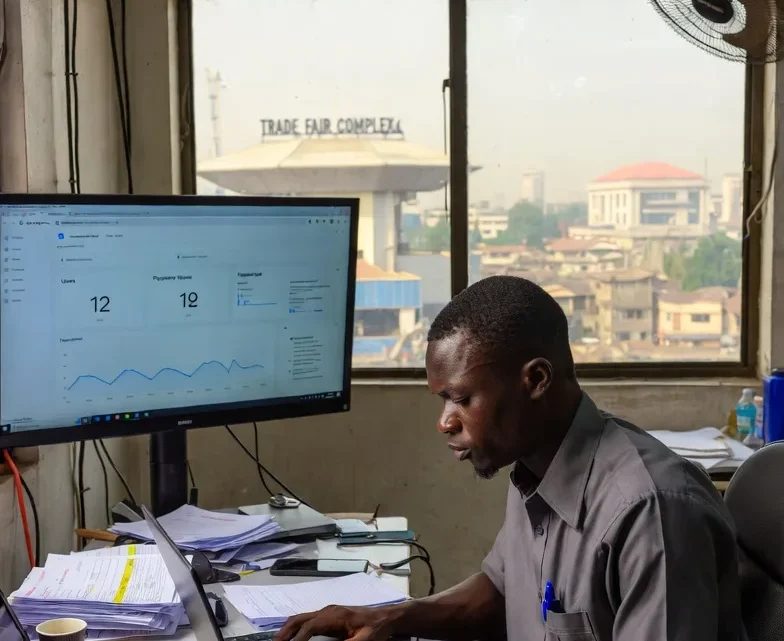
I still remember the exact day I sat in front of my laptop in a cramped Yaba co-working space, three unpaid invoices on my desk and a Google Analytics dashboard showing 12 visitors for the entire month.
Twelve. My mother had more people at her shop on a slow Tuesday.
Trending Now!!:
That was 2014. I had just quit my job at a Lagos advertising agency, convinced I could do it better on my own.
I had watched people talk about search engine optimization, content marketing, and organic traffic like they were printing money. I wanted in. I thought it was easy. I was wrong in ways that still embarrass me today.
My first client was a man I will call Chuka. He sold industrial generators somewhere around Trade Fair Complex. He had a website built in 2009 that loaded slower than NEPA restoring light. His homepage was a block of yellow text on a red background. The contact form had not worked since Goodluck Jonathan was campaigning.
He called me one afternoon, voice like gravel.
“I need to be number one on Google,” he said.
“For which keyword?” I asked.
“All of them,” he replied.
I should have managed his expectations right there. Instead, I smiled into the phone and said, “We can work with that.”
That was my first real mistake in this business.
I took his money, N150,000 upfront, which felt like a fortune to me then. I built him a new site, wrote what I thought was decent website copy, stuffed every page with the phrase “buy generator Lagos” about forty-seven times per paragraph because I had read somewhere that keyword density was important. I submitted his sitemap to Google. I waited.
Nothing happened for six weeks.
Then Google updated its algorithm.
His site dropped from page four, which was already nowhere, to completely invisible. Not page ten. Invisible. I typed his business name directly and even that barely showed up. I felt my stomach drop through the floor of that co-working space.
I called my friend Emeka, who had been doing SEO consulting longer than I had. He picked up on the second ring.
“Guy, I think I killed my client’s website,” I said.
He was quiet for a second, then he started laughing. Not a polite laugh either. The full, rolling, slapping-your-knee kind.
“Keyword stuffing?” he asked.
“Maybe,” I said.
“How many times per page?”
I didn’t answer.
“Bro,” he said, still laughing, “Google penalized you. You need to clean up the on-page SEO, fix the content, build some real backlinks, and pray.”
“Pray?” I said. “Is that a technical term?”
“In your case, yes.”
I spent the next three weeks rewriting every page of Chuka’s website. Proper meta descriptions, clean title tags, readable URLs, actual paragraphs a human being would enjoy reading.
I researched long-tail keywords like “industrial generator supplier Lagos” and “diesel generator for commercial buildings Nigeria.” I stopped writing for robots and started writing for real people. I added an FAQ section. I built a simple internal linking structure so that one page fed traffic to another.
Then came the harder part, link building.
Everyone in digital marketing talks about backlinks like they are some mystical currency. At the time, I thought it meant spamming comment sections with your client’s URL. I had already done that to Chuka’s site, leaving links on random blog posts about football and Nollywood gossip. Not exactly high-authority domains.
Emeka walked me through it properly one evening over suya at a spot near Surulere. He was the kind of person who explained things while chewing, completely unbothered.
“Real backlinks come from real relationships,” he said, pointing a skewer at me for emphasis. “Write something useful. Get it published on a site people actually read. Link back. Repeat.”
“That sounds like it takes time,” I said.
“Everything real takes time,” he replied. “You want fast results, go buy Instagram followers.”
I laughed but took the lesson seriously. I started doing guest posting on small business blogs. I reached out to a generator maintenance company in Abuja and offered to write their blog content for free in exchange for a mention and a link back to Chuka’s site. They agreed.
I wrote a piece titled “How to choose the right generator size for your office,” and it was genuinely useful. It answered real questions. People shared it.
Six weeks later, Chuka’s website appeared on page two for “buy industrial generator Lagos.”
I called him immediately.
“We are on page two,” I said, barely containing myself.
He was quiet.
“Page two is where dead websites live,” he replied.
I blinked. “Sir, progress takes time, we started from page five hun…”
“I said number one,” he reminded me flatly.
I closed my eyes, breathed, and said, “Give me four more weeks.”
That four weeks was the most focused stretch of work I have ever done. I created a content strategy that mapped every blog post to a stage of the buyer journey.
Someone searching “how much does a generator cost in Nigeria” was early in the process, curious, not ready to buy. Someone searching “Caterpillar 100KVA generator price Lagos” was standing outside the shop with their wallet open. I wrote content for both types. I optimized for search intent, not just keywords.
I improved the site’s page speed using compressed images and cleaned-up code. I fixed broken links, which there were many. I set up Google Search Console and Google Analytics properly and actually looked at the data instead of just having it open to feel productive.
One evening I noticed something interesting in the Search Console. A blog post I had written about “generator maintenance tips for Nigerian businesses” was getting a surprising number of impressions but very few clicks. The click-through rate was terrible.
I rewrote the meta title to be more direct and added a number to it, changing it from something vague to “7 generator maintenance tips every Lagos business owner must know.” The CTR doubled within two weeks.
Small things. Compounding.
By the eighth week, Chuka’s website ranked number three for the primary keyword. Not number one, but number three on the first page of Google, above several bigger, older companies with flashier websites.
He called me that evening.
“I got three inquiries today,” he said.
“From the website?” I asked.
“From Google,” he confirmed, and for the first time, I heard something close to warmth in his voice.
“We keep improving,” I told him.
“How much to stay number one?” he asked. Classic Chuka.
I quoted him a monthly SEO retainer. He negotiated me down, naturally, but he signed. That was my first real retainer client, and it changed everything.
Word spread the way things spread in Lagos, through a friend of a cousin of a colleague at a meeting somewhere in Victoria Island. More clients came. A fashion brand, a real estate company, a food delivery startup that kept changing their campaign direction every two weeks, which was its own kind of nightmare. Each project taught me something new about digital marketing, about audiences, about the gap between what clients say they want and what their customers are actually searching for.
I learned that SEO is not a trick. It is not about fooling Google. The algorithm has gotten too intelligent for that, and every time someone tries to game it, Google adjusts and wins. The businesses that rank consistently are the ones with genuinely useful content, clean technical SEO, strong domain authority, and a real understanding of their audience’s search behavior.
I learned that social media marketing and SEO feed each other. A post that goes viral on Instagram drives brand searches on Google. Brand searches improve your organic search ranking. Everything connects.
I learned that conversion rate optimization matters just as much as traffic. Getting people to your site is only half the job. The other half is making sure the site gives them a reason to stay, to trust you, to click the button.
Ten years later, I run a proper digital marketing agency. We handle SEO campaigns, paid search advertising, email marketing, content strategy, and analytics for clients across different industries. I have a small team, a real office, and a client roster that keeps growing.
But I still think about that Chuka website sometimes. Those twelve visitors in a month. That yellow text on red background. The keyword stuffing that crashed everything.
It reminds me that the best lessons in this business come not from the wins, but from the disasters you somehow survive.
And somewhere in Trade Fair Complex, I hope Chuka’s generators are still selling, and his website is still somewhere on page one.
He never did tip me for the work.
But he renewed the retainer for three years, and in this business, that is practically a love letter.