How Sorting Waste Saved Our Neighborhood from an Incinerator
Two Saturdays ago, I was already late for the community clean-up in Yaba.
That alone was ironic because I’m the one always preaching green living, sustainable lifestyle, zero waste habits, and climate-conscious choices like a walking eco-podcast.
Trending Now!!:
Ten years in environmental advocacy and I still oversleep sometimes. Growth, not perfection.
I rushed out with my backpack, reusable water bottle, cloth shopping bag, and my phone on 4%. Typical.
At the gate, I saw my neighbor, Zainab, dragging two black nylon bags.
I frowned.
“Zai, what’s inside those?”
She sighed. “Just trash. I missed waste pickup yesterday.”
I peeked inside. Plastic bottles. Food packs. Sachet water. Old clothes.
My chest tightened.
“This is exactly what we’re trying to stop,” I said. “You can sort this. Plastic recycling. Textile reuse. Organic composting.”
She rolled her eyes.
“You and your sustainability lifestyle motivation. I’m tired abeg.”
I laughed. “Give me five minutes. I’ll show you magic.”
We spread the trash on the ground like detectives. Neighbors passing were staring like we were mad.
“Okay,” I said, pointing.
“Plastics here for recycling.
Food waste here for compost.
Clothes here for donation.
Paper here.
Metal here.”
Zainab blinked.
“So this is what people mean by waste segregation?”
“Yes. This is eco-friendly living in real life, not Instagram.”
She slowly smiled.
“This feels… powerful.”
We loaded the sorted bags into my old bicycle basket and headed for the clean-up point near the canal. The morning sun was soft, Lagos birds were screaming like they had rent to pay, and the smell of roasted corn mixed with damp soil filled the air.
I felt proud. Like a sustainability influencer without the influencer stress.
At the clean-up site, youths were already there. Gloves on. Buckets out. One guy was playing Burna Boy from a Bluetooth speaker.
A girl shouted,
“Green gang assemble!”
We laughed and joined in.
While we worked, I overheard a conversation behind me.
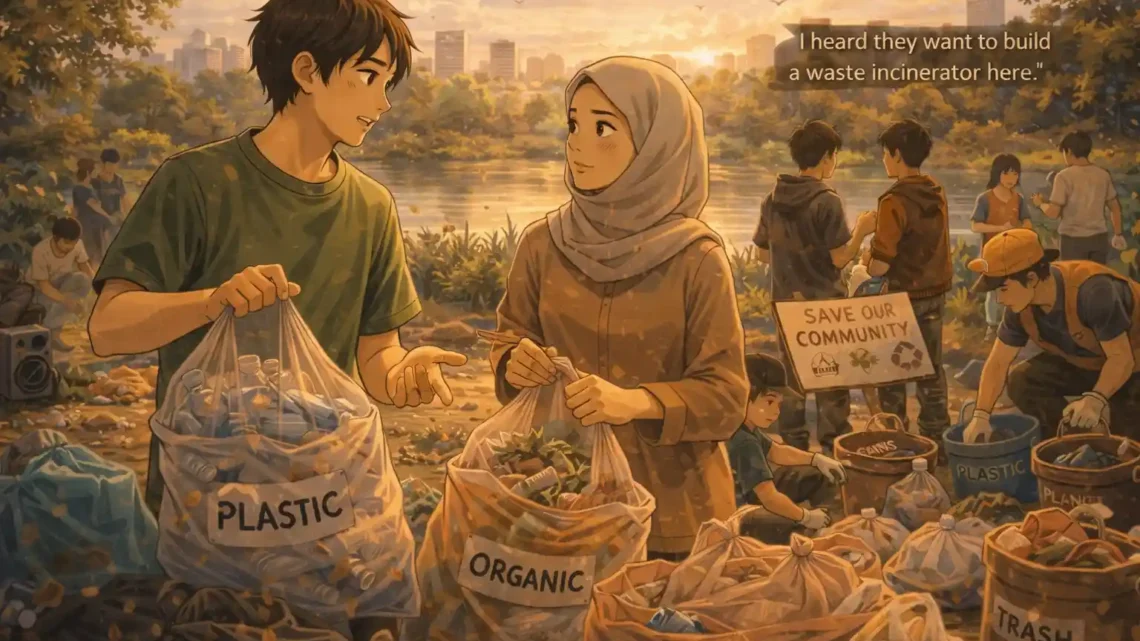
“I heard they want to sell this land to a company.”
“For what?”
“To build a waste incinerator.”
My hands froze.
An incinerator.
In our neighborhood.
The same place we were trying to promote clean energy, pollution reduction, and sustainable development.
I walked closer.
“Who told you?” I asked.
A boy named Tobi shrugged.
“My uncle works in the council. They say it will create jobs.”
I felt a hot wave move through my body.
I’ve spent ten years explaining how burning waste increases air pollution, respiratory disease, and carbon emissions. How recycling and circular economy models are safer and smarter.
Zainab whispered,
“So all this effort might be useless?”
“No,” I said quietly. “This is where it starts.”
That night, I didn’t sleep. I wrote a long post. Not the boring activist kind. The emotional kind.
I wrote about:
- how green living saved me money
- how reducing plastic made my home lighter
- how sustainability isn’t luxury, it’s survival
- how eco-friendly habits protect future generations
- how waste-to-energy isn’t always green energy
I ended with:
“If we don’t choose sustainability, sustainability will be forced on us by disaster.”
The post went viral.
By morning, journalists were calling.
Environmental NGOs reposted it.
A council rep sent me an email asking for a meeting.
Zainab called me screaming.
“You’re trending on X! Green Living Prophet!”
I laughed. “Please, I still forget my reusable cup sometimes.”
The meeting happened three days later.
They didn’t cancel the project.
They changed it.
Instead of an incinerator, they approved:
a recycling plant
composting facility
green jobs for youths
community education programs
renewable energy systems
I sat there stunned.
Afterward, Zainab hugged me tight.
“See what your environmental lifestyle preaching has caused.”
I whispered,
“I almost threw away that trash today.”
She smiled.
“And you almost threw away your destiny.”
Now when people ask me why I take green living and sustainability so seriously, I tell them:
“It’s not about being perfect.
It’s about being responsible.
It’s about choosing a future that doesn’t choke us.”
And sometimes,
the biggest environmental revolution
starts with one bag of trash
you almost didn’t sort.