I Quit Corporate Training to Teach AI Online – The Real Story (Mistakes, Tears & Triumphs)
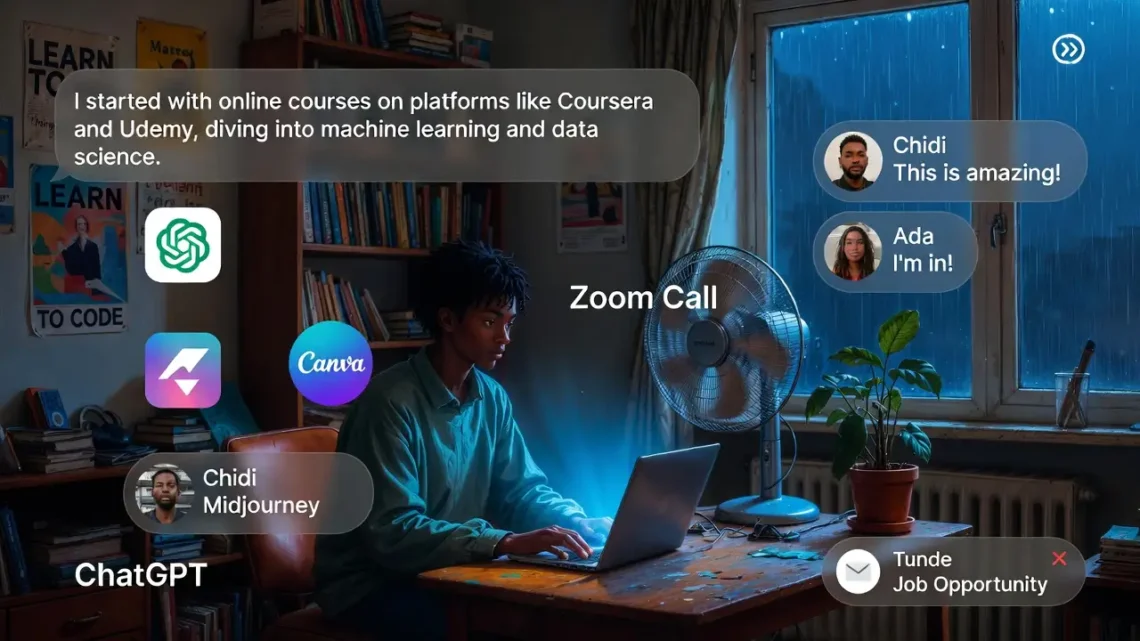
Two nights ago, I was scrolling through my laptop in my small Abuja apartment, the fan whirring like it was about to take off, when I decided enough was enough.
After 12 years of grinding in corporate training rooms—teaching everything from basic Microsoft Office to leadership workshops—I was tired of recycled slides and uninterested faces.
Trending Now!!:
I wanted something fresh: online courses, online education, real impact from my own home.
I had dabbled before. Back in 2018, I created my first mini-course on Udemy about “Effective Presentation Skills for Nigerian Professionals.” It made a few thousand naira in the first month—enough for data and small chops—but then it flatlined.
I made every rookie mistake: generic title, no eye-catching thumbnail, zero promotion. I learned the hard way that great content alone doesn’t sell. You need SEO for online courses, smart keywords like “best online courses for presentation skills” or “learn public speaking online Nigeria,” and consistent marketing.
This time felt different. I was going all in on something that was set to explode in 2026: AI in education. Everyone was talking Artificial Intelligence courses, AI and Machine Learning, generative AI for beginners.
I saw the trend on Coursera, edX, even local platforms—Google’s Introduction to AI was blowing up enrollments. So I built my course: “Practical AI for Everyday Nigerian Professionals: No Coding Needed.”
I poured my heart into it—real stories from when I used ChatGPT to rewrite boring training manuals, Midjourney for custom slides that made participants gasp, simple automation hacks that saved my old team hours.
The launch day arrived. I sat in my dimly lit room, blue light from the screen painting my face, heart thumping like I’d drunk three Red Bulls. I hit “Publish” on Teachable (I’d switched from Udemy because I wanted control over pricing and branding).
The sales page had every SEO trick I’d learned the painful way: keyword-rich title, meta description screaming “best AI online course for beginners 2026,” headings stuffed naturally with “online AI courses,” “AI education platforms,” “learn AI online free tips” (even though mine was paid—value first, always).
First sale came at 2:17 a.m. A notification pinged. Then another. By morning, 12 enrollments. I danced around my room like a madman, waking my neighbor’s dog.
A week in, things got interesting. A student named Chidi messaged me in the community forum:
“Sir, this course is fire! I used your prompt trick on Claude to draft my entire proposal for a promotion. Got the raise yesterday. How did you know this stuff would work in Naija offices?”
I typed back, grinning: “Brother, I’ve been in those same meetings where the boss wants ‘innovative ideas’ but yawns at PowerPoint. I tested everything on real people first—no theory, just what actually moves the needle.”
Then came Ada. She joined live Q&A (I hosted weekly Zoom sessions—nothing fancy, just me in a clean shirt, background blurred):
“Ma, I’m a teacher in Enugu. Can AI really help with lesson plans? My school has no budget for fancy tools.”
I leaned into the camera. “Ada, 100%. Start with free ones—Gemini, ChatGPT. I once turned a dry history topic into an interactive story for secondary students using AI images and role-play scripts. Kids stayed awake. Parents thanked me. You don’t need money; you need the right prompts. I’ll share my top 10 education-specific ones in next week’s module.”
She teared up a bit. “God bless you. This is changing my classroom.”
The course hit 200 students. Money wasn’t crazy—yet—but enough to quit my side consulting gig. I started dreaming bigger: maybe a specialization, partnerships with local tech hubs.
Then the twist hit like Lagos traffic.
One rainy evening, I got an email from Tunde, one of my earliest enrollees. Subject: “Your Course Changed My Life… And Broke It.”
I opened it, stomach dropping.
“Oga, thank you for the AI knowledge. I built a small tool using your no-code tips—AI resume builder for job seekers. It went viral on LinkedIn Nigeria. Companies started paying me to customize it. I made more in three months than five years in banking.
But here’s the wahala: my old boss saw it, claimed I stole company data to train it (I didn’t—I used public examples). Now HR is threatening legal action. They say ‘intellectual property.’ I’m scared. Did I mess up by learning from your course?“
My hands went cold. I’d preached ethics in Module 3—data privacy, no scraping, original prompts—but had I said it loud enough? Had I buried the warnings under excitement?
I called Tunde immediately. His voice cracked over the line.
“Sir, I thought I was careful. But they have lawyers. I might lose everything.”
We talked for an hour. I walked him through what I’d learned from my own early mistakes—always document sources, use open datasets, and add disclaimers. I promised to help: rewrite sections, connect him with a friend who’s a tech lawyer, even refund if needed (he refused).
In the end, it blew over. The company backed down when Tunde showed timestamps proving the tool was built post-employment with zero company data. But it shook me.
I reopened the course that weekend. Added a whole new bonus module: “AI Ethics for Real-World Use: Avoiding Career Landmines.” I shared my fear, Tunde’s story (with permission, anonymized), and practical checklists. No sugarcoating—online education is powerful, but like fire, it can burn if mishandled.
Sales dipped for a week—people got cautious. Then they spiked again. Students messaged: “This is why we trust you. Real talk, not hype.”
Now, months later, I still teach. My course sits proudly among the best online courses for AI skills 2026, popping up in searches for “AI online courses Nigeria,” “practical AI education.” I don’t pretend it’s perfect. I’ve failed, panicked, fixed things. But that’s the beauty of this space—online learning platforms let you evolve in public.
If you’re reading this, thinking of jumping into online courses or creating one, hear me: dive in. Make mistakes. Share the messy truth. Because the real plot twist isn’t the money or the virality—it’s discovering you can change lives, including your own, one honest lesson at a time.
And sometimes, just sometimes, you save someone from falling… by almost falling yourself.