I Used to Hate Online Courses—Then I Met a Procrastinating Student in My Back Seat
If you had told me ten years ago that I’d be teaching people through online courses, I would’ve laughed and told you to sit down.
Back then, I believed real education only happened in classrooms, with whiteboards, dusty projectors, and lecturers who read slides like bedtime stories.
Trending Now!!:
Fast forward to today, and I’ve spent over a decade in education, digital learning, and online course creation—building curriculums, reviewing e-learning platforms, mentoring students remotely, and watching lives change through nothing but Wi-Fi and determination.
But the night that fully converted me?
It didn’t happen in a classroom.
It happened in traffic.
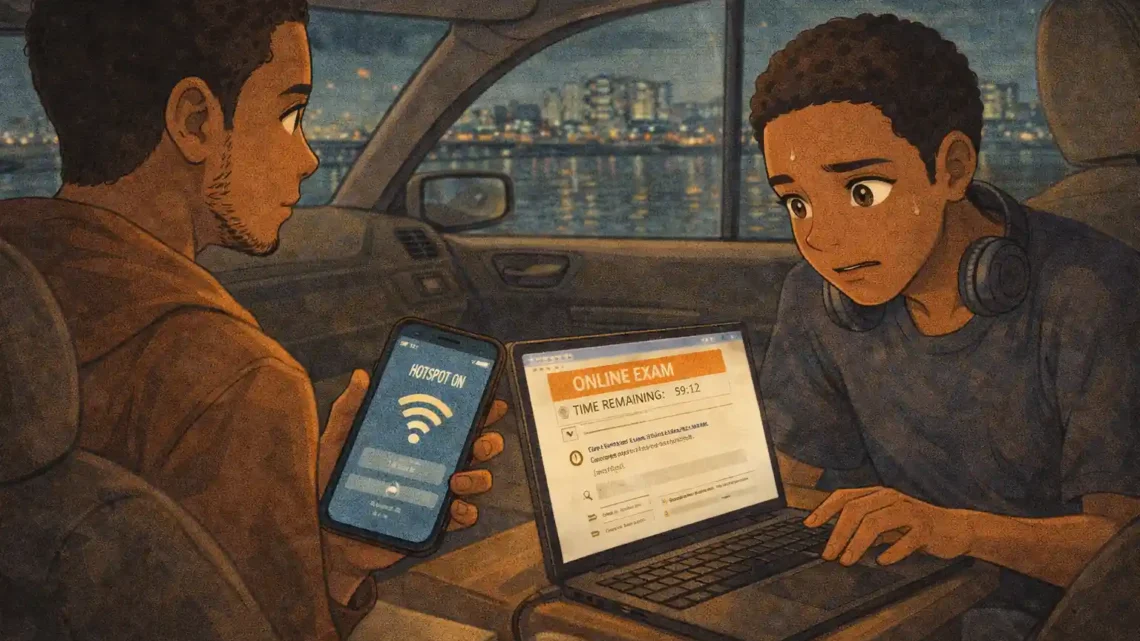
Two nights ago, around 9:30 PM, I was driving back from a late workshop in Victoria Island. My phone buzzed with a Bolt request, and like usual, I messaged to confirm.
The reply came instantly:
“Please drive fast. I have an exam in 40 minutes.”
That was already suspicious.
When I arrived, a young guy—maybe early 20s—jumped into the back seat with a laptop bag, headphones hanging off his neck, fingers still tapping his phone.
“Good evening,” I said.
He didn’t look up.
“Please, just go. I’m late for my online certification exam.”
I raised an eyebrow and pulled into traffic.
Halfway through Ozumba Mbadiwe, he finally looked up.
“I hate school,” he said suddenly.
I chuckled. “That makes two of us. So why the rush?”
He sighed. “I’m enrolled in an online data analytics course. Self-paced. Flexible learning. All that sweet marketing.”
I smiled. I’d written those words myself—for other platforms.
“And?” I asked.
“And I procrastinated,” he admitted. “Thought I could always ‘watch the videos later.’ Now later is now.”
I nodded slowly.
That’s the first real lesson of online education nobody advertises: freedom requires discipline.
“I’ve seen this before,” I told him.
“I’ve built online courses. Reviewed MOOCs. Consulted for e-learning platforms. And trust me—most students don’t fail because the course is bad. They fail because they treat flexibility like permission to delay.”
He looked shocked.
“So it’s not just me?”
I laughed. “If procrastination were a course, it would have the highest enrollment worldwide.”
The car was quiet for a moment. Lagos lights blurred past us.
Then he asked, “Did online courses ever work for you?”
I hesitated.
This was the honest part.
“Yes,” I said. “But only after I failed first.”
I told him about the first online course I ever enrolled in—a professional certification that could’ve changed my career earlier. I never finished it. Got distracted. Told myself I was ‘busy.’
Years later, when I finally committed—scheduled learning hours, applied lessons immediately, treated it like real school—that same model transformed my career.
That’s when I realized something crucial:
Online education doesn’t replace traditional learning.
It rewards personal responsibility.
We pulled up to his destination—a quiet hostel in Yaba.
He checked his phone.
“Exam starts in five minutes,” he said, panicking.
Then his face dropped.
“No network.”
I watched him refresh helplessly.
For a moment, I saw myself—years ago—missing opportunities because I didn’t take learning seriously.
I handed him my hotspot.
“Use mine,” I said. “And breathe.”
His eyes widened. “Are you serious?”
“Very. But promise me something.”
“Anything.”
“Finish the course. Not just the exam.”
Three months later, I got a LinkedIn message.
It was him.
He passed the exam.
Completed the course.
Landed a remote internship through an online learning platform.
His last line hit me hard:
“You didn’t just give me internet that night. You gave me belief in online education.”
What 10+ Years in Education Taught Me
- Here’s the truth, from real experience—not textbook theory:
- Online courses work when students show up consistently
- E-learning platforms amplify effort; they don’t replace it
- Self-paced learning requires structure
- Certificates don’t change lives—applied skills do
- Education today is less about location and more about commitment
The biggest plot twist?
The future of education isn’t online or offline.
It’s personal.
Final Thought
I used to think education needed a classroom.
Now I know it needs intention.
And sometimes…
all it takes to change someone’s future
is a ride, a conversation, and borrowed Wi-Fi.