The Day My Best Investing Advice Almost Broke My Friend
Two nights ago, I was scrolling through my phone in the living room, the blue light hitting my face while my wife slept upstairs.
Another late-night check on the stock app—S&P 500 up 1.2%, my retirement portfolio looking healthier than it had in years. I should have been proud. Instead, a knot twisted in my gut.
Trending Now!!:
I’ve been in personal finance and investing for over 15 years now. Started as a broke 20-something maxing out credit cards on “sure-thing” tech stocks during the dot-com hangover.
Lost half my savings in 2008 because I thought I knew better than the market—chased high-yield investments, ignored diversification, and watched my 401(k) evaporate like morning dew. Learned the hard way: compound interest is magic when it works for you, but debt compounds faster when it works against you.
These days, I write about budgeting tips, how to start investing, passive income ideas, retirement planning, and stock market investing for folks just like younger me. People message me daily asking about best index funds, Roth IRA vs traditional, or how to pay off debt fast. I tell them the truth—no get-rich-quick schemes, just boring consistency wins.
But that night, everything flipped.
My phone buzzed with a notification from an old client, Tunde. We’d worked together years back when he was drowning in consumer debt—car loan, credit cards, even a personal loan from a sketchy app.
I helped him build a debt snowball plan, cut unnecessary subscriptions, and start small with index fund investing through a low-cost brokerage. Last I heard, he was debt-free and putting 15% into his retirement account.
The message read: “Bro, I need to talk. Urgent. Can we meet? My life just blew up.”
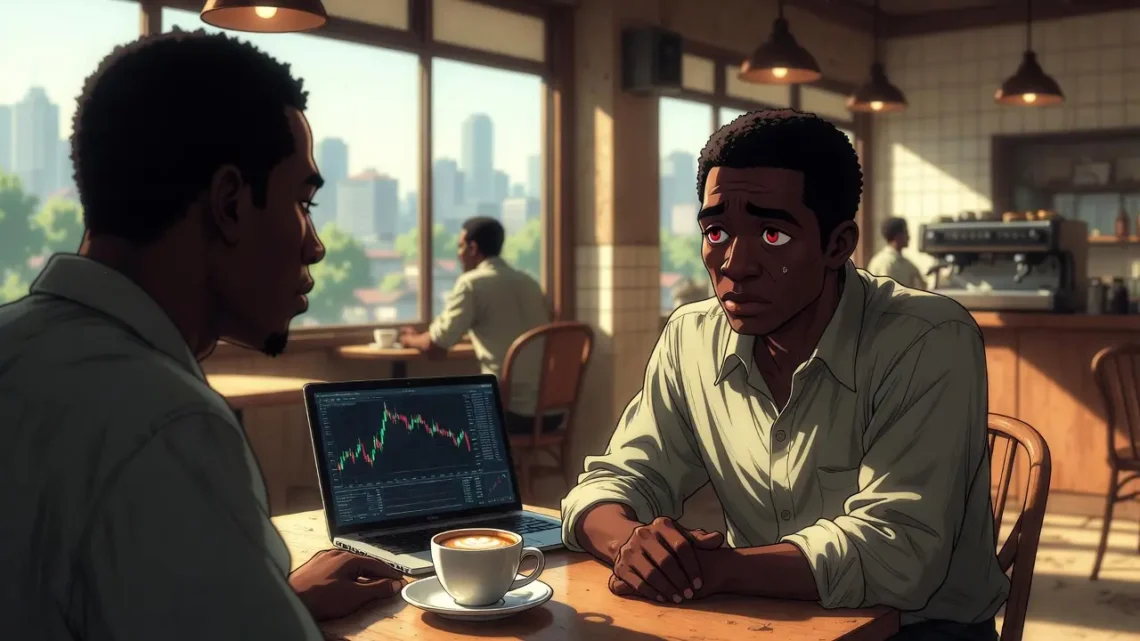
We met at a quiet café in Ikeja the next morning. Tunde looked sharp—tailored shirt, fresh haircut—but his eyes were red-rimmed like he hadn’t slept.
“I did everything you said,” he started, voice low. “Paid off the debts, built an emergency fund, invested in those S&P 500 ETFs you recommended. Even started a side hustle teaching Excel online—passive income started rolling in.”
I nodded, waiting.
“Last month, I hit my first six-figure net worth. Felt unstoppable. So I… I took a risk. A big one.”
He slid his phone over. A screenshot of his brokerage app. A single position: some hyped-up AI stock I’d seen everywhere on Twitter—promising 10x returns because of “the next big thing in artificial intelligence investing.”
“I put 40% of everything in there,” he whispered. “Thought it was my ticket to early retirement. Wife doesn’t even know.”
My stomach dropped. I’d seen this movie before.
“What happened?” I asked.
“It tanked. 65% down in three weeks. Margin call hit yesterday. I had to sell at a loss just to cover. Wiped out three years of gains. I’m back to square one… worse, actually. We were saving for a house down payment.”
He buried his face in his hands. “I got greedy, man. After all the financial literacy you drilled into me—diversification, long-term investing, don’t chase hot tips—I did the exact opposite.”
I sat there, silent for a moment. The café noise faded—clinking cups, soft chatter—like the world paused.
Then I leaned in.
“Tunde, listen. This hurts like hell right now. I know. I’ve been there—lost more than that in ’08 because I thought I was smarter than everyone else. But this? This is the lesson most people never get.”
He looked up, eyes glassy.
“You didn’t lose everything,” I continued. “You still have your job, your side hustle, your habits. The compound interest machine is still running in the background. Markets recover. Greed doesn’t.”
He laughed bitterly. “Easy for you to say. You probably never blew up your account like this.”
I smiled sadly. “I did. Twice. First time, I chased penny stocks. Second time, crypto in 2021. Felt invincible until I wasn’t. The difference? I kept going. Kept investing small, consistently. Kept learning. Today, my portfolio’s solid—not flashy, but growing. Because I stopped trying to hit home runs and started playing singles.”
Tunde exhaled. “So what now?”
“We rebuild. Slowly. First, no more single-stock bets. Back to diversified portfolio—broad index funds, maybe some bonds for stability. Second, tell your wife. Secrets kill trust faster than losses kill accounts. Third, double down on that side hustle. Turn it into real passive income streams—courses, maybe YouTube. Fourth… forgive yourself. This is how we learn.”
He nodded slowly. “You’re not gonna say ‘I told you so’?”
“Nah. I say ‘welcome to the club.’ Most millionaires have stories like this. The ones who quit stay broke. The ones who keep showing up… they win.”
As we walked out, the sun hit us hard. Tunde straightened his shoulders a bit.
“Thanks, man. For not judging.”
I clapped him on the back. “Anytime. Now go home and start that honest conversation. And hey—next time you feel FOMO on a hot stock? Text me first. We’ll laugh about it together.”
Driving home, I thought about how close I came to the same mistake so many times. Personal finance isn’t about being perfect—it’s about surviving your own stupidity long enough to let time and discipline do the heavy lifting.
That plot twist? Tunde didn’t quit. Last week he messaged: his portfolio’s recovering, he’s back to consistent investing, and he and his wife are stronger than ever. Turns out the real wealth building wasn’t the money—it was the humility.
And me? I still check my app every night. But now I smile, grateful I learned my lessons the hard way… so others don’t have to.
If you’re reading this and feeling stuck in debt, chasing trends, or scared to start investing, know this: the market doesn’t care about your past mistakes. It only rewards the ones who keep showing up. Start small. Stay consistent. You’ll get there. I promise.