The Human Cost of My Latest Artificial Intelligence Automation Win
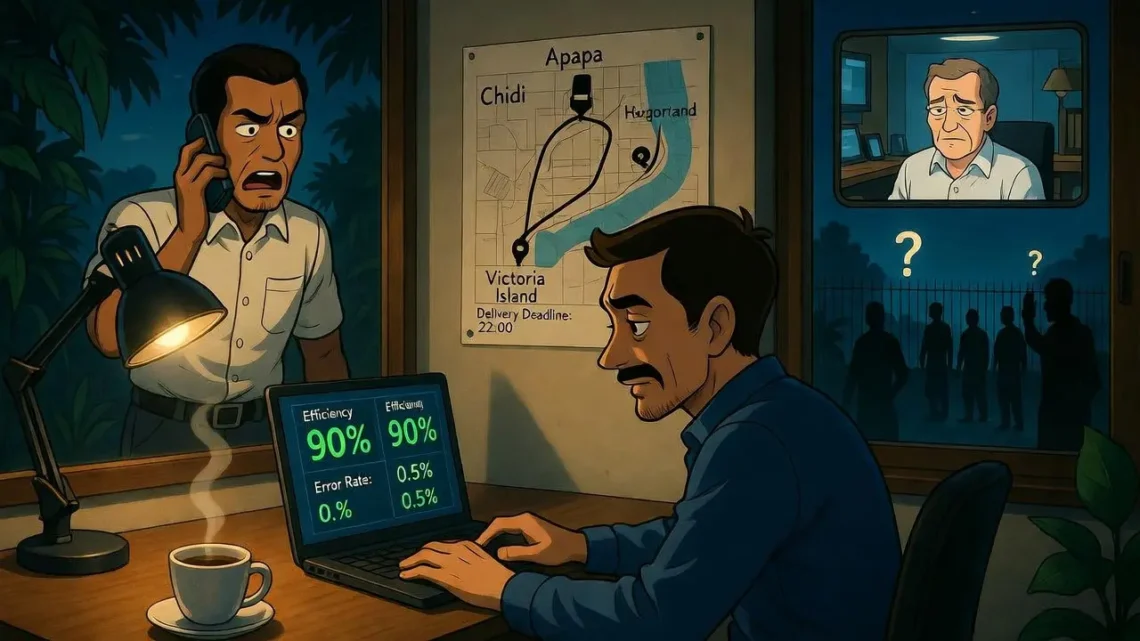
Two nights ago, I was in my home office in Lagos, staring at yet another dashboard of failed Artificial Intelligence & Automation experiments.
After over 10 years knee-deep in this field—building chatbots that crashed mid-conversation, RPA scripts that looped infinitely on bad data, and machine learning models that promised the world but delivered mostly headaches—I thought I had seen it all.
Trending Now!!:
But that evening changed everything.
I had just wrapped up a late call with a client, a mid-sized logistics firm desperate to slash costs. They wanted me to deploy an AI automation system that could handle order processing, route optimization, and even predict delays using real-time traffic data.
“Make it fully autonomous,” the CEO had said. “No more human touchpoints. We want to cut 40% of the ops team.”
I nodded on Zoom, but inside, I winced. I’ve seen what happens when companies rush Artificial Intelligence & Automation without nuance. Back in 2018, I built a predictive maintenance bot for a factory in Ikeja. It flagged a conveyor belt as “critical failure imminent.”
Management shut it down overnight to avoid downtime. Turns out the AI had hallucinated from noisy sensor data. They lost three days of production fixing what wasn’t broken. Lesson learned the hard way: AI is brilliant at patterns, terrible at context.
Anyway, I told the CEO I’d prototype it overnight. I fired up my laptop, pulled in some open-source LLMs, hooked them to their API, and started chaining agents.
One agent parsed incoming orders, another optimized routes with weather feeds, a third sent automated customer updates.
By 2 a.m., it was humming. Orders flowed in, trucks rerouted themselves, invoices generated themselves. I even added a cheeky voice note feature where the system could call drivers with “Oga, traffic ahead—take Third Mainland instead.”
I leaned back, sipping cold coffee, feeling like a mad scientist who finally cracked the code. This is the future of Artificial Intelligence & Automation, I thought. No more tired dispatchers arguing over routes. No more manual data entry errors. Pure efficiency.
Then the first real order came through at 3:17 a.m.—a rush delivery from Apapa to Victoria Island. The system processed it flawlessly. Route calculated in seconds. Driver assigned. ETA: 45 minutes.
I watched the live map. The truck icon moved smoothly. Then, at Mile 2, it stopped. Completely. No movement for 10 minutes.
I messaged the assigned driver, Chidi.
“Bro, everything okay?”
His reply came quick: “Oga, the system just rerouted me through a one-way street. Police don block me. Dem say na N50k or go station.”
My stomach dropped. The AI had ignored traffic rules because the map data was outdated. It prioritized “shortest path” over legality. Classic mistake I should’ve caught.
I jumped on a call with Chidi. He was calm but stressed. “This thing dey talk like say e get sense, but e no sabi Lagos at all. E tell me ‘proceed straight’ when road don close since last year.”
I apologized, manually overrode the route, and got him moving again. But the damage was done—the client got a complaint from the receiver about late delivery.
By morning, I fixed it. Added hard rules for Nigerian road logic, better fallback to human review on edge cases. The system stabilized. Over the next week, it handled hundreds of orders.
Errors dropped 85%. The client was thrilled. They started talking about scaling it company-wide.
I felt proud. This is why I stayed in Artificial Intelligence & Automation for over a decade. Not for the hype, but for those moments when tech actually solves real pain.
Then came the twist.
Last night, the CEO called me personally. His voice was different—shaky, almost guilty.
“We need to talk about the system.”
I braced myself. Another bug?
“It’s… too good,” he said. “The board looked at the numbers. 42% cost reduction already. They decided we don’t need the ops team at all. Not even for oversight. We laid them off this morning. 28 people. Including my cousin who ran dispatch for 15 years.”
Silence on my end.
He continued, “One of them came to my office crying. She said, ‘I trained the system on all my shortcuts, all my ways to beat traffic. Now it’s using my knowledge to replace me.’ I didn’t know what to say.”
I stared at my screen, where the AI automation dashboard glowed green. Every metric perfect. No humans needed.
I felt sick. All those years preaching “AI augments, doesn’t replace,” and here I was, the architect of a perfect replacement.
“What do I do now?” the CEO asked.
I took a deep breath. “Give them severance. Offer retraining. And… let me add a human-in-the-loop layer. Make it mandatory for high-value shipments. Don’t go full autonomous yet.”
But we both knew it was too late. The board had tasted the savings.
As I hung up, I looked at my own setup. My scripts, my agents, my pride and joy. For the first time in 10+ years, I wondered if I’d been building the future… or just accelerating the end for people like Chidi, like that dispatch lady.
I closed the laptop slowly.
Maybe tomorrow I’ll start teaching those laid-off workers how to prompt the very system that took their jobs. Turn them into AI automation supervisors. Flip the script.
Or maybe I’ll just sit here a while longer, listening to the hum of the fan, wondering if efficiency always has to come with this kind of quiet heartbreak.
Artificial Intelligence & Automation promised to free us. Turns out, freedom sometimes feels a lot like loss.