Wedding Day Disasters and How a Planner Fixes Them Before You Notice
I have planned over 300 weddings in eleven years. I have handled crying brides, drunk groomsmen, collapsed wedding cakes, venue floods, missing officiants, and one groom who showed up forty minutes late because he stopped to watch a Champions League match at a sports bar on his wedding day.
I have seen things that would make a therapist cry.
Trending Now!!:
But nothing, and I mean absolutely nothing, prepared me for Chidinma and Emeka’s wedding last October.
It started the way most disasters start, quietly.
Three months before the wedding, Chidinma walked into my office wearing a silk blouse and carrying a mood board thicker than a restaurant menu. She sat down, crossed her legs, and slid the board across my desk like she was presenting a corporate acquisition.
“I want a luxury outdoor wedding,” she said. “Rustic but elegant. Intimate but grand. Garden vibes but black tie. Five hundred guests.”
I looked at her. Then at the mood board. Then back at her.
“Five hundred guests is not an intimate wedding,” I said carefully.
She smiled the way people smile when they have already made up their mind and are just waiting for you to catch up. “It’s intimate for my family. My mother has four sisters.”
I took a deep breath and opened my wedding planning checklist. This was going to be a long engagement.
My name is not important. What matters is that I have been a certified wedding coordinator and full-service event planner since 2013, and I have built my reputation on one promise: no matter what goes wrong on your wedding day, your guests will never know. I call it the duck principle. Calm on top. Paddling like mad underneath.
The first thing I told Chidinma was budget. In event planning, the budget conversation is the most important and most avoided conversation in the entire process. Couples want destination wedding energy on a micro wedding budget, and my job, before I touch a single floral arrangement or book a single wedding venue, is to align the dream with the reality.
“What’s your total figure?” I asked.
She named a number.
I wrote it down, circled it, and did the math in my head. Five hundred guests. Outdoor venue. Black tie. Luxury catering. Wedding decor that would photograph well enough for a magazine cover. The number she gave me was… optimistic.
“This is workable,” I said, which in event planning language means: we are going to need to make some serious decisions.
The wedding venue was our first battlefield.
Chidinma had fallen in love with a sprawling private estate about forty-five minutes outside the city. It had sweeping lawns, an old stone pathway lined with oak trees, and the kind of natural light that makes wedding photography look effortless. It was genuinely beautiful. It was also only available on a Sunday, had no backup indoor space in case of rain, and the estate manager, a very calm man named Mr. Adeyemi, mentioned at the end of the tour that the property had a noise curfew at 10 PM.
“Ten PM,” I repeated.
“Sharp,” he said, with the energy of someone who had enforced this rule before and had enjoyed it.
I turned to Chidinma. She was already texting someone a photo of the oak pathway.
“We’ll take it,” she said.
I looked at the sky. I looked at Mr. Adeyemi. I said nothing. I wrote down: contingency tent rental, generator backup, secondary venue research, noise curfew management plan.
This is the job.
The months leading up to the wedding were a master class in controlled chaos.
We locked in the wedding caterer after tasting seven different menus. We found a florist who could deliver the garden-meets-glamour aesthetic Chidinma wanted, with tall centerpieces, trailing greenery, and ceremony arch florals that looked like something from a fairy tale. We coordinated with the photographer and videographer to build a wedding timeline that gave everyone enough light, enough coverage, and enough buffer time between the ceremony and the wedding reception.
I built the seating chart myself, which took three evenings and one very strong cup of coffee. Five hundred people. Families with old beef. College friends who had not spoken in years. The groom’s uncle who had specifically requested not to be seated near the bride’s aunt for reasons that were explained to me in confident whispers and which I will take to my grave.
Emeka, the groom, was largely unbothered by all of this. He showed up to tastings, nodded at floral samples, approved the wedding decor palette with the phrase “looks fine to me”, and once asked me, genuinely, if the rehearsal dinner was mandatory.
“Yes,” I said.
“Even for the groom?” he asked.
“Especially for the groom.”
He sighed in a way that suggested he had been hoping the answer would be different.
Two weeks before the wedding, the caterer called me.
I saw his name on my screen and felt the specific chill that event planners feel when a vendor calls outside of scheduled check-in times. Nothing good ever comes from an unexpected vendor call two weeks out.
“There’s a small situation,” he said.
“How small?” I asked.
“The refrigeration unit at the secondary kitchen failed. We lost about forty percent of the pre-prepared items.”
I sat down. “Okay. Tell me exactly what we lost and what we can recover by the fourteenth.”
We spent the next hour rebuilding the catering plan from scratch. I called in a favor from another caterer I had worked with on three previous weddings, negotiated a partial contract for supplemental service, adjusted the cocktail hour menu to cover the gap, and restructured the timeline to allow extra setup time in the kitchen.
By the end of the call, we had a solution. It cost more. It always costs more.
I called Chidinma and told her. She was quiet for a moment, then said, “Can we add a cheese station?”
I stared at my wall. “Yes,” I said. “We can add a cheese station.”
The day before the wedding, during the rehearsal dinner, everything felt the way it should. The bridal party was giddy and loud. Emeka’s best man, a tall guy named Seun, gave a toast that had everyone laughing and the mothers of both families dabbing their eyes simultaneously. The wedding rehearsal itself went smoothly, the officiant was charming, the wedding timeline was locked, and I went home at midnight feeling the quiet confidence of someone who has done this long enough to know when a wedding is going to be good.
I should have knocked on wood.
At 6:14 AM on the wedding day, my phone rang.
It was Adaeze, the maid of honor.
“The bride’s dress,” she whispered, in the tone people use when they are trying not to wake someone or cause a national emergency.
“What about it?” I said, already sitting up.
“There’s a tear. Along the back seam. She was trying it on to check the alterations and the zip, it just… it gave.”
I was already putting on my shoes. “How bad?”
“Bad enough that she’s crying. Which is making it worse because she’s trying not to ruin her face and she hasn’t had her makeup done yet.”
“I’m coming. Do not let her look at the tear again. Distract her. Give her food. Put on a playlist. I’ll be there in twenty minutes.”
I called my seamstress, Mrs. Okonkwo, who is seventy-one years old, retired, and the most gifted alterations professional I have ever worked with in over a decade of event planning. She answered on the second ring, which told me she had been awake.
“Wedding emergency?” she guessed.
“How did you know?”
“You only call me before 7 AM for emergencies. What happened?”
I explained. She told me to send a photo. I arrived at the bridal suite, got the photo, sent it. She responded: “Forty-five minutes. Pick me up.”
I picked her up at 7:08. She arrived at the suite with a small kit, assessed the damage in thirty seconds, and got to work while the makeup artist, the hairstylist, the photographer, and three bridesmaids orbited nervously.
Chidinma was sitting very still in the corner, holding a glass of orange juice with both hands, staring at the floor.
I sat next to her. “It’s going to be fixed,” I said.
“You don’t know that,” she said quietly.
“I’ve been doing this for eleven years. I know.”
She looked at me. “What if something else goes wrong?”
“Something else probably will,” I said honestly. “Something always does. But you’re going to be married by the end of today, and it’s going to be beautiful, and in five years you are going to be telling this story at someone else’s wedding and everyone is going to laugh.”
She was quiet. Then: “Is that supposed to make me feel better?”
“A little bit, yes.”
She almost smiled. That was enough.
Mrs. Okonkwo finished at 8:22 AM. The repair was invisible. Better than invisible. She had reinforced the entire back panel while she was in there, and the dress now fit more cleanly than it had during the final fitting.
Chidinma stood in front of the mirror, and the look on her face was the reason I still do this job.
“Okay,” she breathed. “Okay.”
Adaeze started crying immediately. Which made two of the bridesmaids cry. Which made the photographer start clicking because the light was good and the emotion was real and that is what wedding photography is supposed to capture.
Mrs. Okonkwo packed her kit, accepted a hug from the bride, and said to me on the way out, “Same rate as last time?”
“Plus twenty percent,” I said. “You earned it.”
She patted my shoulder. “You always say that.”
“I always mean it.”
The ceremony was stunning.
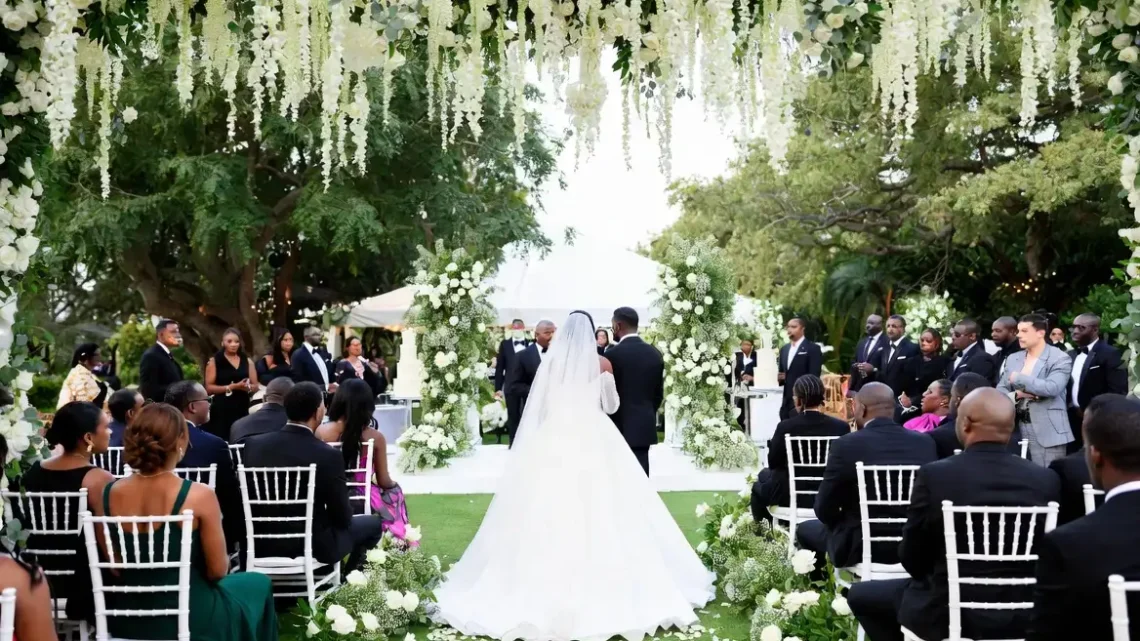
The outdoor wedding setup looked exactly as we had planned it, rows of white chairs beneath the oak trees, the ceremony arch loaded with white roses, trailing jasmine, and eucalyptus, the stone pathway scattered with petals. The weather was gracious, warm but with enough breeze to keep everyone comfortable.
Emeka stood at the altar and watched Chidinma walk toward him, and whatever expression was on his face made even Seun, the best man who had seemed constitutionally incapable of sentimentality, look away for a moment.
The vows were personal and funny and tender in the exact balance that the best wedding vows always are. The officiant had clearly done his homework. The ring exchange happened without incident, which sounds like a low bar but is not, because I have seen rings dropped, rings forgotten, rings handed to the wrong person, and one ring that rolled off the altar and was located seventeen minutes later by a seven-year-old guest who was rewarded with extra wedding cake.
When they kissed, five hundred people cheered, and I stood at the back near the catering tent and exhaled for what felt like the first time in three months.
The cocktail hour flowed into the reception, which was already running four minutes ahead of schedule, which in event planning is a minor miracle. The wedding decor inside the tent glowed under soft amber lighting. The centerpieces were tall and lush, the kind that make guests take photos before they sit down. The cheese station was, genuinely, a hit.
Seun’s best man speech was somehow even better than the rehearsal dinner toast. He told a story about Emeka in university that I will not repeat here, but it involved a borrowed motorcycle, a missed exam, and a promise that was apparently kept for eight years, and by the end of it, Emeka was laughing and hiding his face, and Chidinma was laughing and holding his hand, and the room was exactly the temperature a wedding reception should be.
The wedding cake arrived. Five tiers. White fondant with hand-painted botanical details. The baker, Ms. Funke, had been building this cake in three separate sections and assembled it on-site, which is the only sensible way to transport a cake of this ambition.
They cut it. Everyone cheered again. Someone in the back yelled something in Igbo that made half the room howl.
At 9:47 PM, I caught Mr. Adeyemi’s eye from across the lawn.
He tapped his watch.
I nodded. I walked to the DJ, a young man named Dayo who had been exceptional all evening, and said quietly, “Last song in five.”
He didn’t miss a beat. Literally. He smoothed into a transition, read the room, and chose a song that brought everyone back to the floor for one final round.
At 9:58, the music faded. The lights came up soft. I thanked the guests over the microphone, directed them toward the exit path lit with lanterns, and within twelve minutes, the venue was clearing.
Mr. Adeyemi appeared at my elbow at 10:06, looking at his watch with theatrical precision.
“Six minutes,” he said.
“I know,” I said. “I’ll add it to the final invoice as a small favor.”
He almost smiled. Almost.
At the end of the night, Chidinma found me near the loading area where the rental company was beginning to collect chairs. She had changed into a white after-party dress, her wedding shoes hanging from two fingers, and she looked the way brides look when the performance is over and the real joy has settled in.
She hugged me for a long time without saying anything.
Then she pulled back and said, “The dress. The caterer. The noise thing. Did anything actually go right today?”
“Everything went right today,” I said. “The rest was just weather.”
She laughed. “Is that a planner thing to say?”
“It’s an eleven-year thing to say.”
Emeka appeared behind her, jacket off, tie loosened, looking like a man who had just had the best day of his life, which he had. He shook my hand with both of his and said, simply, “Thank you.”
Some words land differently at the end of a long day.
Those two did.
I drove home at midnight with a lukewarm bottle of water and a container of jollof rice one of the catering staff had packed for me without being asked, which is one of the quiet kindnesses this industry runs on.
On the way, I mentally updated my wedding planning checklist. Backup seamstress on speed dial, always. Noise curfew clause in venue contracts going forward. Catering redundancy protocol, minimum two vendors confirmed. Secondary refrigeration contact list.
Also: cheese station. People love a cheese station. I don’t know why I haven’t been recommending this from the start.
I got home, ate the jollof rice, and sat on my couch in silence for a while.
Three hundred and one weddings.
In eleven years of event planning, luxury weddings, micro weddings, destination weddings, outdoor weddings, last-minute courthouse ceremonies followed by surprise receptions, I have learned one thing that no wedding planning course, no wedding checklist template, no vendor management system can teach you.
People are terrified on the day they are happiest.
And the whole job, the entire job, is to hold that terror quietly so that the happiness has space to breathe.
That is all it is.
And somehow, after eleven years, it still feels like enough.
If you are planning a wedding and wondering whether to hire a wedding coordinator or go the DIY route, the answer is always a coordinator. Not because you cannot do it. But because on the day itself, you should not have to.
That is what we are here for.