When the Adjuster Said “Contributory Negligence”… and I Said “See You in Court”
Two nights ago, I was wrapping up a long day in my Lagos office—papers everywhere, coffee cold—when my phone buzzed with a call from an old client, Tunde. His voice was shaky, like someone who’d just seen a ghost.
“Oga lawyer, abeg come quick. Serious wahala. My wife just had an accident. The other driver don run. Insurance people dey give me headache already.”
Trending Now!!:
I sighed, grabbed my keys, and drove through the evening traffic to the hospital in Ikeja. I’d been doing personal injury and car accident claims for over twelve years now—seen broken bones, totaled cars, families torn apart—but each one still hits different. You never get used to the smell of disinfectant mixed with fear.
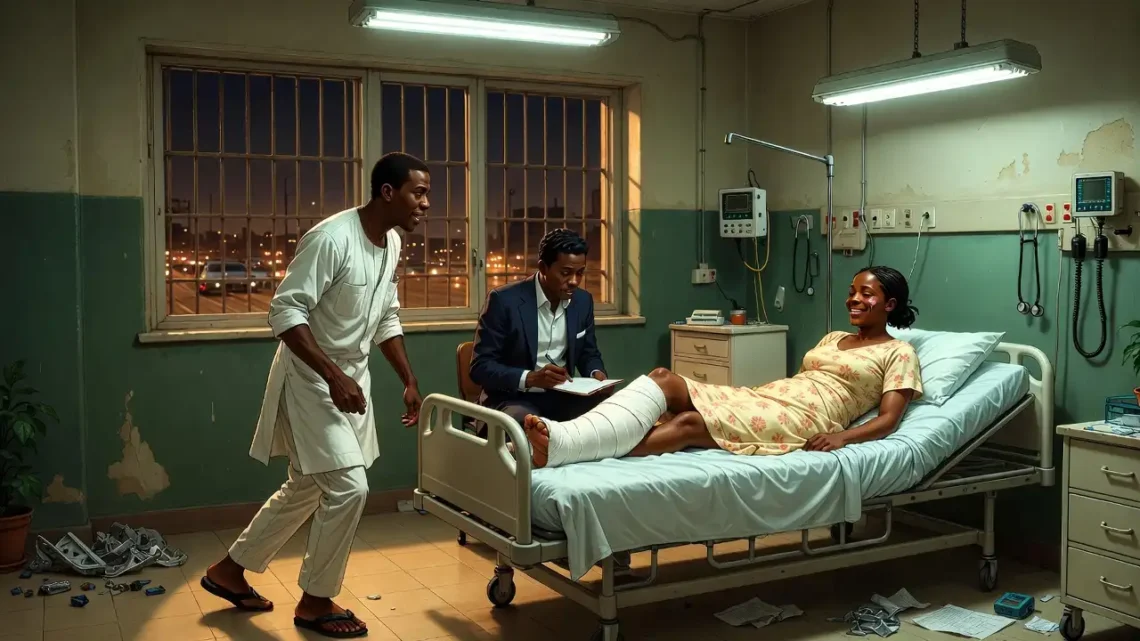
When I walked into the ward, Tunde was pacing by the bed. His wife, Ada, lay there with her arm in a cast, face swollen, but smiling weakly when she saw me. The room had that harsh fluorescent light that makes everyone look guilty.
“Thank God you came,” Tunde said, pulling me aside. “The other driver no get insurance. Na hit-and-run. But my own comprehensive cover suppose pay for hospital bills and car repair. The adjuster come this afternoon, dey talk say because Ada no wear seatbelt properly, dem go reduce the payout by 40%. Wetin be that?”
I nodded. I’d heard this song before. Insurance companies love that “contributory negligence” excuse. In my early days, I lost a case because my client admitted on record he was “maybe speeding a little.” Lesson learned the hard way: never let emotions make you talk too much to adjusters without me there.
I sat with them, took notes. Ada described it vividly—the screech of tires on Third Mainland Bridge, the sudden slam from behind, her phone flying out the window like it had wings.
Glass everywhere, horn blaring from stuck cars behind. She remembered thinking, “This is how people die in Lagos traffic.” But she survived. Bruised ribs, fractured wrist, whiplash that still made her wince turning her head.
The next morning, I called the insurance company—Global Shield Insurance, one of those big ones with glossy ads promising “peace of mind.” The claims handler, a young guy named Emeka, sounded bored.
“Sir, our policy clearly states seatbelt usage is mandatory for full coverage. Medical report shows minor inconsistency in injury pattern—”
I cut him off. “Emeka, listen. I’ve handled over two hundred car accident claims in this city. That ‘inconsistency’ is because the impact threw her forward first, then the seatbelt caught her awkwardly. You want to fight over 40% when your insured caused the crash? Send me the full policy wording and the police abstract. We’ll talk.”
He mumbled something about reviewing and hung up. Classic delay tactic.
Weeks passed. Tunde and Ada came to my office twice a week. I’d make tea, we’d laugh about how Lagos drivers treat indicators like optional accessories. Ada would tease me: “Oga lawyer, you sure say you no be area boy before? You sabi argue pass politician.”
I filed the demand letter, attached medical reports, photos of the wrecked Toyota—crumpled bonnet like paper, windshield spiderwebbed. I even included dashcam footage from a witness who’d uploaded it online. Evidence is king in personal injury cases.
Then the twist nobody saw coming.
One evening, Tunde called me in panic. “Bro, the insurance people just approved full settlement—five million naira! But… dem say na because dem discover something. The other driver? Na their own staff. Company car. Dem no wan court case expose am.”
I froze. In all my years, I’d seen insurers lowball, deny, drag feet—but this? They panicked internally. The hit-and-run driver was their own employee, using the company vehicle off-duty. If it went public—legal action, bad press, maybe even fraud investigation—they’d lose more than the claim amount.
I laughed so hard my secretary poked her head in.
“Tunde,” I said, “this is why you never settle for crumbs. They tried to use seatbelt as shield, but their own skeleton fell out of the cupboard.”
We met at a small buka near my office to sign the release. Ada looked healthier now, cast off, only a faint scar on her forehead. Tunde ordered extra pepper soup, grinning like he’d won the lottery.
“Oga lawyer, you save us. If na me alone, dem for chop my money finish.”
I raised my bottle of Maltina. “To never trusting insurance adjusters who sound too calm on the phone.”
We clinked. Ada leaned in, eyes sparkling with mischief. “Next time I drive, I go wear two seatbelts. Just in case another company staff wan practice Formula One on Third Mainland.”
I drove home that night feeling lighter than usual. In this legal & insurance world full of fine print and fine lies, sometimes the biggest win isn’t just the money—it’s watching good people walk away whole, with a story that ends happy instead of heartbroken. And yes, a little poetic justice never hurts.
Because after twelve-plus years, I’ve learned: the real plot twist isn’t always in the accident. It’s in how the system tries to protect itself—and fails spectacularly when you push back with facts, patience, and a refusal to back down.