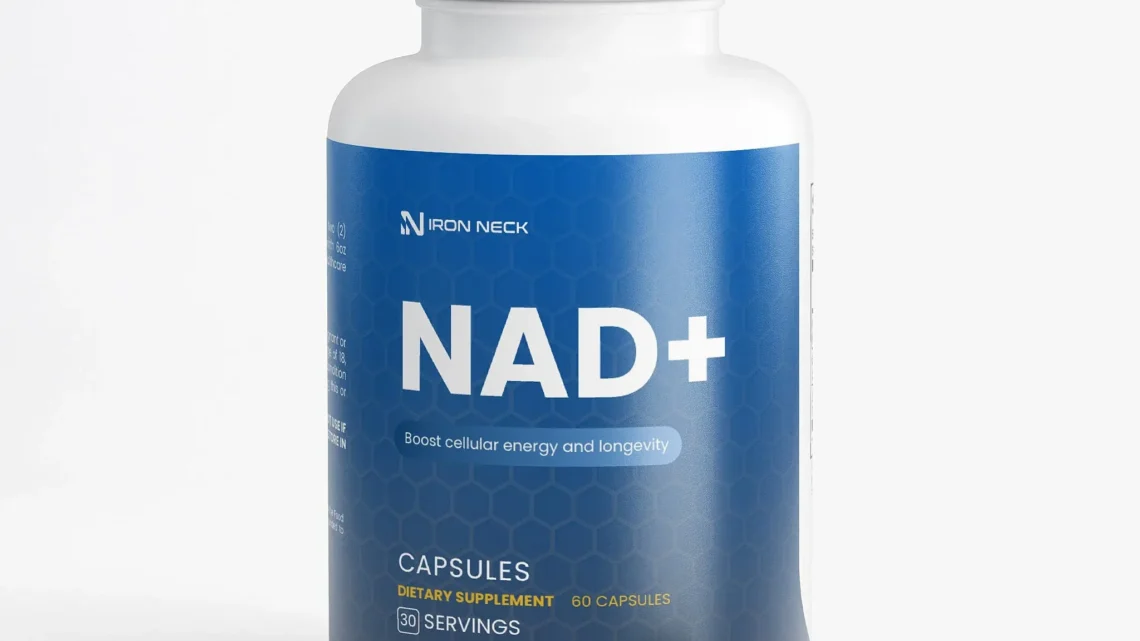
How NAD+ Supplements Are Being Studied for Longevity and What’s Confirmed
Oral precursors reliably raise NAD+ levels and appear safe in short trials, but decades of lab promise have yet to translate into confirmed longevity or lifespan benefits in humans.
Nicotinamide adenine dinucleotide, the coenzyme every cell needs to convert food into usable energy, declines measurably with age, and that single fact has built a supplement category now worth hundreds of millions of dollars a year.
The confirmed science is narrower than the marketing: oral precursors like nicotinamide riboside and nicotinamide mononucleotide reliably raise blood NAD+ levels and appear safe in short-term trials.
Trending Now!!:
Still, no human study has yet shown they extend lifespan, and clinical benefits beyond specific metabolic and muscle markers remain unproven.
Why NAD+ Declines and Why That Matters
NAD+ operates as a shuttle for electrons in roughly five hundred metabolic reactions, most critically the ones that generate ATP inside mitochondria. It also fuels a family of proteins called sirtuins, which repair DNA and regulate inflammation, and a separate class of enzymes called PARPs, which patch DNA breaks but consume large amounts of NAD+ in the process.
Tissue levels of the coenzyme fall by an estimated 50 percent or more between young adulthood and old age, and that decline tracks with markers of mitochondrial dysfunction seen in metabolic disease, cognitive decline, and reduced muscle capacity.
The logic behind supplementation is straightforward: if declining NAD+ correlates with age-related dysfunction, restoring it should, in theory, restore some of that function.




Because NAD+ itself barely survives digestion and cannot easily cross cell membranes, researchers have focused instead on precursor molecules the body can convert internally: nicotinamide riboside, nicotinamide mononucleotide, and to a lesser extent, tryptophan and nicotinic acid, the classic forms of vitamin B3.
What Human Trials Have Actually Shown
The clearest, most repeatable finding across dozens of small trials is pharmacokinetic rather than clinical: oral nicotinamide riboside and nicotinamide mononucleotide both raise circulating NAD+ metabolites within days to weeks, at doses ranging from 250 milligrams to 1,000 milligrams daily.
This is the one claim companies can make with genuine backing, and it is also the claim least connected to any guarantee of feeling or living better.
Beyond that baseline, results fragment by outcome and population. A randomized trial from Washington University researchers, published in Science in 2021 and led by Mihoko Yoshino and Samuel Klein, gave 250 milligrams of NMN daily to postmenopausal women with prediabetes for 10 weeks.
Muscle insulin sensitivity, the ability of muscle to take up glucose in response to insulin, improved by roughly 25 percent, a change comparable to what researchers typically see after a 10 percent reduction in body weight.
The same study, however, found no improvement in fasting blood glucose, blood pressure, liver fat, lipid profile, or inflammatory markers. That split result, real benefit in one specific pathway alongside no measurable change in several others, is the pattern that recurs across the NAD+ literature and gets flattened into blanket “boosts metabolism” claims in marketing copy.
A 2026 PRISMA-guided systematic review of the preclinical and clinical evidence reached a similarly qualified conclusion.
Reviewing the available randomized trials of oral NR and NMN, the authors found that short-term tolerability was generally favorable across studies, with no consistent serious safety signals in the durations tested, yet described clinical effectiveness for anti-aging or wellness outcomes as remaining inconclusive, calling for larger, longer trials with clinically meaningful endpoints, particularly for intravenous approaches.
That last qualifier matters: the review found essentially no controlled human evidence supporting the IV NAD+ infusions sold at wellness clinics, as opposed to oral precursor pills, which at least have randomized data behind their absorption claims.
Reporting from NPR in mid-2026 captured the tension well. Researchers interviewed for that piece agreed the field remains in early days of clinical trials, while noting real people are reporting subjective benefit that scientists feel obligated to investigate rather than dismiss.
At the same time, one researcher whose lab studies NAD+ infusions directly, Stacy Pojednic at Restore, found in a pilot human study that IV NAD+ is actually inefficient at raising levels inside the cell, because the molecule has no easy door to enter from the bloodstream. That single detail undercuts a large share of the infusion industry’s implicit pitch.
Common Misconceptions Worth Correcting
The most persistent misconception is treating a rise in blood NAD+ as equivalent to a clinical benefit. Blood metabolite increases are a biomarker of target engagement, not proof that any tissue is functioning better, aging slower, or that a person will live longer. A second misconception, common in mainstream coverage, is conflating NR and NMN as interchangeable.
NMN cannot cross the cell membrane directly and must first be converted into NR before cells can use it, which is part of why ChromaDex, the company holding key NR patents, has argued NR is the more efficient precursor of the two, a claim that carries an obvious commercial interest but is not without biochemical basis.
A third, more consequential misconception involves oral NAD+ itself, as distinct from its precursors. Straight NAD+ supplements, sold as capsules or sublingual tablets, face a basic absorption problem: researchers studying the molecule report it gets degraded in the gut and is poorly absorbed, which is why serious trials study NR and NMN precursor pills instead of NAD+ itself.
Anyone comparing products should treat “contains NAD+” on a label very differently from “contains a clinically studied NAD+ precursor,” since the former has essentially no direct evidence behind its oral form.
The Regulatory Story Nobody Selling NMN Wants to Explain
NMN’s legal status in the United States has swung twice in ways that matter for anyone buying it.
In November 2022, the FDA concluded NMN was excluded from the legal definition of a dietary supplement, on the grounds that a pharmaceutical company, Metro International Biotech, had already initiated substantial public clinical investigations of the molecule as a drug candidate before it was marketed as a supplement, triggering DSHEA’s so-called race-to-market clause.
That ruling threw the NMN supplement market into a gray zone for nearly three years: Amazon restricted third-party sellers, and companies faced an ingredient that regulators said could not legally be marketed as a supplement even while it remained widely sold.
Following sustained pressure, including a citizen petition and lawsuit from the Natural Products Association, the FDA reversed its position in September 2025.
The agency concluded NMN was not excluded from the dietary supplement definition after all, citing evidence the ingredient had been marketed as a supplement in the United States as early as 2017, before the drug investigation began, and acknowledging that its prior reading of the statute’s race-to-market framework was not the best reading of the law.
That reversal means NMN is currently lawful to sell as a supplement, but the underlying statutory ambiguity that caused the initial ban has not been resolved, and the Council for Responsible Nutrition has publicly noted the FDA’s response failed to address the structural problem that created the confusion in the first place. Anyone recommending or purchasing NMN products should treat this as a live regulatory situation rather than settled law.
What Is Actually Being Tested Right Now
Registered trials on ClinicalTrials.gov give a clearer picture of where the science is heading than any product page does.
Current and recent studies include a Children’s Hospital of Philadelphia trial combining NR supplementation with exercise training in adolescent and young adult survivors of hematopoietic cell transplant, a University of Primorska trial testing sex-specific longevity supplement formulations against epigenetic aging biomarkers in adults aged 50 to 70, and a sleep-focused trial examining NAD+ supplementation’s effect on objective sleep parameters measured by polysomnography in adults aged 40 to 60.
None of these are lifespan trials, because a genuine human lifespan trial for any longevity intervention would take decades and is not logistically realistic. What researchers study instead are surrogate biomarkers: insulin sensitivity, muscle function, inflammatory markers, epigenetic clocks, and specific disease outcomes in patient populations already vulnerable to NAD+ decline.
A March 2026 review from researchers at the University of Oslo and Ullevaal University Hospital, covering years of laboratory and clinical work, described early findings as promising, with some trials reporting improvements in memory, physical movement, and metabolic health, particularly in the context of neurodegenerative disease research targeting Alzheimer’s and Parkinson’s.
The same researchers stressed that larger and longer studies in patients are needed to confirm effectiveness, a caveat that appears in nearly every serious paper on the subject and is routinely dropped from consumer-facing coverage.
What This Means for Someone Deciding Whether to Take NAD+ Supplements
The honest summary sits between the hype and the dismissal. Oral NR and NMN supplements have a real, replicated effect on raising NAD±related metabolites in the blood, and short-term safety data across multiple randomized trials has not turned up serious red flags.
Beyond that, the evidence is outcome-specific and modest: improved muscle insulin sensitivity in one population of prediabetic women, mixed or absent effects on several other metabolic markers in that same study, and a broader literature that the 2026 systematic review summarized as showing clear biological activity without confirmed clinical effectiveness for anti-aging or wellness purposes.
Cost is a practical factor rarely discussed alongside the science: consumer NAD+ and NMN products typically run from $30 to more than $80 a month, and IV infusions at wellness clinics cost substantially more per session, for a therapy that at least one lab studying it directly has found is inefficient at raising intracellular NAD+ compared with oral precursors.
Anyone considering these supplements should weigh that cost against a realistic picture of the evidence: a compound with plausible biology, early and encouraging but far from conclusive human data, an unsettled regulatory history in the case of NMN specifically, and no study of any kind demonstrating that it extends human lifespan.
People with existing metabolic conditions, or those taking medications metabolized through pathways NAD+ precursors intersect with, should raise the question with a physician before starting rather than relying on a supplement label’s framing of the science.
What People Ask