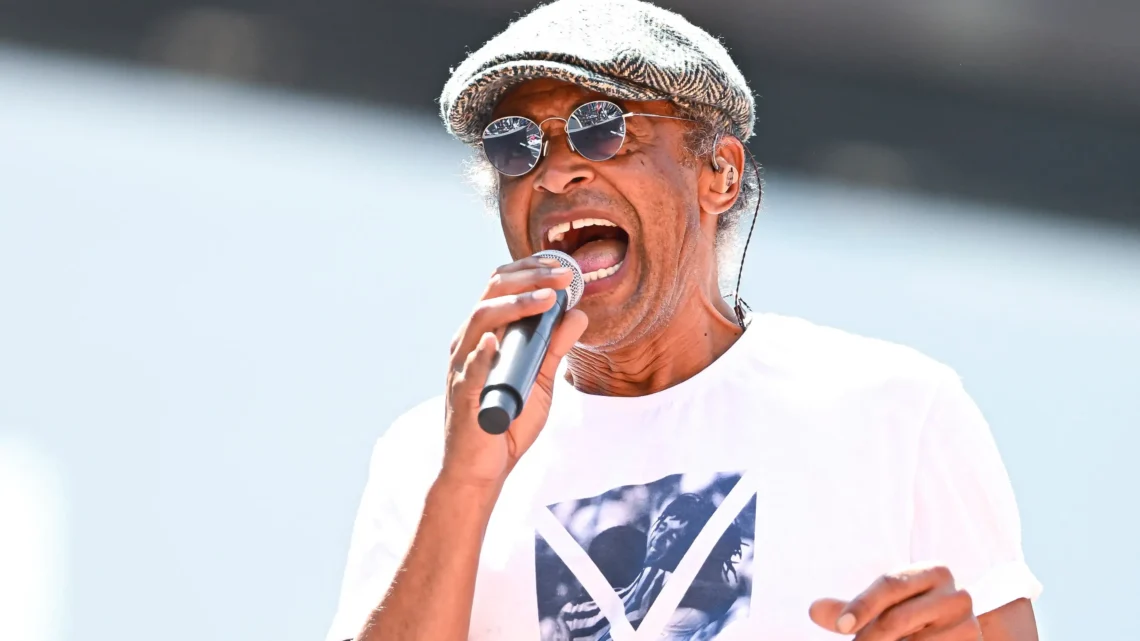
Yannick Noah Biography: Height, Wife, Children, Age, Parents, Songs, Family, News, Son
Biography
Yannick Noah is a French former professional tennis player and recording artist, born on May 18, 1960, in Sedan, northern France.
The son of Cameroonian footballer Zacharie Noah and French basketball captain Marie-Claire Perrier, he spent much of his childhood in Yaoundé, Cameroon, where his path to sporting greatness began in the most unlikely fashion.
Trending Now!!:
At just 11 years old, he was spotted by tennis legend Arthur Ashe at a local clinic, playing not with a racquet but with a wooden board. Impressed by the boy’s raw talent, Ashe connected him with the French Tennis Federation, and Noah was soon enrolled at the federation’s training center in Nice in 1971.
He turned professional in 1977 and steadily climbed the ranks, but his defining moment came on May 23, 1983. Noah became the first Frenchman in 37 years to win the French Open, defeating defending champion Mats Wilander in straight sets in the final.
The victory made him a national hero in France, a status that has never truly faded. Across a nearly two-decade career, he captured 23 singles titles and 16 doubles titles, reaching a career-high singles ranking of world No. 3 in July 1986 and attaining the world No. 1 doubles ranking the following month.
After retiring from the court in 1990, Noah reinvented himself as a successful musician and team captain. He led France to multiple Davis Cup and Fed Cup titles before launching a recording career in 1991 with the album Black & What, which featured the standout track “Saga Africa.” His fourth album, Yannick Noah, released in 2000, became a diamond-certified smash in France and topped charts in Belgium. He was inducted into the International Tennis Hall of Fame in 2005.



Off the court, Noah has remained an active humanitarian. He co-founded Fête le Mur in 1996, a charity bringing tennis and education to underprivileged children in inner cities across the world, and continues to support Enfants de la Terre, the charity established by his mother. He has six children, including Joakim Noah, who enjoyed a 13-year career in the NBA.
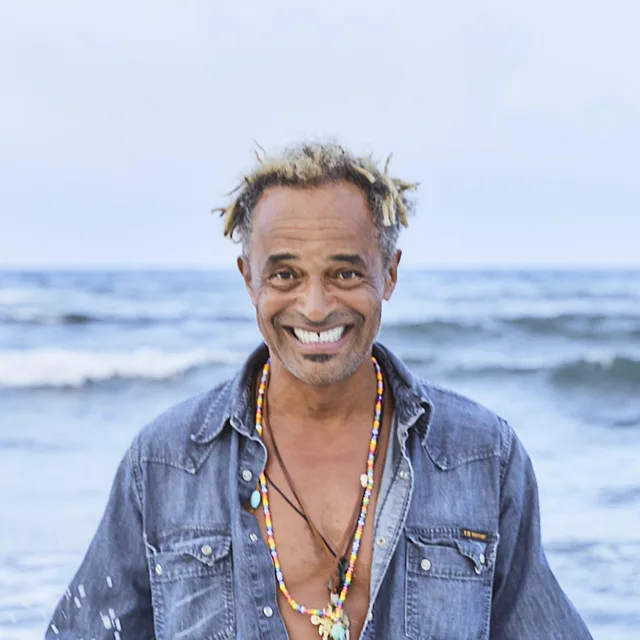
| French former professional tennis player and recording artist | |
| Yannick Noah | |
|---|---|
 |
|
| Wiki Facts & About Data | |
| Real Name: | Yannick Simon Camille Noah |
| Stage Name: | Yannick Noah |
| Born: | 18 May 1960 (age 66 years old) |
| Place of Birth: | Sedan, France |
| Nationality: | French |
| Education: | N/A |
| Height: | 194 cm |
| Parents: | Zacharie Noah, Marie-Claire Noah |
| Siblings: | Isabelle Noah, Nathalie Noah |
| Spouse: | Isabelle Camus (m. 2003), Heather Stewart-Whyte (m. 1995–1999), Cécilia Rodhe (m. 1984–1987) |
| Girlfriend • Partner: | Not Dating |
| Children: | Joakim Noah, Joalukas Noah, Yélena Noah, Jénayé Noah, Eleejah Noah, Keelaani Noah |
| Occupation: | Tennis Player • Singer |
| Net Worth: | $10 million (USD) |
Early Life & Education
Yannick Simon Camille Noah was born on May 18, 1960, in Sedan, a commune in the Ardennes department of northern France. He was born under the Taurus zodiac sign. He is of mixed Cameroonian and French descent, born to a Cameroonian father and a French mother, making him biracial.
As for religion, Noah is a Buddhist, a faith he arrived at gradually during his adult years after encountering Buddhist texts and later meeting the Dalai Lama. He followed the teachings of Sogyal Rinpoche, which further deepened his connection to the practice.
His father, Zacharie Noah, was a celebrated Cameroonian professional footballer who won the French Cup while playing for the Sedan football club in 1961. Zacharie was from Yaoundé, Cameroon, and was of the Ewondo ethnic group.
His mother, Marie-Claire Perrier, was a French schoolteacher and a former captain of France’s national basketball team, a woman Yannick has consistently described as the most central figure in his life. Yannick Simon Camille Noah is the oldest of three children. He has two younger sisters, Isabelle Noah and Nathalie Noah.
In 1963, the Noah family moved to Yaoundé, Cameroon’s capital, after Zacharie sustained a career-ending sports injury. It was in Yaoundé that the young Yannick first encountered tennis and began nurturing the talent that would eventually define his life. He first attended school in Yaoundé, where his parents had settled after meeting and marrying in France.
His path took a dramatic turn when, at the age of 11, he attended a clinic at a local tennis club where American tennis legend Arthur Ashe was visiting as part of a tour of Africa. When given the chance to play with Ashe, a US Open and Wimbledon champion, Yannick aced the professional once and matched him point for point across the net.
Deeply impressed, Ashe contacted Philippe Chatrier, then head of the French Tennis Federation, and secured Yannick a place at the federation’s elite training centre in Nice, France, where he arrived in 1971. Noah spent the next five years at the academy while attending a local secondary school, before opting to leave secondary school one year short of graduation to focus entirely on tennis.
He then moved to Paris and came under the instruction of Patrice Hagelauer, the coach of the French national team. He turned professional in 1977 at the age of 17, the year he also won the French junior title, and never looked back.
Career
Yannick Noah turned professional in 1977 at the age of 17, the same year he claimed the French junior title, signalling early that he was no ordinary talent.
His first professional title came on the Italian Spring Satellite circuit that same year, and he followed it the next year with his first top-level singles victory in Manila, defeating Peter Feigl in the final.
He joined the French Davis Cup team in 1978 and would go on to represent his country for 11 years across two stints, from 1978 to 1985 and again from 1988 to 1990, compiling a career Davis Cup singles record of 25 wins and 13 losses.
Through the early 1980s, Noah established himself as one of the most exciting players on the tour, combining a ferocious serve-and-volley game with rare athleticism and a personality that lit up every arena he entered.
He was one of the last true serve-and-volley players of his generation, an attacking presence who moved toward the net at every available opportunity, a style that has largely disappeared from the modern game. His results began to reflect his growing authority. He ended Ivan Lendl’s 44-match winning streak at the 1982 Palm Springs final, a victory that announced him as a genuine force at the highest level.
His defining moment arrived on May 23, 1983, at Roland Garros. Noah defeated defending champion Mats Wilander in straight sets, 6-2, 7-5, 7-6, to become the first Frenchman to win the French Open in 37 years. The victory triggered scenes of extraordinary national celebration.
His win over Wilander in the final not only captured the heart of a nation but helped cement Noah’s legacy as France’s highest-ranked male player since the introduction of the ATP rankings in 1973. No Frenchman has won a Grand Slam singles title since. In the semifinals on the way to the title, he had overcome a stiff challenge from Jimmy Connors in a memorable five-set battle, demonstrating both the mental toughness and the tactical depth that made him a champion.
Noah’s 19-year playing career included 476 singles wins, 23 tour championships in singles and 16 in doubles, and saw him remain in the world’s top 10 for five consecutive years, debuting at No. 9 in 1983 and rising to a career-best No. 5 the following year. He reached the career-high singles ranking of world No. 3 in July 1986 and attained the world No. 1 doubles ranking in August of that same year, a position he held for a total of 19 weeks.
In doubles, Noah proved equally formidable. He won the French Open men’s doubles title in 1984 alongside compatriot and close friend Henri Leconte, and the pair were also runners-up at the 1985 U.S. Open. Noah reached the French Open doubles final again in 1987, this time partnering compatriot Guy Forget.
Among his other notable singles titles were the Italian Open in 1985 and the Benson and Hedges Indoor Championship in London in 1986. At the U.S. Open, Noah reached the quarterfinals on three separate occasions, in 1983, 1985, and 1989, and in 1990, his final full year on tour, he advanced to the semifinals of the Australian Open.
At the end of 1986, Noah received the ATP Sportsmanship Award, voted on by his fellow players on the tour. He retired from professional tennis in 1990, but his relationship with the sport was far from over. He took on the role of France’s Davis Cup captain in 1991 and immediately delivered the country’s most celebrated team triumph in generations.
In 1991, he captained the French team to the Davis Cup title for the first time in 59 years, since 1932, defeating a heavily favoured United States team 3-1 in the final. In 1996, he once again led the French team to Davis Cup glory, this time defeating Sweden 3-2 in the final held in Malmö, and in 1997, he captained France’s Fed Cup team to its first-ever championship, a 4-1 victory over the Netherlands.
In 2005, Noah received the Philippe Chatrier Award, the International Tennis Federation’s highest accolade, and was inducted into the International Tennis Hall of Fame the same year. His post-playing career extended further still when he was appointed captain of Team Europe for the Laver Cup, bringing the same leadership philosophy that had defined his Davis Cup tenure to an entirely new stage.
As a player, as a captain, and as an ambassador for the sport, Yannick Noah built a career that transcended results and rankings, leaving behind a legacy rooted as much in joy and national pride as in the trophies he collected.
Social Media
- Wikipedia: Yannick Noah
- Instagram: Yannick Noah (@yannicknoah)
- IMDb: Yannick Noah
Personal Life
Yannick Noah was born on May 18, 1960, which makes him 66 years old.
He stands at 6 feet 4½ inches (194 cm) tall, a frame that served him well throughout his playing career and contributed to the physical dominance he brought to the court.
Noah has been married three times and has six children across his various relationships, building a large, widely known family that has produced notable public figures.
His first marriage was to Cécilia Rodhe, a Swedish model and former Miss Sweden 1978, who later became a sculptor. The two wed in 1984 and had two children together: Joakim Noah, born in 1985, and Yelena Noah, born in 1986. Joakim Noah went on to enjoy a successful 13-year career in the NBA and represented France in international competitions, while Yelena Noah established herself as a model in the fashion industry. The marriage ended in divorce.
Noah’s second marriage was in 1995, to Heather Stewart-Whyte, a British model, with whom he had two daughters: Elijah Noah, born in 1996, and Jénayé Noah, born in 1997. After their divorce in 1999, Noah was awarded custody of his daughters from that marriage by the British courts.
His third and longest partnership was with Isabelle Camus, a French television producer. The two came together in the early 2000s and later formalized their relationship. They have a son named Joalukas Noah, born in 2004.
The relationship lasted nearly two decades before ending. After being together for eighteen years, Yannick Noah and Isabelle Camus decided to end their relationship in the summer of 2020. In an interview with Gala magazine, Isabelle expressed her desire to move on from the dynamic of the relationship, describing the period leading up to the split as difficult for her mental well-being. Despite the separation, both have maintained an amicable relationship and continue to see each other for the sake of their son, Joalukas.
Noah subsequently met a woman named Malika, who gave birth to his sixth child, a girl named Keelaani Noah, born on October 22, 2024.
In terms of his broader romantic history, Noah has been one of the more publicly visible figures in French celebrity culture, and his relationships have attracted considerable media attention across the decades. Beyond the three marriages and his relationship with Malika, he has been linked to various figures over the years, though he has remained characteristically private about the finer details of his personal life.
What is consistent across every chapter of his story is his commitment to his children, whom he has spoken about with evident pride in numerous interviews, describing fatherhood as one of the most meaningful dimensions of his life.
Net Worth
Yannick Noah has an estimated net worth of $10 million, a fortune built across multiple decades and multiple careers.
His initial wealth came from professional tennis, where he competed at the highest level for nearly two decades, collecting 23 singles titles, 16 doubles titles, and reaching a career-high singles ranking of world No. 3. His peak earnings year on tour was 1986, when he took home $575,015 in prize money alone, a significant sum in the sport at the time.
After retiring from the court, Noah added considerably to his financial profile through music. His self-titled fourth album, released in 2000, became a diamond-certified phenomenon in France, selling millions of copies and topping charts in Belgium.
The album’s commercial success, combined with extensive touring across Europe, established him as a genuine pop star well beyond the tennis world. Subsequent albums and live performances, including a landmark concert at the Stade de France in 2010 that drew close to 80,000 spectators, kept him among the highest-earning entertainers in the French-speaking world for years.
His income streams have extended further still through his work as a Davis Cup and Fed Cup captain, television commentary, brand endorsements, and business ventures, including a restaurant he owns in Saint-Barthélemy in the French West Indies.
His co-founding of the charity Fête le Mur also raised his public profile in ways that have translated into commercial opportunities over the years. Across tennis, music, and entrepreneurship, Yannick Noah has constructed a financial legacy that mirrors the range and longevity of his public life.
What People Ask
NOTICE!! NOTICE!! NOTICE!!
At TheCityCeleb, we strive to provide accurate and up-to-date biographies and entertainment news, focusing on celebrities. Our editorial team researches information from reputable sources, including interviews, official statements, and verified media.If you spot an error or have additional details, please contact us at editor@thecityceleb.com. We value your feedback and are committed to maintaining trustworthy content.