
Jack Welch Biography: Net Worth, Children, Age, Wife, Parents, Books, Religion, Cause of Death
Biography
Jack Welch (born John Francis Welch Jr., November 19, 1935 – March 1, 2020) was an American business executive widely regarded as one of the most influential CEOs of the 20th century.
Raised in a working-class family in Peabody (near Salem), Massachusetts, he earned a bachelor’s degree in chemical engineering from the University of Massachusetts and a master’s and PhD in the same field from the University of Illinois.
Trending Now!!:
Welch joined General Electric (GE) in 1960 as a junior engineer and rose rapidly through the ranks. In 1981, at age 45, he became GE’s youngest-ever chairman and CEO, a position he held until his retirement in 2001.
During his 20-year tenure, he transformed GE into a highly efficient, high-performing conglomerate—growing its market value dramatically from about $14 billion to over $400 billion—through aggressive restructuring, a focus on being #1 or #2 in every market, rigorous performance management (including the famous “rank and yank” system), and a relentless emphasis on shareholder value and innovation.
Known for his direct, competitive style and nickname “Neutron Jack” (for eliminating people while leaving buildings intact), Welch authored best-selling books, including his autobiography Jack: Straight from the Gut (2001) and Winning (2005).
After retiring, he founded the Jack Welch Management Institute and remained a prominent voice in business leadership and management education. He passed away in New York City at age 84 from renal failure.
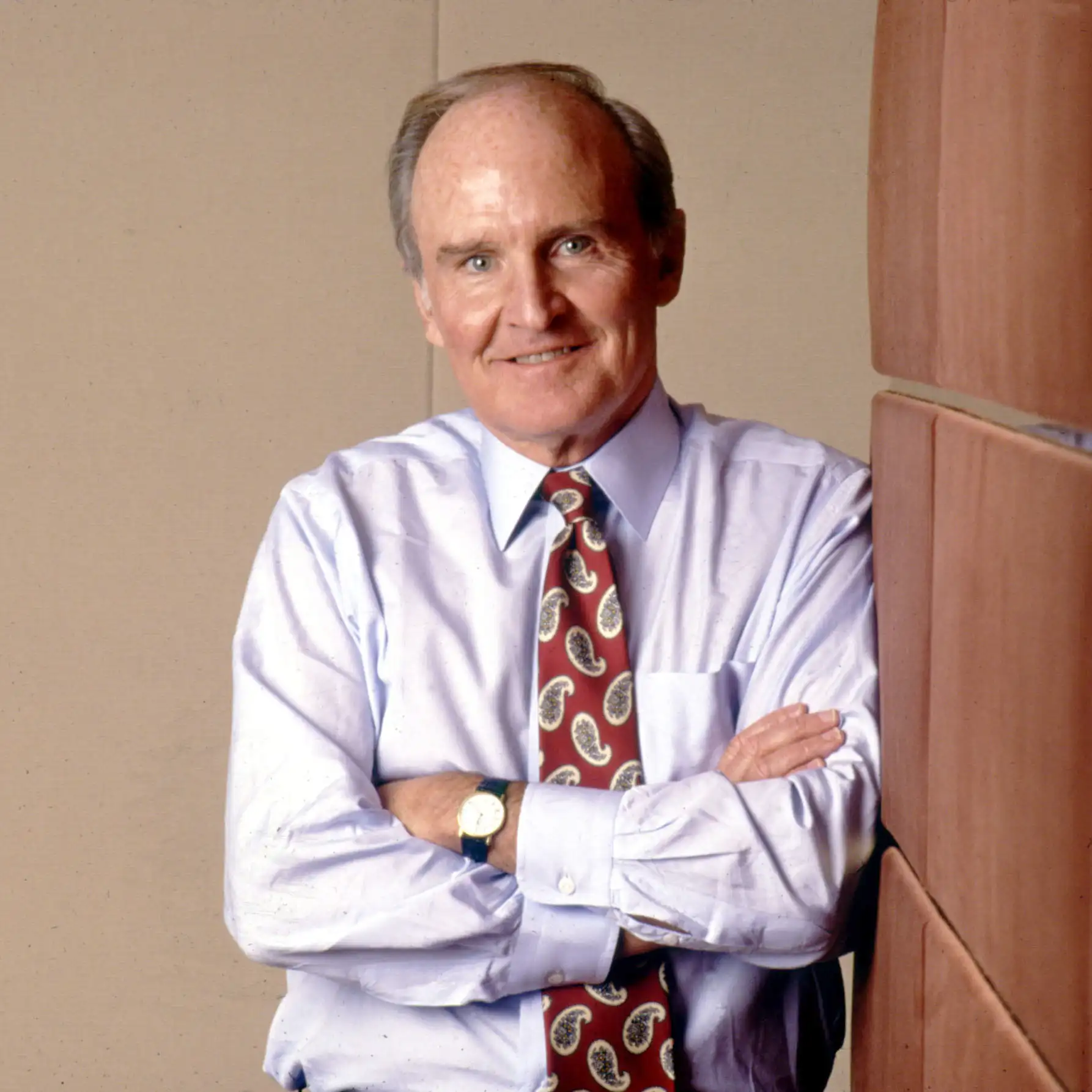
| American business executive and former CEO of General Electric | |
| Jack Welch | |
|---|---|
 | |
| Wiki Facts & About Data | |
| Real Name: | John Francis Welch Jr. |
| Stage Name: | Jack Welch |
| Born: | 19 November 1935 (age 84 years old) |
| Place of Birth: | Peabody, Massachusetts, United States |
| Died: | 1 March 2020 (age 84 years), Manhattan, New York, United States |
| Nationality: | American |
| Education: | Salem High School, University of Massachusetts Amherst, University of Illinois at Urbana-Champaign |
| Height: | 1.7 m |
| Parents: | Grace Andrews Welch, John Francis Welch Sr. |
| Siblings: | N/A |
| Spouse: | Suzy Welch (m. 2004–2020), Jane Beasley (m. 1989–2003), Carolyn B. Osburn (m. 1959–1987) |
| Girlfriend • Partner: | Not Dating |
| Children: | John Welch III, Anne Welch, Katherine Welch, Mark Welch |
| Occupation: | Business Executive |
| Net Worth: | $650 million-$750 million (USD) |
Early Life & Education
John Francis “Jack” Welch Jr. was born on November 19, 1935, in Peabody, Massachusetts, and grew up in a modest working-class neighborhood in nearby Salem, Massachusetts.
He was the only child of Irish-American, Roman Catholic parents: his father, John Francis Welch Sr., worked as a conductor for the Boston & Maine Railroad, while his mother, Grace Andrews Welch, was a homemaker.
Both sets of his grandparents were Irish immigrants, and the family lived in a solidly Irish-Catholic community where Welch served as an altar boy.
Welch attended Salem High School, where he was a three-sport athlete (baseball, football, and hockey captain). He went on to study chemical engineering at the University of Massachusetts Amherst, earning his B.S. degree in 1957.
He then pursued graduate studies at the University of Illinois at Urbana-Champaign, receiving a master’s degree in 1958 and a Ph.D. in chemical engineering in 1960.
His mother, Grace, played a pivotal early role in shaping his driven personality—helping him overcome a childhood stutter and instilling a fierce competitive spirit that defined his later career. The family’s humble, blue-collar roots in Massachusetts remained a point of pride for Welch throughout his life.
Career
Jack Welch spent over forty years at General Electric (GE), starting as a junior chemical engineer and eventually becoming one of the most influential and debated CEOs in business. He joined GE in 1960 after earning a Ph.D. in chemical engineering from the University of Illinois, beginning his career in the plastics division in Pittsfield, Massachusetts, with a starting salary of about $10,500.
Early on, he was frustrated by the company’s bureaucracy and even thought about quitting after a salary dispute, but he decided to stay and quickly moved up the ranks. By 1968, he was vice president of GE Plastics, where he led innovations in materials like Lexan polycarbonate.
During the 1970s, he took on broader executive roles, overseeing areas such as chemicals, metals, and medical systems, and became vice chairman and executive officer in 1979. In 1981, at 45, Welch became GE’s youngest chairman and CEO, succeeding Reginald H. Jones.
He held this position until he retired on September 7, 2001. Over his 20 years as CEO, Welch transformed GE through major restructuring and a strong focus on performance and shareholder value. He introduced the well-known “Be #1 or #2” rule, which required every GE business to be first or second in its market or be improved, sold, or closed.
This led to selling more than 200 underperforming units and freeing up billions in capital, as well as selling off businesses like consumer electronics, housewares, and central air-conditioning. Welch also led GE through more than 600 acquisitions, expanding into financial services, media (including the 1986 purchase of RCA and NBC), and new global markets.
He reduced bureaucracy by cutting management layers, encouraging greater openness, and implementing strict performance reviews. His “rank and yank” system placed employees into the top 20%, middle 70%, and bottom 10%, with the lowest performers usually let go each year.
He also promoted Six Sigma quality programs in the mid-1990s to improve efficiency and cut costs. These actions earned him the nickname “Neutron Jack” because he eliminated jobs but left buildings standing. Under his leadership, GE’s market value grew from about $14 billion in 1981 to over $400 billion, reaching a peak near $600 billion, making it the world’s most valuable company at times.
In 1999, Fortune magazine named him “Manager of the Century.” Welch‘s direct and competitive style was praised for revitalizing GE and shaping modern management, but he was also criticized for focusing on short-term profits, large-scale layoffs, and creating a high-pressure culture.
Some later connected these practices to GE’s struggles after 2001 and to broader trends in American business, such as job instability and an emphasis on quarterly results. After retiring, Welch stayed active in business education and commentary. He wrote best-selling books, including his 2001 autobiography, Jack: Straight from the Gut, and the 2005 management guide, Winning.
In 2009, he started the Jack Welch Management Institute, an online executive education program that later became part of Strayer University, where he helped design courses and interacted with students. He also worked as a senior advisor in private equity, taught at MIT’s Sloan School, and wrote columns for publications such as BusinessWeek.
Welch died on March 1, 2020, leaving behind a legacy as a leader who drove shareholder returns and sparked debate about the long-term effects of his management style on corporate culture and sustainability.
Social Media
- Wikipedia: Jack Welch
- LinkedIn: Jack Welch
- IMDb: Jack Welch(1935-2020)
- Twitter: Jack Welch (@jack_welch) / X
Personal Life
Jack Welch was 84 years old at the time of his death. Born John Francis Welch Jr. on November 19, 1935, he lived until March 1, 2020, when he passed away at his home in New York City.
The cause of death was renal failure (also referred to as kidney failure), after a long battle with the condition, as confirmed by his wife, Suzy Welch.
Welch had three marriages. He first married Carolyn Osburn (sometimes listed as Carolyn B. Osburn or Carolyn Carson) in 1959. They were together for 28 years and had four children—Katherine Welch, Anne Welch, John Welch III, and Mark Welch—before divorcing amicably in 1987.
His second marriage was to Jane Beasley, a corporate lawyer, in 1989. That marriage lasted until their divorce in 2002 (or 2003 in some reports), following a high-profile and costly settlement amid revelations of Welch‘s extensive post-retirement perks from GE.
His third and final marriage was to Suzy Wetlaufer (later known as Suzy Welch), a journalist and former editor of the Harvard Business Review, on April 24, 2004. Their relationship began controversially when she interviewed him for a story while still married to his second wife, but they remained together until his death, collaborating on books, columns, and business ventures.
Regarding his height, Welch was described as relatively short for a high-powered executive, with accounts placing him around 5 feet 7 inches to 5 feet 8 inches (some anecdotal reports suggest he appeared shorter, around 5’4″ to 5’5″, but 5’7″–5’8″ is the most commonly cited range from biographies and contemporaries).
Net Worth
Jack Welch amassed significant wealth through his transformative leadership at General Electric and subsequent ventures, with estimates of his net worth at the time of his death in March 2020 ranging from approximately $650 million to $750 million.
Reliable sources report $650 million, while others, including some media outlets citing contemporary estimates around his passing, place it around $720 million (a figure often referenced from 2006 onward, with modest growth or adjustments thereafter) or up to $750 million.
These figures reflect his massive 2001 retirement package from GE—valued at about $417 million (the largest severance in business history at the time, including pension benefits and perks)—plus earnings from post-retirement activities such as bestselling books (Jack: Straight from the Gut, Winning), speaking engagements, consulting, advisory roles in private equity, and the Jack Welch Management Institute.
Much of his fortune stemmed from GE stock options, compensation during his tenure as CEO (when the company’s market value grew from roughly $14 billion to over $400 billion), and investments.
His wealth supported a luxurious lifestyle, including high-profile real estate (such as properties sold for millions) and philanthropy, though portions were distributed via divorce (notably a substantial settlement to his second wife) and were likely to his four children and to estate planning after his death from renal failure.
What People Ask
NOTICE!! NOTICE!! NOTICE!!
At TheCityCeleb, we strive to provide accurate and up-to-date biographies and entertainment news, focusing on celebrities. Our editorial team researches information from reputable sources, including interviews, official statements, and verified media.If you spot an error or have additional details, please contact us at editor@thecityceleb.com. We value your feedback and are committed to maintaining trustworthy content.