John Varty Biography: Age, Wife, Children, Net Worth, Parents, Height, Helicopter Crash, Brother
Biography
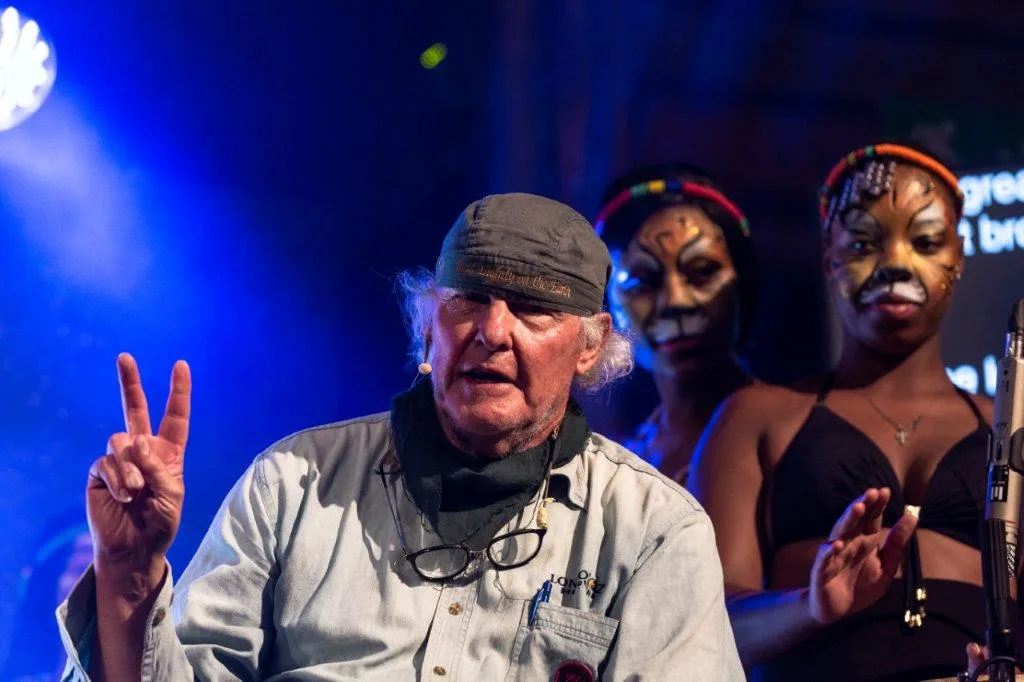
John Varty (born 27 November 1950, Johannesburg) is a South African wildlife filmmaker, conservationist, and big cat specialist with a career spanning over four decades.
He has produced more than 30 documentaries and one feature film. His path into conservation began after the death of his father, Charles, when he and his brother Dave terminated the family farm’s hunting activities and converted it into a game reserve in 1973, renaming it Londolozi, the Zulu word for “protector of living things.” The reserve would go on to become one of the most celebrated safari destinations in the world.
Trending Now!!:
Varty is perhaps best known publicly for co-writing and producing Running Wild, a feature film starring Brooke Shields and Martin Sheen, though his documentary work, including Shingalana, Jamu the Orphaned Leopard, and Living with Tigers, earned him wider acclaim in wildlife circles. Swift and Silent won an American Cable TV award in 1993, and The Silent Hunter won the New York Gold Award.
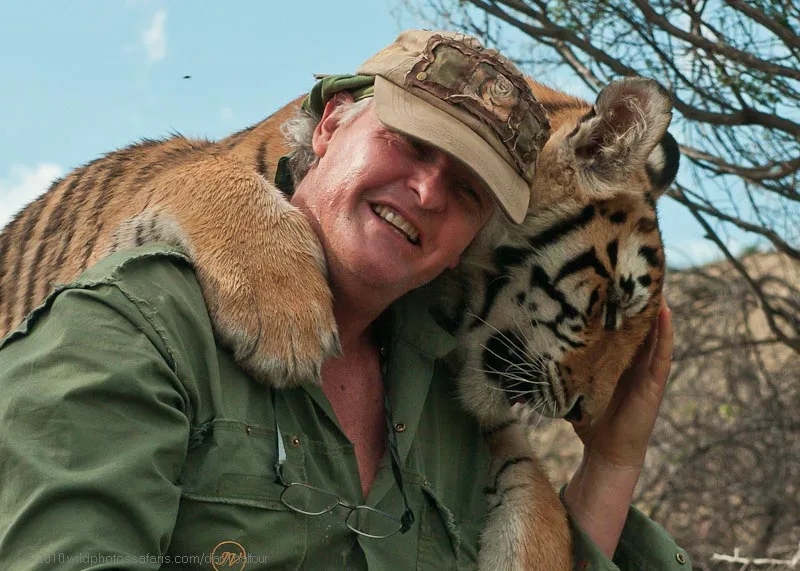
In 2000, Varty launched a Bengal tiger re-wilding project near Philippolis in South Africa’s Free State, with the goal of establishing a free-ranging, self-sustaining tiger population outside of Asia.
The ambitious and controversial project was documented by The Discovery Channel in 2003 and later by National Geographic in 2011. On 29 March 2012, Varty was critically injured when one of his tigers attacked him at Tiger Canyons, suffering multiple puncture wounds across his body and spending nearly a month in hospital.
He has three children: a daughter, Savannah, and twin boys, Sean and Tao.
| South African wildlife filmmaker, conservationist, and big cat specialist | |
| John Varty | |
|---|---|
 | |
| Wiki Facts & About Data | |
| Stage Name: | John Varty |
| Born: | 27 November 1950 (age 75 years old) |
| Place of Birth: | Johannesburg, South Africa |
| Nationality: | South African |
| Education: | Parktown Boys’ High School |
| Height: | N/A |
| Parents: | Maidie Hellier Varty, Charles Boyd Varty |
| Siblings: | Dave Varty |
| Spouse: | Gillian Van Houten (m. 1995) |
| Girlfriend • Partner: | Not Dating |
| Children: | Savannah Varty, Sean Varty, Tao Varty |
| Occupation: | Wildlife Filmmaker • Big Cat Specialist • Conservationist |
| Net Worth: | $5 million (USD) |
Early Life & Education
John Varty was born on 27 November 1950 in Johannesburg, South Africa, under the Sagittarius zodiac sign. He is a white South African of British descent and was raised in the Christian faith.
His mother was Maidie Hellier Varty, a woman remembered as the original keeper of Londolozi’s history. Beginning in 1942, she maintained what would become known as the Sparta Game Book, a meticulous record of guests, observations on the bush, and the life of the family’s beloved wilderness property.
Her belief in her sons and her quiet resolve proved foundational to everything the Varty name would come to represent in conservation. His father was Charles Boyd Varty, a farmer and landowner who had established the family’s game farm in the South African Lowveld. The land had been acquired in the 1920s and was originally used as a hunting ground. Charles died while John and his brother were still relatively young men, a loss that would alter the course of John’s life entirely.
John has one known sibling, a brother named Dave Varty. The two brothers are inseparable from the story of Londolozi. Dave and John were just 15 and 17 years old when they began dreaming of turning the family’s Sparta farm into a safari company, and their mother, a widow navigating the weight of that decision alone, said yes.
After their father, Charles, died, John and his brother Dave ended the farm’s hunting activities and converted it into a game reserve in 1973, renaming it Londolozi, the Zulu word for “protector of living things.”
As a child, John learned about hunting on the family game farm near the Kruger National Park. The bush was not a backdrop to his upbringing; it was the classroom. He developed an intimate understanding of animal behaviour, tracking, and the rhythms of the African lowveld from a very young age, instincts that would later define his entire career.
Beyond life in the wild, he also harboured serious ambitions of becoming a professional cricket player in England, plans that were set aside following his father’s death, when duty to the family land took precedence.
John Varty attended Parktown Boys’ High School in Johannesburg for his secondary education. Parktown Boys’ is consistently rated among the best-performing schools in South Africa and in Africa, with a proud tradition of producing leaders across commerce, politics, academia, and sport.
No record of a university degree is available in public sources. His deeper education came through the land itself, tracking wildlife alongside experienced guides, studying animal behaviour in the field, and learning the craft of documentary filmmaking in an entirely hands-on, self-directed way.
Career
John Varty’s career is one of the most unconventional in the history of wildlife filmmaking. He did not arrive at the craft through any formal training or industry pathway. He became involved in wildlife filmmaking after helping write scripts for Rick Lomba’s films, which examined the problems of excessive land use by commercial cattle farming and new game fences.
Varty was given a film camera as a form of payment when Lomba could not pay him, and so ended up with the means to record animal behaviour. That camera, acquired almost by accident, would define the next five decades of his life.
The earliest Londolozi films showed Varty using his camera to record knowledgeable guides at Londolozi. His first major production, Focus on Africa (1983), drew on the tracking expertise of the people around him, establishing a filmmaking philosophy rooted in authentic bush knowledge rather than staged spectacle.
Over the years that followed, working across Londolozi, Kenya’s Masai Mara, and Zambia’s Luangwa Valley, he built a body of work that was both prolific and internationally celebrated. In total, across the Masai Mara, Luangwa Valley, and Londolozi, he made 33 documentaries and one feature film.
His documentary output covered the full breadth of African wildlife, with a particular obsession with big cats. Among his most widely distributed works were Jamu the Orphaned Leopard, Shingalana, and Living with Tigers. Shingalana was born from a deeply personal story: a single lion cub abandoned at birth in the Sparta pride, which Varty picked up just hours old and raised alongside his partner, Gillian van Houten, and his longtime collaborator, Elmon Mhlongo, with the intention of releasing her back into the wild.
Unfortunately, Shingalana was killed by local lions in Zambia’s Luangwa Valley, but the story became a celebrated television series. Silent Hunter, Swift and Silent, Animal Powers, and Troubled Water all won international awards. Specifically, Swift and Silent won an American Cable TV award in 1993, and The Silent Hunter won the New York Gold Award. His films consistently achieved top ratings on American television channels and were seen by millions of viewers worldwide.
In 1992, Varty crossed into feature film territory. Running Wild, also known as Born Wild, was written by John Varty, Andrea Buck, and Duncan McLachlan, and starred Brooke Shields, Martin Sheen, and David Keith. The film followed a journalist who travels to Africa to document a conservationist’s efforts to protect wild leopards, with Varty playing himself. It was a significant moment, bringing his conservation work to a mainstream international audience through the vehicle of dramatic storytelling.
One of the most emotionally sustained projects of his career was Leopard Queen. In 2011, Varty starred in Leopard Queen, a documentary about a leopard he had filmed for 17 years. The film, which aired on National Geographic Wild, documented his two-decade relationship with the Londolozi leopard known as 3:4, and is widely regarded as among the most intimate wildlife films ever produced in Africa.
In 2000, Varty embarked on the most audacious chapter of his career. He started a Bengal tiger re-wilding project near Philippolis in South Africa’s Free State, with the aim of establishing a free-ranging, self-sustaining tiger population outside of Asia. He established Tiger Canyons near the town of Philippolis on the Van der Kloof Lake in the Karoo as the base for this experiment.
Today, Tiger Canyons holds the world’s only free-ranging population of tigers outside Asia and the only free-ranging white tigers in the world. The project drew the attention of major broadcasters: its progress was documented in a Discovery Channel production called Living with Tigers in 2003, and National Geographic made a second documentary, Tiger Man of Africa, in 2011.
The Tiger Canyons project was not without controversy. It became the subject of accusations by investors and conservationists that the film crew manipulated tiger behaviour for dramatic footage, with former investor Stuart Bray claiming the crew drove prey into the tigers’ path. Scientists also raised concerns about the genetic purity of the tigers, questioning the project’s conservation value. The controversy did little to slow Varty down, but it established him as one of the most debated figures in African conservation.
Beyond film, Varty is also an author, singer-songwriter, and activist. He has released music rooted in his experiences with animals, including an album called In the Jaws of the Tiger.
His autobiography is titled Nine Lives, a title that reflects a life marked by extraordinary physical danger, including 14 bouts of malaria, a near-fatal helicopter crash, melanoma cancer, triple bypass heart surgery, and a near-fatal tiger attack in 2012. Through it all, his commitment to documenting and defending the natural world has remained the defining constant of a remarkable career.
Social Media
- Facebook: John Varty
- Wikipedia: John Varty
- Instagram: John Varty (@john_varty)
- IMDb: John Varty
Personal Life
John Varty is 75 years old, born on 27 November 1950 in Johannesburg, South Africa.
His wife is Gillian Van Houten, a South African author, wildlife writer, and former television newsreader. The two married in 1995, and their union has been defined by a shared passion for wildlife conservation and filmmaking. Long before they formalised their relationship, Gillian was already Varty’s closest creative collaborator, working alongside him and tracker Elmon Mhlongo in the bush.
Together with Gillian van Houten, his partner, and Elmon Mhlongo, Varty raised the orphaned lion cub Shingalana with the intention of releasing her into the wild, a project that produced one of their most celebrated documentary series. The two also worked together on A Secret Life (1999), which tracked the life of a leopard named Lula at Londolozi Game Reserve, documenting her birth, hunts, and interactions with other predators.
Gillian has largely stayed out of the public eye over the years, choosing a private life away from media attention, though she has remained deeply connected to Varty’s conservation work.
The couple has three children together: a daughter, Savannah Varty, and twin sons, Sean Varty and Tao Varty. Savannah appeared in some of her father’s early Londolozi productions as a child, offering a glimpse into the extraordinary upbringing the Varty children experienced in the African bush. The twin boys, Sean and Tao, carry names that reflect their father’s deep connection to nature and his lifelong fascination with Asia through the Tiger Canyons project.
Regarding dating history, John Varty has not publicly documented any romantic relationships prior to Gillian Van Houten. His own accounts of his earlier life focus almost entirely on his work in the bush, his filming career, and his conservation efforts, with personal romantic history kept firmly private.
What is clear from his writings and interviews is that Gillian has been his most enduring personal and professional partnership, the one person consistently present through both the triumphs and the most dangerous chapters of his life, including the near-fatal tiger attack of 2012 that put him in the hospital for nearly a month.
Regarding his height, no verified measurement has been documented in any public source. John Varty’s exact height remains unknown.
Net Worth
John Varty’s net worth is estimated at approximately $5 million, according to figures cited by several celebrity wealth tracking platforms.
It is worth noting that this figure is an unofficial estimate derived from third-party analysis of his public career and assets, not a number he or any authorised source has publicly confirmed. Net worth calculations of this kind should be treated as rough approximations rather than verified figures.
The sources of his wealth are not difficult to trace, even if the exact totals remain speculative. His most significant financial asset has been his co-ownership and founding role at Londolozi Game Reserve, which, under his and his brother Dave Varty’s stewardship, grew from a converted family farm into one of the most celebrated safari destinations in the world. The reserve has been included on Travel + Leisure’s list of the world’s best resorts four times, underscoring the property’s commercial and reputational value over the decades.
His filmmaking career has also been a sustained source of income. His films achieved top ratings on American television channels and were seen by millions worldwide, with production deals spanning the Discovery Channel, National Geographic, and other major broadcasters. Award-winning titles like The Silent Hunter and Swift and Silent would have generated licensing and distribution revenue across multiple territories.
His Tiger Canyons project near Philippolis, while controversial, operates as both a conservation initiative and a safari tourism venture, offering big cat experiences that attract paying visitors and media partnerships, another stream feeding into his overall financial standing.
As with many conservationists whose wealth is tied primarily to land, wildlife assets, and intellectual property rather than liquid capital, John Varty’s true financial picture is beyond the reach of public estimates.
What People Ask
NOTICE!! NOTICE!! NOTICE!!
At TheCityCeleb, we strive to provide accurate and up-to-date biographies and entertainment news, focusing on celebrities. Our editorial team researches information from reputable sources, including interviews, official statements, and verified media.If you spot an error or have additional details, please contact us at editor@thecityceleb.com. We value your feedback and are committed to maintaining trustworthy content.