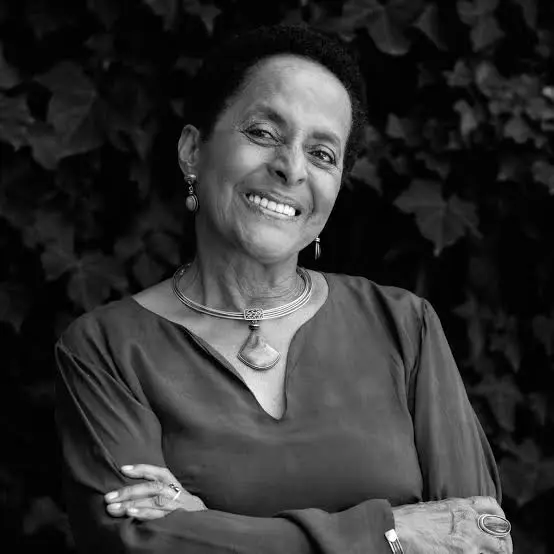
Susana Baca Biography: Husband, Net Worth, Age, Height, Children, Music, Ethnicity
Susana Esther Baca de la Colina, known worldwide as Susana Baca, has devoted her life to unearthing and amplifying the soul-stirring rhythms of Afro-Peruvian music, blending her roles as singer, composer, ethnomusicologist, and educator with a groundbreaking turn as Peru’s Minister of Culture from 2011 to 2012.
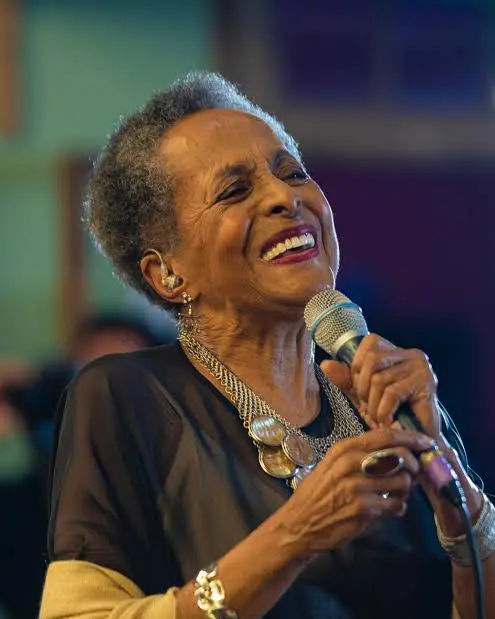
Profile
- Full Name: Susana Esther Baca de la Colina
- Stage Name: Susana Baca
- Born: 24, May 1944
- Age: 81 years old
- Birthplace: Chorrillos, Lima Province, Peru
- Nationality: Peruvian
- Occupation: Singer, Songwriter, Ethnomusicologist, Folklorist, Former Minister of Culture
- Height: 1.60 m
- Parents: Mr. and Mrs. Baca de la Colina
- Siblings: 1
- Spouse: Ricardo Pereira (m. 1980s)
- Children: None
- Relationship: Married
- Net Worth: $3 million
Early Life and Education
Susana Esther Baca de la Colina was born on May 24, 1944, in Chorrillos, a coastal Afro-Peruvian community near Lima, Peru. Her father was a chauffeur who also played guitar at local gatherings, and her mother worked as a cook and laundress for wealthy families.
Trending Now!!:
She had an older sister who encouraged her interest in performing, though details about other siblings remain private.
Baca attended public school before studying at the Universidad Nacional de Educación Enrique Guzmán y Valle, where she earned a teaching degree in 1968 and briefly worked as a teacher.
She is of Afro-Peruvian and Spanish heritage and was raised Catholic, a background that subtly influences her reflections on culture and spirituality.
Career
Susana Baca launched her artistic path in the early 1970s after leaving teaching behind, drawn to the rhythms echoing from her childhood in Chorrillos. She began collecting forgotten Afro-Peruvian folk songs during travels along Peru’s coast, adapting them for stage with simple instrumentation like the cajón and quijada.
Her first recordings emerged in the 1980s through Pregón, a label she co-founded, including Poesía y Canto Negro (1987), which captured the raw poetry of black Peruvian traditions.
Mentored by composer Chabuca Granda, Baca gained early traction with live performances at festivals, but true breakthrough arrived in 1995 when her haunting rendition of “María Lando”—a lament for exploited workers—appeared on David Byrne’s Luaka Bop compilation The Soul of Black Peru, thrusting her onto the international stage and sparking a revival of marginalized sounds.
The 1990s and 2000s marked Baca’s ascent as a global ambassador for Afro-Peruvian culture. Her self-titled debut solo album (1997) blended sparse arrangements with her emotive contralto, followed by Eco de Sombras (2000), which explored shadows of history through landós and festejos.
Collaborations flourished: she joined forces with Calle 13 on the anthemic “Latinoamérica” (2010), earning a Latin Grammy for Record of the Year in 2011, while Lamento Negro (2001) secured her first for Best Folk Album.
In 1992, alongside her husband Ricardo Pereira, she established the Instituto Negrocontinuo to archive songs, dances, and stories, publishing Del Fuego y del Agua that same decade—a book and album duo that documented black contributions to Peruvian music.
These efforts, coupled with tours across Europe, Africa, and the Americas, elevated her from folklorist to icon, influencing artists like Eva Ayllón and earning a Grammy nomination for Canto (2001).
Susana Baca’s legacy intertwines artistry with activism, from her brief but impactful tenure as Peru’s Minister of Culture—where she championed indigenous and Afro-Peruvian representation—to ongoing mentorship at her Centro Cultural de la Memoria Escondida in Cañete.
Albums like Afrodiaspora (2011), A Capella (2020)—another Latin Grammy winner for Best Folk Album—and the protest-infused Palabras Urgentes (2021) continue to weave urgent social commentary into traditional forms, while her 2025 release Conjuros reaffirms her role as a poetic force.
Through UNESCO advocacy and the Transglobal World Music Hall of Fame induction (2021), she ensures Afro-Peruvian voices resonate as vital threads in Latin America’s cultural tapestry.
Social Media
- Instagram Handle: @susana__baca
- Facebook Handle: SusanaBacaOficial
- YouTube: Susana Baca
Personal Life
Susana Baca married Bolivian-born sociologist and musician Ricardo Pereira in the early 1980s; their partnership, now spanning over four decades, blends love with shared purpose, as he serves as her longtime manager and co-founder of cultural initiatives like the Instituto Negrocontinuo.
The couple has no children but has poured their energy into preserving Afro-Peruvian heritage, often retreating to their Lima home for quiet evenings of reading poetry and playing guitar.
Discography
- Poesía y Canto Negro (1987)
- Susana Baca (1997)
- Eco de Sombras (2000)
- Lamento Negro (2001)
- Espíritu Vivo (2002)
- Travesías (2006)
- Seis Poemas (2009)
- Afrodiaspora (2011)
- A Capella (2020)
- Palabras Urgentes (2021)
- Conjuros (2025)
Net Worth
Susana Baca carries an estimated net worth of $3 million. Her financial foundation draws from royalties on over 18 albums, including Latin Grammy-winning releases like Lamento Negro and A Capella, alongside earnings from decades of international tours, cultural lectures, and UNESCO-related work, with additional streams from her cultural center and book sales on Afro-Peruvian folklore.
NOTICE!! NOTICE!! NOTICE!!
At TheCityCeleb, we strive to provide accurate and up-to-date biographies and entertainment news, focusing on celebrities. Our editorial team researches information from reputable sources, including interviews, official statements, and verified media.If you spot an error or have additional details, please contact us at editor@thecityceleb.com. We value your feedback and are committed to maintaining trustworthy content.