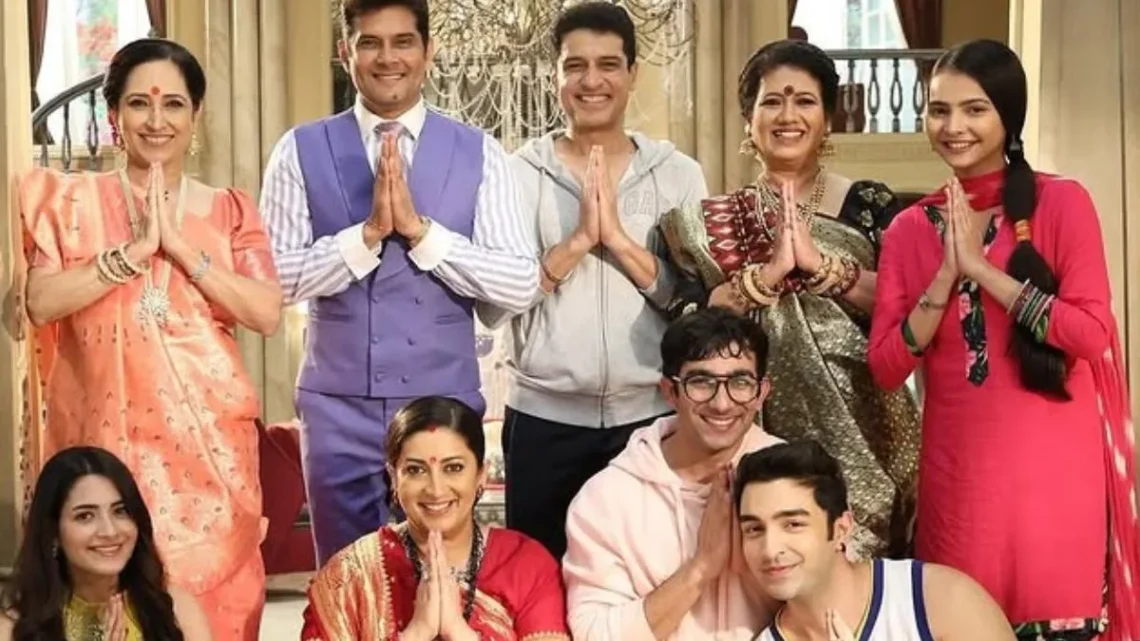
Virani Family Tree: A Complete Breakdown of Indian Television’s Most Iconic Dynasty
There are fictional families, and then there is the Virani family.
When Kyunki Saas Bhi Kabhi Bahu Thi first aired on Star Plus on July 3, 2000, audiences across India were introduced to a wealthy Gujarati household whose members, over the next eight years and nearly 1,833 episodes, would multiply into one of the most intricate, most argued-over, and most emotionally invested family trees in the history of Indian television. People did not just watch the Viranis.
Trending Now!!:
They tracked them, debated them, sometimes wept for them, and occasionally took to the streets when the writers tried to kill one of them off.
Understanding the Virani family tree is not as straightforward as reading a genealogy chart. The show took three major time leaps, introduced over 100 characters, cycled through multiple actors for the same role, and eventually spanned five full generations of the Virani parivar.
What follows is an authoritative, generation-by-generation breakdown of who the Viranis are, how they connect to each other, and why the family’s lineage remains relevant enough to anchor a sequel series, Kyunki Saas Bhi Kabhi Bahu Thi 2, which premiered on JioHotstar in July 2025.
The Roots: Who Founded the Virani Dynasty?
Govardhan and Amba Virani, the First Generation
Everything in the Virani family tree begins with one couple: Govardhan Virani, a business tycoon, and Amba Virani, affectionately known as Baa, who raised their children in the grand family home called Shantiniketan in Mumbai.



Govardhan was portrayed on screen by Dinesh Thakur and later Sudhir Dalvi. Amba, played with immense warmth by Sudha Shivpuri, became one of the most beloved grandmother figures in Indian soap opera history. Her quiet moral authority and unconditional love were the glue holding the Virani khandan together even when everyone else in the house was at each other’s throats.
The two of them had four children, and that single fact is what makes the Virani family tree so expansive. Four branches off the same trunk, each one producing its own set of marriages, conflicts, and descendants across generations.
The Second Generation: Four Children, Four Storylines
Govardhan and Amba had four children: Mansukh Virani, Himmat Virani, Pragya Virani (their daughter, who married into the Sanghvi family), and Jamnadas Virani, referred to by family members as “JD.”
Each of these four formed their own branch of the family, and together they populate what is technically the second generation of the Virani family tree.
Mansukh Virani and Savita Virani
Mansukh Virani, played by Shakti Singh, was Govardhan and Amba’s eldest son, and his wife, Savita Virani, portrayed with ruthless precision by Apara Mehta, was one of the show’s most complicated characters.
Savita was both a loving mother and a deeply manipulative woman, and her complicated relationship with her daughter-in-law, Tulsi, drove much of the show’s early drama. The Mansukh-Savita branch is the central branch of the entire tree, because it produced Mihir Virani, the male lead.
Himmat Virani and Daksha Virani
Himmat Virani, played by Jitendra Trehan, was Govardhan and Amba’s second son, married to Daksha, portrayed by Ketki Dave.
This branch of the family produced Suhasi and Chirag Virani, who were part of the third generation of Viranis. Daksha was one of the three daughters-in-law who made poor Baa’s life difficult in the early episodes, alongside Savita and Gayatri.
Jamnadas Virani and Gayatri Virani
Jamnadas Virani, commonly called JD, married Gayatri, played for years by Kamalika Guha Thakurta, one of the few cast members who would reprise her role across both the original series and the 2025 sequel.
Together, they had two children, Hemant Virani and Sejal. Hemant eventually became the father of Sahil Virani, pushing the Virani bloodline into a fourth generation by the middle of the show’s run.
Pragya Virani and the Sanghvi Connection
Pragya Virani, played by Utkarsha Naik, was the daughter of Govardhan and Amba, married to Naveen Sanghvi.
Their son Vikram Sanghvi married Vaishali, connecting the Sanghvi line back to the Virani family tree by marriage. Pragya was largely a background character who was eventually written off the show without much ceremony, a frustration that longtime fans still mention.
The Third Generation: Mihir, Kiran, and the Women Who Shaped Them
The third generation of the Virani family tree is where the show’s soul lives. This is the generation that gave Indian television Tulsi Virani, arguably the most iconic female character in the history of Hindi-language soap operas.
Mihir Virani
Mihir Virani, the eldest grandson of Govardhan, was Savita and Mansukh’s elder son. He is the character who made the show’s premise possible. The story begins when Savita arranges Mihir’s marriage to the arrogant Payal, but he falls in love with and marries the family priest’s kind-hearted daughter, Tulsi.
What followed from that single decision, a love match crossing class lines in a conservative Gujarati family, was eight years of some of the most-watched television drama India has ever produced.
Mihir is the character who broke all the rules about what a soap opera hero could be. He was played by three different actors over the show’s run: Amar Upadhyay, Inder Kumar, and Ronit Roy, each bringing a different energy to the role. Mihir’s on-screen death led to nationwide protests, forcing the makers to bring his character back, a moment that reveals just how invested audiences were in the Virani family’s fate.
Kiran Virani
Kiran Virani was Mansukh and Savita’s younger son, and his wife, Aarti Patel Virani, played memorably by Eva Grover, was one of the kinder presences in the Virani household.
The Kiran-Aarti branch is notable for one of the show’s most emotionally wrenching subplots: Tulsi gives her firstborn son Gautam to Kiran and Aarti, who are childless, and the two eventually leave India with Gautam, fearing Tulsi might reclaim him. Their daughter Karishma Virani also became part of the broader Virani family narrative.
Hemant Virani
Hemant Virani, son of JD and Gayatri, was the softer, quieter branch of the third generation. Played by Shakti Anand, Hemant eventually married Pooja Virani, played by Prachi Shah, after a complicated journey involving blackmail, a marriage of convenience, the death of Pooja’s first husband, Rajeev, from bone cancer, and eventually genuine love. Their son Sahil Virani became one of the show’s most consistent characters across multiple generations of storytelling.
The Fourth Generation: Tulsi’s Children and the Next Wave of Viranis
Gautam Virani
Gautam Virani, played by Sumeet Sachdev, was Tulsi and Mihir’s eldest son, a widower of Teesha, and later the husband of Damini. Gautam’s romantic life was one of the most tragic arcs in the show.
Teesha and her unborn child died in an accident planned by Mandira that was originally intended for Tulsi. Gautam eventually found his way to Damini Khanna, played by Riva Bubber, and later to Ravee Gupta, and their sons, Mayank and Nakul, became part of the fifth generation.
Shobha Virani
Shobha, played by Ritu Chaudhary, was Tulsi and Mihir’s daughter, and her character represented the ideal of what the Virani women could become under Tulsi’s guidance.
She married Vishal Pratap Mehra, played by Rohit Bakshi, and her daughter Pari becomes a significant character in Kyunki Saas Bhi Kabhi Bahu Thi 2, attending her grandfather Mihir’s wedding in the sequel.
Harsh Virani
Harsh Virani, the youngest child of Tulsi and Mihir, married the scheming Mohini, played by Tasneem Sheikh. Harsh married the greedy Mohini, who frequently causes trouble for the family. Their daughter Archita became one of the more wholesome characters of the fourth generation, someone Mohini lamented had not inherited her mother’s scheming instincts.
Karan Virani
Karan was Mihir’s illegitimate son with Mandira, born of an affair that Mihir had had for many years without Tulsi’s knowledge. Played with complexity by Hiten Tejwani, Karan Virani is one of the show’s most nuanced characters.
Tulsi accepts Karan as her own son, and he comes to love her more than Mandira after learning the truth about his birth mother. His love story with Nandini, played by Gauri Pradhan Tejwani, became one of the most beloved romantic pairings in the show’s history. Karan also married Tanya Virani, played by Rakshanda Khan, in one of the show’s more complicated love triangles.
Ansh Virani
Ansh Virani, played by Akashdeep Saigal, was another fourth-generation character who married Shradda. His entry into the show in 2004 was reportedly the most expensive single scene the production had shot up to that point.
Sahil Virani
Sahil Virani, son of Hemant and Pooja, had one of the more emotionally resonant storylines of the fourth generation. Sahil marries Ganga to save her honor, while Ganga later becomes a successful businesswoman.
He later married Tripthi, played by Suvarna Jha, a character with a grey moral shade who consistently plotted against Tulsi, before eventually reconciling with Ganga.
The Fifth Generation and the Time Leaps
One of the most remarkable structural choices in Kyunki Saas Bhi Kabhi Bahu Thi was its willingness to leap forward in time, sometimes by 20 years at a time. The story took three major leaps: first, a 20-year leap in 2002, then 3 years, and again a 20-year leap in 2006.
These leaps introduced the fifth generation of the Virani family tree, characters like Mayank and Nakul Virani (sons of Gautam and Damini), Lakshya (son of Sahil and Tripthi, played by Pulkit Samrat), and Krishna Tulsi, a character introduced as the heir to Tulsi’s legacy.
The soap unveiled the fourth and fifth generation of the family alongside Krishna Tulsi, a new protagonist described as the heir to Tulsi’s legacy, a strong character with her culture and family values firmly in place.
Ekta Kapoor herself described this as passing the baton to the younger generation, though fan reception to the fifth-generation storylines was mixed, with many feeling the newer characters lacked the depth of the original cast.
The Antagonists Who Shaped the Family’s Destiny
No reading of the Virani family tree is complete without acknowledging the characters who repeatedly tried to destroy it. Mandira, played in different phases by Mandira Bedi and Achint Kaur, was the show’s most persistent villain.
Mandira and Karan try to trouble the Viranis and take over their industries, but fail. Payal Mehra, played by Jaya Bhattacharya, was another recurring antagonist, and Meera Singhania, played by Shubhavi Choksey, was Tulsi’s former friend turned obsessive rival. Meera was exposed by Mihir on their wedding day and imprisoned for Savita’s murder.
These characters functioned not just as plot devices but as stress tests for the Virani family’s values. Every time the family survived their scheming, it reaffirmed what the show was trying to say about the resilience of family bonds.
Tulsi Virani: The Woman Who Holds the Tree Together
No article about the Virani family tree can treat Tulsi Virani as simply one character among many. She is the tree’s moral spine. Smriti Irani played Tulsi, winning multiple awards for her role, including the record for five consecutive Best Actress-Popular awards from the Indian Television Academy Awards.
Tulsi’s evolution from a naïve bride to a strong matriarch was central to the show’s narrative, and her moral compass and resilience made her one of the most beloved characters in Indian TV history. What made Tulsi extraordinary was not that she was perfect but that she was consistent.
She absorbed betrayal after betrayal, loss after loss, and came back to the family table every time, not because the show demanded it, but because the character was written to believe that family, fractured and imperfect as it was, was always worth fighting for.
The story of Tulsi entering the Virani household after marrying Mihir against the family’s wishes, coming from a smaller, middle-class family into a wealthy Gujarati dynasty, was the central engine of the show’s drama. Her relationship with Baa, with Savita, with every generation of Viranis that followed, defined the emotional arc of the entire series.
The Cultural Footprint of the Virani Khandan
Kyunki Saas Bhi Kabhi Bahu Thi was ranked number one with double-digit TRPs for seven continuous years, peaking at 22.4 in May 2001. Numbers like that tell part of the story. The rest is harder to quantify.
The show had a major cultural impact across India. Mihir’s on-screen death led to nationwide protests, forcing the makers to bring his character back. Viewers recreated the show’s grand sets at home, and despite real-life events like the Gujarat earthquake, audiences tuned in regularly.
The show became the first Indian serial broadcast in Afghanistan, where it gained huge popularity before being banned.
That kind of cross-border reach for a family drama built around a Gujarati household in Mumbai is a testament to how universal the Virani family’s dynamics felt. The mother-in-law, the daughter-in-law, the prodigal son, the scheming sister-in-law, the wise grandmother who sees everything but says little, these are archetypes that travel.
The show helped establish Star Plus’s “big 3” soap operas, alongside Kahaani Ghar Ghar Kii and Kasautii Zindagii Kay, marking a turning point for producer Ekta Kapoor and the network alike.
The Sequel: A New Chapter in the Virani Family Tree
Kyunki Saas Bhi Kabhi Bahu Thi 2 and the Sixth Generation
Kyunki Saas Bhi Kabhi Bahu Thi 2 premiered on July 29, 2025, on Star Plus and streams on JioHotstar. It is a sequel and reboot of the original, with Smriti Irani and Amar Upadhyay returning to portray Tulsi and Mihir Virani.
The show continues the legacy of the Virani family, focusing on generational shifts, evolving relationships, and the timeless dynamics between mothers-in-law and daughters-in-law, picking up years after the original with Tulsi Virani returning to guide the new generation through the trials of family, love, and tradition.
The new generation of the Virani family tree in the sequel includes characters like Angad Virani, played by Rohit Suchanti, who is identified as the son of Anupam and Kesar, and Paridhi “Pari” Virani, played by Shagun Sharma, who is identified as Anupam and Kesar’s daughter. Aman Gandhi plays Hrithik Virani, the second son of Tulsi and Mihir, in the sequel.
The sequel also features returning cast members, including Ritu Chaudhary as Shobha Virani, Kamalika Guha Thakurta as Gayatri Virani, Ketaki Dave as Daksha Virani, Hiten Tejwani as Karan Virani, and Gauri Pradhan as Nandini Virani.
New fifth and sixth-generation characters include Sohil Singh Jhuti as Parth Virani (son of Karan and Tanya), Jia Narigara as Samaira Virani (daughter of Karan and Nandini), and Samar Birje as Ronak Virani (son of Karan and Nandini).
The sequel has also introduced significant new storyline elements, including a financial crisis gripping the Virani household and revelations about Shantiniketan being mortgaged, giving the new generation of Viranis real-world stakes that echo the original series’ tensions.
Why the Virani Family Tree Still Matters
There is a reason people keep mapping the Virani family tree more than twenty-five years after the show first aired. Genealogy, whether real or fictional, satisfies a deep human need to understand where people come from and how they are connected.
The Virani family, with its five generations of love matches and arranged marriages, legitimate heirs and illegitimate children, scheming daughters-in-law and quietly powerful matriarchs, gave Indian audiences a mirror to hold up against their own family structures.
The show also did something that very few Indian productions had done before or have done since: it let a family breathe across time. The Viranis were not frozen at the moment of their introduction. They aged, had children, made mistakes, changed their minds about people, and occasionally became the thing they had once despised. That is what real families do.
The Virani family tree is, in the end, not just a cast list or a genealogy chart. It is a document of how Indian popular culture chose to imagine the ideal family and the real one, sitting side by side in the same big house in Mumbai, eating at the same table, fighting over the same things, and somehow, always finding their way back to each other.
NOTICE!! NOTICE!! NOTICE!!
At TheCityCeleb, we strive to provide accurate and up-to-date biographies and entertainment news, focusing on celebrities. Our editorial team researches information from reputable sources, including interviews, official statements, and verified media.If you spot an error or have additional details, please contact us at editor@thecityceleb.com. We value your feedback and are committed to maintaining trustworthy content.