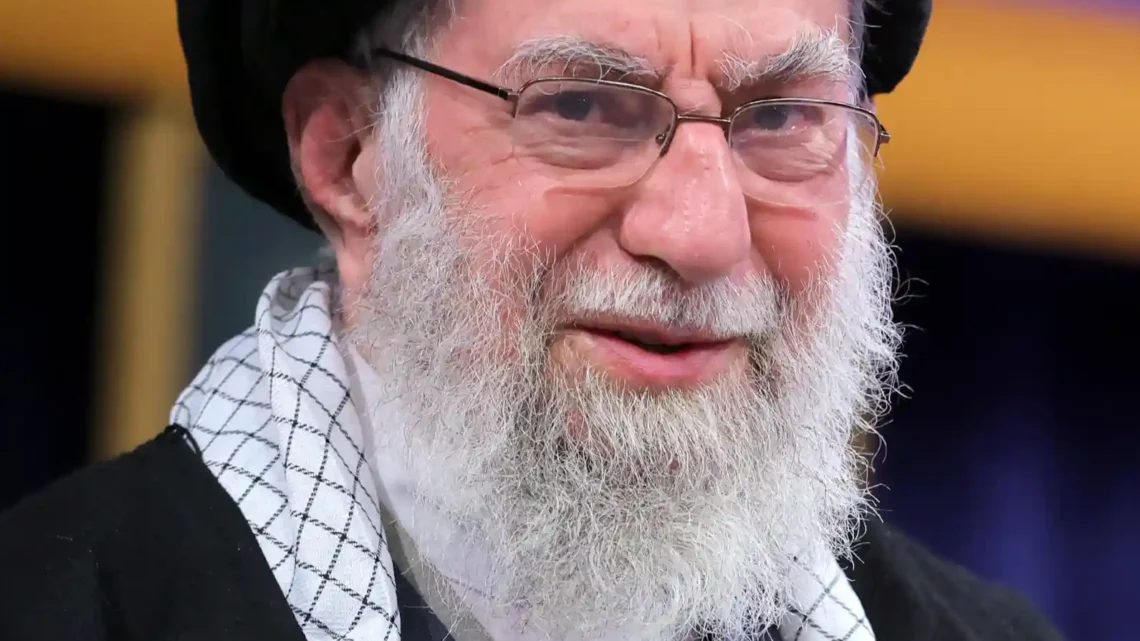
Ali Khamenei Biography: Children, Age, Books, Net Worth, Wife, Parents, Cause of Death
Biography
Ayatollah Seyyed Ali Hosseini Khamenei (born April 19, 1939, in Mashhad, Iran – died February 28, 2026) was an Iranian Shia cleric and politician who served as the Supreme Leader of the Islamic Republic of Iran from 1989 until his death.
Coming from a modest, religious family—his father was a humble Islamic scholar—he began clerical studies as a child and pursued advanced religious education in Mashhad, Najaf (Iraq), and Qom. He became politically active against the Shah’s regime in the 1960s and 1970s, facing multiple arrests and exile.
Trending Now!!:
Khamenei played a key role in the 1979 Iranian Revolution alongside Ayatollah Ruhollah Khomeini. After the revolution, he held several positions, including Minister of Defense, supervisor of the Islamic Revolutionary Guard Corps, and Friday prayer leader in Tehran.
He survived a near-fatal assassination attempt in 1981 that left him permanently injured. He served as President of Iran from 1981 to 1989. Following Khomeini‘s death in 1989, the Assembly of Experts selected him as Supreme Leader, a position he held for over 36 years—the longest tenure of any Iranian leader since Mohammad Reza Pahlavi.
As Supreme Leader, Khamenei wielded ultimate authority over Iran’s political, military, judicial, and religious affairs, shaping the country’s theocratic system, foreign policy (including support for the “Axis of Resistance“), nuclear program, and domestic crackdowns on dissent.
His rule was marked by centralization of power, militarization through the IRGC, and enduring tensions with the West. Khamenei was killed at age 86 in a joint U.S.-Israeli airstrike on February 28, 2026, during an escalated military conflict, triggering a major leadership transition in Iran.
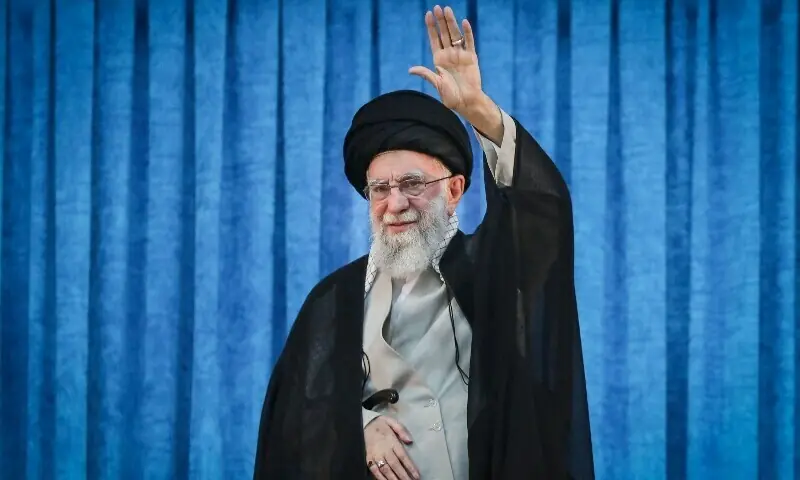
| Supreme Leader of Iran | |
| Ali Khamenei | |
|---|---|
 | |
| Wiki Facts & About Data | |
| Real Name: | Seyyed Ali Hosseini Khamenei |
| Stage Name: | Ayatollah Ali Khamenei |
| Born: | 19 April 1939 (age 86 years old) |
| Place of Birth: | Mashhad, Iran |
| Died: | 28 February 2026, Iran |
| Nationality: | Iranian |
| Education: | Islamic Seminary of Qom (1958–1964), Hawza of Najaf (1957–1958) |
| Height: | 175 cm |
| Parents: | Javad Khamenei, Khadijeh Mirdamadi |
| Siblings: | Rababeh Khamenei, Badri Khamenei, Hadi Khamenei, Mohammad Khamenei |
| Spouse: | Mansoureh Khojasteh Bagherzadeh (m. 1964) |
| Girlfriend • Partner: | Not Dating |
| Children: | Mojtaba Khamenei, Hoda Khamenei, Mostafa Khamenei, Masoud Khamenei, Boshra Khamenei, Meysam Khamenei |
| Occupation: | Cleric • Politician |
| Net Worth: | $95 billion-$200 billion (USD) |
Early Life & Education
Ayatollah Seyyed Ali Hosseini Khamenei was born on 19 April 1939 in the holy city of Mashhad, Razavi Khorasan Province, northeastern Iran, a major religious center known as the burial place of Imam Reza, the eighth Shia Imam.
He was the second of eight children in a modest, deeply pious Twelver Shia clerical family that lived in relative poverty, often in a small one-room house with a basement. His father, Ayatollah Seyyed Javad Khamenei, was a humble alim and mujtahid born and partly educated in Najaf, Iraq, who emphasized an ascetic, simple lifestyle and taught locally in Mashhad.
His mother, Khadijeh Mirdamadi, came from a religious Persian family in Yazd and was known for her dedication to her children’s education in religion, history, literature, and poetry. On his paternal side, Khamenei had Azerbaijani (Azeri) Turkic roots from the Khamaneh area near Tabriz, while his maternal lineage was Persian; as a Sayyid descendant of the Prophet Muhammad through the Shia Imams, he wore the traditional black turban from a young age.
Among his siblings were his older brother, Mohammad Khamenei, a cleric and philosopher; his younger brother, Hadi Khamenei, a cleric and reformist politician; and his sister, Badri Khamenei. His religious education started at age four, when he and his older brother Mohammad were sent to a traditional maktab (Quranic elementary school) in Mashhad to learn the alphabet, Quran recitation, and basic Arabic.
He continued his studies at local Islamic primary schools and later advanced to the hawza (theological seminary) in Mashhad, where he studied the preliminary and intermediate levels under prominent teachers such as Sheikh Hashem Qazvini and Ayatollah Mohammad Hadi Milani.
In 1957, at around age 18, he briefly traveled to Najaf, Iraq, for further studies in Shia jurisprudence, but returned at his father’s request. In 1958, he permanently settled in Qom, Iran’s leading center of Shia scholarship, where he pursued advanced studies under major marja’ such as Ayatollah Ruhollah Khomeini and Ayatollah Seyyed Hossein Borujerdi.
Though intellectually gifted and widely read, including in secular literature and poetry, Khamenei showed early political engagement alongside his religious training, setting the stage for his later revolutionary involvement.
Career
Ayatollah Seyyed Ali Hosseini Khamenei started his political and religious career in the 1960s by actively opposing Shah Mohammad Reza Pahlavi. He shared Ayatollah Ruhollah Khomeini’s messages, organized secret study groups, and joined anti-monarchy protests, which led to several arrests, time in prison, and internal exile between 1963 and the late 1970s.
His involvement grew stronger before the 1979 Islamic Revolution, where he became a close ally of Khomeini. After the revolution, Khamenei joined the Revolutionary Council, helped set up the new Islamic Republic’s institutions, and briefly served as deputy minister of defense while overseeing the early Islamic Revolutionary Guard Corps (IRGC).
In 1980, he became Tehran’s Friday prayer leader, using his position to promote revolutionary ideas, and was elected to represent Tehran in the first parliament after the revolution. In September 1981, he survived a bomb attack during a Friday prayer speech that seriously injured his right arm and voice.
The attack was blamed on the Mujahedin-e Khalq organization. Khamenei was elected president of Iran in October 1981 after President Mohammad Ali Rajai was assassinated. He served two terms from 1981 to 1989, leading the country through the difficult years of the Iran-Iraq War.
As president, he worked closely with Khomeini, managing the war effort, economic issues, and the consolidation of theocratic rule, while the prime minister held most executive powers until 1989, when constitutional changes gave the presidency greater authority.
After Khomeini died in June 1989, the Assembly of Experts chose Khamenei as Supreme Leader on June 4, 1989, even though he did not have the highest traditional religious qualifications. The constitution was changed to allow political and revolutionary experience to count more than strict clerical rank.
He held this top position in Iran’s system, leading the armed forces, judiciary, state media, foreign policy, and having veto power over elected bodies, for more than 36 years until his death. As Supreme Leader, Khamenei centralized power, strengthened the IRGC as a major economic and military force, pushed forward Iran’s nuclear program despite international sanctions, supported the “Axis of Resistance” (including Hezbollah, the Syrian government, Hamas, and Iraqi militias), and kept strong anti-U.S. and anti-Israel policies.
Inside Iran, his rule saw repeated crackdowns on dissent, including the suppression of the 2009 Green Movement, the 2017–2018 protests, the 2019 fuel protests, and the 2022 Woman, Life, Freedom uprising after Mahsa Amini’s death. He oversaw the disqualification of reformist candidates, reinforced hard-line control through groups like the Guardian Council, and shaped Iran’s theocratic government through his guidance and religious rulings.
Khamenei was killed at age 86 in a joint U.S.-Israeli airstrike on February 28, 2026, during a period of rising regional conflict. His death ended his long rule and led to a major succession crisis in the Islamic Republic.
Social Media
- Wikipedia: Ali Khamenei
- Twitter: Khamenei.ir (@khamenei_ir) / X
Personal Life
Ayatollah Seyyed Ali Hosseini Khamenei was 86 years old at the time of his death on 28 February 2026, having been born on 19 April 1939.
In 1964, at the age of 25, he entered a traditional family-arranged marriage with Mansoureh Khojasteh Bagherzadeh, the daughter of a respected merchant family in Mashhad, and she remained his only wife for the rest of his life.
The couple had six children: four sons named Mostafa Khamenei, Mojtaba Khamenei, Masoud Khamenei, and Meysam Khamenei, and two daughters named Boshra Khamenei and Hoda Khamenei. Khamenei had numerous grandchildren, including Mohammad Bagher Khamenei, son of Mojtaba Khamenei, though the family maintained strict privacy, and almost no details about them were ever released publicly.
He stood approximately 5 feet 9 inches (175 cm) tall. His marriage followed longstanding religious and family customs rather than any form of personal courtship.
Cause of Death
Ayatollah Seyyed Ali Hosseini Khamenei, Iran’s Supreme Leader since 1989, was killed at age 86 on February 28, 2026, in a joint U.S.-Israeli airstrike during a major military operation against Iran. The attack, described by U.S. officials as part of efforts to target high-level regime figures and prevent threats, struck his compound and office in downtown Tehran, where he was reportedly carrying out official duties at the time.
Satellite imagery showed severe damage to buildings in the compound, with black smoke rising over the site, and his body was later confirmed recovered from the rubble. The strikes were part of the most extensive U.S.-Israeli assault on Iranian targets in decades, dubbed operations like “Epic Fury” by the U.S. and involving waves of airstrikes across multiple provinces.
U.S. President Donald Trump announced Khamenei’s death on social media shortly after the initial wave, describing it as justice against a long-time adversary, while Israeli Prime Minister Benjamin Netanyahu confirmed the compound’s destruction.
Iranian state media initially downplayed the impact but confirmed Khamenei‘s “martyrdom” early the next day (Sunday, March 1, 2026, Tehran time), declaring 40 days of national mourning and portraying his death as occurring while he stood firm against “global arrogance.”
The events leading to his death stemmed from escalating regional tensions, including Iran’s nuclear program, support for proxy groups, and prior conflicts. After failed diplomatic efforts—such as recent nuclear talks in Geneva—the U.S. and Israel launched the coordinated strikes following intelligence on senior Iranian leaders’ locations, with lobbying from allies like Israel and Saudi Arabia.
The operation killed Khamenei along with other top figures, including IRGC commanders, the defense minister, and security advisers, amid reports of dozens to hundreds of casualties overall. Khamenei‘s killing triggered immediate Iranian retaliation, with missile and drone attacks on Israel and U.S. bases in the Gulf, further waves of U.S.-Israeli strikes, and widespread regional instability.
In Iran, the announcement sparked mixed reactions: pro-regime loyalists mourned and chanted slogans, while opposition activists and some civilians celebrated in the streets, viewing it as a potential turning point.
The death created a major power vacuum, with no clear immediate successor named, raising questions about succession under Iran’s constitution and the roles of the Assembly of Experts, the IRGC, and figures like his son, Mojtaba Khamenei.
Net Worth
Ayatollah Seyyed Ali Hosseini Khamenei was widely reported to control a vast financial empire estimated at between $95 billion and $200 billion at the time of his death in 2026, largely through opaque institutions like Setad (the Headquarters for Executing the Order of the Imam), which manages extensive real estate, corporate stakes, investments, and other assets often originating from post-revolution property seizures and state-linked holdings.
While Khamenei himself lived modestly in public—consistent with his clerical image and official portrayals of personal austerity—independent investigations, including a prominent 2013 Reuters report that pegged Setad’s assets at around $95 billion, highlighted how his position as Supreme Leader granted oversight of this immense wealth, far exceeding typical personal fortunes and fueling ongoing debates about transparency, corruption, and economic disparity in Iran.
Official Iranian sources never confirmed or detailed any personal net worth, and some Western listings occasionally cited nominal figures as low as $50,000 for declared personal assets, but these were widely seen as not reflecting the full scope of institutional control he exercised.
What People Ask
NOTICE!! NOTICE!! NOTICE!!
At TheCityCeleb, we strive to provide accurate and up-to-date biographies and entertainment news, focusing on celebrities. Our editorial team researches information from reputable sources, including interviews, official statements, and verified media.If you spot an error or have additional details, please contact us at editor@thecityceleb.com. We value your feedback and are committed to maintaining trustworthy content.