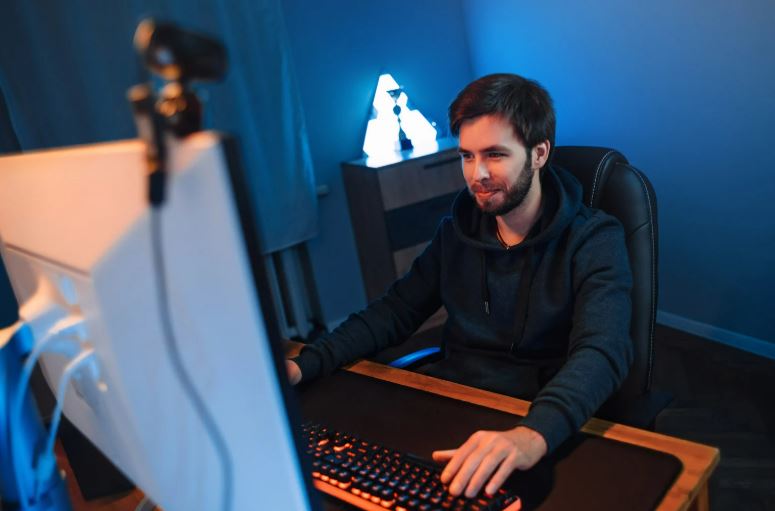
How Slot Streamers Became the New Face of Online Entertainment
There is a moment, somewhere around the third hour of a live gambling stream, when the chat becomes a living organism.
Thousands of viewers are typing the same word over and over, in capitals, in emojis, in full sentences that collapse into fragments of excitement. The streamer has just triggered a bonus round on a high-volatility slot, and the virtual room is collectively holding its breath.
Trending Now!!:
Nobody in that chat is spinning reels themselves. Most of them never will. But they are absolutely, undeniably invested.
That moment, repeated millions of times a day across platforms like Twitch, Kick, and YouTube, is how casino streaming stopped being a niche internet habit and became something that pop culture theorists, game developers, celebrity managers, and regulators are all scrambling to understand at the same time.
I have spent more than a decade watching this space evolve, talking to players, streamers, affiliate managers, and the kind of software engineers who design slot mechanics in Lithuanian offices while nervously tracking which of their games just went viral overnight.
What follows is not a guide built from press releases. It is an honest account of how online slots became, against all odds, one of the most-watched entertainment formats in the world, and what that shift actually means.
The Slot Machine Nobody Wanted to Watch
For decades, slot machines occupied the bottom rung of casino prestige. Tables had the glamour. Poker had the mystique. Slots were what your grandmother played. Industry veterans used to joke that the only people who photographed slot machines were tourists who had already lost their dignity at the roulette wheel.
That indignity extended online. When internet casinos emerged in the mid-1990s, online slots were functional at best. Five reels, basic graphics, a payout table buried in a help menu that nobody reads. The games existed to serve a purpose, not to entertain in any way that the word entertainment was being used anywhere else in culture.
The idea that millions of people would one day choose to watch someone else spin these reels, live, for hours, would have sounded delusional to anyone paying attention to the space in 2010.
What Changed, and When
Brian Christopher and The Big Jackpot started posting casino content to YouTube in the mid-2010s. They filmed themselves playing physical slot machines in Las Vegas, reacting to wins and losses with the kind of genuine emotion that reality television had spent decades trying to manufacture and mostly failing at. The format was raw, unglamorous, and oddly compelling.
Prior to the pandemic, slots content barely registered on YouTube. Then something shifted. Channels like Brian Christopher Slots and The Big Payback pioneered the concept in the mid-2010s, but it was not until the pandemic, when visiting physical casinos became impossible for many, that viewers truly caught on.
What the pandemic did was accelerate a change in viewing behaviour that was already underway. People were stuck at home, comfortable, bored, and scrolling. Casino streams fit the exact architecture of that moment. Short enough to dip in and out of, dramatic enough to spike the attention, social enough in their chat communities to create a sense of belonging that isolation had otherwise stripped away.
The Architecture of Attention
Why Watching Someone Else Gamble Feels Like Entertainment
The psychology at play in casino streaming is not actually mysterious, once you stop being surprised by it. At first glance, watching someone else spin a slot sounds dull. But in practice, it hits many of the same buttons as reality television and esports. There is constant risk, quick results, and a shared cliffhanger every time the reels slow down.
There is also something specific to slot machine design that suits the streaming format in ways that poker and sports betting, for all their cultural capital, simply do not. A slot session has dozens of micro-dramatic moments per minute.
A bonus round trigger, a near-miss on a jackpot, a dead spin sequence followed by an unexpected cascade win. These are moments with a beginning, middle, and end. They compress into clips. They are built for the short-form social media economy in a way that feels almost engineered for it.
The slot becomes a backdrop to a personality the viewer likes hanging out with. What used to be a quiet, solo moment in a casino corner became a shared, always-on performance that feels closer to live entertainment than to traditional gambling.
The community element compounds this. Regular viewers in these streams recognize each other in chat. They have shared references, inside jokes built around specific streamers’ habits or catchphrases, and a collective memory of sessions past. They show up not just for the gambling content but for the social fabric that has grown around it.
The Numbers That Made the Industry Sit Up
Slots videos were viewed over two billion times on YouTube in 2024 alone. Over the last four years, viewership more than tripled, going from 2.3 billion all-time views to a staggering 6.7 billion all-time views as of early 2025.
Vegas Matt alone was responsible for 532 million YouTube views in 2024, despite his channel only starting to post slot videos in 2022. He became the first full-time slots influencer to surpass one million subscribers on YouTube.
These are not niche numbers. These are the kinds of numbers that advertising agencies use to justify eight-figure media budgets.
The online gambling market reached $95 billion in 2024 and could hit $153 billion by 2030. That growth creates enormous budgets for marketing, and casino streamers have become the industry’s most effective promoters.
The Streamers Who Built the Genre
The Personalities Driving the Slot Streaming Boom
Understanding casino streaming as a cultural force requires understanding the specific personalities who built it. These are not anonymous content farms. They are genuine characters whose individual quirks shaped the entire genre.
Vegas Matt is an outlier in the industry and the only one who has truly broken into the mainstream, attracting attention from celebrities like Rob Gronkowski, Howie Mandel, and Dana White. He also has partnerships with FanDuel, Virgin Voyages, and Peppermill Reno.
Mr. Hand Pay took a different route, building credibility through volume and consistency. He has amassed a library of over 2,500 videos covering a wide variety of casino games, with a primary focus on slots, and is particularly known for high-limit gameplay in Las Vegas venues. One of his Buffalo slot streams accumulated 2.3 million views on its own.
Lady Luck HQ built her following through a combination of personality and versatility, covering both land-based and online slots, and became one of the few women in the space to develop a genuinely mass audience. Her passion for slot machines and entertaining commentary produced a rapidly growing fan base, bolstered by collaborations with social casino brands.
Then there is the online-first tier, a different breed entirely. Roshtein, Trainwreckstv, xQc, Adin Ross, and the collective known as ClassyBeef operate in a world of stakes that bear no resemblance to what a typical viewer would ever consider. Single bets can exceed $1,000. Wins sometimes hit tens of millions of dollars. It is part reality television, part gambling advertisement, and part something entirely new.
Adin Ross brings mainstream attention into online casino streaming. His background is internet culture and celebrity collaborations, not niche slots. When gambling entered his content mix, it was not technical analysis but events. His Stake.com blackjack sessions feel like parties, with Drake as a frequent guest. Viewers are not there for house edge. They are there for him.
Drake reportedly signed a $100 million-per-year deal with Stake and became a regular guest on streams with Adin Ross, playing roulette and table games. That a Grammy-winning artist is now a recurring character on a gambling stream is a sentence that would have required significant explanation five years ago. Today, it barely registers as remarkable.
The Kick vs. Twitch Divide
Twitch eventually banned unlicensed casino streams in 2022, which pushed many of the biggest names toward Kick, which welcomed creators and offered a remarkably generous 95% revenue share compared to Twitch’s standard 50/50 split.
The Twitch ban was meant to curtail gambling content. Instead, it essentially funded the launch of a competing platform. Kick positioned itself as the permissive alternative, and the gambling streaming community flooded in, bringing their audiences with them. The unintended consequence was a more centralized, more visible gambling streaming ecosystem, not a smaller one.
When Trainwreckstv revealed his arrangement with Stake, he explained that the payments started at $1 million monthly and scaled to roughly $22.5 million per month at peak. These are sponsorship structures that dwarf what most mainstream media properties can offer their talent.
How Slots Became a Design Problem for Game Developers
The “Streamable Slot” and What It Actually Means
This is the part that most coverage of casino streaming misses entirely, and it is the part that I find most genuinely fascinating. Streaming did not just create an audience for online slots. It changed what gets made.
Game developers at studios like Pragmatic Play, Nolimit City, and Hacksaw Gaming are keenly aware of which of their titles perform on stream. A slot that generates dramatic, clip-worthy moments, a massive multiplier hitting mid-bonus, a wild explosion that cascades into an improbable win, gets discussed, clipped, and reposted across social channels. That free promotion is worth more than almost any paid placement the studio could buy.
When a streamer discovers a new title that ticks those boxes and hits a big win live, the clip flies around social feeds. Soon, the same game starts appearing on more and more channels, and curious players look it up on review sites to see if it fits their own play style and budget.
This is why high-volatility slots have become the default language of streaming. A low-volatility game, one that returns small, frequent wins, may be mathematically better for a casual player. But it produces almost no drama. There is nothing to clip. High-volatility slots, which can go through long dead stretches before paying out significant amounts, are the ones that generate the kind of communal suspense that makes streaming work as entertainment.
The Bonus Buy Mechanic and Its Streaming Origins
The bonus buy feature, which allows players to pay a multiple of their stake to access the bonus round directly, has become one of the most discussed mechanics in online slot design. Online casino streamers play a significant role in shaping player behaviour around this feature.
Their broadcasts often feature high-stakes gameplay, including frequent bonus buys. This can create a fear-of-missing-out effect, where viewers feel compelled to participate, believing they are missing out on potential wins.
It is not coincidental that this feature became standard in the streaming era. A four-hour stream of someone grinding through base game spins waiting for a bonus to trigger is not compelling television. A streamer buying directly into fifty consecutive bonus rounds, each with its own dramatic resolution, absolutely is. The mechanics followed the format.
Understanding RTP in the Age of Streaming Literacy
One of the genuinely positive outcomes of casino streaming going mainstream is that a generation of viewers has developed real fluency in how online slots actually work. Terms like Return to Player, volatility, and hit frequency have moved from technical jargon to casual conversational shorthand in the chat communities built around these streams.
The Big Payback, who started his channel in 2014 and later expanded into online play, noted that the design of online games is particularly interesting because operators do not need to support the physical overhead of a land-based casino, allowing for a much greater return-to-player. He described seeing RTPs of 95 to 96 percent as an eye-opener compared to what he was used to on the casino floor.
As slot gameplay becomes more visible on streams, many viewers naturally seek clear explanations for the features and terms they encounter. Reference resources that explain slot mechanics in plain language, such as OjoSlots slot guides, help viewers follow the action on-screen without needing to play or spend anything themselves. That kind of informed viewership is, arguably, healthier than the passive consumption that characterized pre-streaming gambling culture.
The Uncomfortable Truths the Industry Keeps Talking Around
Celebrity, Aspiration, and the Blurring of Disclosure
The relationship between casino streaming and honest disclosure is, to put it generously, complicated.
There is a version of this content that functions as pure entertainment. Viewers understand they are watching a sponsored performance. The streamer is not risking their own money, or not primarily. The platform compensates them per session, per acquisition, per click. This is advertising. And advertising is fine when it is clearly labelled.
The problem is the overlap between that mode and something that presents itself as authentic gambling. In 2019, a stream glitch appeared to show Roshtein’s “real money” balance matching a demo account balance, something normal casino software would not produce. More recently, Trainwreckstv publicly accused Roshtein of using fake balances after his $24 million win initially did not appear on global leaderboards. The accusations remain unproven, but they matter. If streamers are not risking real money, the entire premise changes.
Research shows that gambling streams do not satisfy gambling urges. Instead, they intensify cravings. Viewers who watch hoping to scratch their itch report increased real-money gambling afterwards.
This is not a fringe finding. It tracks with decades of research on how aspirational media operates, whether the aspiration is a lifestyle, a body type, or a jackpot win. Watching someone do something you want to do, in an environment that frames it as achievable and exciting, makes you want to do it more.
The Youth Exposure Problem
Between 36 and 47 percent of minors aged 11 to 18 have been exposed to gambling streams. xQc himself has admitted to being moderately addicted despite earning over $100 million. If someone that wealthy struggles with this, the question of what happens to viewers with far less financial cushion becomes impossible to ignore.
The platforms have responded with age gating and content warnings. Regulators have responded with varying degrees of urgency. Germany banned all gambling advertising via streamers in July 2024, even for licensed operators. The United Kingdom, which historically had one of the most liberal gambling advertising environments in the world, has been tightening its frameworks. Others will follow.
How the Reuters Report Changed the Conversation
When major news organizations began treating casino streaming as a legitimate economic and cultural story rather than a moral panic sideshow, the conversation shifted. Research highlighted in coverage that slot streamers became the new face of online gambling, documenting what industry insiders had already understood for years: these personalities are not peripheral figures in online gambling. They are its primary marketing infrastructure, and in many cases, its primary cultural product.
The economic logic is blunt. A single top-tier streamer reaching two million concurrent viewers during a high-stakes session delivers more targeted exposure than almost any traditional advertising campaign could buy. The viewer is self-selected, engaged, and sitting in front of a screen that is two clicks away from the casino being featured. The conversion funnel has never been shorter.
The Pop Culture Machinery That Runs Behind It
When Slot Themes Meet IP and Celebrity
The influence runs in both directions. Streaming raised the profile of slots as an entertainment format, and the entertainment industry responded by flooding the slot design pipeline with intellectual property tie-ins.
Industry snapshots from 2024 indicate that over 60 percent of new titles lean on movie, television, or celebrity branding as a core hook. Superhero universes and prestige dramas appear on reels and even in table layouts. A 2024 report from BetMGM suggests nearly 48 percent of new users said pop-culture themes were the reason they first tried online gambling.
The streamers who cover these titles bring their own cultural cache to the material. When Adin Ross opens a branded slot featuring hip-hop references, or when a streamer with five million followers covers a newly released title built around a major film franchise, the line between media promotion and gambling advertising becomes difficult to locate.
In 2025, SCCG Management noted a roughly 35 percent increase in activity tied to the fastest-moving pop culture releases. Streamed celebrity tournaments and branded giveaways layer in influencer culture, adding a touch of gloss and a layer of social pressure.
The Clip Economy and Its Outsized Effect
Social media did not just distribute casino streaming. It restructured its economics. The most important unit of value in this space is not the full session; it is the clip.
A 45-second video of a streamer hitting a 10,000-times-their-stake multiplier on a bonus round, played 30 million times across TikTok, Instagram Reels, and YouTube Shorts, generates awareness that the full three-hour stream could never produce on its own.
Review sessions on established slots channels usually focus on recently released games, spending 15 to 30 minutes on each new title, pointing out unique features and gameplay mechanics, and playing with standard bet sizes to demonstrate the typical player experience.
But the content that actually travels, that breaks beyond the existing audience and reaches general pop culture, is almost always the big win clip. The spectacular moment stripped of its surrounding context.
This is how slot machine culture became searchable, shareable, and genuinely viral, a thing it had never been in its entire mechanical history.
What Comes Next
The Regulatory Tightening That Is Already Underway
The regulatory environment around casino streaming is moving, and it is not moving in a direction that favours the current model of open, sponsored, near-disclosure-free gambling content.
Slots influencers are essentially at the mercy of social media platforms. It has been a rocky ride for those who started on Twitch or TikTok, as both services cracked down heavily on gambling-related content. YouTube, which is the primary platform for most American slots streamers, has thus far remained open for this content.
The question hanging over the entire industry is what happens if YouTube changes its position. The audience is large enough now that alternative platforms would absorb some of it. But the casual viewer discovery that YouTube’s algorithm enables is irreplaceable in its scale.
The Sweepstakes Casino Model and Its Expanding Role
The potential American audience for slots content could be 30 to 40 million people, and a massive influx of marketing money in the form of sweepstakes casinos is now funding the next phase of growth.
Many of the most established streamers have formed working relationships with sweepstakes platforms, which allow play for free in most U.S. states where real-money online gambling is not yet licensed.
Vegas Matt has partnered with FanDuel. Lady Luck HQ and Brian Christopher have worked with Chumba Casino. This sweepstakes model is expanding the geographic reach of casino streaming into markets that were previously inaccessible, and it is doing so with the streamers’ existing audiences as its entry point.
What a Decade in This Space Teaches You
The mistake most observers make about casino streaming is framing it as either a moral crisis or a marketing triumph, and refusing to let it be both at once. It is, in fact, both.
The community dimensions are genuine. People have found real connection in these chat rooms, real entertainment in these personalities, and real education in some of the honest conversations that good streamers have about bankroll management, the nature of RNG outcomes, and the mathematical reality of slot machine design.
The risks are equally genuine. The exposure levels are enormous, the youth penetration is documented and serious, and the disclosure practices in much of the space remain insufficient.
What I know from watching this space evolve is that the genre has already crossed a threshold. It is not niche anymore. It is not going away. The slot machine, once the most anonymous object in the casino, now has fan communities, viral moments, and cultural weight.
The spin, once a private gesture between a person and a machine, is now a shared performance.
And that changes almost everything about what it means to play, to watch, and to understand what gambling has become in the popular imagination.