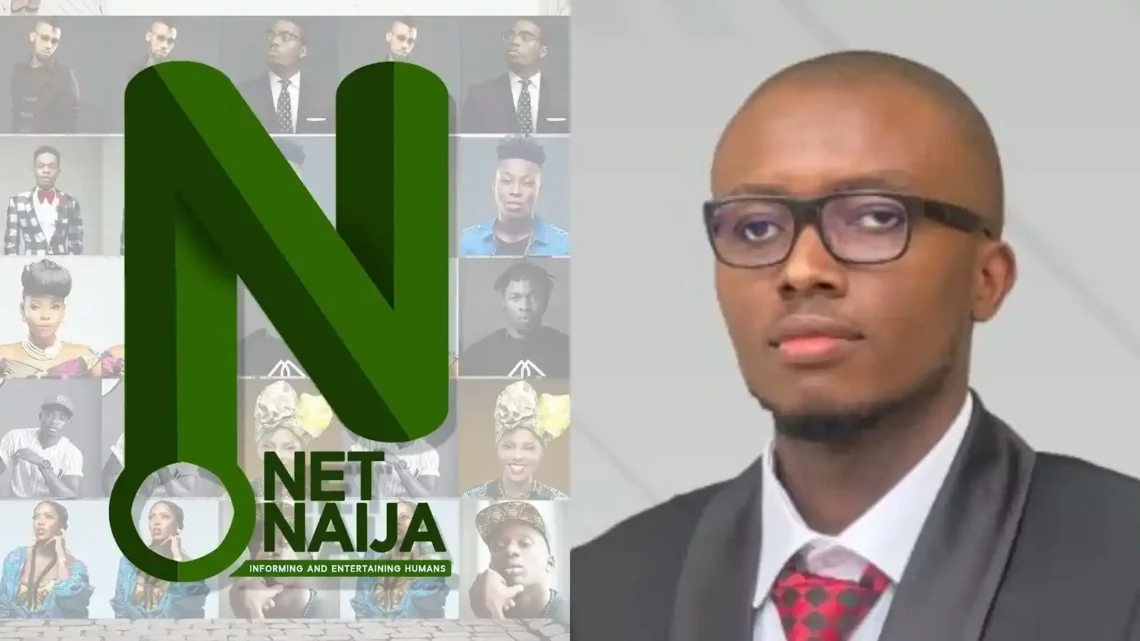
Nigerian Authorities Charge Founder of Popular Free Movie Site With Copyright Infringement
The arrest of Emmanuel Analike, whose NetNaija platform drew tens of millions of visitors seeking free films and music, marks one of Nigeria's most significant enforcement actions against digital piracy and signals a sharp new direction for the Nigerian Copyright Commission.
Emmanuel Analike, the founder and chief executive of NetNaija, one of Nigeria’s most visited online entertainment platforms, was brought before a Federal High Court in Abuja on Wednesday and charged with multiple counts of copyright infringement. The Nigerian Copyright Commission accused him of using his website to possess, reproduce, and distribute pirated films and music to millions of users without authorization from the creators who owned that content.
Mr. Analike, who registered NetNaija Media Enterprises in 2019 as a sole proprietorship providing internet-based services, entered a plea of not guilty when the charges were read before Justice Suleiman Liman. The judge declined to rule on a bail application that had already been filed by the defendant’s legal team and instead ordered Mr. Analike remanded at Kuje Correctional Centre on the outskirts of Abuja. The court scheduled a bail hearing for Monday, March 9.
Trending Now!!:
The charges were filed under Section 44(1)(a) of Nigeria’s Copyright Act of 2022, a law that significantly strengthened the country’s intellectual property framework by broadening the scope of actionable offenses and introducing stiffer penalties for violations. Gladys Isaac-Ojo, who serves as head of the Nigerian Copyright Commission‘s legal unit and acted as prosecution counsel on Wednesday, told reporters after the proceeding that the materials in question included both sound recordings and audiovisual works, films belonging to Nigerian as well as international rights holders.
Mr. Analike‘s defense counsel, Nnemeka Ejiofor, confirmed to the court that a bail application had been submitted before the hearing date, supported by a 23-paragraph affidavit and a written legal address. Justice Liman, however, did not immediately accept arguments on it, opting to defer any decision until the March 9 session.
“This is a remarkable victory,” Ms. Isaac-Ojo said after the proceeding, describing the arraignment as an important step for the commission and for Nigeria’s creative community at large.
The case represents one of the most high-profile enforcement actions the Nigerian Copyright Commission has taken against a digital piracy platform in the country’s history. For years, NetNaija operated largely in the open, offering free downloads of Nollywood and Hollywood films, music albums, and television series to an audience that numbered in the tens of millions each month. The site organized content by genre, presenting everything from Nollywood dramas to international blockbusters and the kind of Netflix originals that rights holders paid significant sums to produce exclusively.
In 2022, industry observers noted that Mo Abudu‘s “Blood Sisters,” a film that premiered on Netflix and ranked among the platform’s top titles globally that week, had been uploaded to NetNaija within days of its release. The same was true of “King of Boys: The Return of the King” and dozens of other productions that were supposed to be exclusive to licensed streaming services. NetNaija, when asked about the matter at the time, said only that its mission was to provide information and entertainment. It declined to address specific questions about licensing or how it generated revenue from a service that cost users nothing.
NetNaija‘s origins trace back to around 2009, long before Mr. Analike formally incorporated it as a business entity. Over the better part of two decades, the platform evolved from a modest download hub into what some described as the country’s informal streaming service, filling a gap that licensed platforms struggled to close. Nigeria, for much of that period, presented serious barriers to legal streaming: expensive subscription prices relative to average incomes, unreliable internet infrastructure in many parts of the country, and the practical difficulty of paying for foreign services with Nigerian bank cards, which international payment processors routinely declined.
For a broad swathe of Nigerian internet users, particularly younger ones, those conditions made NetNaija not merely a convenience but a necessity. The reaction on Nigerian social media on Wednesday reflected that complicated legacy. “My childhood was basically NetNaija,” one user wrote. “There was a time our bank cards couldn’t work on Netflix, Amazon Prime, and the others. How would we have watched those movies if not for piracy?” The sentiment was echoed across platforms by people who expressed sympathy for Mr. Analike, even as they acknowledged the legal questions surrounding the site’s actions.
That sympathy, however, found far less of an audience among filmmakers and musicians who said they had watched their work spread freely across the internet while they struggled to recoup the costs of producing it.
Dika Ofoma, a communications officer at TNC Africa, a film and television production company, has previously spoken about the toll that piracy takes on the industry. “Filmmakers are not making enough money here,” he said. “So to see them lose money to piracy is painful.” His frustration, shared by much of the Nollywood community, pointed to an industry caught between creators who deserved compensation and consumers who often could not afford legitimate alternatives.
Wednesday’s arraignment did not arrive in isolation. It came at the end of a long period of escalating tension between Nigeria’s creative industry and the platforms that distributed content without paying for it.
In 2025, prominent Nollywood figures, including actresses Omoni Oboli and Bimbo Ademoye, publicly accused Ghanaian television stations of broadcasting their films without consent, a controversy that reignited debate across West Africa about who was responsible for policing intellectual property violations and whether existing law had any teeth. Around the same period, authors and publishers began raising alarms about the spread of pirated books online, adding another dimension to a problem that had long been seen primarily as a concern of the film and music industries.
Officials at the Nigerian Copyright Commission have framed the prosecution of Mr. Analike as part of a deliberate strategic shift. Rather than pursuing individual users who download pirated material, the commission said it was now focused on holding platform operators accountable. That approach mirrors enforcement trends seen in other parts of the world, where courts and regulators have concluded that targeting end users yields limited deterrence while the platforms that enable mass distribution continue to operate freely.
The Copyright Act of 2022, under which Mr. Analike was charged, was designed with precisely that ambition in mind. The law updated Nigeria’s intellectual property framework in ways its architects said were long overdue, expanding what counted as an infringement and raising the consequences for those found liable. The commission’s decision to invoke it against the operator of one of the country’s most prominent download sites signals that regulators intend the legislation to do more than sit on the books.
Nigeria’s fight against piracy is not new. In 2017, the Nigerian Copyright Commission conducted raids that resulted in the seizure of more than 1.3 million bootlegged works with an estimated value of over 1.26 billion naira. Those operations made headlines but did not meaningfully slow the problem. Digital piracy had already begun supplanting physical media as the dominant form of distribution, and platforms like NetNaija were positioned to absorb that shift almost entirely.
For now, the immediate question is whether Mr. Analike will be granted bail when Justice Liman takes up the application on March 9. His defense team has argued for his release through a detailed written submission. The prosecution is expected to respond, and the judge will then weigh the competing positions before deciding whether Mr. Analike remains in custody at Kuje or is freed pending trial.
Beyond the bail hearing, the case raises questions that the Nigerian entertainment industry has been wrestling with for years. Digital piracy, researchers and industry groups have long argued, costs the global film sector tens of billions of dollars annually, with developing markets absorbing a disproportionate share of the losses. For Nigeria specifically, where Nollywood has grown into one of the world’s most prolific film industries by volume, the economic stakes are significant.
Whether the prosecution of Mr. Analike ultimately produces a conviction, a settlement, or something else entirely remains to be seen. What the arraignment has already done is send a message that Nigeria’s copyright authorities are prepared to go further than they have gone before. Whether that message is received by the operators of the dozens of other piracy platforms still active in the Nigerian market will be the more telling measure of whether anything has truly changed.
Reporting was contributed by TheCityCeleb staff. Emmanuel Analike‘s legal representatives did not respond to requests for comment by the time of publication.