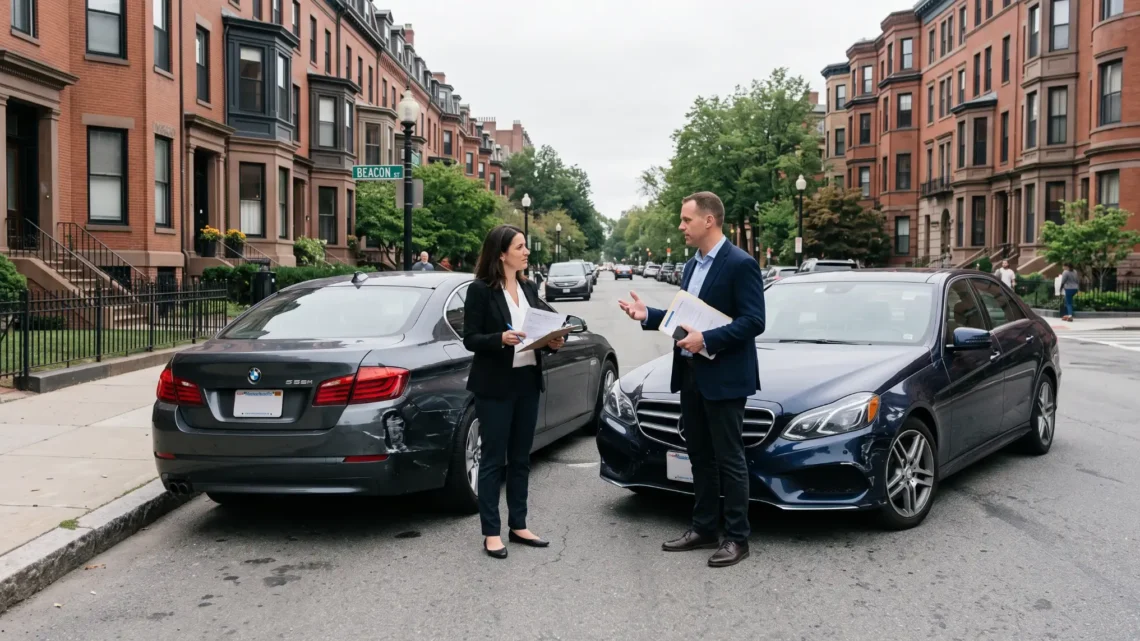
What Massachusetts Drivers Should Know About No-Fault Insurance After a Boston Crash
The phrase “no-fault” is one of the more misleading terms in American insurance, and Massachusetts drivers absorb the confusion firsthand.
It sounds like an assurance that nobody gets blamed. It is not that, and believing it is causes people to make decisions in the first week that they cannot undo later.
Trending Now!!:
What Massachusetts actually built is a system that separates two questions which most people experience as one. Who pays the first medical bills, and who was responsible for the crash? The state answers the first immediately and defers the second, sometimes for years.
No-Fault Only Governs the First Layer
The design goal was speed. Getting injured people treated without waiting for a liability investigation is a genuinely good idea, and that is what the first layer does.
What PIP covers
Personal Injury Protection is mandatory on Massachusetts auto policies. It provides up to $8,000 per person for medical expenses and a portion of lost wages, paid regardless of who caused the collision.
It follows people, not just policyholders
This is the part that surprises almost everyone. PIP can reach passengers, pedestrians and cyclists struck by the vehicle, not only the person who bought the policy. Someone hit while crossing Massachusetts Avenue who does not own a car may still have PIP available through the driver’s policy.




There is a filing deadline attached
The statute requires a claim to be presented as soon as practicable after the accident, and in every case within two years of it. PIP is not automatic. Somebody has to file the application, and the most common failure in a first claim is that everyone assumed somebody else had.
Fault Did Not Go Away, It Got Postponed
Once PIP is exhausted or the injury is serious, the system hands the matter back to ordinary fault-based liability.
The tort threshold is the gate
To claim pain and suffering after a motor vehicle crash, a plaintiff must clear a statutory threshold. Either reasonable medical expenses exceed $2,000, or the injury causes death, consists in whole or in part of loss of a body member, consists in whole or in part of permanent and serious disfigurement, or results in loss of sight or hearing.
Why this makes treatment a legal question
Because the threshold is measured in medical expense, whether someone sought care changes their legal position and not only their recovery. The driver who decides to tough out neck pain rather than get it documented has made a decision about a claim without realizing it.
The Costs No-Fault Does Not Touch
PIP is narrow, and people discover the boundaries at inconvenient moments.
Property damage sits entirely outside it
PIP does not pay for the car. Vehicle damage runs through collision coverage or through the at-fault driver’s property damage liability, on a separate track with separate adjusters.
Eight thousand dollars is not much
An emergency department visit, imaging and a short course of physical therapy can approach the limit quickly. Once PIP is exhausted, health insurance generally takes over, and coordination between the two frequently produces billing chaos that lands on the injured person.
Surcharges and the at-fault determination
Separately from any injury claim, Massachusetts insurers make an at-fault determination that can affect premiums for years. That process is its own thing, with its own appeal route and its own deadlines, and it is not the same as the liability finding in an injury claim. Winning one does not decide the other.
The Clock Most People Miss
Massachusetts generally allows three years from the date the cause of action accrues to file a personal injury lawsuit.
Three years feels comfortable, and that is exactly the problem. PIP handling takes months. Treatment takes longer. Negotiations stretch. Drivers reasonably assume that because correspondence is still arriving, the matter is progressing. Claims involving a public entity can also carry much shorter notice requirements, which is a separate trap entirely.
According to Nicholas R. Thompson, Principal and Managing Partner at RTRLAW and a member of the Massachusetts bar, notes that the recurring problem in no-fault states is not that people miss the law but that they misread the sequence, since PIP paying promptly gives the impression that the claim is being handled when the fault question has not been touched. Drivers frequently consult a Boston legal support for that reason, to find out whether there is a second layer at all before the first one quietly closes.
What to Do in the First Two Weeks
Find out whose PIP applies to you, which is genuinely not obvious if you were a passenger or on foot. File the application rather than waiting for someone to send it.
Get evaluated even if the impact felt minor, and make sure the record connects the symptom to the crash rather than describing it in isolation. Keep every bill, and keep the explanation of benefits from your health insurer, because coordination disputes are resolved with paperwork.
Be careful with recorded statements about fault. No-fault means the medical bills do not wait for that conversation. It does not mean the conversation is not coming.