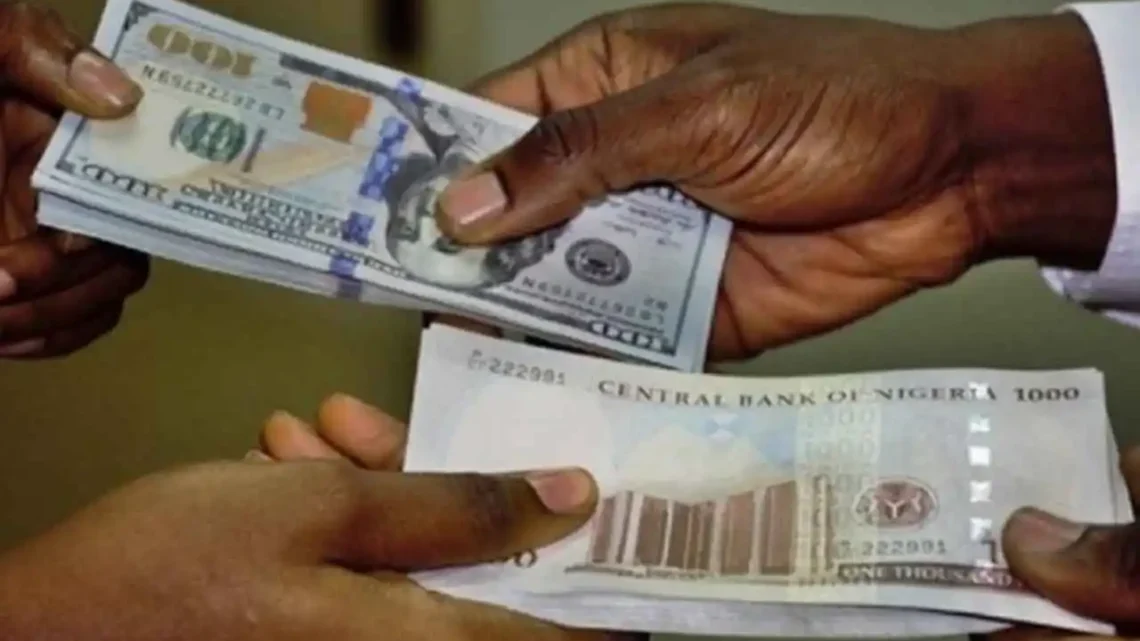
Aboki Naira to Dollar Black Market Exchange Rate Today, 25th August 2026
Nigeria’s parallel currency market opened the week with the naira trading softer against the United States dollar, as street dealers in Lagos, Abuja, Kano and Port Harcourt quoted the greenback at approximately ₦1,400 for buying and ₦1,410 for selling on Tuesday, 25th August 2026, according to rates gathered from Bureau de Change operators and independent currency dealers operating outside official banking channels.
The figures mark a continuation of the mild depreciation recorded over the past several sessions, with the informal market drifting higher after a brief period of relative calm earlier in the month. Traders in the popularly known Aboki market, a term derived from the northern Nigerian currency dealers who have long dominated the informal foreign exchange trade, say demand from importers, travellers preparing for the back-to-school season abroad and small businesses sourcing dollars for international transactions has kept pressure on rates upward in recent weeks.
Trending Now!!:
The Central Bank of Nigeria does not recognize the parallel market as a legitimate channel for foreign exchange transactions and has repeatedly directed individuals and businesses seeking dollars to approach licensed banks and authorised dealers instead. Despite that stance, the black market continues to serve as a critical, if unofficial, barometer for many Nigerians who find the official window difficult to access, whether because of documentation requirements, allocation limits or simple unavailability at the counter.
On the official Nigerian Foreign Exchange Market, the naira has traded in a comparatively narrower band in recent sessions, a divergence analysts attribute to improved liquidity from central bank interventions and steadier external reserves. That gap between the official and parallel rates, though narrower than it was during the more volatile stretches of the past two years, has persisted for months and remains a source of frustration for policymakers who have tried repeatedly to close it.
Other major currencies also moved on the parallel segment. The British pound was quoted at roughly ₦1,882 for buying and ₦1,912 for selling. The euro traded at approximately ₦1,558 to buy and ₦1,610 to sell. The Canadian dollar changed hands at around ₦996 for buying and ₦1,004 for selling. Rates for these currencies, like the dollar, fluctuate throughout the day and can differ meaningfully between cities, with Lagos and Abuja typically serving as the most closely watched benchmarks for the rest of the country.
Currency analysts note that the naira’s movement on the parallel market cannot be read in isolation. Global oil prices, the pace of dollar inflows from remittances and portfolio investors, and the Central Bank’s own intervention rhythm in the official window all weigh on how freely dealers are willing to sell. Street vendors, for their part, describe a market that responds within hours to shifts in sentiment, with quotes sometimes changing two or three times in a single day depending on how much supply is moving through informal networks.




For ordinary Nigerians, the day-to-day swings in the Aboki rate carry outsized consequences. Families paying school fees abroad, small importers restocking goods from China and the Gulf, and diaspora Nigerians sending money home all calculate their transactions against whatever rate the street is quoting that morning, often before banks have opened for the day. That reality has entrenched the black market as an indispensable, if informally regulated, pillar of Nigeria’s currency ecosystem, even as authorities continue to insist that it operates outside the bounds of the law.
Rates reported here reflect quotes gathered from Bureau de Change operators and street-market sources as of Tuesday morning, 25th August 2026, and are subject to change as trading continues through the day.