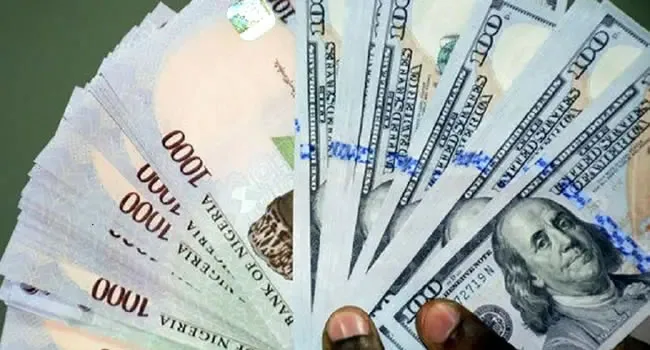
Aboki Naira to Dollar Black Market Exchange Rate Today, 27th November 2026
The naira entered Friday, November 27, trading weaker on the black market than at the official window, with Lagos dealers selling the United States dollar for between ₦1,450 and ₦1,460 despite a strong rally in the official market a day earlier.
Dealers were buying the greenback at about ₦1,440 to ₦1,445. At these rates, a customer purchasing $100 would pay between ₦145,000 and ₦146,000, while a person selling the same amount would receive about ₦144,000 to ₦144,500. Actual quotes may differ according to location, the dealer, the volume involved and the level of demand during the day.
Trending Now!!:
At the Nigerian Foreign Exchange Market (NFEM), the local currency closed Thursday’s session at ₦1,378 to the dollar, compared with ₦1,397 on Wednesday. The ₦19 appreciation, equal to 1.36 per cent, was its biggest single-day gain in more than three months.
The official weighted average rate also improved, moving from ₦1,392.25 to ₦1,387.89, a gain of ₦4.36. Trading during the session ranged from ₦1,375 to ₦1,397.50.
Street prices have not matched the pace of that recovery. Measured against the weighted average, the black market selling rate carried a premium of about ₦62 to ₦72 on each dollar. The difference matters to importers, students, travellers and small business owners who turn to informal dealers for some of their foreign exchange needs.




Thursday’s rebound followed a difficult stretch for the naira, which closed at ₦1,396.50 in the official market on Tuesday, November 24, its weakest closing level in nearly nine months. On the parallel market, the currency had fallen to about ₦1,470 to the dollar on November 19.
The Central Bank of Nigeria (CBN) has since moved to improve the supply of physical dollars. Effective November 25, it raised the amount of cash that banks can sell weekly to each licensed bureau de change operator to $1 million. Under the previous arrangement, weekly sales were capped at $150,000, with only $37,500 available in cash.
The wider limit gives bureau de change operators room to obtain more dollars for retail customers. Its effect on street prices will depend on how much cash reaches the operators and how strongly demand holds in the coming days.
CBN Governor Olayemi Cardoso has linked the recent pressure on the naira to seasonal factors, including year-end portfolio adjustments by foreign investors and businesses protecting themselves against currency risk ahead of the new year. He also cited election-related spending.
Cardoso maintained that Nigeria’s external position still had support from favourable current account balances and diaspora remittances, which stood at about $1.9 billion in the preceding month. He expects the volatility to ease considerably as the country moves into the new year.
The apex bank’s Monetary Policy Committee also retained the benchmark interest rate at 23 per cent at its meeting held on November 23 and 24. Nigeria’s gross external reserves stood at $54.251 billion on November 24, below the $55.26 billion peak reached on October 27.
Attention on Friday will centre on whether the increased cash supply can pull black market quotes closer to the official rate. Anyone planning to exchange money should confirm the latest buying and selling prices before completing a transaction, and use banks or other authorised foreign exchange dealers.