Deepfakes Are Getting Better: What Individuals and Institutions Should Do
As synthetic video and voice cross the threshold of convincing, the defense that works is no longer detection. It is redesigning the processes that once trusted a face or a voice as proof.
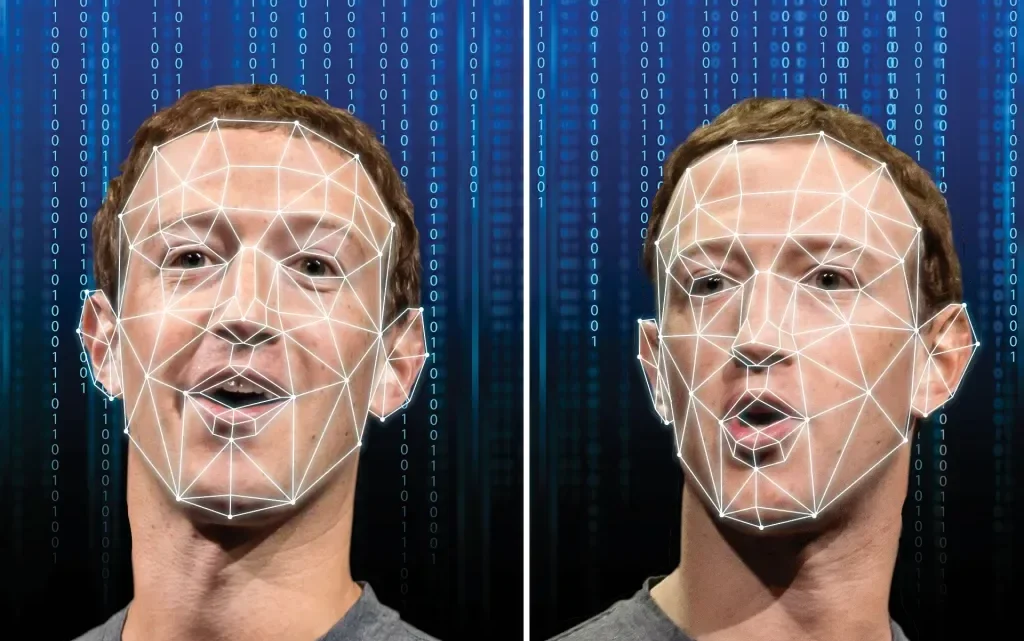
The technology behind synthetic video and audio no longer struggles with the tells that once gave it away. Blinking patterns, lip-sync lag, and waxy skin texture, the checklist a decade of media literacy training relied on, have mostly been engineered out.
What remains is a harder problem: distinguishing real people from convincing fabrications at the exact moment a decision, a wire transfer, a vote, or a reputation depends on getting it right.
Trending Now!!:
Deepfakes are AI-generated or AI-manipulated audio, images, or video that depict real people saying or doing things that never happened, and in 2026 they are cheap enough to produce, realistic enough to evade casual scrutiny, and prevalent enough that both individuals and institutions need concrete, current defensive practices rather than outdated advice about spotting glitchy pixels.
What changed is not just the models. It is the economics. Generation that once required specialized hardware and machine learning expertise now runs on a laptop, and a convincing AI-generated image can be produced in about thirty seconds on a free consumer platform.
That collapse in cost is the single most important fact in this story, because it explains why deepfakes moved from a novelty to an operational category of fraud, harassment, and disinformation within a few years.
Why Detection Keeps Losing Ground
The industry’s own numbers are the clearest evidence that this is not a problem people can out-vigilance their way through. AI detection tools claim 90 to 96 percent accuracy under laboratory conditions, with Intel’s FakeCatcher reaching 96 percent, but real-world effectiveness drops by roughly 45 to 50 percent once those tools face live production content.




A detector marketed as near-perfect can perform closer to a coin flip once it leaves the test set, and generation quality keeps improving with every model release, which means the gap between claimed and actual performance is likely to persist rather than close.
Humans do not compensate for this gap. Independent research on this point is unusually consistent: when people in three countries were asked to identify manipulated visuals, they performed only slightly above chance.
This is the finding institutions most often get wrong. Security awareness training built around “look for artifacts” assumes a detection skill that current evidence says humans do not reliably have, and treating it as a control gives false confidence rather than protection.
The Scale of the Problem in 2026
Volume estimates vary by methodology, but they move in the same direction. An estimated eight million deepfakes are circulating online in 2026, up from roughly 500,000 in 2023, a sixteen-fold increase in two years, with content growing at approximately 900 percent annually.
On the fraud side, the FBI’s Internet Crime Complaint Center recorded 22,364 complaints referencing AI in 2025, tied to $893.35 million in adjusted losses, according to its report published in April 2026.
Identity verification data tells a parallel story: Entrust’s 2026 Identity Fraud Report, drawing on more than one billion identity verifications across 195 countries, found that deepfakes now drive one in five biometric fraud attempts globally, with deepfaked selfie attempts rising 58 percent year over year and injection attacks, meaning fake video fed directly into verification systems rather than held up to a camera, rising 40 percent.
Corporate impersonation has become the category security teams should worry about most, not because it is the largest by volume but because it is the most operationally damaging. Non-consensual pornography remains the dominant use case by sheer count, but fraud specialists report that corporate impersonation, executive video calls, prerecorded messages, and fake onboarding videos, is growing fastest and causing the largest single-incident losses.
The 2024 case of engineering firm Arup, which lost $25 million in Hong Kong after an employee was deceived by a video call populated with deepfaked colleagues, remains the reference incident precisely because it demonstrated that live, interactive video, not just a pre-rendered clip, can now be faked convincingly enough to authorize a real transaction.
Resemble AI separately reported 980 corporate infiltration attempts in the third quarter of 2025 alone, illustrating how real-time manipulation during video calls has become a repeatable attack pattern rather than an isolated incident.
What Individuals Should Do
The practical goal for an individual is not to become a forensic analyst. It is to build habits that make impersonation harder to weaponize and easier to catch before it causes damage.
Verify high-stakes requests through a second channel. Any urgent request involving money, credentials, or sensitive information that arrives by voice or video call, especially one that pressures immediate action, deserves a callback on a known number or a message through an already-established channel. This single habit defeats the large majority of voice-cloning scams, which depend on the target acting before they think to verify.
Establish a verification phrase with family members, particularly older relatives. Voice cloning scams targeting elderly people, often built around a fabricated emergency involving a grandchild, have become common enough that several state attorneys general now publish specific guidance on them. A prearranged phrase or question that a cloned voice would not know closes that gap cheaply.
Treat unsolicited video calls and voice messages from known contacts with the same skepticism as unsolicited email. A convincing face is no longer proof of identity.
Limit high-resolution voice and video samples in public feeds where practical, since commercial voice cloning can now work from a matter of seconds of clean audio, and understand that this exposure is now largely unavoidable for anyone with a public-facing role or profile.
Know the reporting path before it is needed. In the United States, the federal TAKE IT DOWN Act now makes it a crime to knowingly publish non-consensual intimate images, including realistic AI-generated ones, and requires covered platforms to remove reported content within 48 hours of a valid request, a compliance deadline that took effect May 19, 2026. This matters most for residents of the roughly nine states that still lack their own laws covering nonconsensual intimate deepfakes, since federal law is now their primary avenue for removal.
What Institutions Should Do
Institutional exposure runs through workflows that were designed for a world in which a face on a screen or a voice on a call was reliable proof of identity. That assumption no longer holds, and the fix is procedural before it is technological.
Redesign approval flows around the assumption that voice and video can be faked. The clearest operational guidance to emerge from the fraud data in 2026 is not a new detection tool but a change in process: approval workflows for payments, executive requests, hiring, and any process that currently trusts voice or video alone should require a second, independent verification step for high-value actions. A callback protocol, a code word for wire authorizations, or mandatory dual sign-off costs little and closes the exact gap that the Arup-style attack exploits.
Do not outsource identity assurance to a single detection vendor. Microsoft’s Media Integrity and Authentication report, published in February 2026, stated plainly that no single method, whether content provenance, watermarking, or fingerprinting, can prevent digital deception on its own.
Layering matters: provenance checks catch signed, compliant content; watermark detection catches output from cooperating AI labs; forensic classifiers catch the rest. Even the strongest current detection stacks run 70 to 90 percent true-positive rates with 5 to 15 percent false-positive rates on genuine photographs, which is a meaningful error rate to build a compliance or fraud program around without human review as a backstop.
Get in front of provenance infrastructure rather than reacting to it. The technical landscape shifted meaningfully in mid-2026. In May 2026, OpenAI joined the C2PA steering committee and committed to embedding Google DeepMind’s SynthID watermark alongside the Content Credentials it already attaches to generated images, describing the approach as dual-layer rather than either-or.
Google announced that Content Credentials verification and SynthID detection are coming to Search and Chrome, that Pixel 8, 9, and 10 phones will embed Content Credentials directly into video captures, and that Instagram will apply Content Credentials labels automatically through a partnership with Meta.
Organizations that publish visual content, whether marketing material, news, or user-generated media, should treat provenance signing as infrastructure to adopt now rather than a compliance checkbox for later, because the standard only works when content originates from a C2PA-enabled device or workflow, and the majority of content in circulation today still carries none.
Build a deepfake incident response plan before an incident happens. Few organizations have one. It should specify who has authority to freeze a suspicious transaction, how legal and communications teams coordinate on a fabricated executive statement or fake endorsement, and how the organization documents evidence for law enforcement, since deepfake fraud cases increasingly hinge on preserved metadata and call logs rather than a visible tell in the footage itself.
Map compliance exposure now if operating in or serving the European Union. Article 50 of the EU AI Act imposes transparency obligations that became enforceable on August 2, 2026, requiring providers of generative AI systems to mark outputs in a machine-readable format and requiring deployers to visibly disclose deepfake content at the point a person encounters it.
Penalties reach 15 million euros or 3 percent of worldwide annual turnover, whichever is higher, and the obligation applies regardless of where the company is headquartered if it serves EU users. Content generated and published before the deadline does not require retroactive labeling, but republishing or materially reworking it afterward is treated as a new deployment and falls under the rule.
The Regulatory Picture Is Moving Faster Than Most Organizations Have Noticed
Regulation of deepfakes has shifted from scattered state experiments to a genuine federal and international framework within roughly eighteen months, and institutions that have not revisited their compliance posture since 2024 are likely behind.
In the United States, 48 of 50 states now address sexually explicit deepfakes in some form, and 33 states regulate deepfakes in political campaigns, both figures having risen over the prior year.
At the federal level, the DEFIANCE Act, which would let anyone depicted in a nonconsensual sexually explicit deepfake sue the creator or distributor for damages up to $250,000, passed the Senate again by unanimous consent on January 13, 2026 and remains in the House Judiciary Committee, while the NO FAKES Act, which would create a federal property right over a person’s voice and visual likeness against unauthorized AI replicas, cleared the Senate Judiciary Committee in June 2026 with its path to a floor vote still unclear.
Separately, the FCC has already ruled that AI-generated voices in robocalls count as artificial voices under the Telephone Consumer Protection Act, a decision that followed the January 2024 fake robocall impersonating a presidential candidate ahead of the New Hampshire primary and that has produced a $6 million fine.
The European Union’s Article 50 regime is the more consequential development for any organization operating globally, because it is the first binding, cross-sector deepfake transparency law with real penalties attached, and its August 2026 enforcement date has already arrived.
A Practical Framework: Provenance, Verification, Response
The organizations handling this well in 2026 are converging on a three-layer approach rather than a single silver-bullet tool.
Provenance covers content the organization or its trusted partners create: signing outputs with Content Credentials, adopting watermarking where available, and treating unsigned content from external sources with proportionate caution.
Verification covers the human workflows around high-stakes decisions: a mandatory second channel for anything involving money movement, credential changes, or public statements attributed to an executive. Response covers what happens when prevention fails: a documented plan for freezing transactions, correcting the record, and preserving evidence, built before the organization needs it rather than during the crisis itself.
None of these three layers is sufficient alone, which is precisely the point industry researchers have converged on this year.
The organizations and individuals who fare best going forward will not be the ones who get better at spotting fakes. Detection has already lost that race. They will be the ones who stopped designing processes that depend on a face or a voice being enough proof on its own.
What People Ask