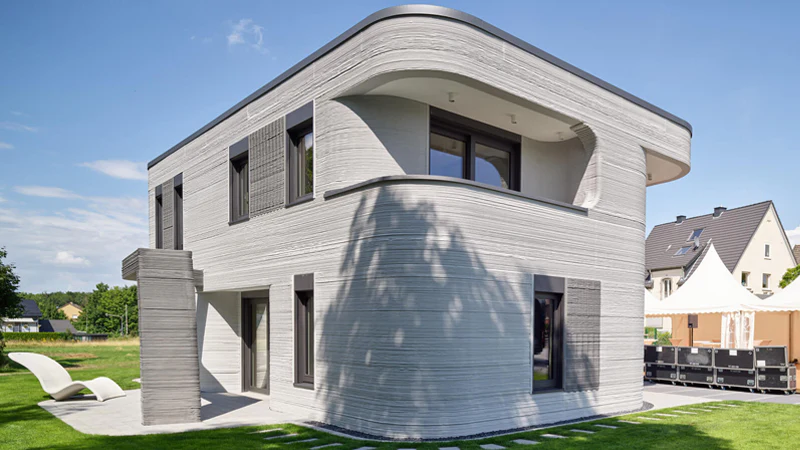
How 3D-Printed Homes Are Disrupting the Housing Market
I’ve spent over a decade in the construction tech space, starting back when 3D printing was mostly for prototypes and small gadgets.
I remember my first site visit to an early ICON project in Austin—watching that massive Vulcan printer lay down layers of concrete felt like stepping into the future.
Trending Now!!:
But it wasn’t all smooth; we dealt with material clogs in the heat, regulatory pushback, and skeptics who thought these homes wouldn’t hold up.
Fast forward to 2025, and 3D-printed homes are no longer experiments—they’re actively reshaping the housing market, making affordable housing more attainable while pushing traditional builders to adapt.
The Speed Revolution: Building Homes in Days, Not Months
One of the biggest disruptions I’ve seen is how 3D-printed construction slashes timelines. Traditional homebuilding can drag on for 6-12 months, plagued by weather delays and labor shortages. With 3D printing, walls go up in hours or days.
Take the Wolf Ranch community in Georgetown, Texas—the world’s largest 3D-printed neighborhood with 100 homes built by ICON and Lennar.
I toured a few of those properties recently; the printer handled the structural walls in under a week per house, allowing the whole subdivision to come online much faster than stick-built equivalents.
This speed isn’t just convenient—it’s a game-changer for addressing housing shortages. In areas like California or Texas, where demand outstrips supply, getting families into homes quicker reduces market pressure and can help stabilize prices.
Cutting Costs and Boosting Affordability in a Tight Market
Affordability is where 3D-printed homes really disrupt things. I’ve crunched numbers on projects where printing reduced labor costs by 50-70% since one operator oversees the machine instead of a full crew.
Material waste drops too—printers use exactly what’s needed, often with recycled or local mixes. In 2025, we’re seeing completed 3D-printed houses priced around $400,000 in competitive markets, sometimes lower for smaller units.
Projects like those from Apis Cor or emerging communities in Detroit and Colorado aim for even more accessible entry points. I once worked on a pilot where we printed a basic 800-square-foot home’s shell for under $50,000 in materials and printing time—finishing brought it up, but still far below traditional costs.
This is forcing the broader housing market to compete on price, especially for first-time buyers squeezed by high interest rates and inventory shortages.
Sustainability: A Greener Way to Build That’s Here to Stay
Sustainability isn’t hype—it’s a practical edge I’ve experienced firsthand. Concrete mixes in modern 3D printers often incorporate fly ash or recycled aggregates, cutting embodied carbon.
These homes are inherently energy-efficient; thick, insulated walls from the printing process keep utility bills low—one Wolf Ranch owner I spoke with paid just $26 for a month’s electricity.
Disruption comes from scale: as more 3D-printed communities emerge, they’re pulling demand toward eco-friendly options, pressuring conventional builders to go green or lose market share.
Real-World Challenges: The Mistakes We’ve Learned From
Don’t get me wrong—it’s not all seamless. Early on, I saw projects stall because of regulatory hurdles; building codes weren’t ready for layered concrete walls.
Material inconsistencies in humid climates caused cracks until mixes improved. And scalability? Companies like Mighty Buildings faced tough times, with sales and layoffs highlighting that upfront printer costs and site logistics can bite if not managed.
But these lessons are paying off. Today, permitted 3D-printed homes are common in states like Texas and Florida, with stronger, resilient designs that withstand winds over 200 mph.
The Future: Disruption Turning into the New Normal
Looking ahead, 3D-printed homes are poised to capture more of the market, especially for affordable and sustainable housing. Communities like Zuri Gardens in Texas show how this tech can deliver dozens of resilient homes quickly.
Traditional builders are partnering up—Lennar with ICON is a prime example—because ignoring it means falling behind. From my experience, the housing market disruption is real: faster builds ease shortages, lower costs improve affordability, and greener methods align with buyer demands.
We’ve made mistakes along the way, but the nuance is in iterating—today’s 3D-printed houses aren’t perfect, but they’re proving tougher, cheaper, and more innovative than many expected.
If you’re in the market, it’s worth considering one; the future of housing is being printed right now.