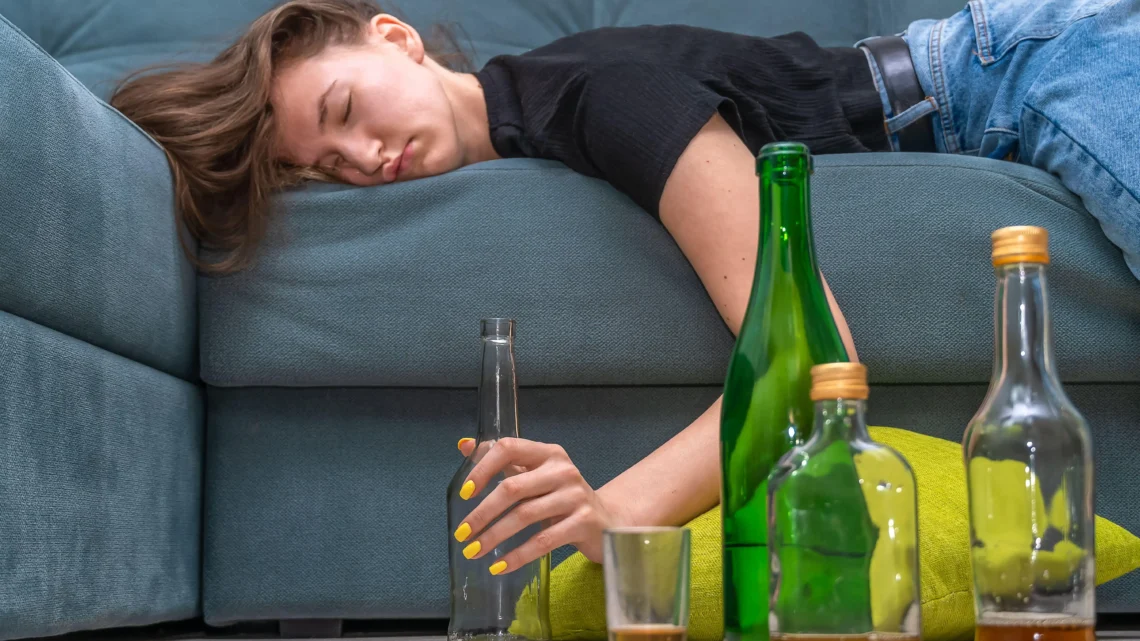
How Alcohol Affects Sleep Architecture Even When You Feel Like It Helps You Rest
That nightly glass of wine or whiskey feels like medicine. Inside your sleeping brain, it is quietly dismantling the very architecture that makes rest actually restorative.
Most people who crack open a beer or pour a glass of wine before bed are not doing it because they are reckless.
They are doing it because it works, or at least it feels that way. The body relaxes, the mind quiets, and sleep comes faster than it would have otherwise.
Trending Now!!:
For millions of people, the ritual of a “nightcap” is less about indulgence and more about function. It is the closest thing to a sleep aid sitting openly on a grocery store shelf.
The problem is not that they are imagining the sedative effect. The problem is that what happens after they close their eyes tells a completely different story than what they experienced falling asleep.
Alcohol does not just slow down sleep quality. It dismantles the structural order of sleep in ways that leave the brain and body more depleted at 7 a.m. than they were at 11 p.m., regardless of how many hours were spent in bed.
The Seductive Science Behind the Nightcap
To understand why alcohol feels like a sleep solution, you have to understand what it is actually doing inside the brain in those first forty-five minutes after consumption.




Alcohol alters the activity of select neurochemicals, including gamma-aminobutyric acid (GABA), glutamate, and adenosine, promoting neural inhibition with reductions in cerebral cortex activity. GABA is essentially the brain’s brake pedal.
When alcohol floods the system, it amplifies GABA activity, and the result is that racing, overclocked feeling of an anxious mind finally slowing to a crawl. Simultaneously, it suppresses glutamate, which is the chemical responsible for keeping the brain alert and responsive. The combination creates something that genuinely resembles natural sleepiness, close enough that the body reads it as rest permission.
This is not a placebo. People fall asleep faster on alcohol than they do without it, particularly at higher doses.
A 2025 systematic review and meta-analysis found that reductions in sleep onset latency and latency to deep sleep were observed following the consumption of a high dose of alcohol, approximately five standard drinks or more. For someone who lies awake grinding through the day’s anxieties for an hour before finally drifting off, that effect feels like medicine.
The difficulty is that the brain is not passive during all of this. It notices the chemical interference, and it responds.
What Sleep Architecture Actually Means
Before getting into the specifics of what alcohol does to sleep, it helps to understand what healthy sleep architecture looks like when alcohol is not involved.
Sleep is not a single state. It is a cyclical progression through distinct stages, each with a specific biological function, and those stages repeat in roughly 90-minute cycles throughout the night. The first stage is light sleep, where the body begins slowing down.
The second stage involves deeper relaxation, lower heart rate, and the beginning of memory consolidation. The third stage, slow-wave sleep (SWS) or deep sleep, is where physical repair happens: tissue regeneration, immune strengthening, and the clearing of cellular waste from the brain through a process the lymphatic system manages largely during this stage.
Then comes REM sleep, the stage that gets shortchanged most aggressively by alcohol. REM, which stands for rapid eye movement, is when the brain processes emotional experiences, consolidates complex memories, integrates new learning, and, in ways that researchers are still mapping, maintains psychological stability.
Dreams occur predominantly during REM. So does much of what makes sleep feel genuinely restorative rather than just unconscious.
A healthy night of sleep devotes progressively more time to REM with each passing cycle. The early cycles are heavy on deep slow-wave sleep. By the third and fourth cycles, especially in the second half of the night, REM stretches dominate. Miss that second half, and you miss the majority of your REM sleep for the night.
The First Half Lie
Here is where the alcohol deception becomes clinically significant.
In the first two to three hours after drinking, alcohol actually boosts slow-wave sleep. The sedation deepens it. Drinkers experience what researchers describe as the “false promise” phase, deeper slow-wave sleep that seems beneficial but proves deceptive.
This is the part of the night that fools people into thinking they slept well. They were “out cold.” They “didn’t move all night.” They “went down fast and hard.” All of that can be true, and none of it reflects the quality of what followed.
Evidence consistently shows that although alcohol may reduce sleep onset latency, it disrupts sleep architecture, suppresses rapid eye movement sleep, increases sleep fragmentation, and impairs breathing during sleep, particularly in the second half of the night.
The second half of the night is when the bill comes due. As blood alcohol concentration drops, the brain mounts a neurological rebound.
GABA activity, which was amplified by the alcohol, now pulls back sharply. The suppressed glutamate activity rebounds upward. The brain, effectively, overcorrects. The result is increased arousal, lighter sleep, more frequent waking, and the near-total collapse of REM sleep cycles that should have been building during those final hours.
Many people who drink regularly before bed never trace this back to the alcohol because they do not fully wake up during these disruptions. They just surface briefly, shift, and drift back.
The sleep feels continuous from the inside. The polysomnography data, the kind collected in sleep labs where brain activity is measured through the night, tells a markedly different story.
The REM Suppression Problem
Despite the belief that alcohol facilitates sleep onset, researchers have concluded that larger doses of alcohol result in greater REM sleep disruptions, highlighting a concern for the potential use of alcohol as an over-the-counter sleep aid.
The relationship between alcohol dose and REM damage is not ambiguous. A dose-response relationship was identified such that disruptions to REM sleep occurred following consumption of a low dose of alcohol, approximately two standard drinks, and progressively worsened with increasing doses.
Two drinks. Not a binge, not a celebration. Two drinks before bed, which is well within what most people consider responsible or moderate drinking, meaningfully reduces REM sleep.
The first night of alcohol administration resulted in a large, statistically significant decrease in total REM sleep, approximately an 11-minute decrease, and these effects were less pronounced on subsequent alcohol nights.
Eleven minutes may not sound catastrophic in isolation, but across a week of nightly drinking, the cumulative REM deficit builds in ways that affect mood regulation, cognitive sharpness, and emotional processing in ways that are hard to attribute to any single cause.
What does REM deprivation actually feel like? It rarely announces itself as “I need more REM sleep.” Instead, it shows up as irritability that seems disproportionate to the situation, a persistent mental fog that coffee partially addresses but never clears, difficulty retaining information from the day before, and a curious emotional bluntness where things that should feel satisfying or joyful just feel flat.
Sleep researchers and clinicians who work with chronic drinkers see these presentations constantly. Patients come in describing vague, low-grade psychological distress, and the sleep data almost always reflects a consistent REM deficit.
How the Brain Tries to Compensate
One of the most instructive patterns in sleep research is what happens to the brain when it goes through extended periods of REM disruption, and then the disrupting substance is removed.
Heavy or repeated drinking disrupts normal REM cycles, making it harder to get consistent, refreshing sleep even after you stop drinking. Some people also experience rebound insomnia, vivid dreams, or fatigue for several nights as their body readjusts.
This rebound effect, where the brain overcompensates by flooding the person with intense, often disturbing dreams when they stop drinking or cut back, is one of the primary reasons people who try to quit using alcohol as a sleep aid find the first several nights genuinely difficult.
The brain has been deprived of REM for weeks or months, sometimes years. When the suppression lifts, it does not gently reintroduce REM. It floods back with an intensity that can be disorienting, even frightening. Vivid nightmares, night sweats, and multiple early wakings are common.
People misinterpret this as proof that they cannot sleep without alcohol, when it is actually proof of the opposite: the brain reestablishing the sleep architecture that the alcohol was dismantling all along.
Circadian Rhythm Disruption: The Clock No One Talks About
Sleep quality is not determined purely by what happens once you are asleep. The timing and regularity of sleep is governed by the circadian rhythm, a 24-hour internal clock calibrated by environmental cues, primarily light and darkness. Alcohol interferes with this system in ways that extend well beyond a single night.
Alcohol use and dependence appear to interfere with circadian rhythms, with evidence suggesting that consuming alcohol may decrease the body’s sensitivity to cues like daylight and darkness.
Mechanistic pathways include effects on neurotransmission, sleep homeostasis, circadian regulation, thermoregulation, and alcohol metabolism during sleep. The thermoregulation piece is one that rarely gets discussed in mainstream coverage but is clinically significant.
Core body temperature naturally drops during sleep, a process the circadian clock coordinates. Alcohol disrupts this process, causing the body to lose heat too quickly initially and then triggering temperature fluctuations that fragment sleep in the back half of the night. The night sweats that many drinkers experience are not incidental. They are a direct symptom of disrupted thermoregulation during sleep.
Chronic ethanol consumption leads to downregulated adenosine signalling, which underlies insomnia, a major predictor of relapse. Adenosine is the chemical that accumulates in the brain throughout the day, building what sleep researchers call “sleep pressure,” the biological need to rest.
Healthy sleep pressure drives consistent sleep timing. When chronic alcohol use disrupts adenosine signalling, the circadian clock loses one of its primary feedback mechanisms. Sleep becomes fragmented, inconsistent, and progressively less tied to natural rhythms of light and dark.
The Tolerance Trap
One of the more insidious features of alcohol’s effect on sleep is how quickly the brain adapts to it, and how that adaptation works against the user.
The effects of alcohol on sleep architecture were most notable on the first night of alcohol administration, and the human nervous system likely develops a tolerance to repeated doses. This sounds like good news. It is not.
What tolerance actually means in this context is that the initial sedative effect that made the alcohol feel helpful begins to fade. The same one or two glasses that used to reliably put someone to sleep stop working within a few weeks of nightly use.
So the person does what feels logical: they pour a little more. The dose creeps upward to maintain the same apparent sleep onset effect, while the REM-suppressive and sleep-fragmentation effects do not diminish in the same way.
The person is now drinking more, sleeping worse in structural terms, and potentially misattributing the worsening daytime fatigue and cognitive fog to stress, ageing, or anything other than the alcohol they are using specifically to sleep.
This is one of the most common patterns seen in people who develop alcohol use disorder without ever identifying their drinking as problematic.
They are not drinking for recreation. They are drinking because they believe, reasonably and in good faith, that it is the only thing that gets them to sleep. The alcohol hijacked a real problem (poor sleep) and made itself the solution to the very problem it was creating.
Alcohol and Sleep-Disordered Breathing
The sleep disruption picture becomes significantly more complicated for people who snore or who have undiagnosed obstructive sleep apnea. Alcohol relaxes the muscles of the upper airway.
That relaxation, the same one that feels pleasant in the hours before bed, translates during sleep into increased airway resistance, greater likelihood of snoring, and in people with existing or subclinical sleep apnea, more frequent airway obstructions.
Habitual alcohol consumption is associated with poorer subjective sleep quality, insomnia symptoms, and increased risk of sleep-disordered breathing.
For someone with undiagnosed sleep apnea, a nightcap can meaningfully increase the number of apnea events per hour of sleep, increase the duration of oxygen desaturation during each event, and intensify the cardiovascular strain that makes untreated sleep apnea dangerous over time.
The cruel irony is that sleep apnea itself causes people to wake exhausted, reach for stimulants during the day to cope, and then struggle to fall asleep at night, creating exactly the kind of sleep anxiety that alcohol temporarily soothes.
What This Looks Like the Morning After
The findings of naturalistic research reveal that the duration of nightly awakenings is negatively related to overall hangover severity, and total hangover severity accounts for a moderate but meaningful amount of variance in cognitive performance the following day.
The hangover is not primarily about dehydration, though dehydration contributes. It is substantially a product of disrupted sleep architecture. The headache, the cognitive slowness, the emotional flatness, the inability to concentrate, these are, in large part, what REM-deprived, sleep-fragmented sleep looks like when it makes contact with the demands of the waking day.
People who drink moderately before bed, two or three drinks, and then report feeling unrested despite eight hours in bed, are not misreading their bodies. They are accurately perceiving the outcome of poor sleep architecture, regardless of sleep duration.
Eight hours of fragmented, REM-suppressed sleep is not equivalent to eight hours of healthy, structurally intact sleep. The brain does not discount the structural damage because the hours were technically logged.
Breaking the Cycle Without Catastrophizing It
None of this means that a glass of wine on a Friday night is destroying your health. Context, frequency, and dose matter enormously.
A drink or two on occasion, consumed at least three to four hours before sleep, is metabolized significantly before the brain enters its deepest sleep cycles, and the disruption, while present, is modest for most healthy adults.
The concern is nightly use, particularly nightly use that began as a sleep management strategy. If you are drinking before bed because you cannot sleep without it, the alcohol is no longer supplementing your sleep.
It is running it, badly, and the longer that pattern continues, the harder the underlying sleep problem becomes to separate from the alcohol dependency that has layered on top of it.
Alcohol disrupts sleep through multiple mechanisms, disrupting electrophysiologic sleep architecture, triggering insomnia, and contributing to abnormalities of circadian rhythms, and future studies should unravel these associations in individuals who misuse alcohol.
Sleep hygiene improvements, consistent wake times, reduced screen exposure before bed, cooler sleeping environments, and addressing underlying anxiety or sleep disorders through evidence-based approaches all address the root system rather than the symptom. They are not as fast as a nightcap. Nothing is. But they accumulate in the right direction rather than the wrong one.
The Larger Conversation We Need to Have
The persistent cultural belief that alcohol is a legitimate sleep aid is not random. It is reinforced by the fact that the sedative effect is real, immediate, and perceptible in a way that REM suppression and circadian disruption simply are not.
You feel yourself falling asleep faster. You do not feel your brain skipping its third REM cycle. The feedback loop is broken.
In patients with alcohol use disorder, the prevalence of insomnia ranges from 36 to 91 percent, and insomnia and circadian abnormalities may coexist in the same individuals, creating a compounding cycle that is difficult to untangle clinically.
That range, 36 to 91 percent, is worth sitting with. It means that for people who develop a dependent relationship with alcohol, sleep problems are nearly universal, not incidental. They are structural. And they persist.
The conversation around alcohol and sleep needs to move past the binary of “it helps you fall asleep” versus “it is bad for you,” because both statements are partially true and together they obscure the more important point: alcohol changes the kind of sleep you get, not just the onset of it, and those changes compound over time in ways that go far beyond feeling groggy in the morning.
Restorative sleep is not simply unconsciousness with a long duration. It is the brain moving through its architecture in the right order, at the right times, doing the biological work that no supplement, no morning routine, and no amount of caffeine can substitute.
Alcohol interrupts that architecture at the molecular level, and it does so even when everything about the experience of falling asleep feels like it is going exactly right.
That is the part worth understanding.
What People Ask