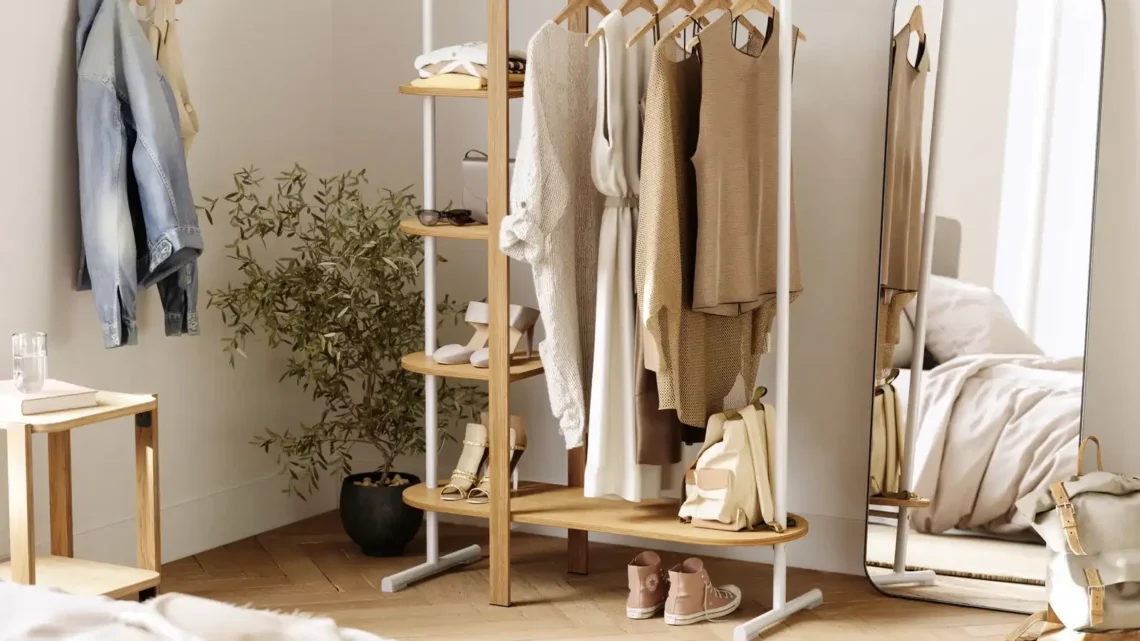
How to Build a Capsule Wardrobe That Works for Both Office and Weekend
There is a Monday morning that most working adults know very well. You are standing in front of a closet stuffed with clothes, and you have absolutely nothing to wear.
Not literally, but functionally. The blazer you bought on sale does not pair with anything. The jeans are too casual for your 9 a.m. meeting.
Trending Now!!:
The dress you love has a dry-clean-only tag you have been ignoring for six months. You grab the first safe option, feel vaguely defeated, and leave the house ten minutes late.
That morning was the turning point for me, more than a decade ago. I had spent years covering personal style, working closely with wardrobe consultants and image directors across New York, London, and Lagos, and yet my own closet was a complete mess. The problem was not a lack of clothes. It was a lack of system.
Building a capsule wardrobe that moves seamlessly between professional settings and casual weekends is not a Pinterest concept. It is a practical skill, and it has a learning curve. What follows is everything I know about doing it well.
What a Capsule Wardrobe Actually Is (and What It Is Not)
The term capsule wardrobe was coined by London boutique owner Susie Faux in the 1970s, then popularized by Donna Karan’s Seven Easy Pieces campaign in 1985. The idea was simple: a small, edited collection of interchangeable, high-quality pieces that require almost no thought to combine.




What it is not is a rigid, aesthetic-driven uniform. You are not signing up to own exactly 33 items or wear only neutrals for the rest of your life. A capsule wardrobe is defined by function, not formula. The pieces you choose should reflect your actual life, not an idealized version of it.
The office-to-weekend capsule, specifically, solves a very modern problem. Most people’s lives no longer exist in clean compartments. You might work a hybrid schedule, grab brunch with friends straight after a morning presentation, or need to look appropriate at a rooftop event that started as an afterwork drink. Your wardrobe needs to move with you, not against you.
The First Step No One Talks About: Auditing Your Actual Life
Before buying a single thing, spend twenty minutes mapping your week as it realistically looks. Not how you wish it looked.
How many days are you in a structured office environment? How many are remote? Do you commute? Do weekends usually involve brunches, errands, outdoor activities, or formal social events? What is the dress code culture at your workplace, formal corporate, business casual, or creative smart?
This audit matters because the biggest mistake people make when building a capsule wardrobe is building it around somebody else’s life. Style influencers make gorgeous minimalist wardrobes look effortless because they have been designed for a particular lifestyle. Copy it without considering your own context and you will spend money on pieces that sit unworn.
Identifying Your Wardrobe Gaps
After the life audit, go through your current closet and categorize what you already own into three groups: works well, works sometimes, and never gets worn. Most people discover that the never gets worn pile is large and often expensive.
The pieces in the works sometimes category are usually the most instructive: they tell you what is missing to make them work more consistently.
A good blazer that only works with one specific pair of trousers is not a versatile piece. A pair of trousers that pairs with nothing because the color is too specific is a gap, not a solution. Recognizing these patterns is the foundation of smart capsule wardrobe building.
Building Your Color Architecture
The most underrated part of a functional capsule wardrobe is the color palette. Get this right and every piece you buy connects to every other piece. Get it wrong and you are forever doing laundry on Sunday night because the only shirt that goes with those trousers needs washing.
The 80/20 Neutral Rule
Experienced stylists work with what is sometimes called the 80/20 rule: eighty percent of a capsule wardrobe in neutrals, twenty percent in what you might call accent colors or seasonal interest.
Neutrals do not have to mean boring. Black, white, ivory, navy, camel, stone, and grey are all neutrals. Choosing three to four that complement your skin tone and anchoring your wardrobe around them creates the foundation of mix-and-match outfits that feel intentional rather than accidental.
For the remaining twenty percent, choose colors that work with your neutrals. Burgundy pairs with navy and camel. Olive works with stone and cream. A single rust-toned piece can revive five neutral combinations without requiring any additional purchases.
Why Tone Matching Matters More Than Color Matching
One thing most wardrobe guides overlook: the difference between color matching and tone matching. Warm and cool tones do not always mix well visually, even when both are technically neutrals.
A cool-toned grey next to a warm-toned camel can look slightly off without anyone being able to articulate exactly why. Learn whether your core neutrals are warm, cool, or balanced, and shop within that tone family. This is the detail that separates a wardrobe that looks polished from one that just looks safe.
The Core Pieces: What Actually Earns a Place in a Work-to-Weekend Capsule
This is where most capsule wardrobe guides give you a shopping list. I will give you something more useful: a framework for evaluating each piece before it enters your closet.
A piece earns its place in an office-to-weekend capsule if it can be worn at least three distinct ways across at least two contexts, work and personal, without requiring significant transformation. If it only works in one context, it is not a capsule piece. It is a speciality item, and speciality items belong in a different category.
Tops
The tailored button-down shirt is the workhorse of a cross-contextual wardrobe. Tucked into trousers for a morning meeting, open over a tank for a Saturday at an outdoor market, tied at the waist with wide-leg jeans for an evening out. The key is fit: not too boxy, not too tight. A slightly oversized button-down in a quality cotton or cotton-blend fabric will outlast a dozen trendy blouses.
The fitted crewneck knit in merino or a merino-blend serves the same multi-context function in cooler months. It layers under blazers without bulking, pairs with dark jeans for weekends, and elevates itself the moment you tuck half of it into high-waisted trousers.
The quality basic tee deserves more credit than it gets. Poor-quality tees are a waste of money: they lose their shape within months and make even expensive trousers look cheap. Invest in two or three well-cut tees in your core neutrals. The cost-per-wear calculation on a durable, shape-retaining white tee is genuinely excellent.
Bottoms
Dark-wash straight-leg jeans remain the single most versatile bottom in a work-to-weekend wardrobe. With a structured blazer and leather loafer, they read as smart casual in most modern offices. On the weekend, they are effortless with trainers and a knit. The straight silhouette, rather than skinny or wide-leg, threads a middle path between casual and polished that makes them contextually flexible.
Tailored trousers in a neutral are non-negotiable for office-heavy schedules. A well-cut pair in camel, stone, or charcoal that fits properly through the waist and hip without alterations is worth significantly more than three cheaper pairs that fit awkwardly. The fit is everything here. Trousers that require constant adjusting or that bag at the knee will always look like an afterthought.
A midi or knee-length skirt in a fluid, non-synthetic fabric adds femininity without sacrificing versatility. Paired with a tucked-in knit and flat boots, it works for office environments. Worn with a simple tee and sandals on the weekend, it becomes entirely different. The key word is fluid: structured pencil skirts tend to read as specifically workwear, whereas a softer A-line or wrap silhouette crosses over more naturally.
Layering Pieces
The blazer is the single most powerful piece in a cross-contextual capsule wardrobe, and it is worth spending properly on one. A well-structured blazer in black, navy, or camel can transform almost any outfit beneath it into something that reads as intentional and polished. Worn open over a tee and jeans on Friday evening, it communicates effortless style. Over a button-down with trousers on Monday morning, it is entirely professional.
The fit of a blazer is non-negotiable. Shoulders must sit precisely at the end of your shoulder. The length should hit at the high hip or upper thigh. Anything that pulls across the back or collapses at the shoulder is not worth keeping, regardless of the price tag.
A quality lightweight jacket or structured coat extends the capsule into outerwear. A camel coat is the gold standard of quiet luxury investment dressing: it makes everything beneath it look more considered, lasts for years with proper care, and reads as elevated whether you are walking into a Monday morning briefing or spending Sunday afternoon at a gallery.
Footwear
Shoes are where capsule wardrobes frequently go wrong. People underestimate how much footwear communicates context. The same dark-wash jeans read very differently depending on whether you are wearing white leather trainers, loafers, or ankle boots.
For an office-to-weekend capsule, three shoe categories cover most situations.
A leather or leather-look loafer is currently the strongest dual-context shoe in the market. It has moved decisively out of strictly formal territory and now reads as elevated smart casual, appropriate for most modern offices and genuinely comfortable for weekend wear.
A clean white or monochrome trainer handles the casual end while remaining neat enough for creative or casual Fridays in most office environments. The key word is clean: worn or dirty trainers communicate informality regardless of the outfit above them.
Low-heeled ankle boots bridge the gap between seasons and between dress codes. They work with skirts, trousers, jeans, and dresses in a way that few other shoes manage, and they remain both practical and polished.
The Accessories Layer: How to Create Variety Without Buying More Clothes
One of the most experienced stylists I know has a rule: the same ten pieces of clothing styled with different accessories become forty different outfits. She is right, and this principle is what makes a minimalist wardrobe feel anything but boring.
Building a Functional Accessories Kit
A quality leather belt in a neutral tone does more than hold up trousers. It creates a defined silhouette, adds intention to an untucked shirt, and introduces texture contrast in an all-neutral outfit.
A structured bag, whether a tote or a compact shoulder bag, is the accessories equivalent of a blazer: it instantly communicates whether an outfit is casual or dressed up. One quality bag in a neutral leather shade, worn during the week with work essentials and on the weekend with personal items, serves an enormous function in a capsule wardrobe.
A silk or lightweight scarf in your accent color is an underutilized capsule tool. Worn around the neck with a simple tee and jeans, it adds immediate visual interest. Tied to a bag handle, it elevates a basic tote. Used as a hair accessory, it shifts an entire outfit register.
Jewelry in a consistent metal tone, either gold or silver, kept simple and unfussy, allows all your looks to feel coherent. Mixing metals is a styling skill; building a capsule wardrobe is a systems skill. Keep the two separate for now.
The Mistakes That Cost People Time and Money
After years of writing about personal style and working alongside professional wardrobe consultants, the same mistakes appear again and again, especially in people building their first serious capsule wardrobe.
Buying the Concept, Not the Life
The minimalist wardrobe aesthetic has been heavily marketed through social media, and many of the images that surface under capsule wardrobe tags belong to a very specific kind of life: loft apartments, remote work, mild climates, and a certain level of economic freedom. If you work in a physically demanding environment, live in an unpredictable climate, or have children, a photogenic thirty-piece wardrobe may not work practically. Build for your life, not the image.
Prioritizing Price Over Cost-Per-Wear
The instinct to save money by choosing cheaper versions of capsule staples is understandable, but it produces the worst possible outcome: you spend money on pieces that wear out quickly, fit poorly, and eventually never get worn. The cost-per-wear calculation, the total price divided by the number of times you actually wear something, will almost always favor the more expensive, better-made version of a staple over the cheaper one.
This does not mean you need to spend a fortune to build a good wardrobe. It means that where you choose to save should be deliberate. Save on trend-driven pieces, seasonal items, and anything you are genuinely uncertain about. Invest in your most-worn, most-visible staples.
Ignoring the Role of Fit
No fabric quality, no capsule system, no color strategy compensates for poor fit. A beautifully made pair of trousers that does not sit correctly at your waist will never look as good as a moderately priced pair that fits perfectly. Budget for alterations. A tailor is not a luxury; for capsule wardrobe builders, a tailor is infrastructure.
Failing to Do a Test Run
Before committing fully to a new capsule wardrobe, test its functionality for a week. Photograph yourself in each combination you have planned. Wear them in real contexts, not just at home.
You will quickly discover which pieces feel confident and which feel performative. The pieces that make you feel slightly uncertain are usually the ones that will sit unworn.
Sustainable Fashion and the Long Game
The capsule wardrobe approach is inherently more sustainable than conventional fashion consumption, and that matters beyond personal preference. The fashion industry produces an enormous volume of textile waste each year, and fast fashion purchasing cycles are a significant contributor.
Building a wardrobe around investment pieces, quality materials, and versatile design is a practical rejection of disposable fashion. It also tends to produce better style outcomes. Pieces designed to last, both in construction and in aesthetic timelessness, tend to look better over time than trend-driven items.
When evaluating a potential purchase for your capsule, ask whether the piece is designed with a long lifespan in mind.
Natural fibers like cotton, wool, linen, and silk tend to age better and feel better against the skin than their synthetic counterparts. Brands built around the quiet luxury and elevated essentials philosophy, from Everlane at the accessible end to The Row at the investment end, tend to offer pieces that hold up to this standard.
How Many Pieces Do You Actually Need?
The honest answer is: fewer than you think, more than the internet will tell you.
A functional office-to-weekend capsule wardrobe for most working adults falls somewhere between 25 and 40 pieces, including shoes and outerwear. That number includes options for different seasons and a handful of specialty items for specific occasions. It does not include the clothes that already live in your drawers and serve their purpose.
The number is less important than the ratio. Most experienced capsule wardrobe builders work with roughly 70 percent workhorses, pieces worn multiple times a week across multiple contexts, and 30 percent supporting items that fill specific gaps. The 70 percent should receive almost all of the investment.
The Seasonal Rotation: Keeping Your Capsule Fresh Without Shopping Constantly
One of the best-kept secrets of sustainable wardrobe management is the seasonal rotation. Rather than treating your capsule as a static collection, separate it into two main groups: your year-round core and your seasonal additions.
Year-round core pieces, your dark jeans, your blazer, your quality knits, your leather shoes, earn their place by working across twelve months. Seasonal additions rotate in and out based on climate and occasion: lighter fabrics and brighter accent colors for spring and summer, heavier outerwear and richer tones for autumn and winter.
This system also allows you to shop the end-of-season sales with genuine intention rather than impulse. You know exactly what gap you are filling before you buy.
A Note on Personal Style Within the System
Building a capsule wardrobe does not mean erasing your personal aesthetic. It means creating a reliable foundation that expresses your identity consistently rather than accidentally.
If your style leans creative, introduce that creativity through accessories, texture contrasts, or a single statement piece per outfit rather than through unpredictable purchases. If your style is more classical and restrained, lean into the quiet luxury ethos: impeccable fabric, excellent fit, and the kind of understatement that communicates confidence without effort.
The capsule wardrobe system works best when it is treated as a framework, not a prison. It gives you options, eliminates decision fatigue, reduces financial waste, and, over time, produces a personal style that feels genuinely yours rather than assembled from trend cycles you cannot quite keep up with.
That is the real return on investment. Not just a tidier closet. A clearer sense of who you are when you walk out of the door every morning, ready for wherever the day takes you.
What People Ask