How to Deep Clean Your Washing Machine And Why You Must
In more than ten years of walking into people’s laundry rooms, diagnosing why their clothes still smell after a wash, I’ve learned one hard truth: the washing machine itself is often the dirtiest thing in the house. People load it week after week, assuming the constant flow of water keeps it pristine.
Then the musty odor creeps in, black specks appear on clean towels, or the rubber seal on a front-loader turns into a slimy ring of doom.
Trending Now!!:
I’ve seen it countless times, and every single case traces back to the neglected buildup of detergent residue, body oils, lint, and bacteria thriving in damp corners.
Deep cleaning your washing machine isn’t optional busywork; it’s the only way to ensure your laundry actually comes out clean, odor-free, and free of hidden grime. Regular deep cleans prevent mold and mildew growth, stop that persistent sour smell on clothes, improve efficiency by clearing clogs in drains and pumps, and help the machine last longer without costly repairs.
Front-loaders suffer most because they use less water and trap moisture behind the door seal, but top-loaders hide scum under agitators or in baffles just as effectively. In humid climates or households with frequent heavy loads, monthly cleaning is non-negotiable.
Otherwise, every three months keeps things in check. The reward is simple: clothes that smell fresh right out of the drum, no more re-washing “clean” items, and far fewer service calls.
Why Your Washing Machine Gets Dirty (And How It Affects Your Laundry)
Over time, every wash leaves behind traces: undissolved detergent cakes up, fabric softener creates filmy residue, skin oils and sweat cling to the interior, and hard water minerals build scale. In front-loaders, the gasket becomes a petri dish for black mold if not wiped dry after each use.
Top-loaders fare slightly better but still collect gunk in hard-to-reach spots. I’ve pulled apart machines where the smell was so bad the owners thought the drain line was backed up, only to find the source was years of accumulated scum.
Ignoring this leads to real problems. Clothes absorb the odors, towels feel stiff or dingy, and efficiency drops as the machine works harder against blockages. In one home I visited, a family kept buying new scented boosters to mask the issue until the pump finally failed from mineral buildup. A thorough clean could have prevented it all.
Supplies You’ll Actually Need
Skip the expensive tablets for routine cleans; in my experience, they’ve never outperformed the basics. Grab:
- Distilled white vinegar (cheap and effective at dissolving residue and killing bacteria)
- Baking soda (gentle abrasive and deodorizer)
- Old toothbrush or small scrub brush
- Microfiber cloths or rags
- Spray bottle
- Dish soap for soaking parts
These are household staples, cost pennies per clean, and won’t harm seals or components when used right.
Step 1: Tackle the Rubber Gasket (Front-Loaders Only)
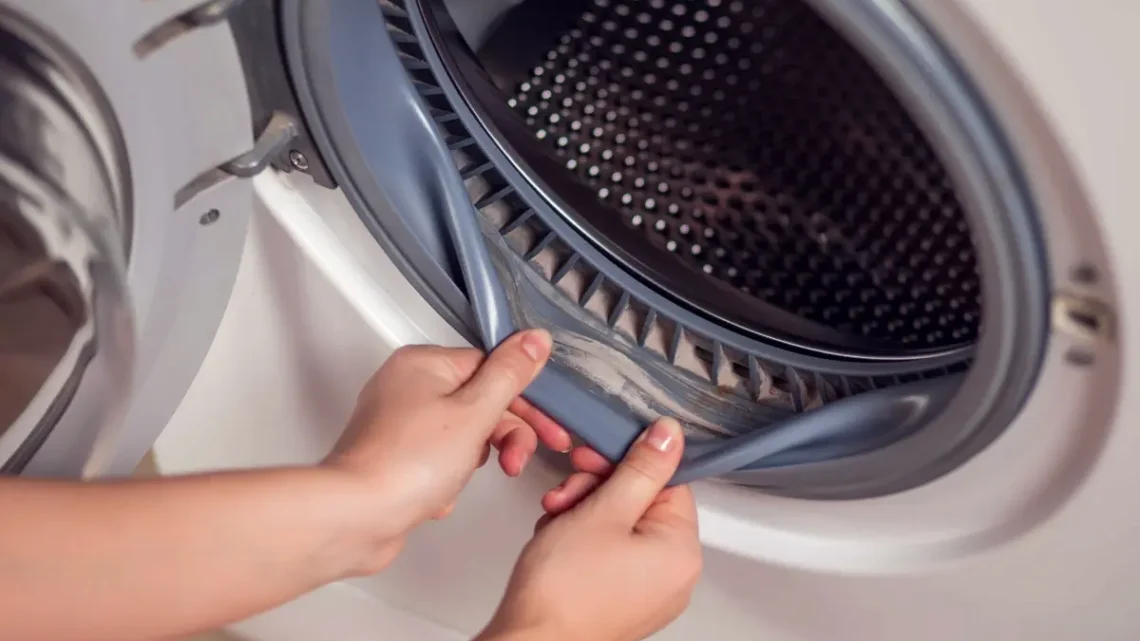
This is where most trouble starts. The pleated rubber seal traps moisture and debris, turning into black mold almost overnight if ignored. I’ve cleaned gaskets so coated that they looked painted on.
Mix equal parts white vinegar and warm water in a spray bottle. Generously spritz the entire gasket, getting into every fold. Let it sit 10-15 minutes to loosen grime. Use an old toothbrush to scrub thoroughly, especially the bottom where water pools.
Wipe away the sludge with a damp cloth, then dry completely with a towel. Leave the door ajar afterward to air it out. Do this wipe-down after every load if possible; it prevents most mold from taking hold.
Step 2: Clean Removable Parts
Pull out the detergent drawer (most have a release tab; check your manual). Soak it in hot water with a squirt of dish soap and a splash of vinegar for 20-30 minutes. Scrub off hardened residue; I’ve seen drawers so caked it looked like concrete. Rinse and dry.
If your model has a bottom lint filter (often behind a small panel), remove and clean it the same way. Skipping this step is a common mistake; clogged filters cause poor draining and odors.
Step 3: Run the Vinegar Deep Clean Cycle
Empty the drum completely. Set the machine to the hottest, longest cycle (sanitize, whites, or tub clean if available).
Pour 2-4 cups of white vinegar directly into the drum. Start the cycle. Once it fills and agitates a bit, pause for an hour-long soak. This lets the vinegar break down soap scum, dissolve minerals, and kill bacteria. Resume and let it finish. The hot water amplifies the effect; cooler cycles won’t cut through the buildup as well.
Step 4: Follow with Baking Soda for Neutralizing and Scrubbing
With the drum empty again, sprinkle ½ to 1 cup of baking soda directly inside. Run another hot cycle. The baking soda neutralizes any faint vinegar scent (it usually fades anyway) and provides gentle abrasion to dislodge remaining residue. For top-loaders, add the baking soda after the water fills slightly so it dissolves evenly.
Step 5: Final Wipe-Down and Drying
Wipe the drum interior, door glass, and exterior with a damp cloth. Prop the door or lid open for several hours to dry fully. Moisture is the enemy; leaving it sealed invites problems back.
Tips from Years of Real Homes
Never mix bleach and vinegar; it creates dangerous fumes. Use bleach sparingly, only for top-loaders if needed, and check your manual.
If hard water is an issue, vinegar handles most scale, but occasional descaling products help. Avoid overloading detergent; excess is a major culprit in residue.
After a proper deep clean, the transformation is immediate. Gym clothes lose that locker-room whiff, towels feel softer, and the machine runs quieter.
Households that make this a habit rarely face breakdowns or persistent smells. It’s not exciting work, but it’s the quiet care that keeps everything else fresh. Your washing machine scrubs your world clean; return the favor every few months.