
How to Line-Dry Your Laundry Indoors and Outdoors
In more than a decade of hanging laundry on lines strung across backyards, balconies, and cramped apartments, I’ve come to see line drying laundry as one of those quiet household rituals that quietly saves money, preserves fabrics, and sometimes even lifts your mood.
It started for me out of necessity during a stretch of broke grad-school years when the dryer in our building ate quarters like candy.
Trending Now!!:
Now it’s a habit, preference, and a small act of rebellion against the constant hum of appliances. Whether you’re drying outdoors under an open sky or indoors when the weather turns or HOA rules bite, the principles remain the same, though the details shift with conditions.
Why Outdoor Line Drying Still Wins When You Can Do It
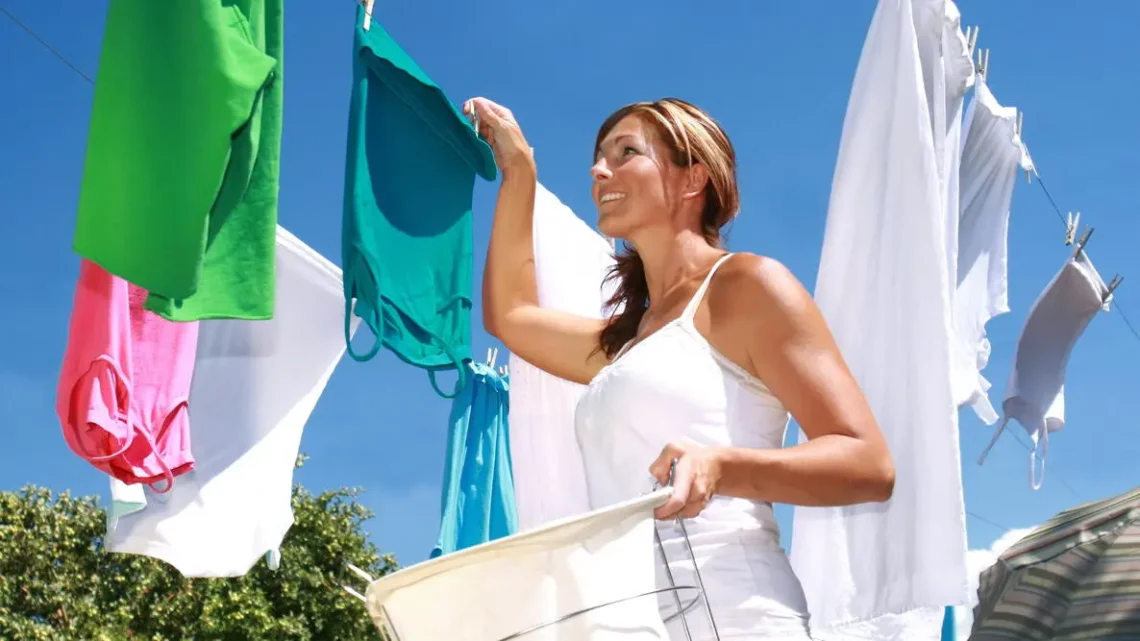
Outdoors remains the gold standard for air drying clothes whenever possible. Sun and wind do most of the work, leaving fabrics softer and fresher than any tumble cycle. I once lived in a sunny Midwestern suburb where our clothesline ran parallel to the fence, east-west to catch the full arc of daylight.
Whites brightened naturally from UV exposure, towels fluffed up without fabric softener, and everything smelled like fresh air instead of that faint electric-burnt scent dryers leave behind.
Pick your spot carefully: full sun bleaches whites beautifully but fades colors fast, so hang darks or vibrant pieces inside-out or in partial shade.
Avoid trees unless you enjoy surprise bird droppings, something I learned after ruining a favorite white sheet set early on. Wipe the line with a damp cloth before each use; dust and pollen build up otherwise.
The Right Way to Hang Clothes on a Line
The real art is in how you hang things. Shake each item vigorously as it comes out of the washer; this loosens twisted fibers, flings off excess water, and cuts drying time while smoothing wrinkles. I used to skip this step, then wondered why my shirts emerged creased like forgotten accordions.
Hang shirts and blouses by the hem, not the shoulders, to avoid stretched points at the bottom, a mistake that left several tees permanently wavy at the edges until I donated them.
Pants go upside down by the cuffs, so water drips from the heavier waistband rather than pooling. Socks by the toes, underwear discreetly by seams or elastic. Give heavier pieces like jeans or towels their own space; don’t crowd them. Airflow matters more than you think.
On breezy days, clothes flap gently and dry in half the time of still air. On calm, humid ones, they can take all afternoon, but they still come out softer.
Sun-Dried Whites and Towels: The Payoff
Nothing beats the crisp feel of sun-dried towels and sheets pulled straight from the line. The natural bleaching effect on whites is real, and the texture improves with every cycle, no softener needed.
Switching Indoors: Making It Work Without the Musty Smell
Indoors, indoor line drying or using a clothes drying rack becomes necessary in rain, winter, apartments without yards, or cities with strict rules.
I’ve dried loads in tiny New York walk-ups, Midwest basements, and coastal rentals where salt air made everything feel perpetually damp. The biggest challenge is moisture buildup, which can turn a room musty or encourage mold if you’re not careful.
Space is everything: never overload the rack. Leave gaps between items to allow air to circulate. Position the rack near an open window, under a ceiling fan on low, or in a hallway with cross-breeze from cracked doors. In winter, I place mine close to a radiator but not touching; the gentle heat speeds things up without scorching. A box fan aimed at the rack works wonders on sluggish days, cutting drying time from two days to overnight.
Avoid overusing detergent or fabric softener, as both leave residues that make air-dried clothes feel stiff. A splash of white vinegar in the rinse cycle softens naturally and kills any lingering odors, a trick I picked up after one too many loads came in crunchy.
For delicates, sweaters, or knits, always lay them flat on a mesh shelf or towel to block; never hang them, the weight of wet wool stretches shoulders into sad droops. I ruined a cashmere cardigan that way in year two, lesson learned.
A Hybrid Approach That Saves Time and Energy
One hybrid approach I rely on now: start outdoors for a few hours of sun and breeze when the forecast cooperates, then finish indoors if evening cools or dew falls. It combines the best of both, especially for bulky bedding that needs serious airflow.
Energy savings add up too, skipping the dryer even partially shaves dollars off bills and eases wear on clothes, seams last longer without constant tumbling.
After all these years, the quiet satisfaction remains. Pinning up a load on a crisp morning, watching sheets billow like sails, or folding sun-warmed towels that smell purely clean, these small things ground the day.
Line drying isn’t about perfection; it’s about working with what you have, learning from the occasional stiff sock or faded shirt, and finding a rhythm that feels right. Once you get the hang of it, the dryer starts feeling like an unnecessary luxury rather than a necessity.