Nigeria Cannot Rebrand What It Refuses to Fix
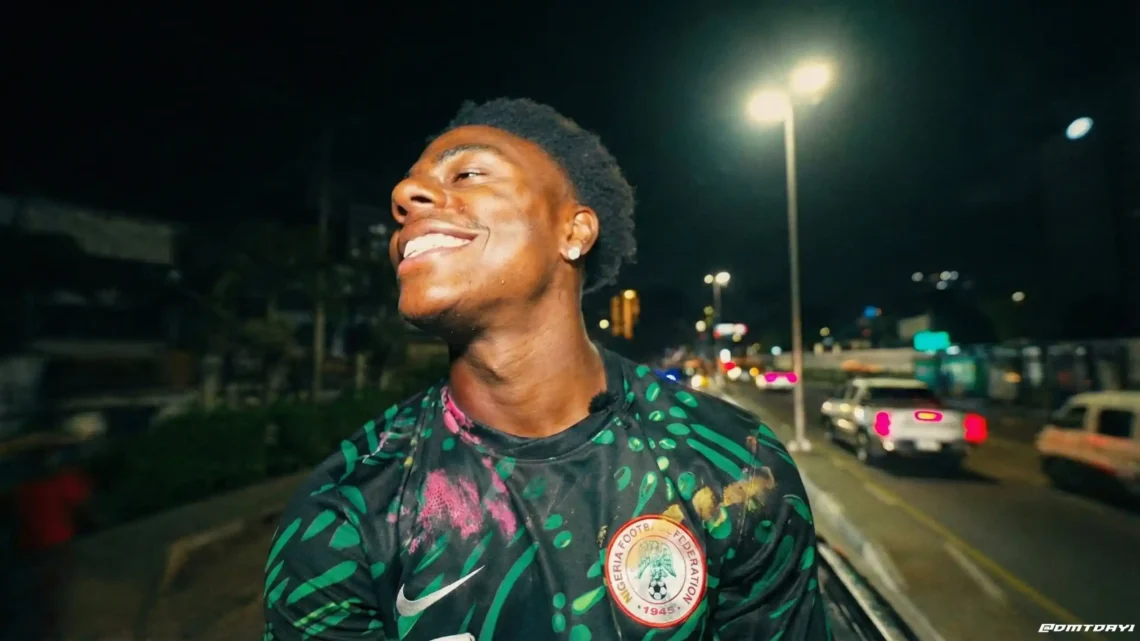
The scenes that followed the American streamer IShowSpeed through Lagos in January 2026 were instantly legible to a global audience raised on virality. Phones rose like a second skyline.
Young men sprinted alongside convoys. Security frayed, then vanished. What began as an exuberant welcome curdled into disorder, then into spectacle.
Trending Now!!:
For a few days, Nigeria dominated timelines and comment sections, praised for its energy, mocked for its chaos, dissected for its inability to host a guest without courting danger. Then, as always, the algorithm moved on.
What remained was not pride or even embarrassment, but something colder and more durable: confirmation. The episode did not damage Nigeria’s international image so much as expose how fragile it already was.
No influencer visit, no viral dance, no sudden burst of global attention can compensate for a reputation eroded over decades by governance failure, cultural drift, and a grinding moral exhaustion. The problem is not that the world misunderstands Nigeria. It is that the world increasingly understands it all too well.
That conclusion is no longer anecdotal. In January 2026, the Nigerian Institute of Public Relations released its first Nigeria Reputation Perception Index. This was a sober attempt to quantify what had long been felt. Nigeria scored 35.2 percent. Awareness abroad was high. Trust was not. The gap between the two told the real story: Nigeria is visible everywhere and believed almost nowhere.
International benchmarks reinforce the point. Transparency International continues to rank Nigeria near the bottom of its Corruption Perceptions Index, hovering around 140 out of 180 countries in recent years. The numbers flatten lived experience into a league table, but the underlying reality is messier and worse.
Oil revenues vanish into opaque accounts. Security budgets swell while communities remain unprotected. Anti-graft agencies arrest selectively, stall predictably, and conclude rarely. To outsiders, corruption is no longer a scandal in Nigeria; it is the operating system.
Human rights reporting from 2025 and early 2026 adds another layer. Accounts from Human Rights Watch and Freedom House describe journalists detained or abducted after publishing investigations, media houses leaned on through regulatory threats, and counterterrorism operations marked by extrajudicial killings. Insecurity has become ambient.
Banditry in the northwest, Boko Haram and ISWAP in the northeast, kidnappings along major highways and even in urban centers together claimed more than 2,200 lives in the first half of 2025 alone. Each report is digested abroad, not as an exception but as part of a pattern, reinforcing the idea of a state perpetually losing control of its territory and its narrative.
Culture, once Nigeria’s soft power refuge, has not escaped the drift. Nollywood, for years celebrated as Africa’s most prolific film industry, now struggles under the weight of its own success. The early films, raw and inventive, drew on juju, ancestral fear, moral ambiguity, and the supernatural logic of everyday life. They were imperfect, sometimes absurd, but unmistakably Nigerian.
Today, much of the output feels engineered for algorithms rather than audiences. Romance comedies recycle the same misunderstandings and reconciliations. Epic war films stage grand battles only to resolve their tension through predictable love stories. Streaming deals multiply, but creative risk diminishes. International viewers consume Nollywood content in bulk, rarely in awe. Prolific, yes. Profound, seldom.
Religion, perhaps the most powerful social force in the country, presents a particularly uncomfortable image. Nigeria’s Pentecostal movement has produced pastors whose wealth rivals that of industrialists. Private jets sit on runways as symbols not merely of success but of theology.
Congregations are urged to give sacrificially while unemployment and inflation hollow out daily life. Names like David Oyedepo and Enoch Adeboye recur in discussions of religious opulence, not because they are alone, but because they exemplify a system where spiritual authority is measured in assets.
Islamic leadership, meanwhile, has its own fractures, with some clerics accused of excusing or rationalizing extremism, deepening mistrust and polarization. To the outside world, Nigerian faith often appears less as moral ballast than as an enterprise, promising miracles while normalizing inequality.
Politics offers little counterweight. Corruption scandals arrive with metronomic regularity. Oil sector graft, judicial bribery, suspended reformers, recycled faces in new cabinets. Even when policies show incremental improvement, they are drowned out by public cynicism and relentless online derision.
Nigeria’s international representatives are too often known less for statecraft than for spectacle: lavish entourages, tone deaf remarks, and children of privilege studying and shopping abroad. The impression is of a ruling class insulated from consequence, governing a country it rarely seems to inhabit.
Sport, a domain that should unify, instead reveals neglect in its purest form. Nigerian athletes routinely threaten strikes over unpaid bonuses. Before major tournaments, including AFCON fixtures in early 2026, players again raised the prospect of boycotts.
The Super Falcons have protested allowances so often that the act itself feels ritualized, with punishment frequently falling on those who speak loudest. Nigeria demands medals and moments of glory, yet treats its athletes as expendable. When success comes, officials claim credit. When it does not, players absorb the blame.
Afrobeats complicates the picture further. No Nigerian cultural product has traveled farther or faster. Wizkid, Burna Boy, Davido, Tems, and others headline festivals, win Grammys, and dominate charts. Yet success has come with distance.
Many of these artists live abroad, brand themselves as global or simply African, and sometimes resist the Afrobeats label itself, wary of being boxed in by Nigeria’s reputation. Collaborations fracture into camps. Homecomings feel transactional, tethered to tours and endorsements. The music thrives. The nation that birthed it often feels incidental.
Then there are the stains that refuse to wash out. Cybercrime has evolved from crude email scams into a sophisticated ecosystem of romance fraud, sextortion, and business email compromise. Teenagers in Europe and North America are blackmailed through social platforms. Corporations lose millions through spoofed invoices.
The global losses run into the billions. Nigeria’s share of the blame is amplified by ritualized folklore around Yahoo Plus, a grotesque blend of technology and superstition that speaks to desperation and moral collapse. Drug trafficking networks intersect with these schemes, reinforcing the image of Nigeria as a transit hub for illicit flows.
Migration patterns add to the complexity. Visa overstays and cultural clashes abroad feed stereotypes, while the relentless brain drain deprives the country of doctors, engineers, and academics who might have steadied institutions at home.
What the world sees are extremes: the ultra-wealthy pastor, the scammer, the viral crowd, the politician’s child abroad. What it rarely sees is the ordinary Nigerian keeping systems alive through ingenuity and endurance.
The uncomfortable truth is that Nigeria’s image problem is not imposed from outside. It is curated internally, sustained by selective outrage and communal silence. Fraud is condemned until it benefits someone familiar.
Corruption is decried until it funds a local project. Excess is admired even as poverty spreads. National pride has become reactive, flaring in defense against criticism rather than grounding itself in reform.
This is not an argument for despair, nor a plea for sympathy. It is a demand for honesty. No foreign influencer, no marketing campaign, no rebrand can substitute for institutional repair. Reputation follows reality, not the other way around.
Every Nigerian carries a portion of this burden, but influence brings with it an obligation. Religious institutions must submit to transparency. Cultural industries must choose depth over volume. Sports federations must pay their athletes.
Artists who profit from global platforms must decide whether national identity is a liability or a responsibility. Citizens must withdraw admiration from ill-gotten wealth and insist on consequences.
The mirror held up by the world is unforgiving because it is accurate enough to hurt. Nigeria can still change what it reflects, but not through denial or spectacle.
Only through the slow, unglamorous work of accountability. The question is no longer whether the world is watching. It is whether Nigerians are willing to look back before the image hardens into permanence.