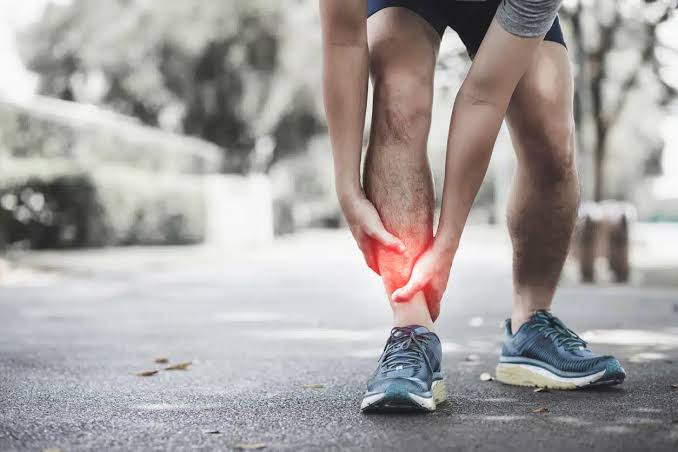
Running Injuries That Are Almost Entirely Caused by Footwear Choices
Most running injuries get blamed on training errors: too much mileage added too quickly, not enough recovery, weak hips. That diagnosis is usually correct.
But a distinct category of injury traces back almost entirely to what is on the runner’s feet: compressed midsoles that quietly stop absorbing shock, toe boxes that squeeze the forefoot on every stride, motion-control systems sold to the wrong foot type, and minimalist transitions rushed by weeks instead of months. These are not training mistakes.
Trending Now!!:
They are equipment mistakes, and they are far more common, and far more fixable, than most runners realize.
The Pronation-Control Myth That Still Sells Shoes
For three decades, the running shoe industry operated on a simple premise: runners whose feet roll inward too much, or “overpronate,” need motion-control shoes to correct that movement and prevent injury. Specialty running stores built entire fitting rituals around it, complete with wet foot-print tests and treadmill gait analysis.
The research underneath that premise has largely collapsed. A randomized trial from Aarhus University in Denmark gave 927 novice runners the same pair of neutral shoes regardless of how their feet pronated.
Runners who over-pronated or under-pronated actually suffered fewer injuries on average than runners with neutral pronation. An earlier controlled trial reached an even more uncomfortable conclusion for the industry: when runners were placed into shoes matched to their pronation type, those in the “correct” motion-control shoes for their foot type had the highest injury rate of any group.




A separate clinical trial that compared neutral, stability, and motion-control shoes across different foot postures found the mismatch could actively cause harm.
The motion-control shoe produced significantly more pain across both neutral and pronated foot types, and the researchers concluded that prescribing pronation-control systems based on foot type alone was overly simplistic and potentially injurious. That finding came out of a trial partly funded by Nike, which makes the result harder to dismiss as anti-industry bias.
None of this means motion-control shoes are useless. A later randomized trial led by Laurent Malisoux at the Luxembourg Institute of Health found the opposite effect in a specific subgroup: runners with an existing history of pronation-related injuries, such as posterior tibial tendon problems or Achilles issues, saw their injury rate cut by more than half when using motion-control shoes, though the benefit only held for runners with pronated feet, not the general population.
The takeaway for most runners is narrower than the marketing suggests: motion control is a treatment for a documented problem, not a prophylactic every pronator needs.
The Injury Nobody Notices Coming: Midsole Compression
Ask most injured runners when they last replaced their shoes, and the answer is often “I’m not sure, they still look fine.” That is precisely the danger. Midsole foam degrades from the inside long before it looks worn from the outside.
The physical mechanism is well documented. Every foot strike compresses the EVA, PEBA, or TPU foam in the midsole, and repeated compression gradually reduces the foam’s resilience, meaning it stops springing back and stops absorbing force the way it did when new. How quickly a midsole loses that resilience depends on the foam type: EVA breaks down fastest, PEBA is somewhat more durable, and TPU is the most durable of the common options.
One of the earliest studies to quantify this, conducted by researchers at Tulane University, found that running shoes retained only about 70 percent of their original shock absorption after 500 miles. A more recent study of fifteen recreational runners found cushioning reduced by 16 to 33 percent after roughly 400 miles of use.
The uncomfortable part is that runners rarely feel this decline happening. Perceived comfort changes very gradually as shoes wear out, and most runners cannot detect meaningful cushioning loss until it reaches roughly 10 percent degradation, at which point the change becomes noticeable and significant. By the time a shoe feels obviously “dead,” it has often been transmitting excess load into the runner’s joints for weeks.
That transmitted load has a clinical name in sports medicine clinics. Worn shoes are a common contributing factor in overuse injuries treated by sports medicine providers, and shin splints in particular can develop when reduced shock absorption pushes more stress onto the lower leg muscles and bones.
The same source notes a pattern that experienced coaches recognize instantly: the return of an old injury that had previously resolved is often an early sign that a runner’s shoes, not their training, have quietly failed them.
Mileage is a useful proxy but not a precise one. A shoe that tilts to one side when set on a flat surface has worn unevenly, which alters the runner’s natural gait even before the foam has fully compressed. Pressing a thumb into the midsole and finding it hard and unresponsive rather than soft is a faster, more individualized test than counting miles, since body weight, foot strike pattern, and running surface all change how fast a given pair breaks down.
The Toe Box Squeeze: Bunions, Neuromas, and Black Toenails
Running shoes are frequently narrower through the forefoot than the foot they are meant to hold, and the consequences accumulate with every stride rather than every mile. The foot does not stay a fixed shape during a run.
At midstance and toe-off, the arch flattens and the forefoot spreads laterally, which means a toe box that fits comfortably while standing still can still be actively compressing the foot during the exact phase of the gait cycle that matters most.
The clinical link to bunions, or hallux valgus, is now well established rather than anecdotal. Narrow-fitting footwear is a confirmed, modifiable risk factor for hallux valgus development, and population studies of both barefoot and shod communities show bunion rates climbing consistently with years spent in shoes, with women affected at roughly twice the rate of men.
A landmark survey by the American Orthopedic Foot and Ankle Society found the effect was directly proportional to fit: women who wore shoes no more than half a centimeter narrower than their actual foot rarely reported foot pain, while among women whose shoes were more than half a centimeter narrower than their feet, 80 percent reported foot pain and 73 percent had become orthopedic patients.
The downstream biomechanics matter as much as the deformity itself. Hallux valgus reduces the big toe’s loading force at push-off, forcing the body to shift load onto the second and third metatarsals, a compensation that frequently produces metatarsalgia or plantar fascia irritation before the bunion itself becomes the primary complaint. A runner chasing plantar fascia pain with stretching and rolling may be treating a symptom while the actual cause sits one size too narrow in the closet.
The same compression mechanism explains two of the more visually alarming footwear injuries: black toenails, caused by repeated microtrauma to the nail bed when toes jam forward against a tight or short toe box on downhill or long-distance efforts, and Morton’s neuroma, a thickening of tissue around a plantar nerve that a too-narrow forefoot can aggravate with every step.
The fix is unglamorous and cheap relative to the injury it prevents: sizing shoes to accommodate natural toe splay rather than sizing for a sleek profile.
Minimalist Shoes: Real Benefits, Rushed Timelines
The minimalist and barefoot-style running movement, accelerated by the 2009 book Born to Run, promised stronger feet and a more natural gait.
The theory has some biomechanical support. In practice, it has also generated one of the clearest examples in sports medicine of an injury caused almost entirely by how a shoe change was managed rather than by the shoe category itself.
A frequently cited study out of Utah tracked 19 runners transitioning to Vibram FiveFingers over ten weeks against a control group that kept running in conventional shoes. Ten of the nineteen transitioning runners suffered a bone-related injury, either a stress reaction or a full stress fracture, most commonly in the heel or metatarsals, compared with just one injury among seventeen runners in the conventional shoe group, even though the conventional group ran higher weekly mileage.
A separate clinical case series reviewed by orthopedic surgeons found a similar pattern among experienced runners who switched footwear categories: of ten patients presenting with injuries sustained in minimalist footwear, eight had metatarsal stress fractures, one had a calcaneal stress fracture, and one had a ruptured plantar fascia, all despite being seasoned runners with no injuries in the prior year.
The mechanical reason is straightforward. Studies of forefoot strikers, the gait pattern minimalist shoes encourage, have found a 41.7 percent increase in contact forces at the ankle and a 14.4 percent increase at the knee during the initial portion of stance, along with greater peak pressure across the forefoot region linked directly to metatarsal stress fracture reports.
None of this indicts minimalist shoes as inherently dangerous. It indicts the timeline most runners use to adopt them. The consistent thread across the research is a transition compressed into days or weeks rather than months, before the intrinsic foot muscles and bone density have adapted to a fundamentally different loading pattern.
Super Shoes and the Navicular Question
The carbon-plated “super shoe” category has reshaped elite marathon times, and the injury conversation around it is newer and less settled than the pronation or minimalist debates. Sports medicine physicians raised concern after observing a cluster of navicular bone stress injuries, a serious midfoot fracture, in elite runners using carbon-plated shoes.
It is worth being precise about how strong that evidence actually is: the entire published case record behind the navicular concern is five injuries described in a clinical opinion piece rather than a controlled study, and the authors themselves framed it as a hypothesis warranting a slow, gradual transition into plated shoes rather than proof of causation.
Larger, more controlled research has not confirmed a broad biomechanical mechanism for that concern. A 2026 systematic review pooling fifteen crossover trials found no consistent change in joint power or leg stiffness attributable to carbon plates.
A separate study of everyday runners, not elites, found the technology’s performance benefit without its feared cost: the same super shoes improved running economy in thirty everyday runners without raising their loading rate compared with a conventional trainer.
The prudent conclusion for now sits between hype and alarm: super shoes are not confirmed to cause navicular injuries broadly, but the case reports concentrated specifically among elite runners doing very high mileage in them make a gradual introduction, rather than an immediate switch to full-time use, a reasonable precaution.
What Actually Reduces Footwear-Related Injury Risk
If pronation-matching, stability categories, and marketing claims about “correction” have weaker evidentiary support than the industry historically implied, what does the research actually favor? Two findings stand out for having survived scrutiny across multiple independent studies.
The first is comfort, not correction, as the selection filter. Biomechanist Benno Nigg proposed what researchers now call the preferred movement path, or “comfort filter,” meaning the shoe a runner’s body finds subjectively comfortable tends to align with the biomechanics that actually reduce that individual’s injury risk, more reliably than any arch-based prescription.
Impact-force attenuation has been linked to lower injury risk, but runners cannot easily assess those underlying biomechanics themselves when trying on new shoes, which is precisely why comfort has emerged as the more practical and evidence-supported proxy.
The second is shoe rotation. Laurent Malisoux’s prospective study followed 264 recreational runners over 22 weeks and found that runners who used more than one pair of running shoes concurrently had a significantly lower injury risk, with a hazard ratio of 0.614, compared with runners who relied on a single pair.
The proposed mechanism is variation rather than any single shoe’s superiority: alternating between pairs with different midsole densities, geometries, and wear patterns varies the load placed on the same muscles and tendons, rather than repeating an identical stress pattern run after run.
Notably, resting a single pair of shoes between runs does not substitute for genuine rotation, since testing has shown that a shoe’s cushioning shows no measurable recovery even after a 24 or 48-hour rest period, unlike the body’s own tissue, which does repair itself with rest.
A Practical Framework for Footwear-Related Injury Prevention
Translating the research into practice comes down to four checks most runners skip. Replace shoes by feel and by the flat-surface tilt test rather than by mileage alone, since degradation speed varies with body weight and surface.
Buy for toe box width first and silhouette second, checking that toes can splay without overhang when standing on the removed insole. Treat motion-control and stability categories as a response to a diagnosed, pronation-related injury history, not a default purchase based on a wet foot-print test.
Introduce any new shoe category, minimalist or maximalist, over months rather than weeks, and keep at least two pairs of everyday trainers in rotation rather than running every session in one pair.
None of these choices requires expensive equipment or professional gait analysis. What they require is treating the shoe itself as a variable worth managing with the same discipline runners already apply to mileage and pace, since the evidence increasingly suggests that variable matters more, and is easier to control, than the industry spent thirty years insisting.
What People Ask