
The Anti-Inflammatory Diet Explained Without the Pseudoscience
From nightshade scares to fish oil hype, a close reading of what the trials show about eating to lower inflammation, and what they leave unproven.
Search interest in the anti-inflammatory diet is rarely idle curiosity. Readers arrive after a blood test returns an elevated CRP, after a rheumatologist mentions lifestyle, or after a social feed promises that cutting out tomatoes will quiet a swollen knee.
The gap between what trials can show and what wellness marketing claims has grown wide enough to cost people money, nutrients and, in some cases, time away from effective treatment.
Trending Now!!:
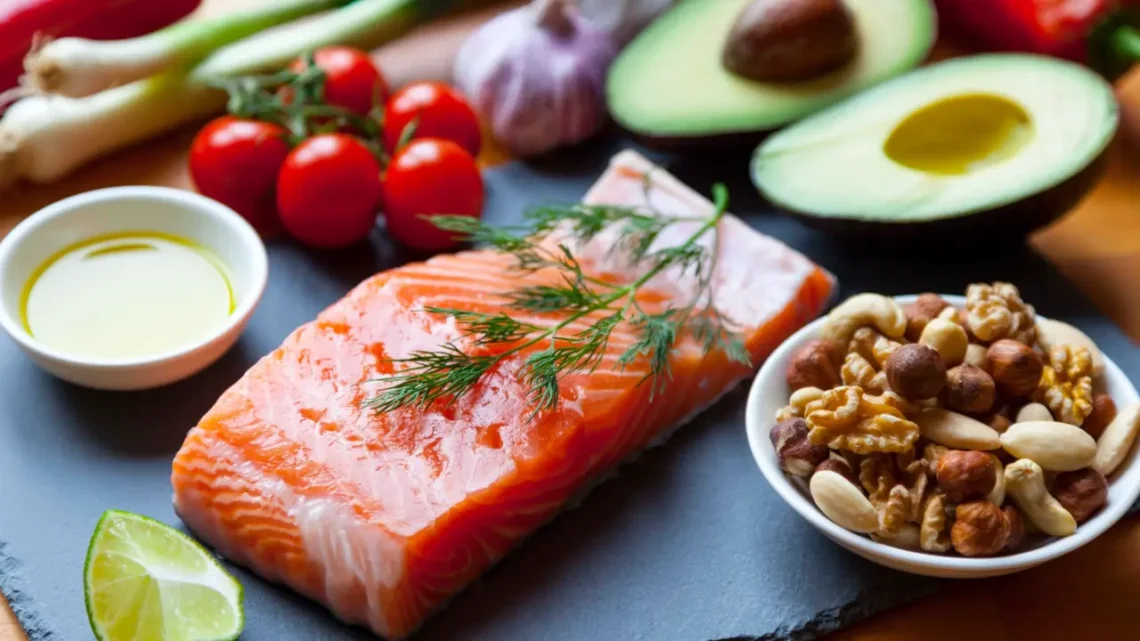
An anti-inflammatory diet is an eating pattern built on vegetables, fruit, legumes, whole grains, nuts, fish and olive oil, with little ultra-processed food, added sugar or processed meat. It is essentially the Mediterranean diet under another name. Trials show modest reductions in markers such as CRP, not a cure for any disease.
What “Inflammation” Means in a Dietary Context
Acute inflammation is the immune system doing its job after an injury or infection. The dietary conversation concerns something quieter: chronic, low-grade inflammation, usually tracked through high-sensitivity C-reactive protein (hs-CRP), a protein the liver produces in response to inflammatory signals.
A reading of 3 mg/L or above is the conventional cutoff researchers use to flag elevated levels, and interleukin-6 is another marker that studies report commonly.
CRP is a marker, not a disease. It rises with a head cold, a sprained ankle, smoking and excess abdominal fat, which means a single reading taken during an unrelated illness can mislead. Lowering a marker is also not identical to lowering disease risk, a distinction that most popular coverage ignores.




What the Evidence Actually Shows
The strongest signal belongs to the Mediterranean pattern. A meta-analysis of 33 randomized trials involving 3,476 participants found significant reductions in hs-CRP, interleukin-6 and interleukin-17 compared with control diets.
An umbrella review of meta-analyses reached a consistent ranking: the Mediterranean diet reduced circulating CRP most, followed by vegetarian and vegan diets and energy-restricted diets. The authors graded the underlying evidence as weak in quality, and intermittent fasting, ketogenic, Nordic and Paleolithic diets showed no inverse association with CRP in that review.
Plant-forward eating performs well in separate work. Researchers at the University of Warwick pooled seven randomized trials covering 541 participants. They found that plant-based diets lowered CRP by an average of 1.13 mg/L compared with omnivorous diets, according to lead author Luke Bell.
Against a clinical threshold of 3 mg/L, a drop of that size is not trivial. Averages conceal a good deal of variation, however. A meta-analysis of low-carbohydrate diets found that baseline CRP strongly predicted how much the marker fell, which suggests people with higher starting inflammation have more to gain, while people with low readings have little room to improve.
The practical lesson is that patterns outperform ingredients. No single food in these trials carried the effect. The benefit appeared when a whole way of eating changed, with more legumes, vegetables, fruit, nuts and olive oil displacing refined and processed items.
The Weight Confounder Rarely Mentioned
Body fat is itself a source of inflammatory signaling, and this complicates every diet comparison. In the POUNDS LOST trial, a two-year randomized study of four weight loss diets with different fat, protein and carbohydrate targets, weight loss lowered hs-CRP by a similar magnitude regardless of dietary composition.
The reductions tracked changes in weight, waist circumference and abdominal fat, and they persisted even after participants regained roughly half of the weight they had lost by 24 months.
A counterweight exists. A short trial cited in the same literature found that higher-fat Mediterranean-style diets reduced hs-CRP more than a low-fat diet even with minimal weight loss, pointing to a contribution from food quality itself.
The defensible reading holds both findings at once. For someone carrying excess weight, sustained fat loss through any diet they can maintain is probably the most powerful anti-inflammatory lever available. For someone at a stable weight, the quality of the pattern matters more.
Ultra-Processed Food: The Better-Supported Villain
If one category deserves suspicion, ultra-processed food has the more consistent record. An analysis of 9,254 US adults from the National Health and Nutrition Examination Survey, published in The American Journal of Medicine, found that 27.3 percent had elevated hs-CRP.
Adults who got 60 to 79 percent of calories from ultra-processed products had an 11 percent higher likelihood of elevated hs-CRP than those at 0 to 19 percent, and the 40 to 59 percent group showed a 14 percent increase.
Senior author Charles H. Hennekens and colleagues used the NOVA classification, which places sugar-sweetened drinks, packaged snacks, processed meats and many frozen ready meals in its fourth group.
An Australian cohort study reported a roughly 4 percent higher hs-CRP with greater ultra-processed intake, independent of body mass index and sex. Both findings are observational.
Ultra-processed diets also tend to be low in fiber and plants, which makes it hard to say whether the processing, the missing foods, or the extra calories drive the signal. The result is a reasonable basis for reducing these products, not proof of a specific mechanism.
Foods Blamed Without Good Evidence
Nightshades are the standard example. The claim that tomatoes, peppers, eggplant and potatoes drive inflammation traces to solanine and related glycoalkaloids, compounds that do cause problems in large quantities. One estimate holds that a small adult would need to eat almost 500 grams of fully green potatoes to become ill.
The Arthritis Foundation and Versus Arthritis both state that evidence linking nightshade vegetables to arthritis flares is lacking. Much of the supporting material for avoidance comes from mouse studies of intestinal inflammation, including work in which deep-fried potato skins with concentrated glycoalkaloids worsened colitis.
The anecdotal pull remains strong, helped by high-profile avoiders such as Tom Brady. Individual sensitivity is plausible, and a person who notices a consistent pattern can run a structured elimination and reintroduction with a registered dietitian. Blanket avoidance carries a cost, though. The Mediterranean pattern with the best trial record is built on tomatoes, peppers and eggplant.
Advice to remove gluten, dairy or sugar for everyone tends to rest on mechanistic reasoning rather than on trials in the general population. Celiac disease and diagnosed intolerances are different cases, where elimination is medically justified.
Omega-3 Supplements: Mixed Results
Fish oil sits at the intersection of food science and the supplement market, and the trial record is uneven. A large meta-analysis of 68 randomized trials with 4,601 participants examined marine omega-3 effects on CRP, interleukin-6 and TNF-alpha, and found that the lowering effect weakened when body mass index exceeded 30 in people with chronic non-autoimmune disease.
A 12-trial analysis in patients with chronic kidney disease found no significant change in CRP. A pooled analysis in type 2 diabetes did show reduced CRP, but heterogeneity was extreme, with an I-squared of 98 percent, so the average hides wildly different trial results.
For readers weighing a fish oil supplement, the practical implication is to check the actual EPA and DHA content per serving, since trials differ in dose and composition, and to treat oily fish as the food-first option. Anyone on blood thinners or managing a chronic condition should raise supplements with a clinician.
The Dietary Inflammatory Index: Useful, With Caveats
Researchers often score diets with the Dietary Inflammatory Index, a tool designed by Nitin Shivappa and colleagues and revised in 2014.
By 2019, it had appeared in more than 200 studies. Its scores draw on literature spanning cell culture, animal experiments and human studies, which makes it ambitious and also vulnerable: part of its logic rests on laboratory evidence that does not always translate to people.
Calculation requires a nutrition database and normalization against global intake figures, and a 2021 paper in PLOS One proposed a revised calculation after showing limitations in the original on simulated data.
The index is a legitimate research instrument. A high score in an observational study shows that a diet pattern is linked with disease, and it does not demonstrate that changing the score changes the outcome.
Autoimmune Disease and Medical Reality
The most authoritative institutional endorsement comes from rheumatology. The American College of Rheumatology’s 2022 guideline on exercise, rehabilitation, diet and integrative interventions for rheumatoid arthritis contained 28 recommendations, only one of them strong, and that one concerned exercise.
Diet earned three conditional recommendations, including adherence to a Mediterranean-style diet over no formally defined diet. The panel did not extend the same recommendation to other named diets, a result the guideline’s own investigators acknowledged might surprise some clinicians.
Diet complements disease-modifying drugs and does not replace them. The guideline’s restraint is instructive: even in the condition most associated with inflammation, the endorsed intervention is the Mediterranean pattern, not a restrictive elimination protocol.
Access is the neglected issue. A survey of 1,385 Americans with rheumatoid arthritis presented at ACR Convergence found that 84 percent were open to trying a Mediterranean-style diet. Yet, only 27 percent had heard about diet from their rheumatology provider.
Around 20 percent screened positive for food insecurity, which correlated with low adherence, and up to 30 percent disliked beans or whole grains. Budget-conscious versions exist: canned beans, frozen vegetables, canned fish and plain olive oil cover most of the pattern at modest cost. Coverage for dietitian visits varies by insurance plan, so patients who want medical nutrition therapy should check benefits before booking.
A Three-Tier Framework for Judging Any Claim
A simple evidence ladder separates useful advice from noise.
The first tier holds interventions strong enough to act on: a Mediterranean-style pattern, reduced ultra-processed food intake, weight reduction for people with excess body fat, and regular physical activity, which the Warwick researchers noted amplifies the benefit of plant-based eating.
The second tier holds plausible but inconsistent options, including omega-3 supplements, low-carbohydrate diets and fasting protocols. The third tier holds claims sustained mostly by marketing: universal nightshade avoidance, detox regimens and single superfood remedies.
Four questions sort any new claim quickly. Was the evidence a randomized trial or an observational association? Which marker moved, and by how many units? Was the comparison group eating a typical diet or a deliberately poor one? Would the effect survive after accounting for weight change?
Common Mistakes
The most frequent error is treating a CRP result as a diagnosis. A reading taken during an infection or after a hard workout says little about diet, and a repeat test in stable health is the sounder basis for decisions.
A second error is ingredient swapping without a pattern change: turmeric stirred into an otherwise ultra-processed diet, or a green juice added to a day of refined food. A third is over-restriction. Cutting multiple food groups without a diagnosis narrows nutrient intake and often lowers adherence, which defeats the purpose.
Timelines are the fourth. Trials in the low-carbohydrate literature ran anywhere from two to 144 weeks, so changes in inflammatory markers should be measured over weeks to months, not days.
What a Practical Week Looks Like
A defensible anti-inflammatory week looks unglamorous. Beans or lentils appear several times. Olive oil is the default cooking fat.
Oily fish such as sardines, mackerel or salmon shows up at least twice, with nuts, whole grains, vegetables and fruit filling the rest of the plate. Sugar-sweetened drinks and processed meats shrink to occasional items rather than daily staples.
Persistently high hs-CRP on repeat testing, joint swelling, morning stiffness or unexplained fatigue warrants a medical evaluation, since these can signal conditions that diet alone will not manage. The eating pattern is best treated as a durable foundation that sits beside treatment, not as a substitute for it.
What People Ask