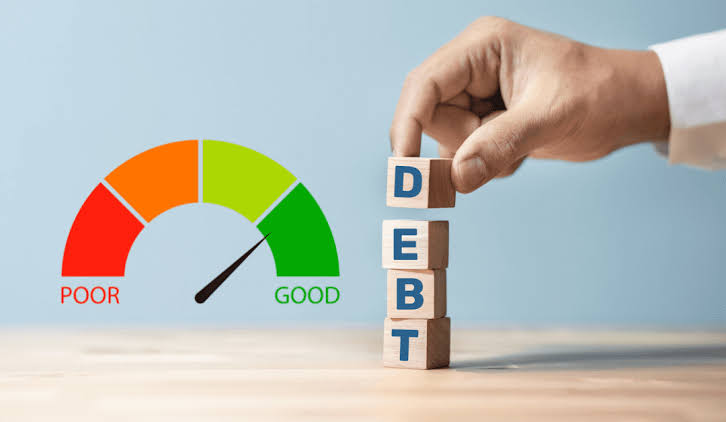
The Difference Between Good Debt and Bad Debt Is Not What You Were Taught
After a decade of watching debt play out in real households rather than spreadsheets, the line between good debt and bad debt has less to do with mortgages versus credit cards, and far more to do with income, timing, and how much shock a budget can absorb.
I have spent more than a decade sitting across from people at their kitchen tables, on video calls, and occasionally in my own inbox at midnight, looking at spreadsheets that were supposed to make sense of someone’s financial life.
After all that time, I can tell you the textbook definition of good debt versus bad debt is not wrong, exactly. It is just incomplete in a way that quietly wrecks people.
Trending Now!!:
You have heard the version everyone repeats. Good debt is a mortgage, a student loan, or a small business loan because it builds wealth or future income.
Bad debt is credit cards, payday loans, and car loans, because they drain your money on things that lose value. It fits neatly into a listicle. It also misses almost everything that actually determines whether a debt helps you or buries you.
I have watched a “good debt” mortgage destroy a family’s finances faster than any credit card could. I have also watched a so-called “bad debt” personal loan save someone’s credit score and sanity. The asset class on the loan agreement was never the real story.
The real story was always the relationship between the debt, the person’s income, their timeline, and their ability to absorb a shock. That is the part nobody taught us in school, mostly because nobody taught us anything about debt in school at all.




Why the Old Categories Stopped Working
The good debt versus bad debt framework was built for a slower, more predictable economy. It assumes a stable job, a degree that reliably converts into higher income, and a housing market that behaves the way it did for our parents. None of those assumptions holds the way they used to, and the numbers back this up.
As of June 2026, the average credit card APR sits around 22.17 percent, with rates on individual cards ranging anywhere from roughly 5.75 percent up to 36 percent depending on creditworthiness.
Compare that to a 30-year fixed mortgage, which has been hovering closer to the low 6 percent range this year, or federal undergraduate student loans for the 2026 to 2027 school year, fixed at 6.52 percent. On paper, the mortgage and the student loan look like obvious winners. Cheaper money, attached to appreciating assets or future earning power. Case closed, right?
Except that is not how debt actually behaves in someone’s real financial life. A mortgage at 6 percent on a house you cannot truly afford is not good debt. It is a slow leak that empties your savings, kills your ability to invest, and turns homeownership into a 30-year hostage situation.
A student loan for a degree that does not lead to a job paying enough to service it is not good debt either, no matter how low the interest rate looks on paper. I have clients with master’s degrees and six figures of “good debt” who are in a far worse position than a tradesperson who financed a used truck.
The Question Nobody Asks: Debt Relative to What?
Here is the thing the textbooks skip. Debt is never good or bad in isolation. It is good or bad relative to your income, your job stability, your existing obligations, and how much breathing room you have left after the payment clears your account.
This is essentially what debt-to-income ratio, or DTI, is trying to measure, and it is the single most underrated number in personal finance. Mortgage lenders generally want your total monthly debt payments, including the new mortgage, to stay at or below 36 percent of your gross monthly income, with housing costs alone capped closer to 28 percent under the classic 28/36 rule.
Some loan programs will stretch that to 43 percent or even higher with strong compensating factors, but here is what I have learned after watching hundreds of these deals close: just because a lender will approve a higher DTI does not mean your life can absorb it.
I had a client, a sharp guy, dual income household, who qualified for a mortgage at a back-end DTI just under 50 percent because his credit score was excellent and his down payment was strong. The lender said yes. His budget said no.
Eighteen months later, after one of the two incomes dropped due to a layoff, that “approved” mortgage was the thing keeping him up at night. Nothing about the asset changed. The mortgage was still good debt by every textbook definition. What changed was his margin for error, and that margin was paper thin from day one.
Good Debt Has Three Things in Common, Not One
After years of watching debt play out in real life rather than in a spreadsheet model, I stopped categorizing by asset type and started categorizing by behavior.
In my experience, debt that actually helps someone build wealth tends to share three traits, and missing even one of them turns “good debt” into a slow-motion problem.
It Has a Predictable, Fixed Cost
Fixed-rate debt lets you plan. Variable-rate debt lets the market decide your budget for you. A fixed 6.52 percent federal student loan is something you can build a repayment strategy around for years.
A variable-rate private loan or a credit card balance, where rates can swing based on the prime rate or simply based on a missed payment triggering a penalty APR near 27 percent, is something you are negotiating with every single month. Predictability is not a minor feature. It is the difference between debt you manage and debt that manages you.
It Builds Something That Outlives the Payments
A mortgage builds equity. A degree, assuming it leads to relevant, employable skills, builds earning capacity that persists for decades.
A well-structured small business loan builds an asset, the business itself, that can generate income long after the loan is repaid. Bad debt, by contrast, is almost always financing something that is gone before the bill is paid off.
The vacation ends. The depreciating car loses value faster than you pay down the loan. The new phone on a buy-now-pay-later plan is obsolete in two years while you are still paying for it.
This is also where the car loan example gets interesting, because it is the one that breaks the simple framework completely. Traditionally, auto loans get filed under bad debt because cars lose value the moment you drive off the lot.
But if that car is what gets you to a job that pays significantly more than your previous one, and the math actually works out over the life of the loan, that financing arguably converts into good debt.
I have seen this play out literally, a client who financed a reliable used car to take a job 40 minutes farther away that paid an additional 14,000 dollars a year. The loan was technically “bad debt.” The decision was one of the smartest financial moves I watched a client make that year.
You Can Survive It Going Wrong
This is the trait almost nobody talks about, and it is the one I care about most after years of doing this work. Good debt should not be able to take you down if your income drops for three to six months.
This means the payment has to fit comfortably inside your budget even before you account for raises, bonuses, or a second income continuing forever. If a job loss turns your mortgage from comfortable to catastrophic within 60 days, the size of that mortgage was a mistake, regardless of how attractive the interest rate was when you signed.
Where Bad Debt Actually Comes From, and It Is Not What You Think
The conventional wisdom says bad debt comes from undisciplined spending. Vacations, designer bags, impulsive Amazon carts. In my experience, that is maybe a third of the real picture. The bigger driver of destructive debt I have seen over and over is unmanaged emergencies colliding with a lack of cash reserves.
Someone’s car breaks down, and they do not have 1,200 dollars sitting in savings, so it goes on a credit card at 22 percent. A medical bill arrives that insurance only partially covers.
A period of reduced income forces minimum payments to become the only option. None of these started as a frivolous purchase. All of them became “bad debt” because there was no buffer to absorb the shock.
This is why I tell people that the real enemy is not debt itself. It is the absence of an emergency fund. A household with three to six months of expenses set aside can treat a financial surprise as an inconvenience.
A household without one treats every surprise as the start of a credit card balance that may take years to unwind, especially once you are only making minimum payments and the interest is compounding faster than you can chip away at the principal.
The Quiet Trap of “Good Debt” Behavior on Bad Debt Instruments
There is a nuance that almost never makes it into articles on this topic. Sometimes the instrument is technically bad debt, but the behaviour around it is healthy.
A 0% introductory APR credit card, used deliberately to finance an emergency repair with a plan to pay it off before the promotional period ends, which currently averages somewhere around 11 to 13 months on most offers, is not the same animal as carrying a revolving balance at 22 percent indefinitely. The card is the same. The behavior determines the outcome.
I have also seen the reverse. People treat their mortgage, the textbook’s favourite example of good debt, with the same carelessness they show to a credit card. They refinance repeatedly to pull out equity for discretionary spending.
They stop thinking of the home as shelter and start thinking of it as an ATM. At that point, the asset class stopped mattering. The behaviour took over, and the behaviour was bad debt behaviour wearing a good debt costume.
A Framework I Actually Use With Clients
Forget the asset-type checklist for a moment. When I am trying to help someone figure out whether a piece of debt belongs in their life, I walk through four questions in this order.
First, does this debt have a fixed, predictable cost, or am I exposed to a rate that can move against me without warning? Second, does it build or protect something with lasting value, whether that is equity, income potential, or a functioning asset I need to earn a living? Third, can my budget absorb this payment if my income drops for several months, not just in a best-case scenario? Fourth, and this one surprises people, am I taking on this debt instead of building savings, or in addition to it?
That fourth question matters more than people expect. Plenty of financial educators in 2026 are recommending a sequencing approach that goes roughly like this: build a basic emergency cushion first, keep up minimum payments on everything, capture any employer retirement match in full because that is free money, then aggressively attack high-rate toxic debt, and only after that is handled, ramp up retirement investing while steadily paying down whatever lower-rate debt remains.
I have used versions of this sequence with clients for years before it had a name, mostly because doing things in the wrong order is how people end up debt-free on paper but broke in practice, with no cushion and no investments to show for the sacrifice.
What I Wish Someone Had Told Me Earlier in My Career
I used to believe, the way most newer advisors do, that the job was to sort debts into the right buckets and tell people to pay off the bad ones first. It took real years of watching real outcomes to understand that the bucket matters less than the person’s actual capacity to carry the weight.
I have seen a physician with 300,000 dollars in “good debt” student loans living one emergency away from disaster because their lifestyle expanded to match an income that had not arrived yet.
I have seen a single parent with a modest car loan and a small balance on a store credit card sleep better at night than people with mortgages twice their income, simply because they kept their debt small enough that nothing could knock them over. Net worth on a spreadsheet said one thing. Financial stability said something else entirely.
If I had to compress a decade of this work into one piece of advice, it would be this. Stop asking whether a debt is good or bad in the abstract. Ask whether this specific debt, at this specific size, fits the actual income and stability you have right now, not the income you are hoping to have.
Good debt that outgrows your ability to service it stops being good. Bad debt that you can pay off in full before interest accrues stops being dangerous. The label on the loan was never the point. Your margin for error always was.
The Bottom Line
Good debt and bad debt are not fixed categories stamped onto mortgages, student loans, and credit cards. They are outcomes that emerge from how a debt fits your income, how exposed you are to rate changes, whether it builds something lasting, and whether you have enough of a financial cushion to survive things going wrong. A mortgage can become bad debt.
A car loan can become good debt. The asset type is just the starting point of the conversation, not the conclusion.
After years of watching this play out in real households, I trust the math of debt-to-income, emergency savings, and payment predictability far more than I trust any list that tells you what kind of debt you are allowed to feel good about.