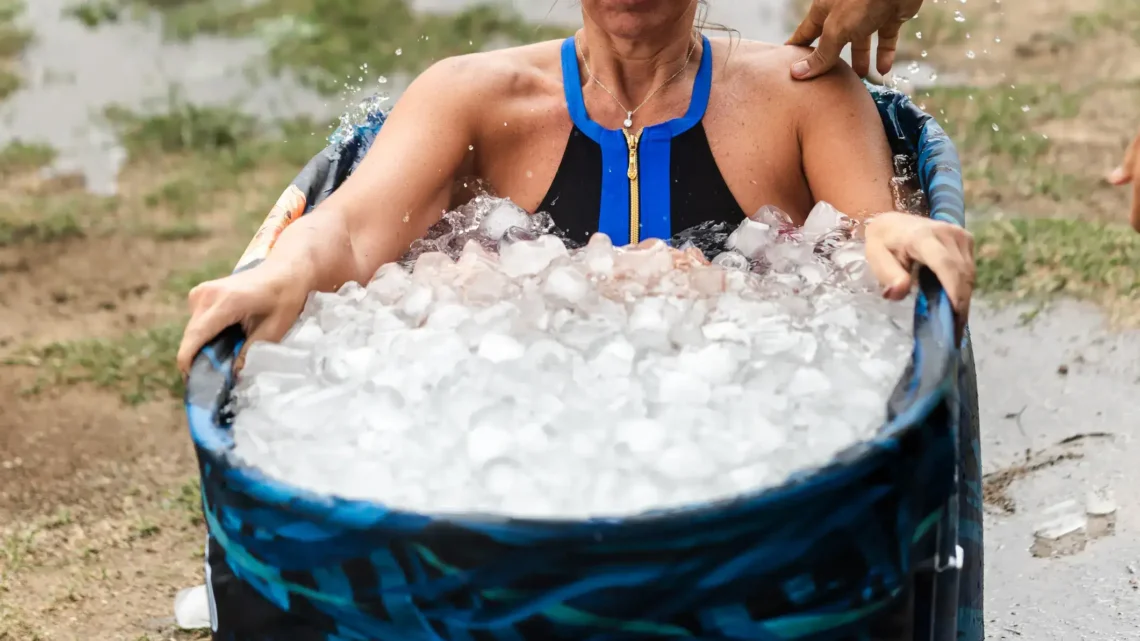
The Evidence Behind Cold Plunge Therapy and What Is Still Being Studied
The science on cold water immersion is real, nuanced, and still evolving. Here is what the latest research actually confirms, what remains unproven, and what every practitioner needs to know before getting in the water.
Somewhere around the third second of full-body submersion in 50-degree water, your brain does something it almost never does in modern life: it completely shuts up.
No to-do list, no background anxiety, no scrolling impulse. Just cold, and your breath, and the white noise of every nerve ending screaming at once.
Trending Now!!:
After eleven years in that water, standing in frozen rivers in January, sitting in purpose-built plunge tubs in rehabilitation clinics, and spending more hours than bears mentioning reading peer-reviewed literature on what exactly is happening inside the body during those few minutes of deliberate cold exposure, one thing becomes clear: the science is more nuanced than the influencers make it sound, and more promising than the cynics will admit. Neither the miracle narrative nor the flat-out dismissal holds up when you look at the actual data.
Cold plunge therapy, sometimes called cold water immersion therapy or ice bath therapy, has moved well past trend status.
It sits now at an uncomfortable intersection where genuine clinical interest meets wellness-industry hype, where real physiological effects bump up against overblown marketing claims. What follows is an honest accounting of where the evidence actually stands, what we know, what is still being figured out, and what remains genuinely unknown.
What Cold Plunge Therapy Actually Is
Defining the Practice
Cold water immersion therapy refers to deliberate submersion of the body, typically chest-deep or higher, in water at or below 59 degrees Fahrenheit (15 degrees Celsius) for a defined period of time, usually between one and twenty minutes.




The term “cold plunge” has become the popular shorthand for this, though it covers a spectrum of practices, from the backyard ice bath loaded up with bags from a gas station to clinical hydrotherapy pools with precise temperature controls.
The practice is not new. Cold water therapy has been around for thousands of years. The Greek physician Hippocrates has been credited by some as the grandfather of cold therapy, and an ancient Egyptian document called the Edwin Smith Papyrus, dated around 3500 B.C., references cold being used for therapeutic purposes. What is new is the research infrastructure now available to understand why it works, and for whom, and under what conditions.
The Spectrum of Cold Exposure
Precision matters here because research tends to lump together things that are meaningfully different. A fifteen-second cold shower at the tail end of a hot one is not the same stimulus as a five-minute full-body immersion at 50 degrees Fahrenheit.
Cryotherapy chambers, where the body is exposed to extremely cold air for a few minutes, differ from water immersion in how quickly heat is pulled from the body. Water conducts heat away from the body roughly twenty-five times faster than air at the same temperature. That matters a great deal when interpreting study results.
The Neuroscience of What Happens in the First Few Minutes
The Cold Shock Response
The moment cold water touches the skin above the chest, the body launches a cascade of responses it has been rehearsing for millions of years. The cold shock response includes peripheral vasoconstriction, a sharp spike in heart rate, hyperventilation, and a surge in blood pressure.
Skin cold receptors flood the nervous system with signals. This is not a bug; it is the architecture of survival. It is also where most of the real risk in cold plunging lives, which is something that rarely gets enough airtime in the wellness content ecosystem.
The Neurochemical Flood
What happens in the minutes after submersion is where things get genuinely interesting from a clinical standpoint.
Cold water immersion triggers the release of important hormones and neurotransmitters, including dopamine, serotonin, cortisol, norepinephrine, and beta-endorphins, which are linked to the modulation of neural responses to stress and other emotion-related circuits affected in depression, anxiety, and post-traumatic stress disorder.
The numbers on norepinephrine, in particular, are striking. At water temperatures of around 40 degrees Fahrenheit, a steep spike of norepinephrine occurs in the body and brain, as much as 200 to 300 percent above baseline in as few as 20 seconds.
That is not a trivial shift. Norepinephrine drives arousal, focus, and mood in ways that overlap significantly with the mechanisms of action for commonly prescribed antidepressants. Research has documented a 530 percent increase in noradrenaline, which increases arousal and cognitive function, alongside a 250 percent increase in dopamine, which can affect mood and provides a feeling of pleasure and satisfaction.
This neurochemical profile is one of the more robustly documented effects in the cold immersion literature, and it helps explain something that anyone who has practiced this consistently already knows from lived experience: the post-plunge clarity is not placebo.
Something real is happening in the brain chemistry. Whether that translates into lasting therapeutic benefit is a different and more complicated question.
The Mental Health Angle: Promising, Still Being Written
What the Research Shows
Several studies show mood improvements immediately after and thirty minutes after cold water immersion, with significant improvements in self-esteem and depression ratings. One study found that after a cold bath, participants felt more alert, proud, inspired, and less distressed and nervous, with brain scans also showing improved neural activity.
In one case study, a woman with major depressive disorder and anxiety no longer had symptoms after four months of cold water swimming, eventually discontinuing medication and remaining symptom-free a year later.
That case study is remarkable and should be treated as exactly what it is: a case study. One person’s outcome, not a treatment protocol. The broader mental health picture is promising but genuinely under-researched in rigorous ways.
At the biochemical level, whole-body exposure to cold triggers a release of neurotransmitters such as serotonin, cortisol, dopamine, norepinephrine, and beta-endorphin, which play a crucial role in emotion regulation, stress regulation, and reward processing. Deficits in these neurotransmitters have been reported as critical factors in developing psychiatric disorders such as depression, anxiety, and emotional disturbances.
The Expectancy Problem
Here is something the enthusiast community almost never discusses: the role of expectation in reported mental health benefits.
Future cold immersion studies will need to measure and control for expectancy effects when evaluating treatment outcomes. Research in other areas of psychiatry has demonstrated that belief in a treatment’s efficacy can significantly moderate outcomes.
This matters because most people who get into a cold plunge already believe it will help them. They have watched the videos, read the posts, possibly paid for a membership somewhere.
That belief is itself a powerful variable. It does not mean the benefits are not real; it means disentangling the biochemical effects from the psychological ones is harder than the current research base can support. Honest practitioners in this space acknowledge this. The ones who don’t are selling tubs.
Cold Plunge and Physical Recovery: The Strongest Evidence
Exercise Recovery and Muscle Soreness
This is where the evidence base is most solid. Research on cold water immersion has found evidence that it helps reduce the degree of exercise-induced muscle damage that can occur after physically challenging activities. Less damage leads to less inflammation, which in turn reduces soreness and helps restore physical performance the next day, according to findings cited by the Mayo Clinic.
A 2025 systematic review in the medical journal PLOS ONE, which analyzed eleven studies and more than 3,000 participants, found that cold water immersion can deliver real short-term benefits: lower perceived stress within hours, modest improvements in sleep and quality of life, and reduced muscle soreness after intense exercise.
These are not marginal effects. For an endurance athlete who needs to train again tomorrow, reduced soreness is not a luxury; it is a performance variable.
The critical qualifier is timing and training type, which brings us to one of the most important and underreported findings in this space.
The Hypertrophy Problem: What Strength Athletes Need to Know
For anyone doing cold plunges after resistance training sessions primarily to build muscle, the timing of that practice deserves a serious rethink.
Cold water immersion following resistance training may blunt gains in absolute strength and muscular power.
A 2024 meta-analysis published in the European Journal of Sport Science, which reviewed eight studies on the subject, found that cold water immersion does not fully prevent gains, but the evidence suggests it modestly blunts hypertrophic adaptations compared to resistance training alone, an attenuation likely due to suppressed anabolic signalling, reduced blood flow, and blunted inflammation, all of which may dampen muscle protein synthesis.
The mechanism makes biological sense. Post-exercise inflammation is not simply damage to be managed; it is a signal that tells the muscle to grow. When that inflammatory response is aggressively suppressed with cold water, the message is partially muted.
Research found that immersing limbs in near-freezing water after weightlifting significantly reduced blood flow to the muscles, limiting their ability to absorb protein and recover, which could blunt muscle growth and undermine the benefits of resistance training.
The practical guidance from the research is clear: individuals seeking to maximize muscle hypertrophy should avoid using cold water immersion immediately following bouts of resistance training and should further consider the frequency and timing of application.
In practice, the smarter approach is to use cold plunges on rest days, or at least wait several hours after a strength session before getting in the water. The recovery benefits do not require sacrificing the gains. Strategic timing is the solution.
Endurance Athletes: A Different Calculus
The picture is different for endurance sports. There seem to be little or no negative effects of post-exercise cold water immersion on endurance training adaptations.
Cyclists, runners, and triathletes competing across multiple days have long used cold immersion as a legitimate recovery tool, and the research backs this use up more convincingly than it backs up the general wellness application.
The Cardiovascular Evidence: Intriguing but Handle With Care
What Cold Does to the Heart
A 2024 review in the Journal of Thermal Biology focused on the cardiovascular effects of cold exposure in healthy people. The authors examined 24 studies that tested either cold water immersion or cryostimulation, which exposes people to extremely cold air for several minutes.
Earlier research found that cold plunges could increase blood flow, reduce resting heart rate, and improve overall cardiovascular markers. The initial plunge itself, however, is a stress event for the cardiovascular system.
The cold shock response produces a surge in blood pressure and a spike in heart rate before any regulatory adaptations kick in. For a healthy person in their thirties, this is manageable. For someone with a pre-existing cardiac condition, uncontrolled hypertension, or a history of arrhythmia, it is a meaningful risk that requires medical clearance first, not afterwards.
Brown Fat, Metabolism, and the Weight Loss Question
Cold water immersion activates brown adipose tissue, which is metabolically distinct from the white fat most people are trying to lose. Brown fat burns calories to generate heat rather than storing them, a process called non-shivering thermogenesis.
Controlled studies of mild cold air exposure in healthy adults demonstrate that acute energy expenditure rises and brown fat is activated. A systematic review and meta-analysis of randomized trials reported that above-shivering cold raised daily energy expenditure meaningfully.
The metabolic benefits extend beyond calorie counting, though. Where cold exposure shows stronger, clinically relevant benefits is in metabolic health. Multiple studies report improvements in insulin sensitivity of up to 22 percent in prediabetic adults, along with improvements in fasting glucose and triglyceride clearance, even independent of weight change.
That is a genuinely significant finding. Insulin sensitivity improvements of that magnitude, if replicable at scale, would be clinically meaningful for the roughly one in three American adults currently classified as prediabetic. This is an area where more rigorous randomized controlled trials are overdue.
Cellular and Longevity Research: The Newest Frontier
What Is Happening at the Cellular Level
A 2024 study published in Advanced Biology demonstrated that brief cold water immersion initiates cellular changes that support metabolic health and immune function. The researchers found that the stress induced by cold triggers the release of cold-shock proteins, which increase cellular resilience and may even have anti-aging effects.
Findings from the University of Ottawa suggest that proper autophagic activity could not only extend cellular longevity but also prevent the onset of various diseases. Autophagy is essentially the body’s cellular housekeeping process, clearing out damaged proteins and organelles.
The idea that cold stress can enhance this process is exciting from a longevity standpoint, with one important caveat: most of this research has been conducted on small samples of young males over short periods. Drawing sweeping conclusions about ageing from a seven-day cold acclimation study is not science; it is optimism.
The Systematic Review Picture: Honest Accounting
What the 2025 PLOS ONE Analysis Actually Found
The most comprehensive systematic review to date, published in PLOS ONE in January 2025, analyzed eleven studies covering more than 3,000 participants.
Cold water therapy may temporarily lower stress, improve sleep quality, and slightly enhance quality of life. The evidence, however, offered little support for improvements in mood or immunity.
The catch is that those benefits fade. By three months, most of the effects disappeared, and researchers noted the evidence base remains thin, limited by small studies and few randomized controlled trials.
This is the honest picture. Cold plunge therapy produces real, measurable short-term effects. The long-term evidence is much thinner. The wellness industry has gotten very good at front-loading the “real effects” part of that story while quietly leaving out the “may not persist” part.
Gaps the Research Has Not Closed
Several areas remain genuinely under-studied.
Women’s Physiology
The overwhelming majority of cold immersion studies have been conducted on men. Hormonal variation across the menstrual cycle affects thermoregulation, cardiovascular response, and recovery, and almost none of this has been properly studied in the context of cold water immersion. Women engaging in this practice are largely extrapolating from male-subject data, which is a significant gap the field needs to close.
Long-Term Protocols
Most studies follow participants for weeks, not months or years. There is no good data yet on what consistent cold plunging over two or five years does to the body, for better or worse. The absence of long-term data is not proof of safety or harm; it is simply an unanswered question.
Dose-Response Relationships
How cold is cold enough? How long is long enough? How often? These questions have not been answered with the precision that would allow clinicians to make specific, evidence-based recommendations. The best current guidance is somewhere between 50 and 59 degrees Fahrenheit, one to ten minutes, two to four times per week, a range wide enough to drive a truck through.
Immune Function
The PLOS ONE analysis found little evidence to support improvements in immunity. This is notable because immune system benefits are among the most commonly cited reasons people give for adopting cold plunge practice. The absence of evidence is not evidence of absence, but it is a flag for caution in the claims being made commercially.
Safety, Contraindications, and the Risks Nobody Talks About
Who Should Not Be Getting In
The cold shock response is not trivial. Peripheral vasoconstriction combined with the cardiovascular demand of sudden cold immersion creates a real, if uncommon, risk of cardiac events in susceptible individuals.
People with known heart disease, uncontrolled high blood pressure, Raynaud’s phenomenon, or those who are pregnant need to consult a physician before starting any cold immersion practice. This is not boilerplate caution; it is physiologically relevant advice.
Hypothermia is another genuine risk that gets under-discussed in wellness contexts because most cold plunge sessions are short. A person who loses consciousness during a cold plunge is at serious risk of drowning. The rule is simple: never cold plunge alone in a tub you cannot easily exit without assistance.
The Placebo Question and Why It Is Not as Dismissive as It Sounds
The placebo effect in cold water immersion research is a persistent methodological challenge. It is nearly impossible to blind a participant to whether they are in cold water or not. This means that expectation effects cannot be cleanly separated from biochemical ones in most study designs.
The honest position is not that the benefits are placebo, but that the current research cannot fully quantify how much of what people experience is biochemical versus expectation-driven. Both can be real. Both can be therapeutic. The distinction matters for how future research is designed, not necessarily for how an individual chooses to practice.
How to Actually Use Cold Plunge Therapy Intelligently
A Protocol Based on Current Evidence
Temperature
Aim for 50 to 59 degrees Fahrenheit (10 to 15 degrees Celsius). Going colder does not produce proportionally greater benefits and increases risk. Going warmer than 59 degrees may not produce a sufficient physiological stimulus.
Duration
Start at thirty seconds and work toward five to ten minutes over several weeks. Research found diminishing returns beyond eleven minutes, with longer exposure not increasing brown fat activation or metabolic rate further, while increasing shivering, which shifts energy use away from brown adipose tissue toward skeletal muscle and reduces net efficiency.
Frequency
Two to four sessions per week appears to be a reasonable range based on available evidence. Daily plunging is not supported by current research as producing better outcomes than a more moderate schedule.
Timing
If muscle building is a goal, avoid plunging immediately after resistance training. Wait at least four to six hours, or save sessions for rest days. For endurance recovery, timing is more flexible.
Entry
Slow, controlled breathing before and during immersion reduces the cold shock response and the associated cardiovascular spike. Controlled entry with intentional breathing is one of the most important variables in safe practice, and one of the least discussed in popular coverage.
The Bottom Line on What We Actually Know
After more than a decade of watching this field evolve, the honest summary is straightforward: cold plunge therapy is a real physiological intervention with real, documented short-term effects on mood, muscle soreness, stress markers, and metabolic activity.
The claims that extend beyond those documented effects, into the territory of immune system transformation, dramatic weight loss, disease prevention, and longevity extension, are running ahead of the evidence.
The best evidence says cold water immersion benefits are real but modest, and mostly short-term. For healthy adults, brief supervised sessions can reduce soreness and perceived stress. Cold plunges are not a magic bullet for heart health, immunity, or longevity.
Used intelligently and within appropriate limits, cold water immersion is a legitimate tool in a recovery and wellness toolkit. The neurochemical response is real. The soreness reduction is real.
The metabolic activation is real. The mental clarity many practitioners report is almost certainly a combination of genuine biochemistry and the profound psychological effect of voluntarily doing something difficult every day.
That last part, the discipline dimension, is nearly impossible to study in a lab. After eleven years in cold water, it may be the most important thing of all.
What People Ask