
The Gut-Brain Axis: What Scientists Actually Know vs. What Wellness Brands Claim
Probiotics, microbiome tests, and mood supplements promise to rewire the mind through the gut. The human trials, the regulators, and the testing data show how much of that is established science and how much is marketing.
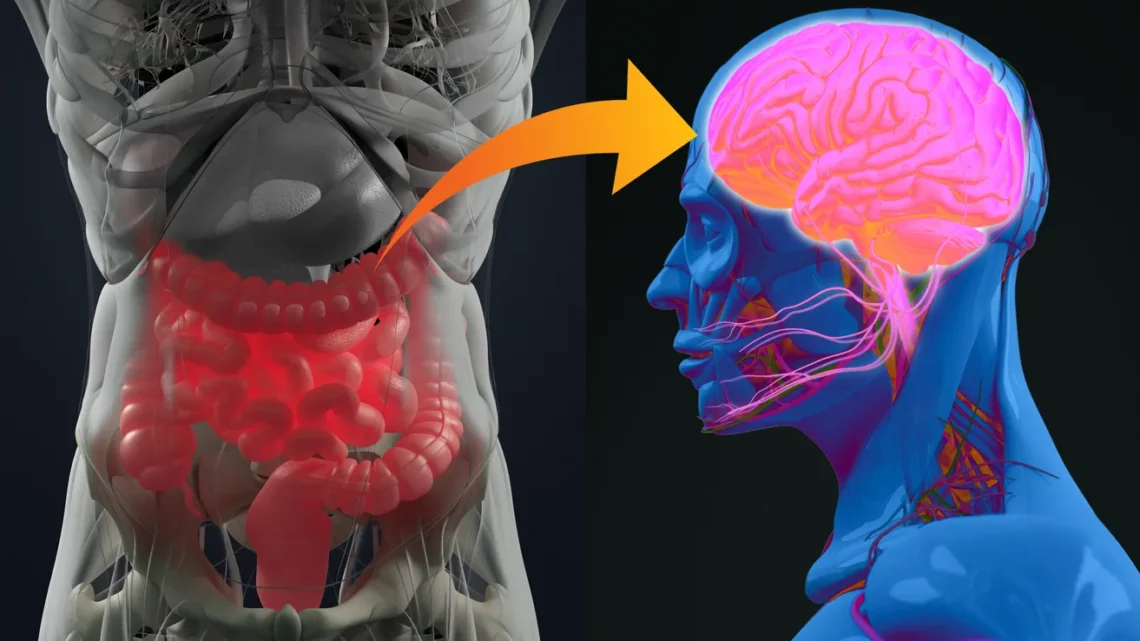
The gut-brain axis is real: gut microbes, the vagus nerve, immune signaling, and microbial metabolites do influence the brain.
What remains unproven is that any commercial probiotic, gut test, or supplement reliably improves mood, anxiety, focus, or mental illness in the general public. The strongest evidence is modest, strain-specific, and mostly adjunctive.
Trending Now!!:
Few ideas in health have travelled from the laboratory to the checkout aisle as fast as this one. Probiotic capsules, mood gummies, stool-sequencing kits, and “gut-brain” powders now sell on the premise that trillions of bacteria can be tuned to calm anxiety or sharpen attention.
Market researchers disagree sharply on the size of the business, with published estimates running from under $15 billion for gut-health supplements to above $70 billion for the broader probiotics category, a gap that mostly reflects definitions. The direction is consistent: spending is rising faster than the evidence.
What the Gut-Brain Axis Is, and Why It Is Not the Controversial Part
Communication between the digestive tract and the brain runs along at least four routes: the vagus nerve, the immune system, hormonal signaling, and compounds made by microbes, including short-chain fatty acids.
Researchers such as John Cryan and Ted Dinan helped build the field and popularized the term “psychobiotics” for live organisms that might offer a mental health benefit.




Animal work gives the mechanism credibility. In rodent studies, misfolded alpha-synuclein, the protein implicated in Parkinson’s disease, has been shown to travel from the gut to the brain along the vagus nerve, and cutting the nerve blocked the transfer. Nobody serious disputes that the gut and brain talk to each other.
The most repeated statistic in wellness marketing is that roughly 90 percent of the body’s serotonin is made in the gut. The figure is accurate and misleading. Gut serotonin mainly governs digestive motility and does not cross the blood-brain barrier, so it cannot be treated as a direct lever on mood.
What Human Trials Show on Mood and Anxiety
The human evidence is where claims and findings separate. A 2022 systematic review in Nutrients identified 54 randomized, placebo-controlled studies of probiotics and postbiotics on psychological outcomes, of which 30 were eligible for meta-analysis.
A 2025 meta-analysis in Nutrition Reviews pooled 23 randomized trials covering 1,401 patients with clinically diagnosed conditions and framed the findings as support for an adjunctive approach alongside standard treatment, not a replacement.
Earlier reviews describe a small to moderate effect on depressive symptoms. A systematic review of neuroimaging trials found promising signals but flagged variable methods and small samples.
Results in healthy volunteers are weaker. Some placebo-controlled trials have found no overall effect of probiotics on mood, anxiety, stress, or sleep quality, which matters because most supplement buyers are not clinical populations.
Study design deserves as much scrutiny as study results. Several of the most striking reported improvements come from small, open-label trials, such as an eight-week study of 60 patients with mild-to-moderate depression taking an SSRI with or without a specific Lactobacillus combination.
Open-label means participants knew what they were taking, an arrangement that inflates apparent benefit. The better-controlled ProDeCa trial, a double-blind study of 266 patients recovering from gastrointestinal cancer surgery, reported that patients on a psychobiotic formula fared better than those on placebo, whose depression, anxiety, and stress scores worsened.
The result is encouraging, yet it applies to a narrow, high-stress surgical population and one formulation.
This is the point most competing coverage misses. A probiotic is not a category with a single effect; it is a strain, a dose, and a delivery format. A benefit shown for one combination says nothing about the generic product on a pharmacy shelf, and retail formulations frequently differ from trial formulations in strain, dose, or both.
Parkinson’s Disease: The Strongest Signal, Still Early
The most compelling clinical result so far sits outside mental health. In the GUT-PARFECT trial at Ghent University Hospital, led by Roosmarijn Vandenbroucke and Patrick Santens among others, 22 people with early-stage Parkinson’s disease received a fecal microbiota transplant from a healthy donor, and 24 received their own stool as placebo, delivered through a nasal tube into the small intestine.
The donor group showed an improvement in motor scores after 12 months, with the benefit growing between months six and twelve. Participants also reported less constipation.
The caveats are substantial. The trial was small, ran at a single center, and used an invasive procedure, and the investigators themselves described the effect as mild.
A 2019 review from Groningen asked bluntly whether fecal transplantation for Parkinson’s was “hope or hype,” and larger multicenter trials are needed to answer it. Even so, the result is the kind of evidence the supplement aisle lacks: randomized, double-blind, and placebo-controlled.
Where Marketing Outruns the Evidence
Regulators have noticed. The Federal Trade Commission recently sued the multilevel marketing company Amare and three executives, alleging the company marketed supplements as treatments for depression, anxiety, and ADHD in children and adults.
According to the complaint, the company and its distributors promoted products on Instagram, TikTok, Facebook, and YouTube using claims tied to the gut-brain axis, neurotransmitters, and cortisol.
Christopher Mufarrige, director of the FTC’s Bureau of Consumer Protection, was among the officials who announced the case. Trade press reading the filing described it as a signal of growing scrutiny of “clinically proven” language in mood and cognition products.
The pattern is not new. Dannon settled FTC and state claims over its probiotic yogurt marketing for $21 million and softened its digestive and immunity claims.
In a separate case, the FTC argued that Bayer’s probiotic supplement claims needed randomized trial support, while industry groups countered that holding supplements to a pharmaceutical standard contradicts the Dietary Supplement Health and Education Act.
Bayer prevailed in the contempt proceeding. The practical lesson is that the legal line between a structure-function claim such as “supports digestive balance” and a treatment claim such as “relieves anxiety” is thin, and gut-brain marketing routinely crosses it.
The Microbiome Test Problem
At-home stool tests promise a personalized readout and a tailored supplement plan. The evidence for that promise is poor. In a study led by Stephanie Servetas and Scott Jackson at the National Institute of Standards and Technology, researchers sent identical reference stool material to seven direct-to-consumer companies through 21 kits.
Results diverged: some kits reported high levels of potentially harmful Clostridium bacteria in the sample while others found none. Variation between companies was comparable in size to the biological differences normally seen between different people. Within a single company, one of three identical samples was classified as unhealthy while the other two were classified as healthy.
There are currently no regulator-approved clinical microbiome diagnostic tests, and a 2024 editorial in The Lancet Gastroenterology & Hepatology noted that in the United States these tests are not regulated as medical devices.
Diane Hoffmann, a study co-author at the University of Maryland, said the hype around testing “doesn’t really match the evidence.” Jackson’s advice to physicians fielding patient questions was blunt: “buyer beware.”
Anyone weighing the cost of a gut microbiome test should treat the report as an unvalidated snapshot, and should be especially wary of any supplement regimen sold on the back of it.
How to Evaluate a Gut-Brain Claim
Four checks cut through most marketing. The first is strain match: the exact organisms, doses, and duration on the label should match those used in a published human trial, not merely the same genus.
The second is population match: results in surgical patients, people with irritable bowel syndrome, or clinically depressed adults on antidepressants do not transfer to healthy adults seeking a mood boost.
The third is outcome quality: validated clinical scales and blinded designs carry weight, while stool-bacteria changes and mouse data do not demonstrate that a person feels better.
The fourth is claim type: language promising to treat or cure a mental health condition is a regulatory red flag, whatever the packaging says.
What Has Support
The most defensible gut-brain interventions are unglamorous. Gut-directed hypnotherapy and cognitive behavioral therapy have randomized evidence in irritable bowel syndrome, the clearest example of a disorder of gut-brain interaction.
A 10-week Stanford trial published in Cell found that a diet high in fermented foods increased microbial diversity and reduced markers of inflammation, a result that supports eating fermented foods and fiber-rich plants without requiring a branded product.
Adults with diagnosed depression or anxiety have a clearer rule: probiotics can be discussed with a clinician as an add-on, never as a substitute for therapy or prescribed medication.
Anyone shopping for a probiotic should choose by strain and published trial evidence rather than colony count or marketing language, and should read any claim about the mind with the same skepticism applied to a claim about a drug.
What People Ask