He Gave Me My First Bank Account. I Squandered His Money. Then a Stranger’s Son Called
Chuka did not shout. That was the worst part.
I had just told him I spent the hundred thousand naira he gave me to start my POS business on my sister’s hospital bill and my mother’s rent in the village. He sat back on the bench outside his shop in Ajegunle, sucked his teeth once, and said, another one will come.
Trending Now!!:
I wanted him to be angry. Anger I could carry. Forgiveness like that just sat on my chest.
Chuka was the friend everybody prays for, and almost nobody gets. We grew up two houses apart in a small village outside Agbor, in Delta State, the kind of place where the road turns to red mud every rainy season, and NEPA is the least of anybody’s worries because most houses do not even have a meter.
He left for Lagos first, hustled his way into a small phone repair shop in Ajegunle, and two years later, when I finally scraped enough money for a bus ticket to follow him, he was the one waiting for me at Mile 2 motor park.
The first thing he did, before food, before finding me a place to sleep, was drag me to a bank on Wilmot Point Road.
You cannot be successful without an account where money can enter, he told me, filling out the form himself because my hand was shaking, half from the AC and half from the size of the city outside the window.
I had never opened one before. Growing up, money moved through hands, not through machines. That single afternoon felt like someone had finally let me into a room I did not know existed.
Six months later, Chuka transferred that hundred thousand naira into the same account. It was meant to be the beginning of my own hustle, a POS stand outside a busy junction, the kind of small business that keeps a family eating in a city where the cost of living climbs every single month.
Instead, it became my sister’s hospital deposit and three months of rent I had promised my mother before I left. I told myself it was temporary. It was not.
He never brought it up again. Not once.
Before all that, back in the village, there was a woman everybody called Mama Ngozi. Her only son, Emeka, had traveled abroad years before I did, to the UK, and he sent money home in bursts, sometimes generous, sometimes silent for months.
Mama Ngozi lived alone in a small block house near the stream, and I used to fetch her water and firewood on my way from the farm, mostly because my own grandmother had asked me to, and partly because the old woman told good stories in exchange for kola nut. I never thought of it as anything.
I did it for almost two years before I left for Lagos, and I forgot about it the moment the bus pulled out of the park.
I did not know Emeka had never forgotten.
By the time the container came into the picture, I was down to zero again. Chuka kept coming through in small ways, feeding me when I could not feed myself, letting me sleep on his floor when my own rent fell through.
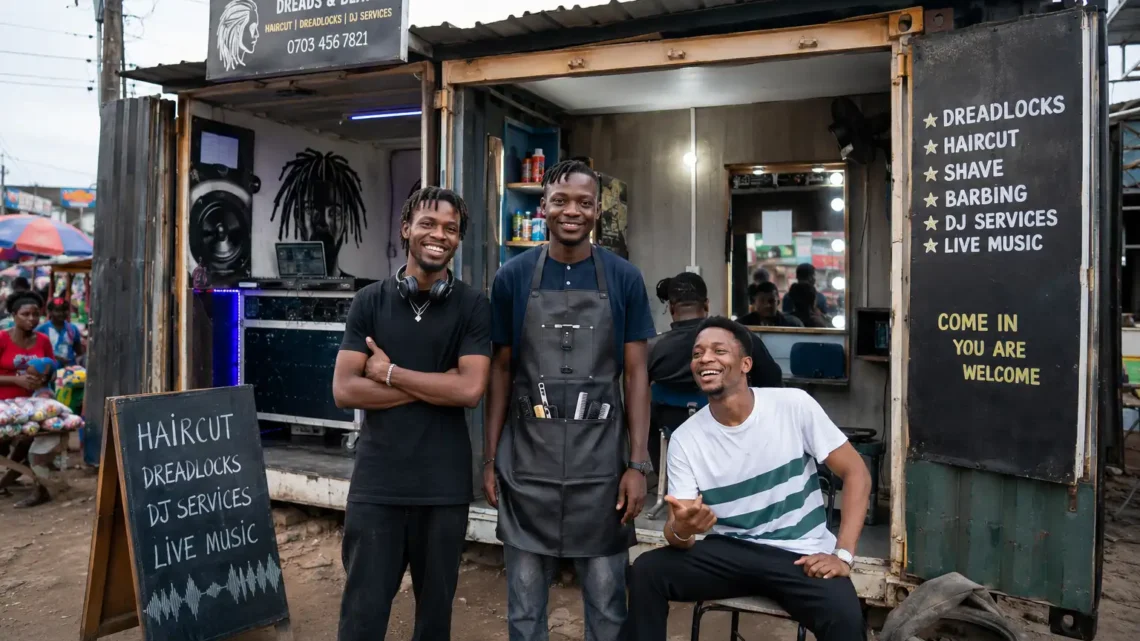
I DJ small parties on weekends, I make dreadlocks and cut hair for men in the neighborhood who cannot afford the salons on the island, and I play a bit of live music when a church or an owambe needs someone last minute. None of it added up to enough. I was surviving, not living, and the shame of squandering the one real chance I had been given sat under everything I did.
Then the call came.
An unknown UK number. I almost did not pick it up, because in Lagos you learn fast that strange international numbers are either scammers or people trying to sell you a dream. It was Emeka.
He said his mother, before she passed the year before, told him about a boy who used to fetch her water without being asked twice, who never once collected money for it. He had been trying to trace me through people from the village for months. When he finally found my number, he asked me one question that made my chest tighten.
What do you actually want to do with your life?
I told him the truth. DJ. Hairstylist. Musician. Whatever paid that week.
Pick one, and I will help you start it properly, he said. This is not charity. This is me finishing what my mother would have wanted.
I chose the hairstyling and DJ setup together, one small shop where I could cut and make dreadlocks in the day and store my speakers and mixer for weekend gigs. Emeka wanted to rent me a proper shop, but shop rent in most parts of Lagos is close to impossible for someone starting from nothing, some landlords ask for two years upfront just to sign the agreement. I told him I would rather buy a container and find a small plot to park it, cheaper, and mine outright once it was paid for.
He sent the money in one transfer. I stared at the alert for almost ten minutes before I believed it was real. It was more money than I had ever held in my life, more than Chuka’s two hundred thousand, more than anything I had earned from every party and every haircut combined.
I did not tell Chuka immediately. When I finally did, sitting on the same bench outside his shop where he once told me another one will come, he just smiled and said nothing for a while.
I told you, he said eventually. I told you it was coming. I just didn’t know it would come with dreadlocks and a container.
We laughed until my stomach hurt.
I found a plot behind a busy bus stop in Oshodi, paid the space owner a small monthly fee, and had the container fitted with a mirror, a barber chair I got secondhand from a closing salon, shelves for my equipment, and a small speaker mounted in the corner that plays whatever I feel like that day, sometimes Rema, sometimes old highlife my father used to play on Sunday mornings.
The first week, I barely slept. I was sweeping, arranging, testing lights, calling every DJ contact I had to spread the word.
The shop opened on a Wednesday. By Friday, I had cut eleven heads and made two sets of dreadlocks. By the following weekend, I had my first paid gig booked directly from someone who saw the container and asked for my number.
I still have not told Chuka everything Emeka said on that first call. There was a line at the end, almost as an afterthought, that I have not been able to shake since.
My mother said you were the only one who never asked her for anything back.
I think about that more than I think about the money.